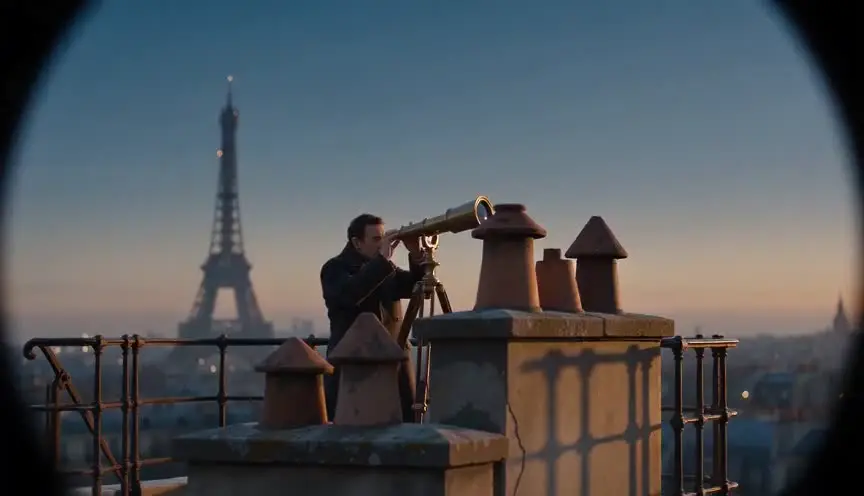
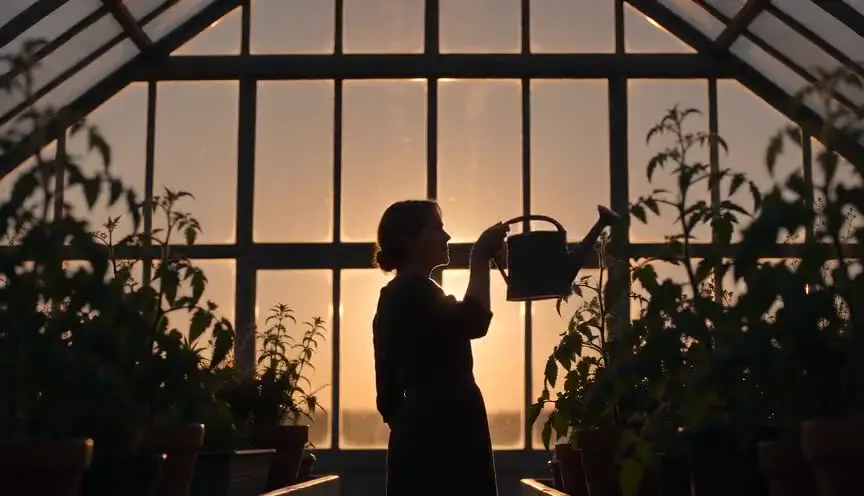
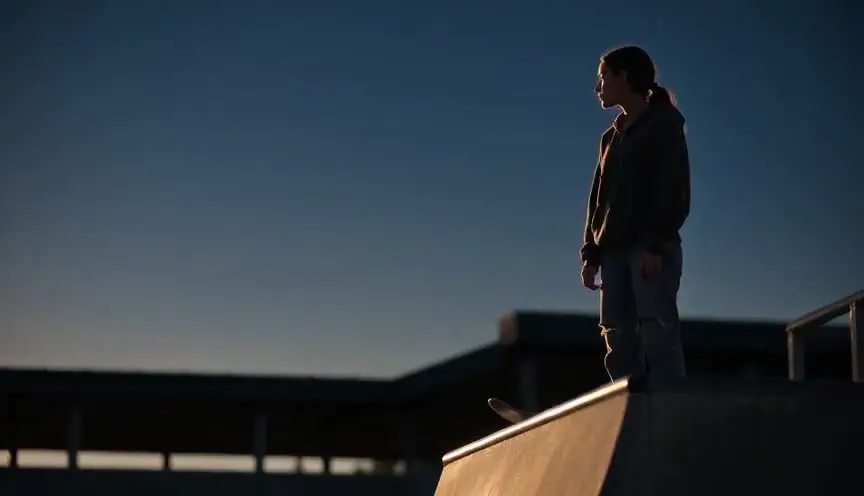
Fade in and fade outOpening and closing the eyes
A fade brings the image up from black (or white), or takes it down into black. The audience experiences it like opening or closing their eyes, a clear beginning, ending or pause in the story.
Also calledFade to blackFade up from blackFade to white
Editing and transitions
Why it works on screen
Fades frame the story. A fade in lets the audience enter slowly, as if waking into a world. A fade out marks a real ending, the close of a chapter, a death, a night falling, a relationship ending. In the middle of a film, a fade to black and back can mark a big jump in time or a break in the character's life. Fading to white suggests blinding light, shock, spiritual release or memory loss. A scene earns it when the story needs a strong pause, a full stop rather than a comma. Too many fades weaken that feeling.
The shot list line
- Size
- Any, often wide for openings and endings
- Angle
- Eye level or a composed, stable angle
- Movement
- Static or very slow, so the fade itself is the motion
- Lens
- Any, chosen for the scene
- Duration
- 1 to 4 s for the fade
Shoot extra handles at the start and end of the shot so the editor has room for a slow fade without cutting into the action.
Screenplay
On the page
"FADE IN:" traditionally opens a screenplay and "FADE OUT." ends it, so those two uses are expected. Inside the script, fades are rarer. Use "FADE TO BLACK." or "FADE OUT." at the end of a major act or a sequence when the story truly stops before resuming. Avoid fades between every scene. The duration and color of each fade are editing decisions, listed in the shot list or editing notes when the director plans them.
INT. O'SULLIVAN FARMHOUSE - COUNTY KERRY - NIGHT
The wake is ending. Neighbors lift their coats from the pile on the bed.
MAEVE O'SULLIVAN (50s, black cardigan) collects teacups on a tray. She stops at her father's empty armchair, still dented where he sat.
She switches off the lamp beside it.
FADE TO BLACK.
FADE IN:
EXT. O'SULLIVAN FARMHOUSE - SPRING - DAY
The armchair sits outside in the sun, a hen asleep on the cushion.
Storyboard
In the storyboard
Draw the last frame of the scene, then a small black panel with FADE OUT written in it and the duration. For a fade in, start with the black panel, then the first frame of the new scene. Use gradient hatching to show the image darkening or brightening. Note whether the fade goes to black or white and what the sound does during it, since sound often lingers or arrives before the picture.
Pairs well with
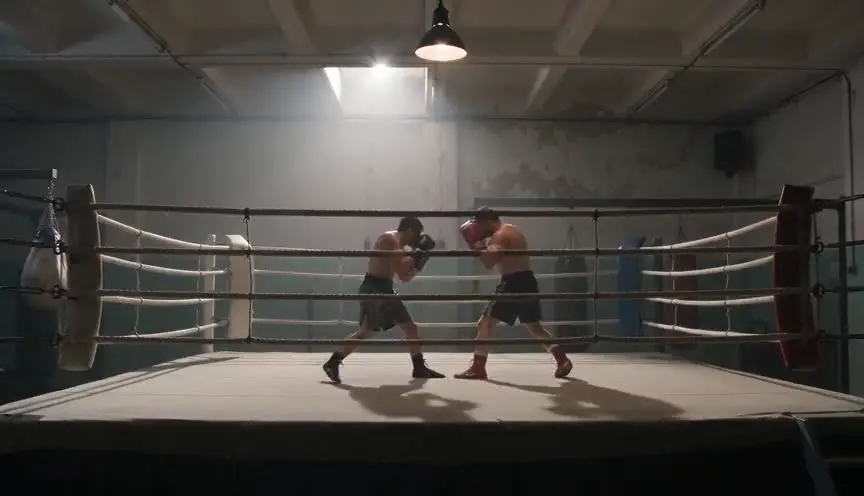
A wide shot before a fade out leaves the audience with the whole space and the character's place in it. As the image darkens, that final picture stays in mind.
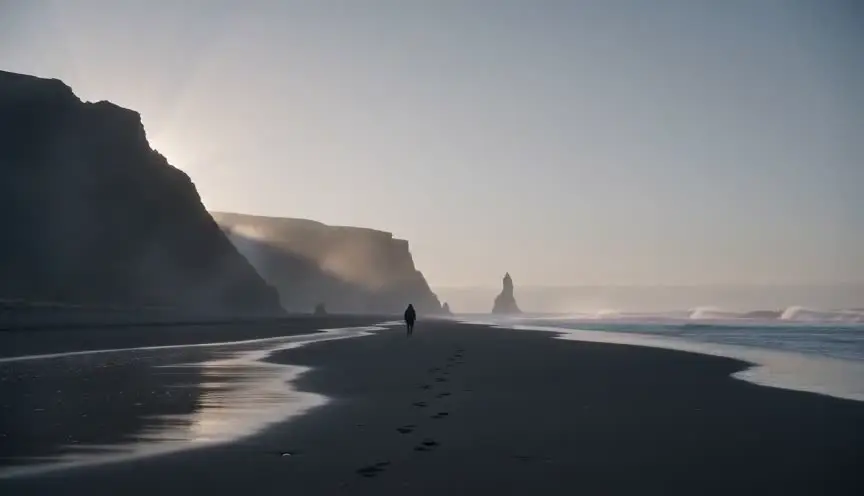
After a fade in, an establishing shot tells the audience where the new chapter begins, turning the black pause into a clear step forward in time.
Reference
Watch it in
The Godfather (1972)
The film slowly rises out of black onto Bonasera's face, pulling the audience into the dim, closed office before the wedding outside.
Citizen Kane (1941)
The prologue at Xanadu starts with a fade up on the No Trespassing sign, then flows into a series of dissolves and fades.
ScreenWeaver
Set it up in ScreenWeaver
Write FADE IN: and FADE OUT. where your screenplay needs them, and ScreenWeaver breaks the scenes down into shots automatically. In the storyboard, give the last shot before a fade and the first shot after it a composed framing, a stable angle, a static or very slow movement and a slightly longer duration so the fade has room. Characters and locations carry from shot to shot. Check the pause and rhythm in the AI previsualization.
Start writing for freeThe prompt behind this clip
This is the exact prompt that rendered the clip at the top of the page. Keep the description of the camera and the light, change the subject and the place.
Fade in and fade out: the frame begins as a solid black screen, then over about one second the image gradually brightens into a locked-off wide shot of a rainforest river, sunlight filtering through a dense green canopy onto slow brown water with a wooden canoe drifting near the bank. The camera never moves, holding the scene steady for two seconds while light shimmers on the current. In the final second the entire image evenly dims back to solid black, ending the shot in complete darkness. No text.
Common mistakes
- 01
Fading between every scene
Frequent fades make the story stop and start and feel like a TV show going to ads. Keep them for major breaks, openings and endings.
- 02
No handles
Cutting a shot too tight leaves no room for a slow fade, so the editor must fade on action. Ask for a few seconds of stillness at the end of key scenes.
- 03
Ignoring sound
Letting music or dialogue cut abruptly while the image fades feels clumsy. Plan how sound fades or carries through the black so the moment feels complete.