Speed rampTime that brakes and accelerates
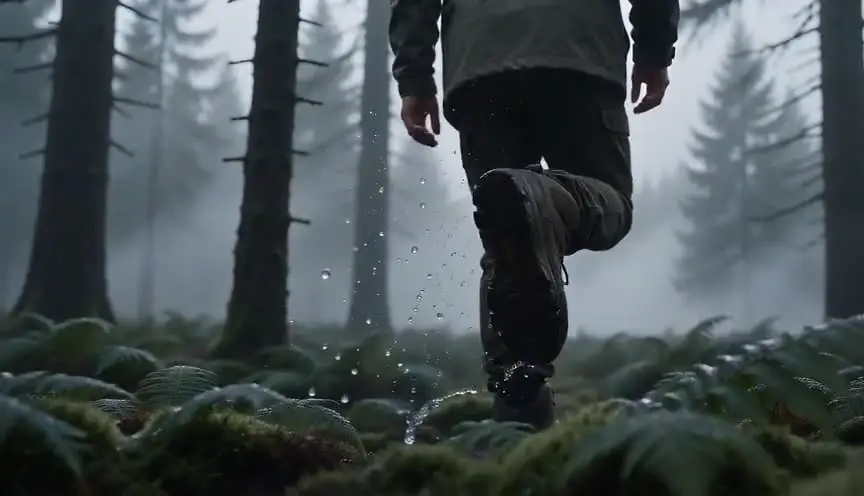
A speed ramp changes the playback speed inside a single shot, gliding from normal speed into slow motion or fast motion and back again. The audience feels time breathe with the action, stretching at the key instant and snapping forward after it.
Also calledTime rampSpeed rampingVariable speed shot
Time and motion
Why it works on screen
The ramp lets you choose the exact moment that matters inside a movement. A fighter swings at full speed, time drags through the impact, then snaps back as the opponent falls. A runner leaps, hangs in the air, lands at full pace. It serves action, sport, stylized comedy, music-driven sequences and any beat where rhythm is part of the storytelling. It gives kinetic scenes a sense of control, as if the film itself were reacting to the action. A scene earns it when a single instant inside a fast movement deserves attention, and the energy before and after must stay intact.
The shot list line
- Size
- Full shot
- Angle
- Low angle from the side
- Movement
- Tracking alongside, then static at the jump
- Lens
- 24mm to 35mm
- Duration
- 3 to 5 s on screen
Shoot at a high frame rate for the whole take, 120 fps or more, so the editor can ramp freely, and light for that frame rate from the start.
Screenplay
On the page
A speed ramp is an editing and camera choice, and the term does not belong in a spec script. What the writer can do is mark the instant that time should stretch, using SLOW MOTION briefly inside a fast action line, then return to normal speed right away. Keep it rare, since each use draws attention to the film's style. If the whole sequence is built on ramps, describe its rhythm once and leave the exact curves to the shot list and the edit.
EXT. ROOFTOPS - KOWLOON - DUSK
Laundry lines, water tanks, neon beginning to flicker below.
MING (17, torn hoodie, a stolen phone in her teeth) sprints across the tar, two SECURITY GUARDS behind her.
The gap between the buildings: three meters, eleven floors down.
She jumps.
SLOW MOTION
Her shadow crosses the alley. The phone slips from her teeth. She catches it in midair.
NORMAL SPEED
She lands, rolls, and is gone. The guards skid to a stop at the edge.
Storyboard
In the storyboard
Draw three panels for one shot: the approach at full speed, the key instant in slow motion and the exit at full speed. Link them with a single long arrow to show it is one continuous take. Under the panels, draw a speed curve, a line that dips where time slows and rises back up, and write the percentages, for example 100, 20 and 100. Note the capture frame rate.
Pairs well with

A whip pan at full speed right after the ramp snaps the audience out of the slowed instant into the next action. The two together give a sequence a sharp, musical rhythm.

Ramp into slow motion on a movement, then cut on that same movement to another angle at normal speed. The match keeps continuity while the speed change lands the impact.
Reference
Watch it in
300 (2007)
The battles keep sliding from slow motion into full speed and back, a speed pattern that became the signature of the film's stylized fighting.
Snatch (2000)
Guy Ritchie ramps characters walking and running in quick bursts, giving the most ordinary movement a comic, kinetic kick.
ScreenWeaver
Set it up in ScreenWeaver
Mark the instant that time should stretch inside the action, and ScreenWeaver breaks the scene down into shots automatically. Open the shot, set the framing, angle and movement, and give it an on-screen duration, then add a speed ramp note with the start speed, the slowed instant and the end speed. Characters and locations carry from shot to shot, so the action stays continuous around the ramp, and the AI previsualization lets you judge the rhythm.
Start writing for freeThe prompt behind this clip
This is the exact prompt that rendered the clip at the top of the page. Keep the description of the camera and the light, change the subject and the place.
Speed ramp: a lone motorcyclist crosses a vast white salt flat under a hard midday sun, camera on a low tracking dolly moving alongside at the rider's height. For the first two seconds the shot plays in slow motion, dust hangs suspended and the rider's jacket ripples gently in the still air. At the midpoint the motion snaps sharply into normal speed, the motorcycle surges forward, dust kicks up violently and the horizon smears with heavy motion blur. One continuous take, no cuts, the flat white ground and sky stay constant throughout. No text.
Common mistakes
- 01
Shooting at normal speed
You cannot ramp into good slow motion from 24 fps footage without artifacts. Capture the whole shot at a high frame rate if a ramp is planned.
- 02
Ramping on every shot
Constant ramps turn a sequence into a trailer and tire the audience. Save them for the beats where an instant truly deserves to stretch.
- 03
Ramp at the wrong instant
If the slowdown hits before or after the key moment, the effect feels random. Time the curve to the exact frame of impact, jump or glance.