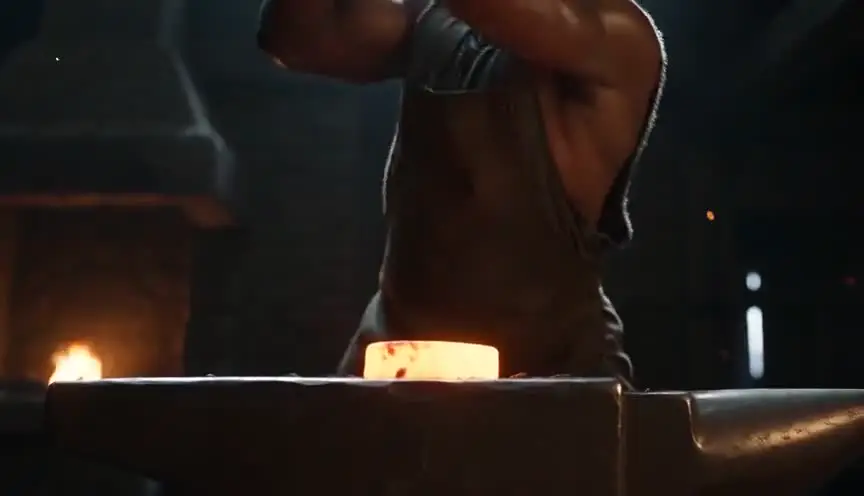
CandlelightA small world around a flame
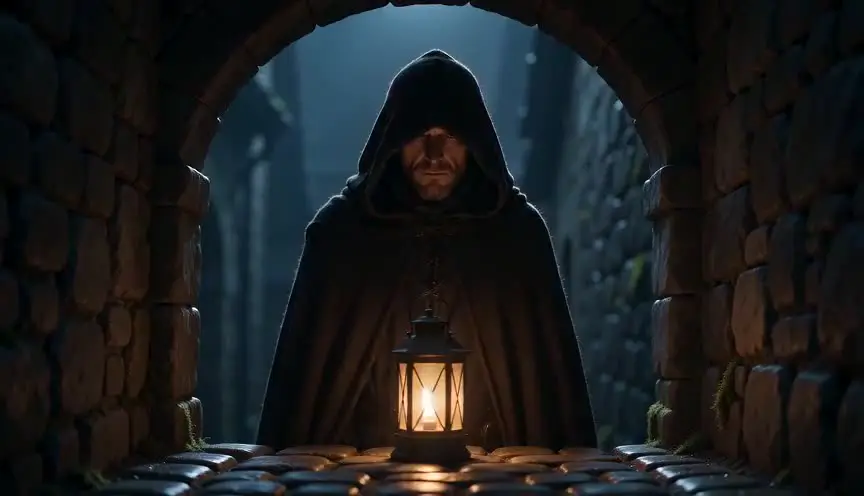
Candlelight lights a scene with candle flames, real or reproduced, giving a warm, low, flickering glow that falls off quickly into darkness. The world shrinks to the circle of the flame, and the audience leans in close to the people inside it.
Also calledFirelight lightingPractical candle lightingFlame-lit scene
Lighting
Why it works on screen
Candlelight is the light of before electricity, of power cuts, of rituals and of secrets. It pulls characters together, because they must sit close to see each other. Use it for period drama, for vigils and wakes, for dinners that turn into confessions, for love scenes, for prayers and for plotting. The flicker keeps the image alive and a little unstable, as if the moment could go out. A scene earns it when intimacy, fragility or ceremony matters, and when the darkness beyond the table holds something the characters would rather not face.
The shot list line
- Size
- Medium close-up
- Angle
- Eye level, slightly below the flames
- Movement
- Static
- Lens
- 35mm to 50mm, fast aperture
- Duration
- 5 to 8 s
Keep real candles in frame, add small warm hidden sources at flame height with a gentle flicker, and expose so the darkness beyond the table stays black.
Screenplay
On the page
Candles are props, so the screenplay may name them without breaking any rule. Write why they are lit: a storm, a birthday, a vigil, a house with no electricity, a period setting. Let characters light them, carry them, blow them out, because each of those actions changes the scene. Do not describe the quality of the glow. How many candles, which extra sources hide behind them and which lens the crew uses belong in the shot list.
INT. FARMHOUSE KITCHEN - CONNEMARA - NIGHT
The storm has taken the power. Three candles in saucers on the table, and the rest of the house gone to black.
NORA FLAHERTY (70s) deals cards to her son DECLAN (40s) and his wife, PRIYANKA (30s), meeting her for the first time.
The flames lean every time the wind hits the door.
Nora lays down a card and finally looks at Priyanka.
NORA
He never brought anyone home. Not once in forty years.
Storyboard
In the storyboard
Draw the candles clearly and a small circle of warm light around each. Shade faces from bright near the flames to dark at the far edge, with light coming from below and in front. Leave the background black. Mark any hidden unit with a dotted lamp symbol at table height. Note "candlelight, 1900 to 2000K, flicker" and the number of candles. If a candle is lit or blown out during the shot, draw before and after panels.
Pairs well with
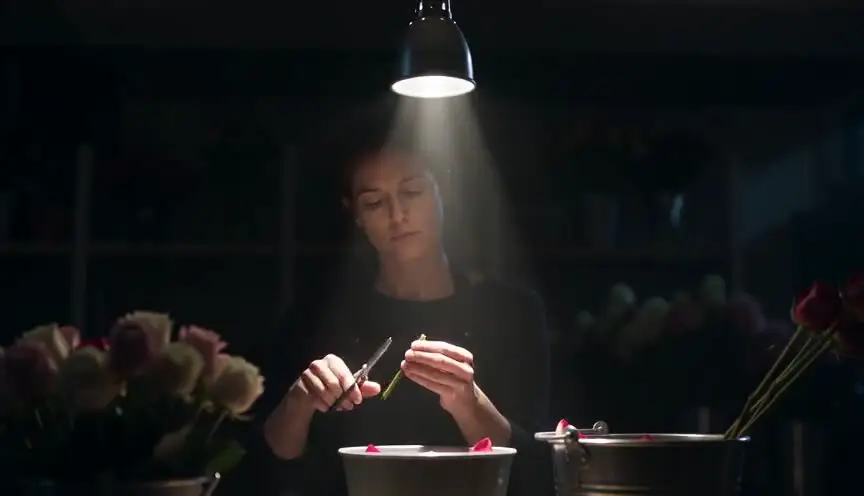
Candlelight produces chiaroscuro on its own: faces sculpted out of darkness by a single warm source. Pair them when the scene should look like an old master painting.

Candlelight falls off fast, so faces close to the flame hold most of the information. Close-ups let the audience read expressions that a wide shot would lose to the dark.
Reference
Watch it in
Barry Lyndon (1975)
Kubrick filmed the interiors with nothing but real candles, using an unusually fast lens so no electric light was needed.
The Favourite (2018)
Robbie Ryan builds the palace nights around visible candles, letting the flames flicker over faces in wide-angle frames.
ScreenWeaver
Set it up in ScreenWeaver
Write the candles and why they are lit into your action lines, and ScreenWeaver breaks the scene down into shots automatically. Open each shot, set framing, angle, movement and duration, and note "candlelight" with the number of flames. The location, props and characters carry from shot to shot, so the candles stay in place across the coverage. The AI previsualization helps you judge how dark the room can be while the faces still read.
Start writing for freeThe prompt behind this clip
This is the exact prompt that rendered the clip at the top of the page. Keep the description of the camera and the light, change the subject and the place.
Candlelight illuminates a weathered wooden cabin interior at night, snow visible through a frosted window behind a middle-aged man wrapped in a wool blanket. A single thick candle burns on a rough-hewn table in the foreground, its flame swaying and flickering, casting warm amber light that pulses unevenly across his face and the log walls while the rest of the room falls into soft darkness. The camera holds static and close, locked off, as the flame's light breathes in and out, shadows shifting slowly with each flicker, no other light source visible. No text.
Common mistakes
- 01
Perfectly still flames
A hidden lamp that stays perfectly steady while the candles flicker gives the cheat away. Add a gentle, irregular flicker to any supplementary source.
- 02
Wrong color
Candlelight is very warm. White balance that corrects all of it turns the scene into ordinary tungsten light. Keep some amber in the image.
- 03
Light from nowhere
Lighting the back wall or the ceiling brightly breaks the small world of the flame. Let the room fall to black beyond the reach of the candles.