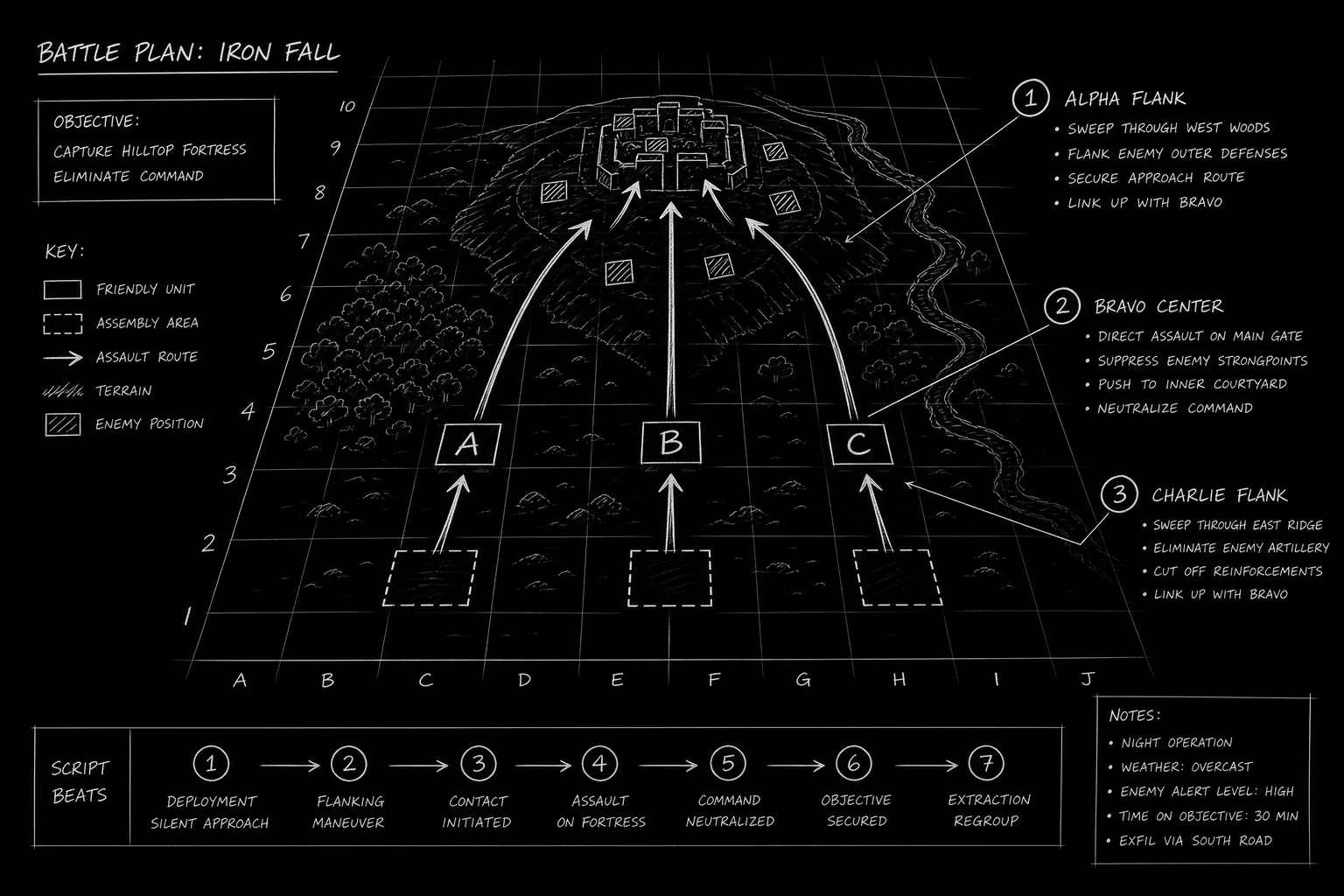
Epic battles tempt writers into census mode: thousands of soldiers, twelve named captains, three castles, and a siege engine introduced on page ninety-seven. The reader drowns before the first arrow flies. Battle scene screenplay craft at scale is not about listing everything. It is about choosing a human lens and making geography legible while the world burns.
Scale should feel large. The page should feel controlled.
Epic does not mean encyclopedic. Epic means the audience senses armies while the story tracks one clear objective at a time.
Free tool: use the Slugline Formatter to clean up and standardize your scene headings.
How It Works: Scale Through Focus
Large battles are filmed and read through narrowing:
- Strategic objective: breach the wall, hold the bridge, protect the king, delay the fleet
- Tactical lens: follow a squad, a commander, a civilian caught inside
- Emotional stake: what this battle costs your protagonist personally
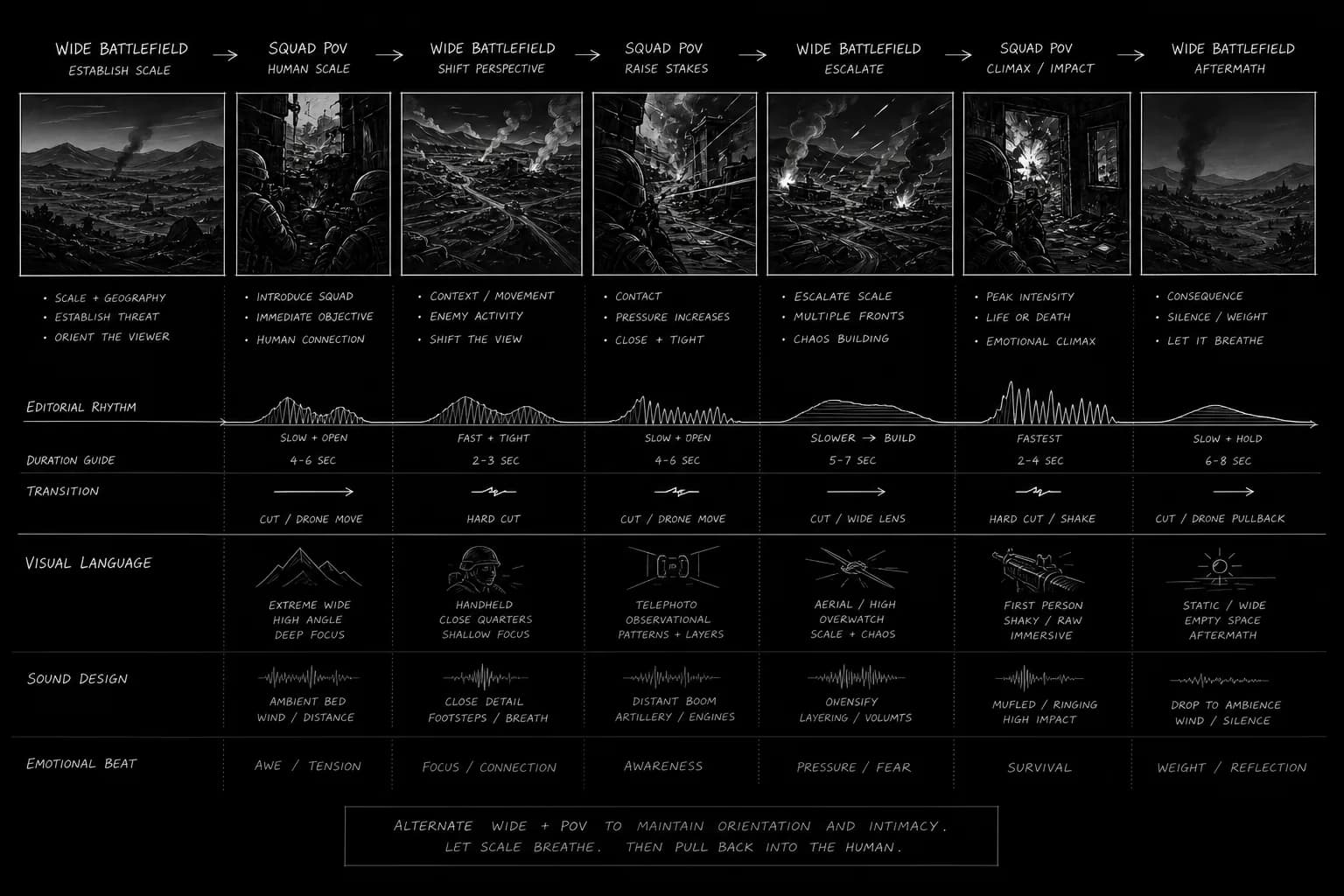
The format alternates brief scope shots with sustained close execution. You imply armies with sound, smoke, and reported intel. You write the fight you can hold in working memory: usually a handful of named agents per sequence.
Platform and Use-Case Sections
Historical and Fantasy Features
Historical epics need place names readers can track. Open with a simple map sentence: "The river splits the field. Castle on the north bank. Siege lines on the south." Fantasy adds creature units and magic rules. State magic limits once per sequence so victories feel earned.
Link to intercutting parallel action when battle threads split: cavalry charge while tunnel team breaches under walls.
Television Hour-Long Drama
TV battles are shorter and cheaper. Choose one set piece inside the larger war. Format with tight scene headings. End on a character decision, not battlefield panorama.
Animation and VFX-Heavy Projects
Animation scripts may tag set pieces as sequences. Still anchor emotion in character choices. VFX notes belong in production drafts more than lean specs.
Step-by-Step: Writing a Readable Epic Battle
Step 1: Write the battle's one-sentence purpose. "Delay the enemy until the village evacuates." Everything else serves that sentence.
Step 2: Pick POV anchors. Usually one to three characters maximum per movement. Tag them early. Return to them rhythmically.
Step 3: Establish geography in plain language. Left flank, river, gate, ridge. Avoid jargon unless characters use jargon and you define it.
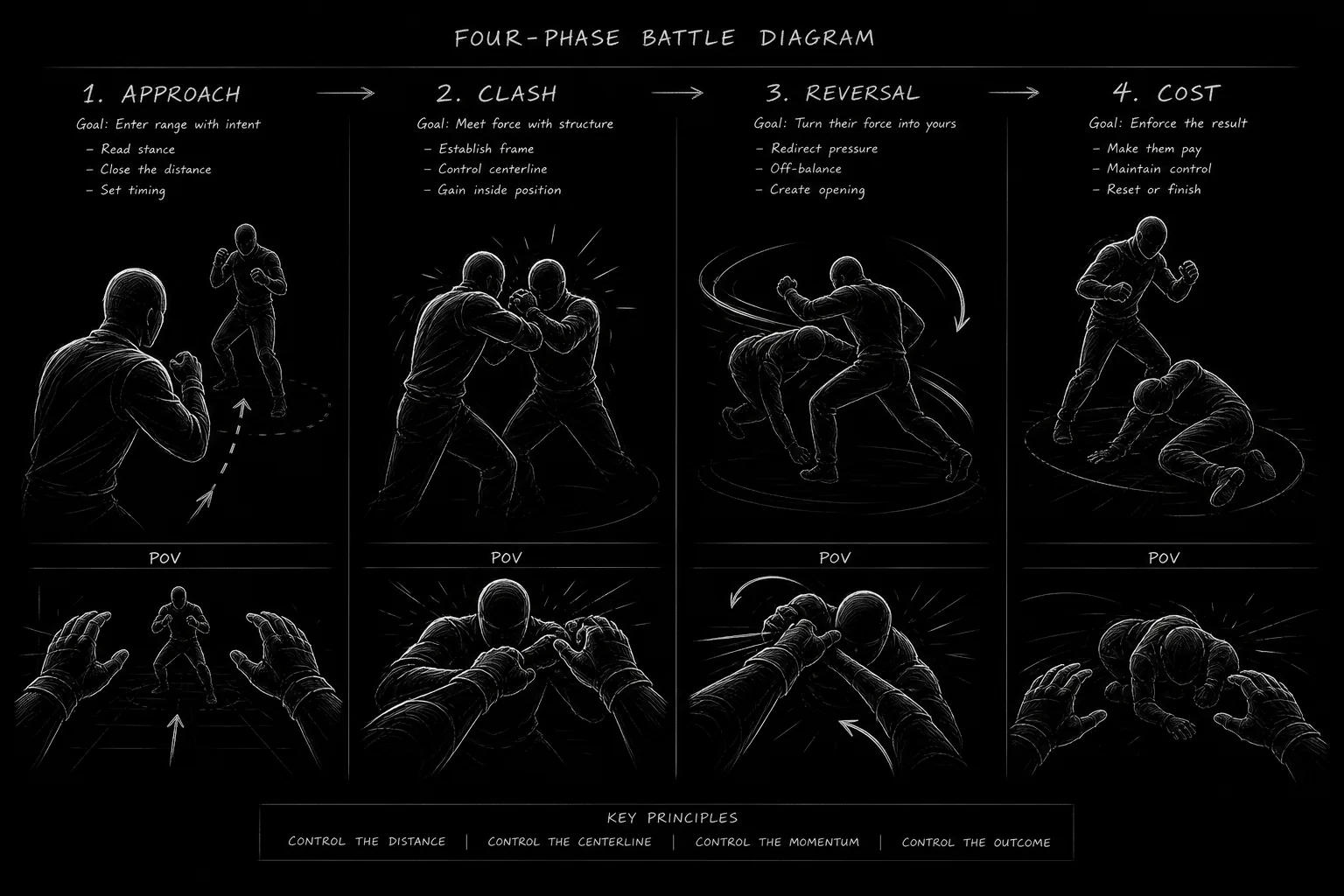
Step 4: Chunk into movements. Movement one: approach. Movement two: first clash. Movement three: reversal. Movement four: cost. Each movement gets an outcome line.
Step 5: Use reported scale sparingly. "Horns along the ridge. Thousands, if the dust tells truth." One line of scale beats a paragraph of troop types.
Step 6: End on human consequence. Injury, death of ally, moral choice, pyrrhic win. The battle resolves a character arc thread, not only a military map.
Operational Section: Formatting, Clarity, and Production Reality
Scene headings at scale. You may use master slug then mini-movements:
EXT. BATTLEFIELD - DAY
Then action blocks with bold movement labels if helpful. Do not create forty separate slug lines for every fifty feet of field unless production truly needs them.
Army vs squad names. Name squads readers must track. Call background conflict "INFANTRY LINES" or "ARCHERS ON THE WALL" without naming every lieutenant.
Weapons and wounds. Be specific enough for stakes, not clinical enough for a manual. One vivid injury beats three generic slashes.
Horses, creatures, vehicles. Treat them as agents with clear behavior. "The cavalry wheels left" tells more than "horses everywhere."
Sound and smoke. Battles are audio chaos. Note pivotal sonic shifts: horn means retreat, silence means dread. See sound in screenplays.
Page budget. A ten-page uninterrupted battle exhausts readers. Break with decisions, reversals, or brief interior beats.
| Scale problem | Reader fix |
|---|---|
| Too many names | Anchor on 2-3 POVs |
| Unclear terrain | One map sentence up front |
| Repetitive blows | Outcome per movement |
| No emotional stake | Tie battle to character goal |
Try it free
Try Screenweaver for free on your script
It is free. Import your existing project, get a clearer view of your outline, and regain control of your story structure in minutes.
Start FreeOutcome and Results: What Controlled Scale Achieves
When formatting and design align:
- Readers feel enormity without losing thread.
- Producers can budget a representational slice of the larger war.
- Editors can imagine rhythmic expansion and contraction of scope.
- Theme lands. War is not abstract; it costs someone we follow.
Test clarity by summarizing the battle aloud in four sentences after reading your draft. If you cannot, simplify geography or POV count.
Run a table read on battle dialogue only. Commanders giving orders should sound distinct and purposeful, not interchangeable.
Relatable Scenario: Hold the Bridge
Your protagonist is not a general. She is a squire ordered to hold a bridge until refugees cross. The army is huge, but your page follows her squad of four. Act the battle through objectives: "Block the first charge. Buy two minutes. Fall back to the second arch." Wide lines arrive as reports: "Cavalry on the ridge." We feel scale without meeting every rider.
When she chooses to destroy the bridge while her friend is still on the far side, the epic becomes personal. Scale serves character. That is the difference between a history lecture and a battle scene.
Movement Checklist Before You Draft
- Can I state the battle objective in one sentence?
- Do I know which three characters I return to?
- Does each movement change their options?
- Is there a human cost beat at the end, not only a tactical win?
If any answer is no, fix structure before adding more soldiers.
Commanders, Soldiers, and Civilians on the Page
Give commanders short orders that reveal strategy: "Hold the ford, not the hill." Give soldiers sensory fragments: "Ash in his teeth. Cannot see the banner." Give civilians one job: hide, run, betray, document. Mixing all three in the same paragraph blurs readability.
When cavalry or artillery arrives, report it through POV: "Horns. Ground tremor. Cavalry entering from the east." The reader feels scale through consequence, not roster.
After the Battle: Transition Beats
Do not end on panorama alone. End on a character action: dropping a sword, carrying a body, refusing an order, burning a flag. Then write a short transition that shows time passing and cost settling. Readers need demobilization emotionally, even if the next scene is hours later in a tent or days later at home.
Weather and visibility are free clarity tools. Fog hides armies until horns sound. Rain muds cavalry charges. Smoke turns the field into rooms within the battlefield, letting you write smaller readable chunks inside the epic.
Why It Matters: Old Way vs New Way
The old way: Writers copied historical accounts into screenplay form. Pages filled with unit names and flanking jargon. Readers quit. Visual effects teams inherited confusion.
The new way: Writers design battles as alternating wide and close grammar with a single strategic spine. Scale is suggested, stakes are personal, geography is taught once and reused.
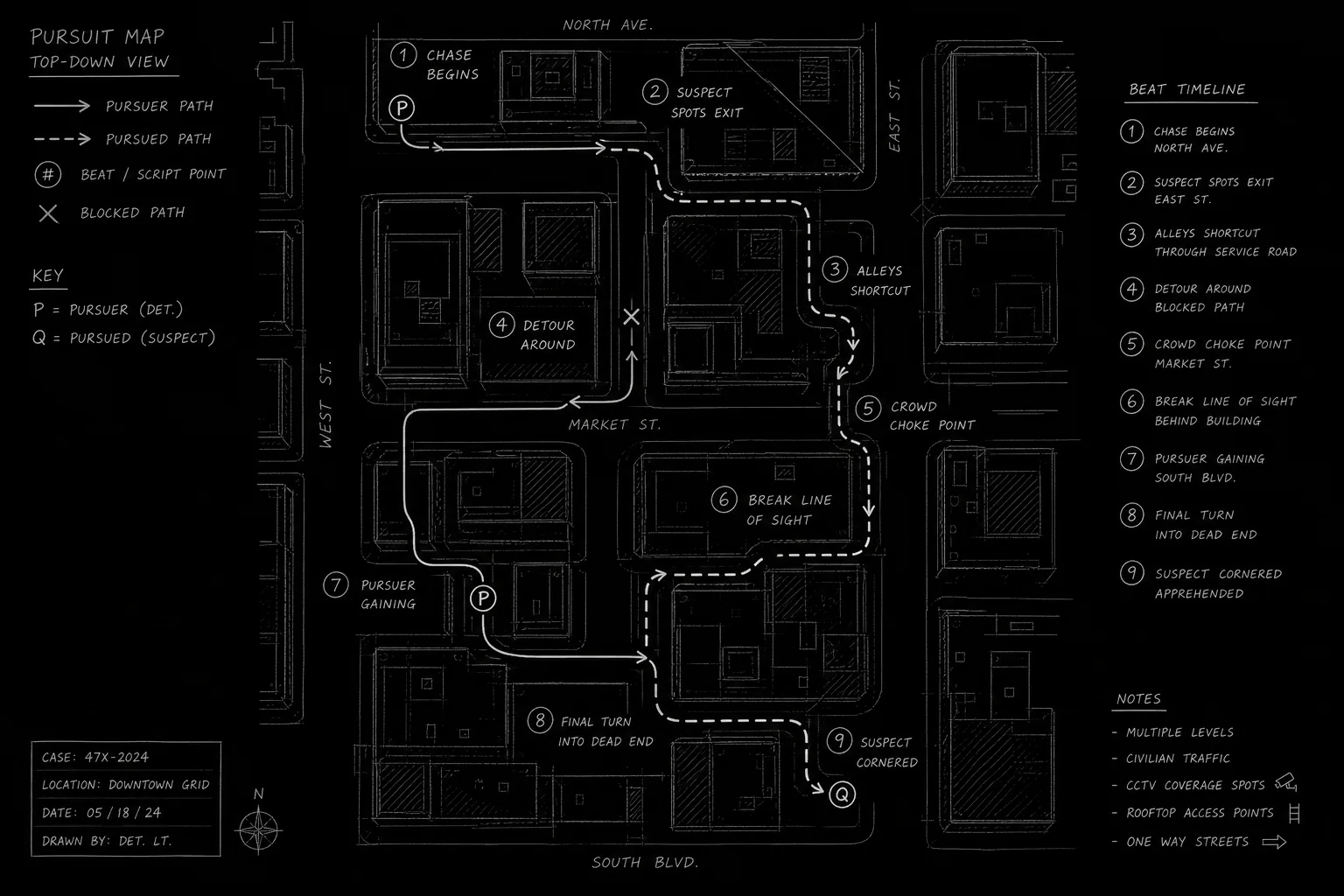
That is the same principle as chase clarity: the audience must always know what matters now, even when the world is huge.
Final CTA and Conclusion
Open your battle sequence. List every named character with a speaking role. If the list exceeds what you can remember without notes, cut or merge.
Draw the field. Mark POV returns. Rewrite until each movement changes the protagonist's options.
Epic scale is a feeling. Clarity is the craft that makes the feeling believable. Write the war small on the page so it can play enormous on screen.
Final Step
Build your next script with Screenweaver
Move from ideas to production-ready pages faster with timeline-native writing and AI-assisted story flow.
Try Screenweaver