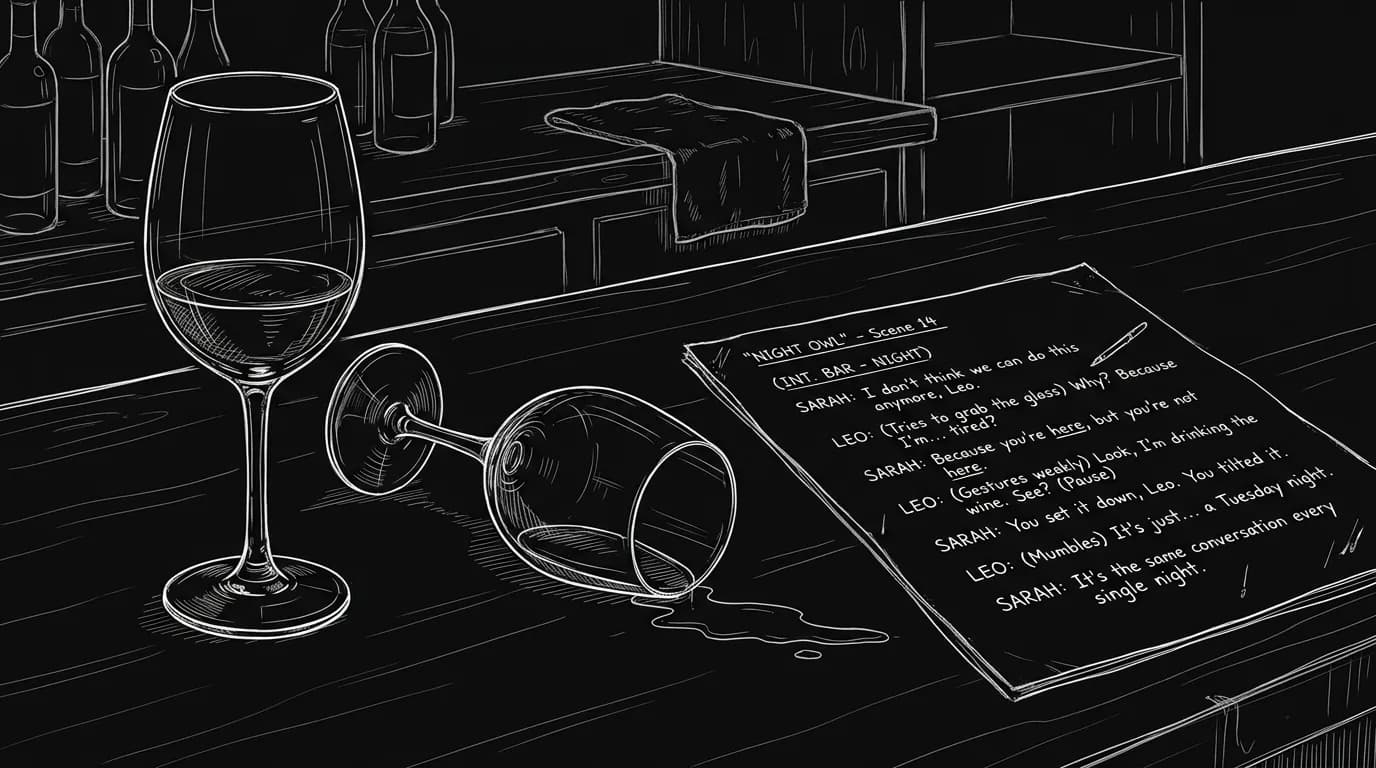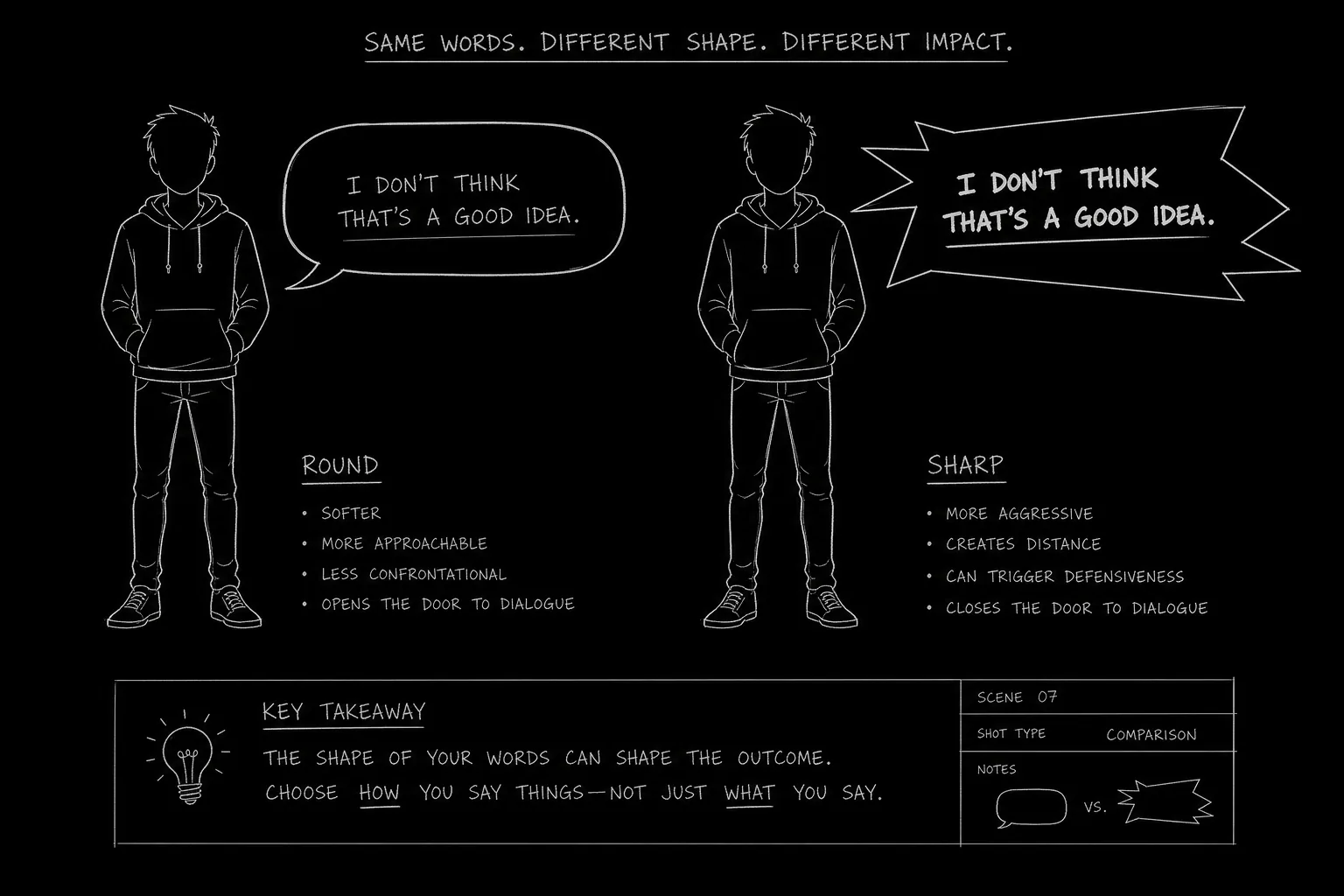

The reader hits page 85 and pauses. Something’s off. The protagonist who opened the script with clipped, defensive one-liners is now delivering paragraph-long speeches. The mentor who never cursed is dropping f-bombs. Nobody named it in the outline. Nobody planned it. It just crept in,scene by scene, draft by draft,until the character in Act Three doesn’t sound like the same person who showed up in Act One. That’s voice drift. And it’s one of the quietest ways a script loses a reader’s trust.
Voice drift isn’t about accent or dialect. It’s about the bundle of habits that make a character sound like themselves: sentence length, rhythm, vocabulary, the way they deflect or attack, the topics they avoid. When those habits slip, the character feels inconsistent. Sometimes the note from a development exec is literal: “Who is this in Act Three?” Often it’s vaguer: “I lost the character” or “The voice flattened out.” This piece is about why voice drift happens, how to catch it before it reaches a reader, and how to fix it. We’ll also look at a practical way to check voice across the script,so you’re not relying on memory alone.
What “Voice” Actually Means on the Page
In life, we recognize people by how they talk. The friend who never finishes a sentence. The colleague who always starts with “So here’s the thing.” The parent who answers questions with questions. On the page, **voice** is the sum of those patterns. It’s word choice: does the character use “kid” or “child,” “gonna” or “going to”? It’s sentence shape: short and punchy, or long and meandering? It’s rhythm: do they interrupt? Do they trail off? Do they answer a question with a question? It’s also what they don’t say. The character who never talks about their past is making a choice. The one who deflects with humor is making another. When that pattern holds, the character feels real. When it breaks for no reason, the reader feels the break.
Voice can evolve,but the evolution has to be motivated. If the character has been through hell by Act Three, maybe they’re quieter. Maybe they’re angrier. That’s arc. What’s not arc is the character suddenly sounding like a different writer took over. The difference is intention. One is “the character changed because the story changed them.” The other is “the character changed because we forgot who they were.”
Voice drift isn’t the character changing. It’s the writer losing the thread. The fix isn’t to freeze the character,it’s to make every line a choice that fits who they are (or who they’ve become for a reason).
Why Voice Drift Happens
Long scripts are written over days or months. You’re not the same person on Tuesday as you were on the Monday when you wrote the opening. Mood shifts. You absorb other voices,another script you’re reading, a show you binged, the last conversation you had. Without a clear record of who the character was at the start, the version you hold in your head slowly replaces the version on the page. The character in scene one was sharp and guarded. By scene twenty you’re writing “your” default,maybe more open, maybe more explanatory,and the character blurs into you.
Another cause: serving the plot. You need the character to deliver information. So they say the thing that explains the twist, and they say it in the most direct way. The line does the job. It also sounds like no one in particular. When exposition drives the line instead of character, voice goes out the window. The same thing happens when you’re rushing. Under deadline, or deep in a rewrite, you stop asking “would she say it like that?” and start asking “did we get the beat in?” The beat gets in. The voice gets generic.
Ensemble scripts add another layer. You’re juggling six characters. By the time you circle back to the protagonist, you’ve been living in someone else’s head for ten pages. The protagonist’s voice can soften or shift because you’ve been writing the mentor, the villain, the comic relief. Without a way to re-anchor,a reminder of how this character talks,you slip. For more on balancing multiple storylines without losing track of who’s who, our guide on writing ensemble cast storylines goes into how to keep every thread distinct.
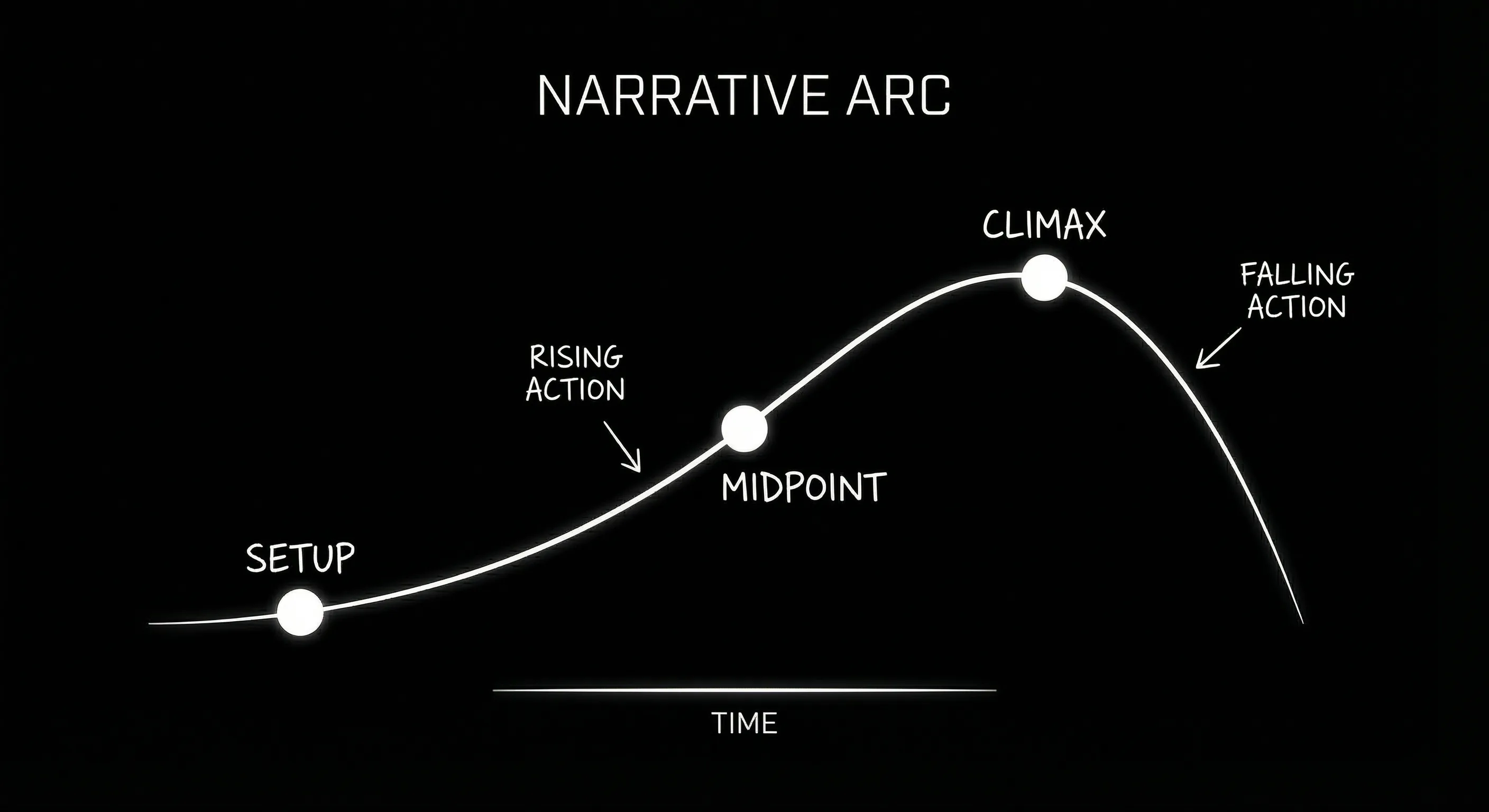
When sentence length and rhythm shift without motivation, the reader feels the drift.
Defining Voice Before You Lose It
The best defense is to lock in the voice when the character is still fresh. Some writers keep a “voice sheet”: a few lines of dialogue that capture the character at their most themselves. Not backstory,actual lines. How they greet someone. How they refuse something. How they lie. When you’re deep in Act Two and the character starts to sound blurry, you read those lines. You don’t copy them. You use them as a tuning fork. Does the line I’m about to write resonate with that?
Another method: give the character a verbal tic or constraint. Not a gimmick,a rule. “She never uses contractions.” “He never says ‘I’m sorry.’” “She answers in one word when she’s uncomfortable.” The constraint gives you a check. If you write “I’m sorry” for that character, you either catch it in the pass or a tool that checks for consistency does. The point isn’t to make every character a tic-machine. It’s to have at least one or two concrete markers so that when the script gets long, you have something to test against.
When Voice Should Change (And When It Shouldn’t)
Characters can change how they talk when the story earns it. The character who started guarded might open up,but we need to see the moments that made them open up. The character who used humor to deflect might drop the humor in the dark night,because they’re too broken to perform. That’s not drift. That’s arc showing up in voice. The key is that the change is visible on the page. The reader should be able to point to the turn. If the character just “sounds different” with no story beat to hang it on, you’ve drifted. If the character’s new way of speaking is the payoff of a beat,the dark night, the betrayal, the moment of choice,then you’re using voice to show change. Our piece on character arcs spells out how internal change maps to structure; voice is one of the ways that change becomes audible.
| Cause | What Shows Up on the Page | Fix |
|---|---|---|
| Writer drift over time | Character starts to sound like your default or like another character | Voice sheet or sample lines; re-read Act 1 before writing later acts |
| Exposition override | Character says what the plot needs in neutral, generic language | Rewrite so information is revealed in character-specific way or action |
| Ensemble bleed | Protagonist sounds like the character you were just writing | Re-anchor with voice sheet; check dialogue in isolation per character |
| Unmotivated “growth” | Voice softens or shifts with no story beat to justify it | Either add the beat that earns the change or revert to consistent voice |
Checking Voice Across the Script
Relying on memory is unreliable. By draft three, you’ve read the script so many times that your brain smooths over the inconsistencies. You stop hearing the character; you hear the story. That’s when a systematic pass helps. One approach: pull every scene where the protagonist speaks and read only their lines, in order. Do they sound like the same person from first line to last? If you have a voice sheet, hold it next to a random page from Act Two or Three. Does that page match?
Tools can extend that idea. If the script is tied to a timeline or beat map, you can run a **Voice Consistency Check** over the whole project. The idea isn’t to rewrite your dialogue for you. It’s to flag sections where the dialogue’s register, sentence length, or vocabulary diverges from earlier in the script. You get a nudge: “This scene reads different from the character’s established voice in Act One.” You decide whether the difference is intentional (arc) or accidental (drift). In ScreenWeaver, the Voice Consistency Check does exactly that,it compares dialogue across the timeline so you can see where a character’s voice might have slipped. You’re still the writer. You’re just not relying on a fading memory of who the character was sixty pages ago.
The goal isn’t to make every character sound the same for 110 pages. It’s to make sure that when they sound different, it’s because the story made them different,not because you forgot who they were.
Voice vs. Exposition: The Overlap
Voice drift often shows up when dialogue is doing double duty: character and exposition. The character has to explain the plan, or reveal the secret, or deliver the theme. So you write the line that delivers the information. The line is clear. It’s also flat. It could be anyone. Fixing that usually means rewriting so the information comes out in a way only this character would say it,or so it comes out in action and subtext instead of a speech. When every line has to sound like the character first and deliver plot second, voice holds. When plot drives the line, voice erodes. For more on keeping dialogue from sliding into exposition, our guide on dialogue that doesn’t sound like exposition goes deep on how to keep meaning without spelling it out.
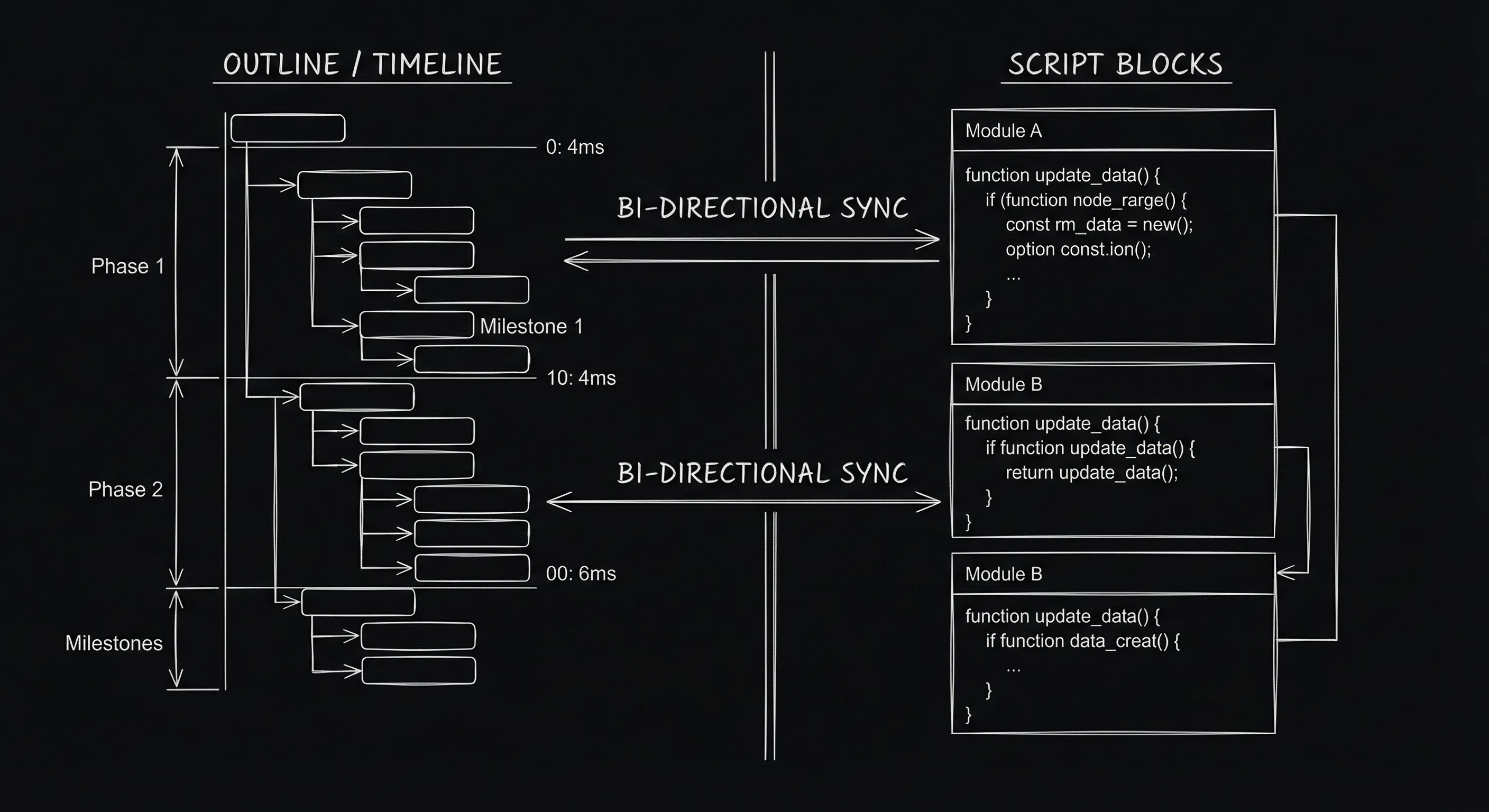
Tracking voice across the timeline: one line holds, the other drifts.
The Takeaway
Voice drift is the character sounding different in Act Three than in Act One for no story-driven reason. It comes from writing over time without a reference, from letting exposition override character, and from juggling so many voices in an ensemble that the main one blurs. You can fight it by defining voice early,voice sheets, sample lines, a constraint or two,and by re-anchoring when you’re deep in the script. You can catch it by reading a character’s lines in isolation or by using a **Voice Consistency Check** that compares dialogue across the timeline and flags divergence. When the character does change how they talk, make sure the story earns it. When they don’t, make sure every line still sounds like them. The reader might not name it. But they’ll feel it when it’s right,and when it’s gone.
Final Step
Build your next script with Screenweaver
Move from ideas to production-ready pages faster with timeline-native writing and AI-assisted story flow.
Try Screenweaver