
The script opens with a character who "has a past." By page ten we get the flashback: the accident, the loss, the thing they don't talk about. The reader has seen it a hundred times. The wound is real, but the way it's written feels borrowed. Trauma as backstory is one of the most powerful engines in drama. It's also one of the easiest to do badly. The goal isn't to avoid trauma. It's to make it organic: something that lives in the character's behavior and choices instead of in a block of exposition or a single, obvious flashback. Here's how to write wounds that feel earned, specific, and free of cliché.
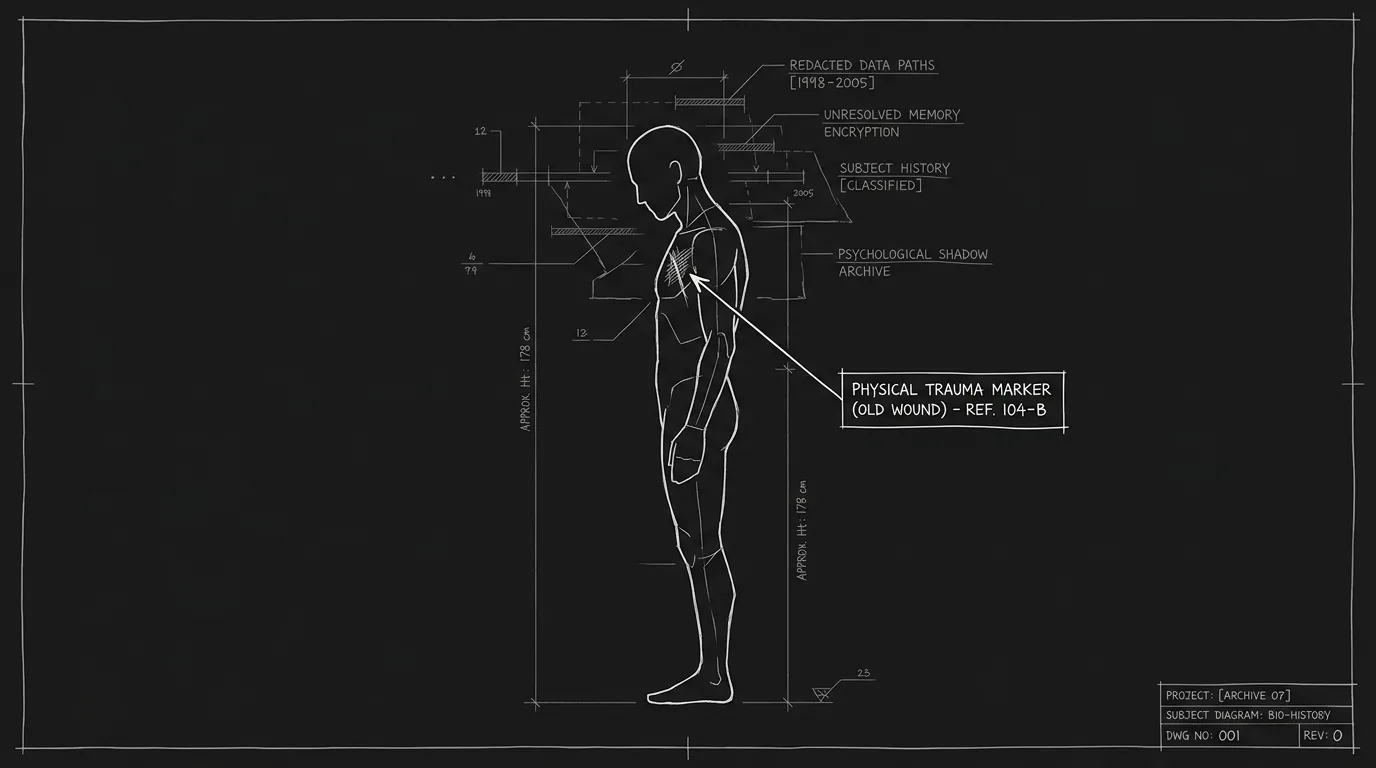
The best trauma backstory never gets a full scene. It gets a detail. A flinch. A line they can't say. The audience fills in the rest.
Think about it this way. In life, people don't announce their damage. They reveal it in what they avoid, what they overdo, and what they can't let themselves want. On the page, that means you show the symptom of the wound long before you explain the cause. A character who was betrayed might never say "I don't trust people." They might show up late to every meeting. They might refuse to make the one phone call that would save the deal. The wound drives behavior. The behavior is what we write. Our guide on character arcs explains how change over the story can turn that wound into growth, or into a trap. This piece is about planting the wound so it doesn't feel like a sticker you slapped on the character.
Why Trauma Backstory So Often Feels False
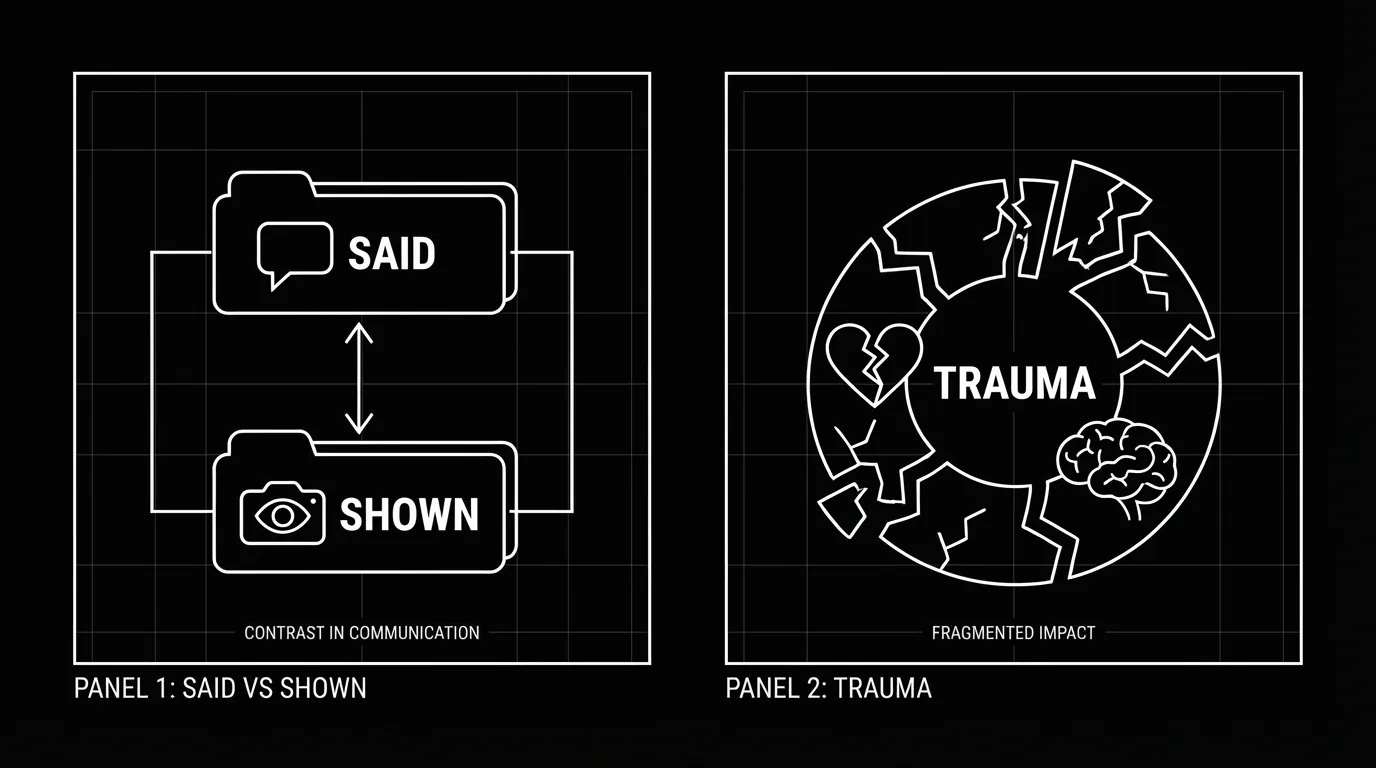
The problem isn't trauma itself. It's the when and the how. Too many scripts do the same thing: introduce a likable character, then pause the story to deliver the tragic backstory in one chunk. A therapist asks. A friend pushes. A drunk confession. The audience gets the information. They don't get the experience. The difference is simple. Information is "ten years ago my brother died and I've never gotten over it." Experience is the character changing the subject every time someone mentions family. It's the way they leave the room when a certain song plays. It's the one relationship they won't risk. When the backstory is delivered as a speech, it becomes data. When it's encoded in action and avoidance, it becomes part of the character's present. That's organic integration.
Another trap: the wound that exists only to justify one moment. The character has to be reluctant to join the mission, so we learn they lost someone on a mission. The character has to be bad at commitment, so we learn they were abandoned as a kid. The trauma is in service of the plot beat, not the other way around. It feels like a receipt. The fix is to let the wound have multiple consequences. It doesn't just make them reluctant once. It shapes how they talk to authority, how they handle good news, how they react when someone else is in danger. The wound is a lens through which they see the world. When you use it that way, the big plot moment (joining the mission, finally committing) feels like the tip of an iceberg. The reader has already felt the iceberg.
Relatable Scenario: The Cop Who "Lost a Partner"
You're writing a detective. You want them to be haunted, driven, a little broken. So you give them the classic: they lost a partner. Maybe in the first act we get a scene where they visit a grave or stare at a photo. The reader has seen that exact beat in a dozen procedurals. It doesn't land. Try this instead. Never show the grave. Never show the photo. Show the detective refusing to ride with a new partner. Show them taking the call alone. Show them freezing for one beat when a colleague says "I've got your back." The wound is in the pattern of behavior. When, later, someone says "You still don't trust anyone, do you?" the line hits because we've already seen the behavior. The backstory can stay in your notes. What's on the page is the present-day cost. For stories where the past is deliberately revealed in pieces, see our guide on flashbacks: when to use them and how to keep pacing alive.
Relatable Scenario: The Parent Who Lost a Child
High stakes. Easy to tip into melodrama. The parent is overprotective of the surviving kid, or they've shut down, or they're chasing the person who did it. All valid. The cliché is the single scene where they "open up" and tell the story, the accident, the hospital, the moment they knew. After that, the character is "explained" and the script moves on. Stronger approach: the loss is never fully told. We get fragments. A date they can't say out loud. A room in the house no one goes into. A reaction when another character mentions a child's name. The parent's want in the story might be unrelated (solve the case, save the town, get the job). But their need, to stop punishing themselves, to forgive, to risk loving again, is tied to the wound. We feel the need through what they do and don't do. We don't need the full story. We need the ongoing cost. Linking want and need is the engine of want vs need; trauma often sits in the need.
Relatable Scenario: The Veteran with PTSD
Another minefield. The veteran who jumps at loud noises, can't sleep, drinks too much. Those are real. They're also shorthand. The reader has seen them so often they barely register. To avoid cliché, get specific. What exact trigger sets them off? A smell? A word? A time of day? What do they do instead of "having a moment", do they leave, do they shut down, do they get angry at the wrong person? And what do they want that the wound is blocking? Maybe they want to reconnect with their family. The wound isn't "PTSD." It's "I can't sit at a crowded dinner table without seeing the room differently." One specific image, one specific avoidance. That's enough. The rest is behavior.
The Trench Warfare Section: What Beginners Get Wrong
Dumping the backstory in one scene. The friend who says "Tell me what happened." The therapist who asks. The drunk confession. It's efficient. It's also dead on the page. The audience gets information; they don't get the character. Fix: Remove the dump. Replace it with two or three small moments scattered across the script where the character's behavior implies the wound. A refusal. A change of subject. A reaction that doesn't match the situation. Let the audience infer. If you must have one "revelation" scene, make it late and make it partial. The character says one line. The rest stays unsaid.
Making the wound the only interesting thing about the character. Some scripts give the character a tragic past and nothing else. No humor, no skill, no contradiction. They're "the one with the wound." Fix: Give them a full life. A job they're good at. A opinion about something unrelated. A flaw that has nothing to do with the trauma. The wound is one layer. It shouldn't be the whole person.
Using the same wounds everyone uses. Dead spouse. Dead child. Abusive parent. Betrayal by a partner. These are real. They're also overused in the same way. Fix: Find a wound that's specific to your story world. Maybe they didn't lose someone, they caused the loss. Maybe the betrayal wasn't romantic; it was professional or institutional. Maybe the wound isn't a single event but a pattern (never being believed, always being the one left behind). Specificity breaks the sense of "I've read this before."
Letting the wound explain everything. Once you've established a trauma, it's tempting to hang every quirk on it. They're guarded because of the past. They work too hard because of the past. They can't say I love you because of the past. After a while the audience feels like the character has no agency. Fix: Let some traits be unrelated. Let the character have a mix of reasons for what they do. The wound is a major driver. It's not the only one.
Revealing the wound too early. If we know the full backstory by page 20, there's nothing left to discover. The character becomes a solved puzzle. Fix: Dole out the past in fragments. Let the audience piece it together. Or never give the full story, only the behavior that suggests it. Mystery about the past keeps the present tense.
Try it free
Try Screenweaver for free on your script
It is free. Import your existing project, get a clearer view of your outline, and regain control of your story structure in minutes.
Start FreeTrauma Integration: Before and After
| Approach | Before (cliché) | After (organic) |
|---|---|---|
| Revelation | One scene: "I need to tell you what happened." | Scattered beats: character avoids, deflects, or reacts in a way that implies the past |
| Specificity | "They have PTSD" / "They lost someone" | One specific trigger, one specific avoidance, one specific cost in the present |
| Function | Wound justifies one plot beat (e.g. reluctance) | Wound shapes multiple behaviors: trust, risk, authority, intimacy |
| Audience role | Told the backstory | Infer the backstory from behavior; may never hear the full story |
Use this as a checklist. If your trauma backstory leans left, shift it right. You don't need to remove the wound. You need to make it live in the present.
Step-by-Step: Weaving Trauma Into the Present
First: Write down the wound in one sentence. Not for the script, for you. What happened? Then ask: What would someone who went through that do? Not "feel." Do. Avoid? Overwork? Refuse to get close? Pick two or three concrete behaviors. Second: Look at your first act. Where can you show one of those behaviors without explaining why? A character suggests a plan; your character says no without a good reason. Someone touches their shoulder; they flinch. Third: In the middle of the script, add one moment where the wound is almost named, a line that could mean something else, or a detail (a date, a place) that only makes sense later. Fourth: If you have a "revelation" scene, cut it in half. Give one piece of information. Let the rest stay implied. Fifth: Read the script and remove every line that explains the wound to the audience. If the behavior is clear, you don't need the explanation. If the behavior isn't clear, add behavior instead of dialogue.
When a Flashback Is the Right Choice
Sometimes the past is so central that a flashback earns its place. The rule: the flashback should change the present. Not just inform it. The audience should learn something that reframes what they've already seen. So the flashback comes after we've been wondering why the character does X. When we see the past, we think, "So that's why." And the present scene gains new weight. If the flashback could be replaced by a line of dialogue ("Ten years ago I…") without losing meaning, don't use a flashback. Use behavior and one sharp line. Our guide on flashbacks and pacing goes deeper on when and how to cut to the past without killing momentum.
The Perspective
Trauma as backstory works when it's lived, not announced. Show the symptom. Dole out the cause in fragments, or not at all. Let the audience infer. Give the character a full life so the wound is one layer, not the whole person. And make the wound specific, one trigger, one avoidance, one ongoing cost, so it doesn't blend into every other "damaged" character they've seen. The goal isn't to avoid writing pain. It's to write it in a way that feels true. That happens when the wound drives behavior on the page, and the backstory stays where it belongs: partly in your notes, partly in the reader's imagination.
Final Step
Build your next script with Screenweaver
Move from ideas to production-ready pages faster with timeline-native writing and AI-assisted story flow.
Try Screenweaver