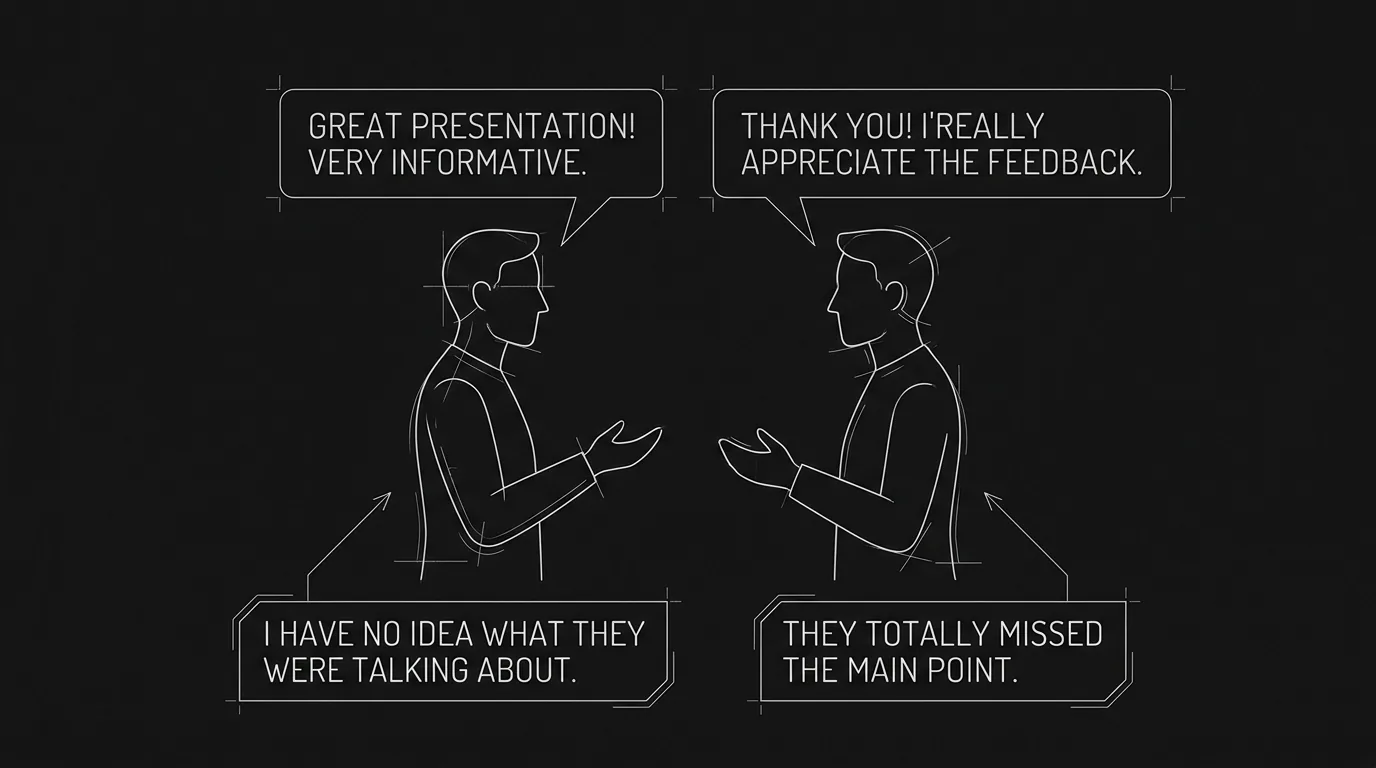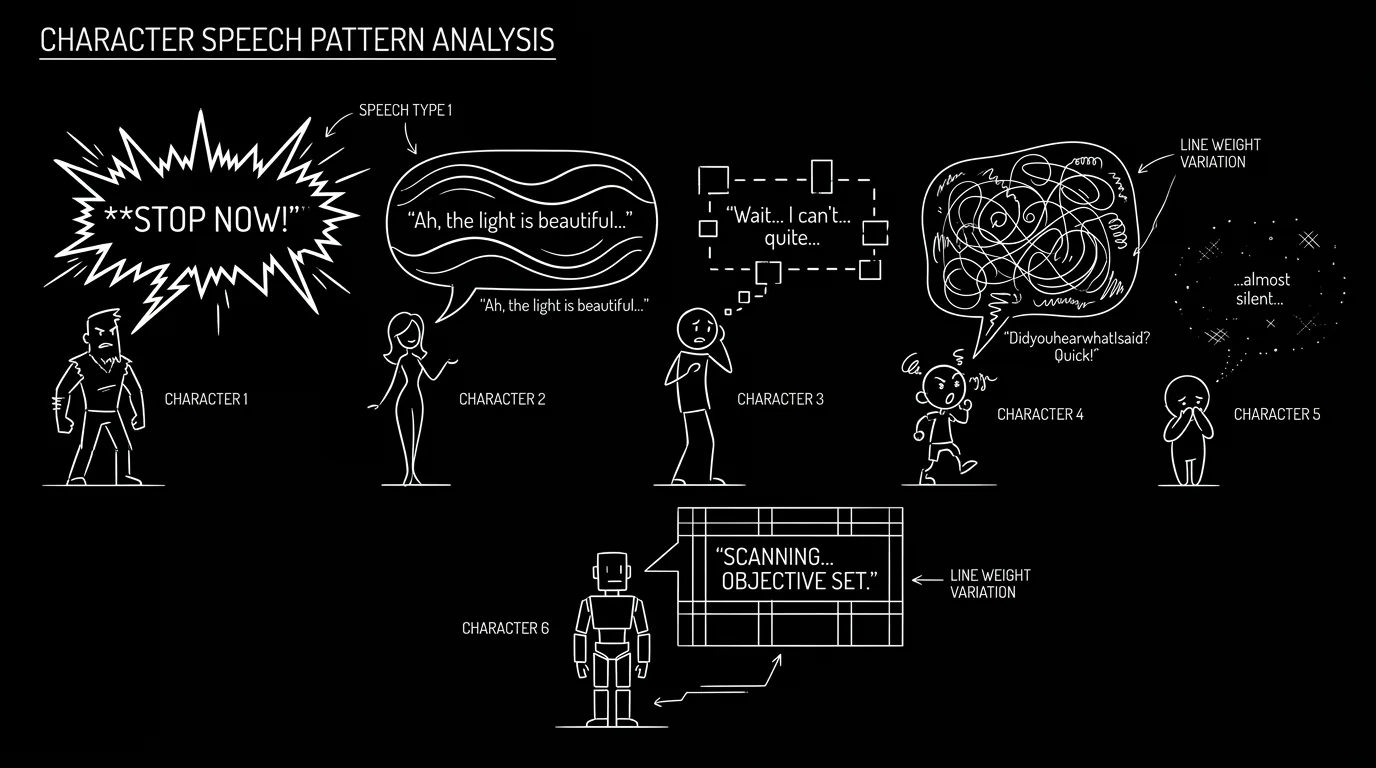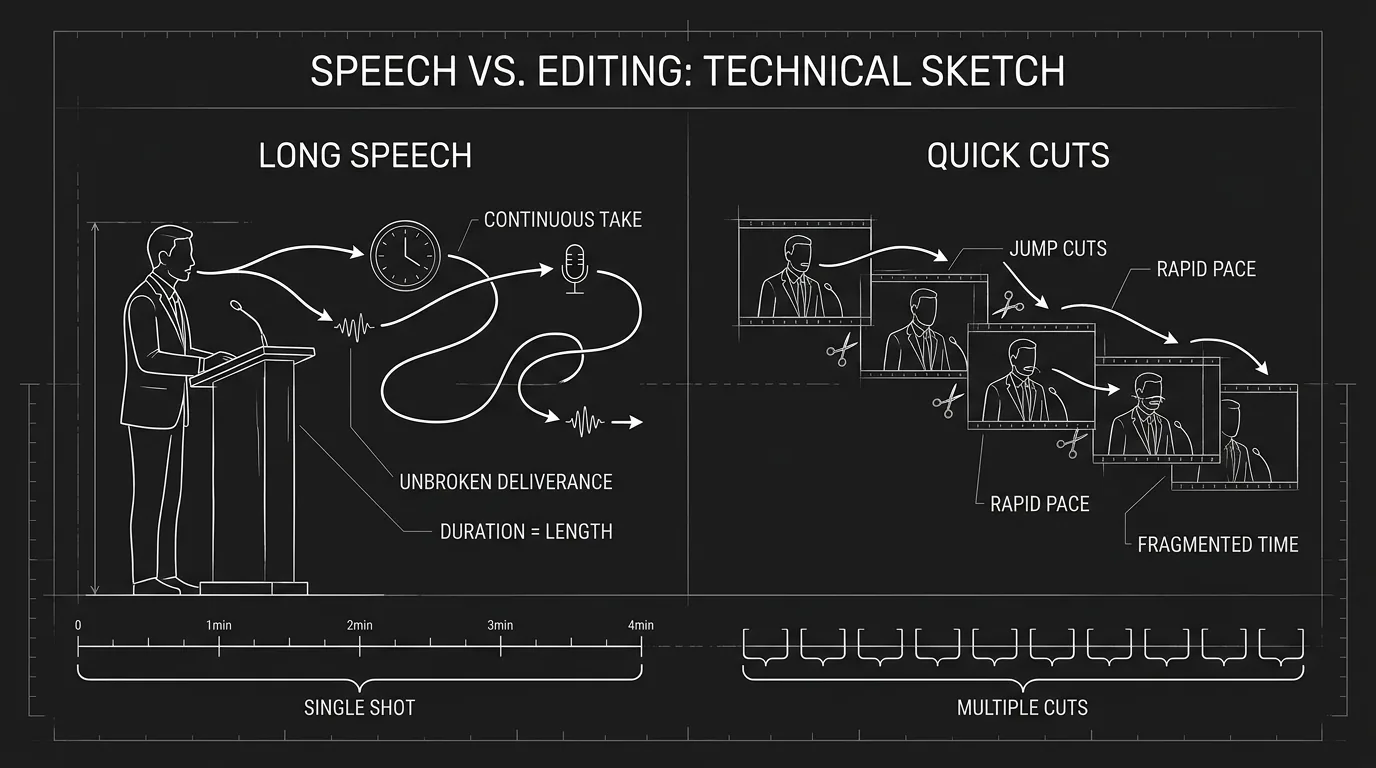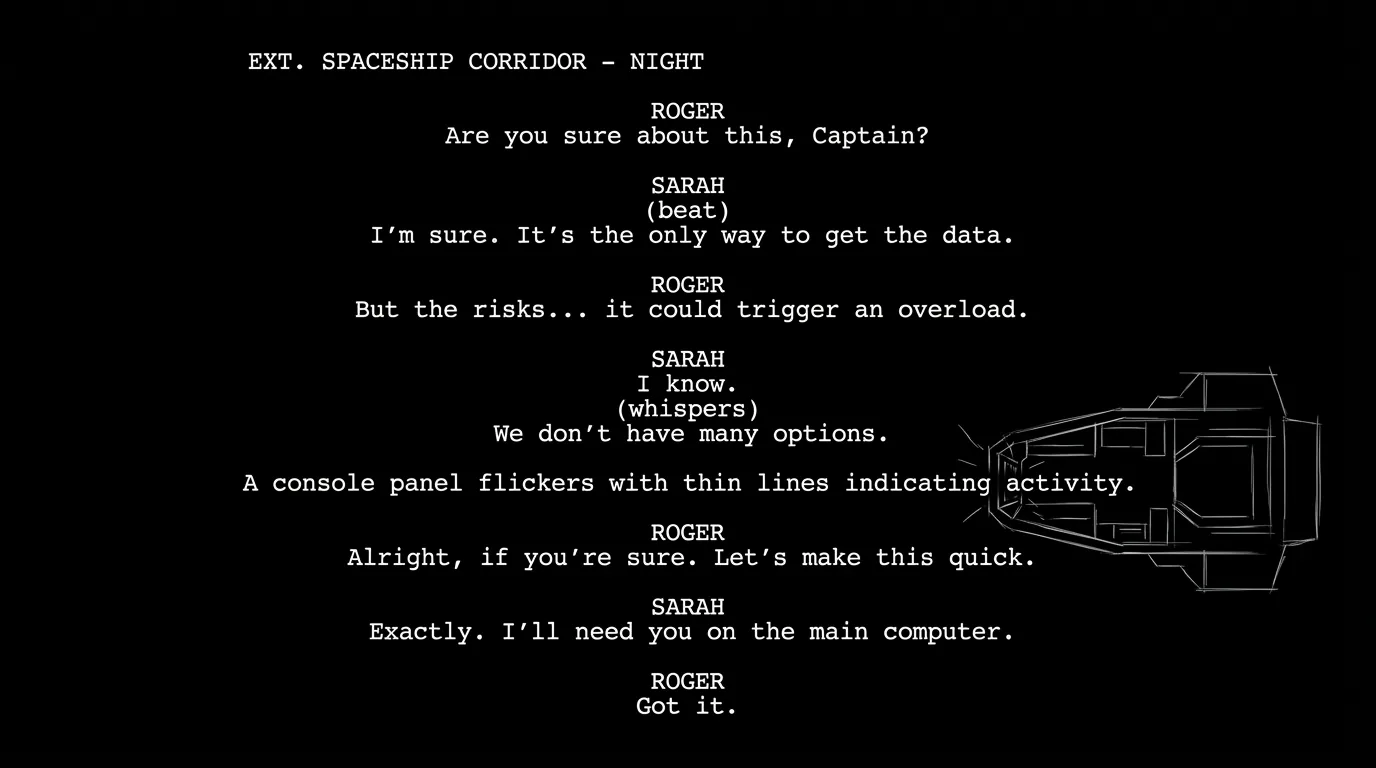

You've written the line. Then you add "(angrily)" or "(pause)" or "(through tears)." Then another. By the end of the scene the dialogue is wrapped in stage directions. You're directing from the page. The actor's job is to make choices. Your job is to give them something to play, not to play it for them. When you over-specify tone, gesture, and pause in parentheses, you shrink the actor's room and the reader's imagination. Here's how to leave space for the performance without losing your intent.
The best script gives the actor the line and the situation. The actor brings the how. If you've already decided the how, there's nothing left to discover.
Think about it this way. In the room, the actor will try things. They'll find a reading you didn't expect. They might be angrier than you wrote. Softer. Funnier. Your job is to make sure the story and the character are clear. Their job is to fill in the performance. When you write "(sarcastically)" you're doing their job. When you write a line that can only be read one way, you might be right, or you might be closing the door on something better. The goal is parsimony: use parentheticals when they're necessary for clarity (e.g. who they're talking to, or a technical note). Avoid them when they're directing the read. Our guide on distinct voices helps actors by giving them syntax to hold onto; that's writing for performance without directing it. This piece is about what to leave out.
When Parentheticals Help (And When They Don't)
Help: Clarifying to whom the line is addressed when more than one person is in the scene. "(To Sarah.)" "(To the crowd.)" That's logistics. Help: A technical note that affects the line, (V.O.), (O.S.), (on phone), (reading from card). The actor and the director need to know. Help: When the meaning of the line is ambiguous without a nudge. Rare. Example: "I love it." Could be sincere or sarcastic. If the story needs it to be sarcastic and the context doesn't make that clear, "(sarcastic)" might be the least bad option. Better: rewrite the line or the context so the meaning is clear without the note.
Don't help: Tone that the actor can find. "(Angrily.)" "(Sadly.)" "(With a smile.)" The situation and the line usually imply the tone. Let the actor choose. Don't help: Pauses and beats that the actor and director will find in rehearsal. "(Pause.)" "(Long beat.)" Unless it's a structural silence (e.g. the scene turns on the pause), leave it out. Don't help: Physical business that blocks the actor. "(She picks up the cup, then puts it down.)" If it's not story-critical, cut it. If it is, one action line is enough, you don't need to choreograph every gesture in parentheses. For formatting silence and action, see writing silence: action beats belong in action lines, not in parentheticals under dialogue.
Relatable Scenario: The Argument Where Every Line Has a Direction
She's mad. He's defensive. You've written "(coldly)," "(raising his voice)," "(through clenched teeth)" under half the lines. The page is cluttered. The actor reads the line and the parenthetical and thinks "you're not letting me find it." Fix: Strip the tone parentheticals. Leave the dialogue and the situation. If the scene is clearly an argument, "angrily" is redundant. If a specific line could be read two ways and the story needs one, fix the line or the context, "I can't believe you" after he's just lied can land without "(disbelief)." For overlapping arguments, see dual dialogue: format can show escalation without directing every read.
Relatable Scenario: The Emotional Reveal With Too Many Beats
The character is about to say the big thing. You've written "(pause)," "(takes a breath)," "(quietly)," "(almost whispering)." You're directing the moment beat by beat. Fix: One action line before or after the line can set the moment: "She doesn't answer for a long moment." Or "When she finally speaks, her voice is barely there." Then give the line. No parenthetical. The actor and director will find the pause and the volume. For when silence does the work, see writing silence.
Relatable Scenario: The Comedy Line That's Over-Specified
The line is funny. You've added "(wryly)" or "(deadpan)" so the reader gets it. The actor might find a different read that's funnier. Fix: If the line is funny on the page, it doesn't need a tone note. If it's only funny when read a certain way, consider sharpening the line so the read is clear, or leave it and let the actor try. Comedy often benefits from room. For comedy structure, see rule of three and comedy timing.
The Trench Warfare Section: What Beginners Get Wrong
Defaulting to a parenthetical for every shift. Every time the tone might change, you add a note. The page becomes a script for a single performance. Fix: Use parentheticals for clarification (who, technical, rare meaning). For tone, trust the line and the situation. Add one only when you've tried and the read is still ambiguous.
Writing action in parentheticals. "(Looks away.)" "(Sits down.)" That's action. It belongs in an action line. Fix: Move physical business to action lines. Keep parentheticals under dialogue for what applies to the way the line is delivered (and use those sparingly).
Directing the reader instead of the actor. Sometimes writers add tone so the reader gets it, they're worried the exec won't hear the sarcasm. Fix: If the exec can't get it from context, the line or the scene might need work. Don't use parentheticals as a crutch for unclear writing.
Over-specifying in the first draft. You're finding the scene and you're writing every beat. Fine for discovery. Fix: In the next pass, strip parentheticals. Keep only what's necessary. Read the scene without them. If something is lost, fix the dialogue or the action, not the parenthetical.
Forgetting that different actors will make different choices. Your mental performance is one version. The cast will have others. Fix: Give them the text and the situation. Let the "how" be their job. You keep control of the "what" and the "when."
Try it free
Try Screenweaver for free on your script
It is free. Import your existing project, get a clearer view of your outline, and regain control of your story structure in minutes.
Start FreeParentheticals: Use vs. Avoid
| Use | Example | Why |
|---|---|---|
| To whom | (To Sarah.) | Clarifies addressee in a group |
| Technical | (V.O.) / (on phone) | Affects how the line is recorded or played |
| Rare meaning | (sarcastic) only when context doesn't work | Last resort when line is ambiguous |
| Avoid | (angrily), (pause), (sadly) | Actor and director will find it |
| Avoid | (she picks up the cup) | Action → action line |
When in doubt, cut the parenthetical. If the scene breaks, add back only what's needed.
Step-by-Step: Cutting Direction from the Page
First: Take a scene. Highlight every parenthetical under dialogue. Second: For each, ask: Is this who, technical, or meaning-critical? If yes, keep it. If it's tone, pause, or gesture, cut it. Third: Read the scene without the cut parentheticals. Does the story still read? If a beat is lost, fix it with an action line or a dialogue change, not a parenthetical. Fourth: For key moments where you're afraid the read will be wrong, try rewriting the line so the intended read is clear. "I can't believe you" after a lie might need no note. "Oh, great. Perfect." might need no "(sarcastic)" if the situation is clear. Fifth: Leave at most one or two parentheticals per scene, and only when necessary. For action and silence, see writing silence. For dialogue clarity, see subtext.
Action Lines vs. Parentheticals
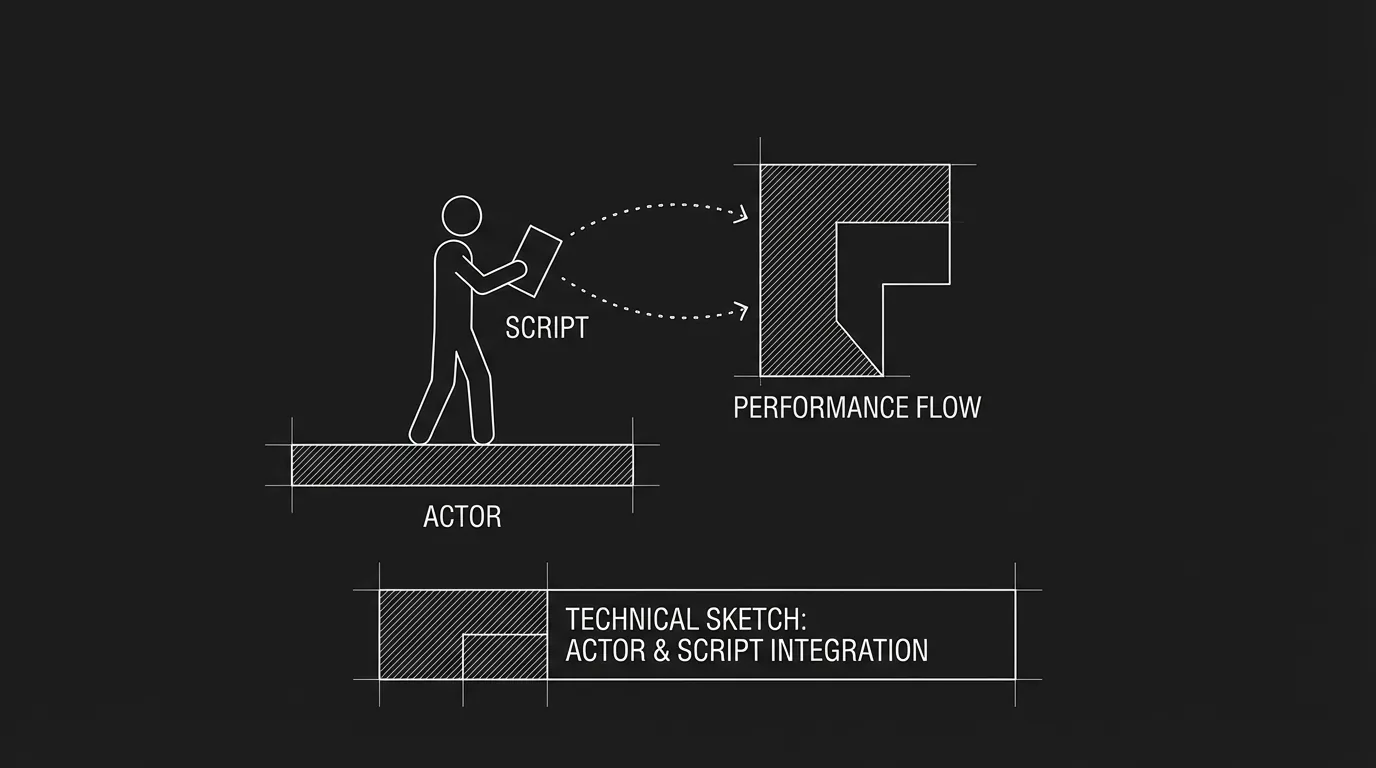
Action lines are where you describe what happens, movement, silence, reaction. Parentheticals under dialogue are for how the line is delivered when that's not obvious. So: "She crosses to the window. Looks out. When she speaks, she doesn't turn." That's action. Then the line. No "(without turning)." The action line already said it. For formatting non-verbal beats, see writing silence.
The Perspective
Write the line and the situation. Let the actor find the tone, the pause, the gesture. Use parentheticals for who's being addressed, for technical notes, and only rarely for meaning. Cut tone and pause directions. Put action in action lines. When you direct from the page, you shrink the performance. When you leave room, the actor has something to play, and the script stays clean. So give them the what. Let them bring the how.
Final Step
Build your next script with Screenweaver
Move from ideas to production-ready pages faster with timeline-native writing and AI-assisted story flow.
Try Screenweaver