
By the end of the script, the character isn’t the same. Or maybe they are,and that’s the point. Character arc is the technical name for what changes (or doesn’t) between page one and the final image. It’s not a vague “they grew.” It’s a trajectory. Up, down, or flat. Each has a purpose. Each has a structure. And each shapes how the audience feels when they leave the theatre. This piece breaks down positive, negative, and flat arcs so you can choose the right one for your protagonist,and so you can see, on the page, whether you’re actually delivering it.
Writers throw around “arc” without always defining it. Development notes say “we need a stronger arc” or “the character doesn’t change.” But change isn’t the only valid outcome. Some of the most memorable characters hold the line. Some get worse. The key is to know what you’re building. We’ll look at what each arc type is, when to use it, and how to track it so that the character’s journey is visible in the script,not just in your head. We’ll also touch on how tools that visualize arc progress can help you spot when the character’s trajectory drifts or when the climax doesn’t pay off the arc you set up.
What a Character Arc Actually Is
A character arc is the change (or lack of change) in the character’s **belief**, **behavior**, or **emotional state** from the start of the story to the end. It’s usually tied to a **lie** they believe or a **flaw** they have. In a positive arc, they move from the lie toward the truth,or from the flaw toward growth. In a negative arc, they move deeper into the lie or the flaw. In a flat arc, they don’t change; instead, they change the world (or the people around them). The arc isn’t the plot. The plot is what happens. The arc is what the character does with what happens,internally and in their choices.
Why does it matter? Because the audience invests in the character. They want to see a journey. That journey can be upward (they become better), downward (they become worse), or steady (they stay true and affect others). If you promise one and deliver another,or if you never commit to an arc at all,the ending can feel unearned or vague. When the arc is clear, the ending lands. The character’s final choice or final state feels like the result of everything that came before. For more on how structure supports that journey, our guide on the three-act structure shows where the major turns typically fall and how they align with the character’s internal shift.
The arc isn’t “something good or bad happens.” It’s “the character’s relationship to the truth (or to their flaw) shifts,or deliberately doesn’t,from beginning to end.”
The Positive Arc (Change for the Better)
In a **positive arc**, the character starts with a false belief or a flaw. By the end, they’ve been tested by the story and they’ve moved toward the truth or toward growth. They might still be imperfect. But they’re not who they were. The classic example is the protagonist who believes “I can only rely on myself” and, through connection and loss, learns to trust. Or the one who believes “winning is everything” and learns that some things matter more. The story puts them in situations that challenge the lie. They resist. They suffer. Eventually they have a moment of recognition,often near the climax or in the dark night,and they make a choice that reflects the new belief. The ending shows them acting from that new place.
The positive arc is the most common in mainstream film and TV. Audiences like to see characters grow. The risk is making the change too easy. If the character gives up the lie in act one, there’s no arc,just a short hop. The story has to earn the change. The character has to cling to the old way until the cost is too high. The **dark night of the soul**,the emotional low before the final push,is often where they hit bottom and either break through or break. For more on that beat, our piece on writing the dark night of the soul explains how to make the low point feel real so the rise feels earned.
Structurally, the positive arc needs a clear **before** and **after**. We need to see the character act from the lie early (so we know what they believe). We need to see them tested in the middle. We need to see the moment of choice,do they hold the lie or let it go?,and we need to see the aftermath. If any of those is missing or fuzzy, the arc feels incomplete. Readers will say “I didn’t feel the change” or “the ending felt unearned.” Often what’s wrong is that the character’s starting state wasn’t established, or the climax didn’t require them to make a choice that demonstrated the new belief.
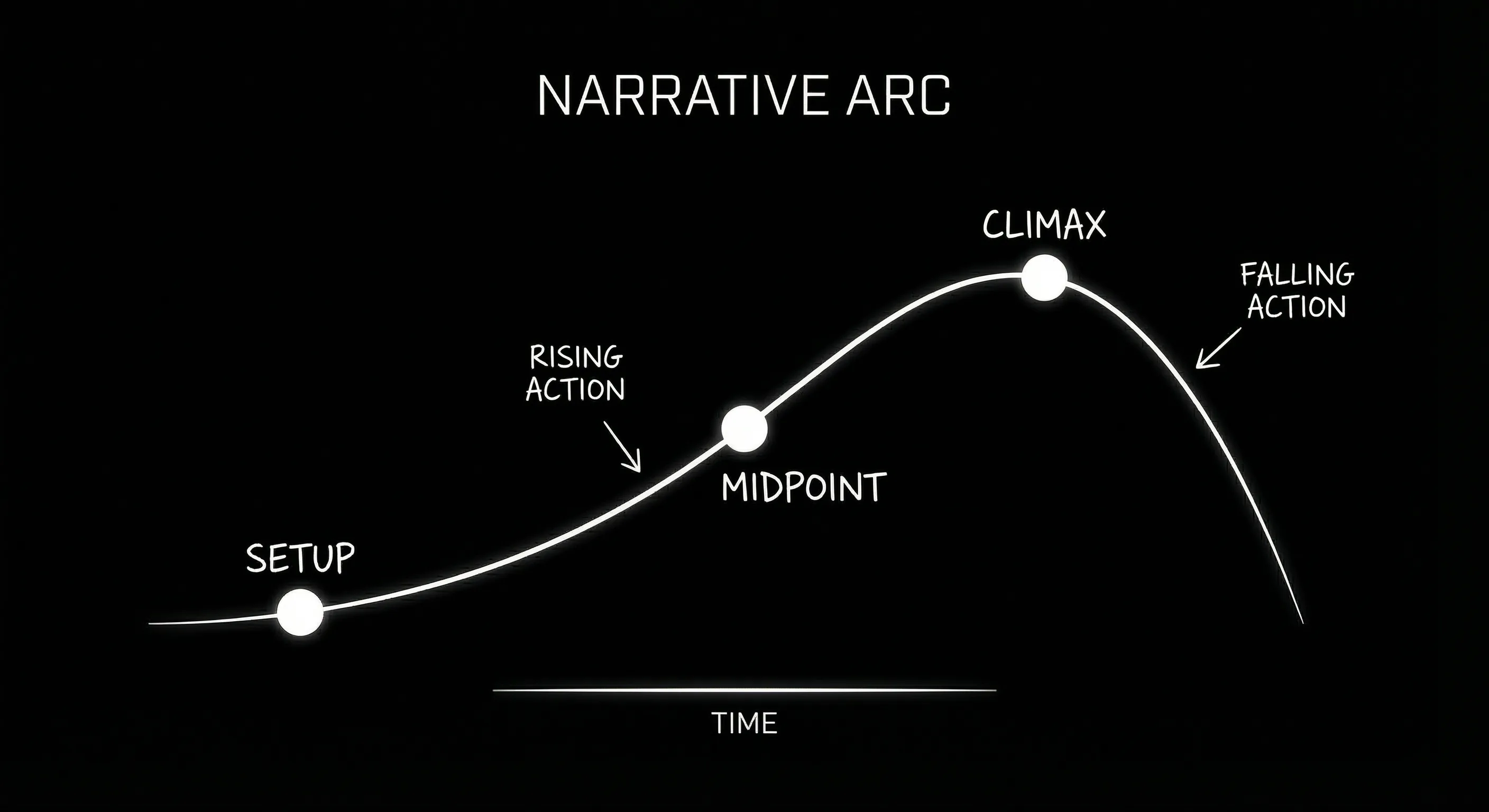
The positive arc: a rise from false belief to truth (or from flaw to growth).
The Negative Arc (Change for the Worse)
In a **negative arc**, the character moves deeper into the lie or the flaw. They don’t learn. They double down. They might have moments of doubt, but they reject the truth. By the end, they’re worse than when they started. Tragedies are built on negative arcs. So are many villain origins and cautionary tales. The audience watches someone with potential,or with a chance,choose the wrong path. The ending hurts because we saw the fork and we saw them take it. The negative arc isn’t “bad things happen to the character.” It’s “the character’s choices (or refusal to change) lead them to a worse state.” They had agency. They used it wrong.
Writing a negative arc is harder than it looks. The character still has to be compelling. We have to understand why they make the choices they make. We might even sympathize with the wound that drives them. But we watch them use that wound as an excuse or a weapon. The **antagonist** in many stories has a negative arc,they refuse the call to change and are destroyed (or destroy others). When the protagonist has a negative arc, the story is usually a tragedy. We’re not meant to leave feeling uplifted. We’re meant to feel the weight of what was lost. For more on how to build an antagonist who has their own journey (often a negative one), see our guide on building complex villains.
The negative arc also needs a clear before and after. We need to see the character when they still had a chance,when the truth was offered or the better path was visible. We need to see them refuse or turn away. We need to see the cost. The ending should feel inevitable: given who they are and what they chose, this is where they had to land. If the downfall feels random or imposed, the arc doesn’t land. If it feels like the result of a series of choices that flowed from their flaw, it does.
| Arc Type | Direction | Character | Common Use |
|---|---|---|---|
| Positive | Lie → Truth / Flaw → Growth | Changes for the better | Most mainstream heroes; redemption stories |
| Negative | Deeper into lie or flaw | Refuses change; gets worse | Tragedies; villain arcs; cautionary tales |
| Flat | No internal change | Stays true; changes the world or others | Iconic heroes (e.g. James Bond); parables |
The Flat Arc (Steadfast)
In a **flat arc**, the character doesn’t change. They already hold the truth. The story tests that truth,and the character holds the line. The change happens in the world or in the people around them. The protagonist is the catalyst. They walk in, they act from their belief, and by the end the community (or the other character, or the situation) is different. They are not. That’s not a flaw in the writing. It’s a design choice. Some of the most iconic characters have flat arcs. They’re reliable. We don’t watch them to see them learn. We watch them to see them win (or lose) without bending. The emotional satisfaction comes from the external victory or loss, and from the consistency of the character.
The flat arc is easy to confuse with “no arc.” The difference is intention. If you didn’t mean for the character to stay the same, and the reader says “they didn’t change,” that’s a note. If you meant for them to stay the same,to be the rock the story breaks against,then the flat arc is working. The story has to give them something to do. Stakes. Obstacles. A world that needs changing. The character’s job is to act from the truth and let the world respond. The **midpoint** and **climax** still matter: they’re where the character’s steadfastness is tested most. For more on how the midpoint raises stakes without requiring the character to change, see our guide on mastering the midpoint.
A flat arc isn’t “we forgot to give them an arc.” It’s “the character is the constant; the world (or the people in it) is the variable.”
Seeing the Arc on the Page
In the drafting and revision process, it’s easy to lose track of where the character is. You write scene by scene. The arc is a throughline that runs across dozens of pages. If you don’t have a way to see it, you might drift. The character might change too early. They might never quite change. The climax might not reflect the arc you thought you were writing. One way to fix that is to map the arc explicitly. Where does the character start (belief/behavior)? Where do they end? What are the key beats in between,the moments that push them toward or away from change?
Tools that visualize arc progress can make this concrete. When the arc is a **progress bar** or a **curve** tied to the script, you can see at a glance whether the character’s trajectory matches the arc type you chose. In ScreenWeaver, the character arc view lets you track the protagonist’s progress across the timeline. You can see where they are at the start, at the midpoint, in the dark night, and at the climax. If the bar doesn’t move when it should (positive arc), or if it moves the wrong way (negative arc when you wanted positive), you spot it. You’re not relying on memory. You’re looking at the same story object,the script and the map,and checking that the internal journey lines up with the structure. That alignment is what makes the ending feel earned.
Mixing Arc Types in an Ensemble
In stories with multiple protagonists or a strong B-plot, different characters can have different arcs. The hero might have a positive arc. The ally might have a flat arc (steadfast support). The antagonist might have a negative arc. That’s not a problem. The problem is when the main character’s arc is unclear because you’re trying to serve too many journeys at once. Usually one character carries the primary arc. The others support, mirror, or contrast. If you’re not sure whose arc is primary, ask: whose change (or steadfastness) would make the story feel complete? That’s your throughline. The others can be simpler,or they can be negative or flat by design.
The Climax as Arc Payoff
The climax is where the character’s arc pays off. In a positive arc, they make a choice that only the “new” version of them would make. In a negative arc, they make the choice that seals their fate. In a flat arc, they hold the line when it costs the most. If the climax could happen without the arc,if the character could have made the same choice on page 20,the arc wasn’t necessary. The best climaxes feel inevitable because of who the character has become (or refused to become) over the course of the story. So when you’re revising, check: does the final choice or final state reflect the arc? If not, either adjust the climax or strengthen the arc so the climax is the natural end of the trajectory.
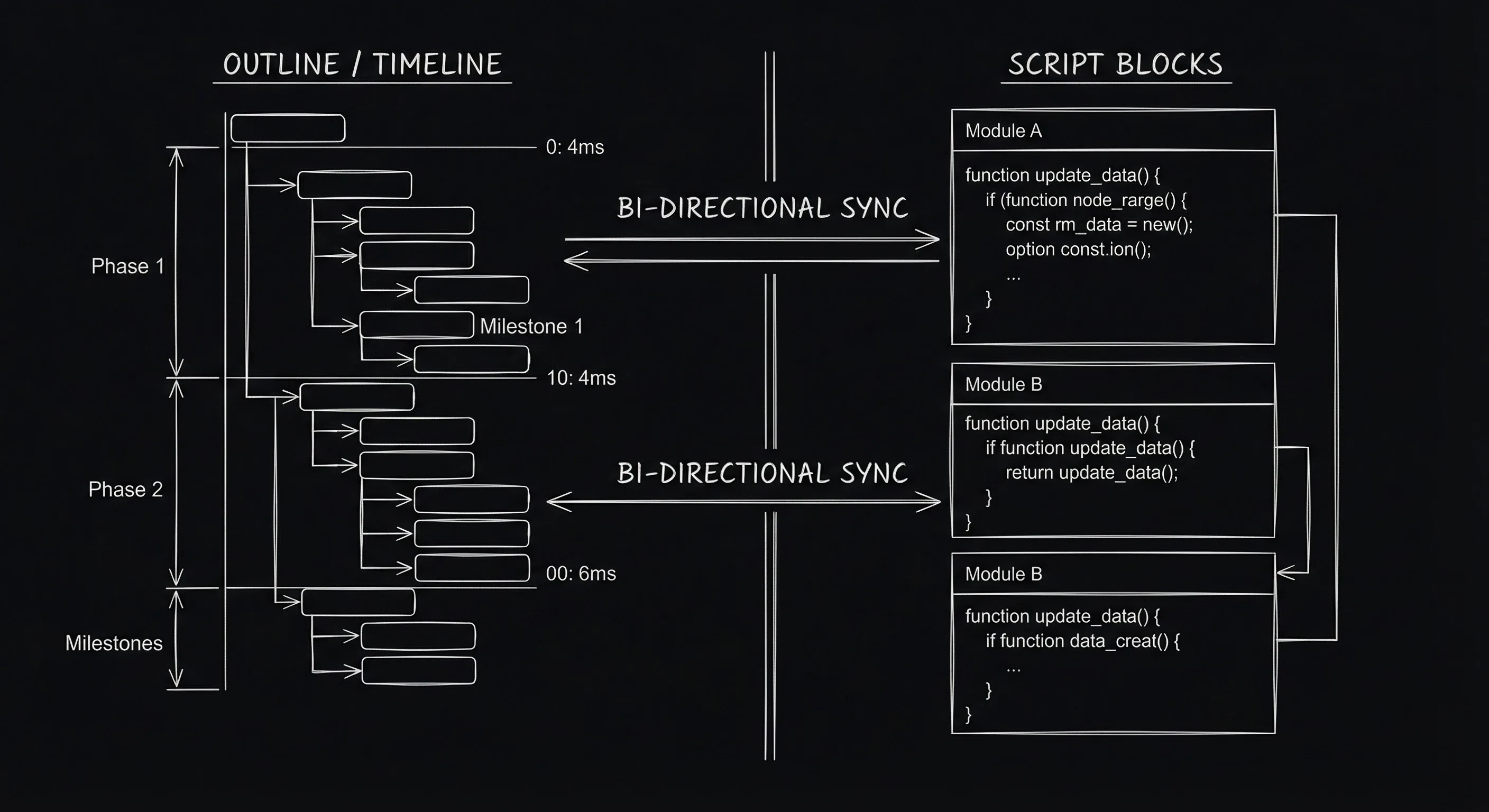
Visualizing the arc: positive, negative, and flat, with progress along the story.
The Takeaway
Character arc is the change (or lack of change) in the character’s belief or behavior from start to end. **Positive arc**: they move from lie to truth, or from flaw to growth. **Negative arc**: they double down on the lie or the flaw and end worse. **Flat arc**: they don’t change; they change the world or the people around them. Choose the arc type that fits your story. Establish the character’s starting state. Build the beats that push them along the trajectory. Pay off the arc in the climax. Use a visual,a progress bar or a curve on the timeline,to see whether the character’s journey is actually on the page. When the arc is clear and consistent, the ending lands. When it’s fuzzy or unearned, the reader feels it. Get the arc right, and the rest of the script has something to hang on.
Final Step
Build your next script with Screenweaver
Move from ideas to production-ready pages faster with timeline-native writing and AI-assisted story flow.
Try Screenweaver