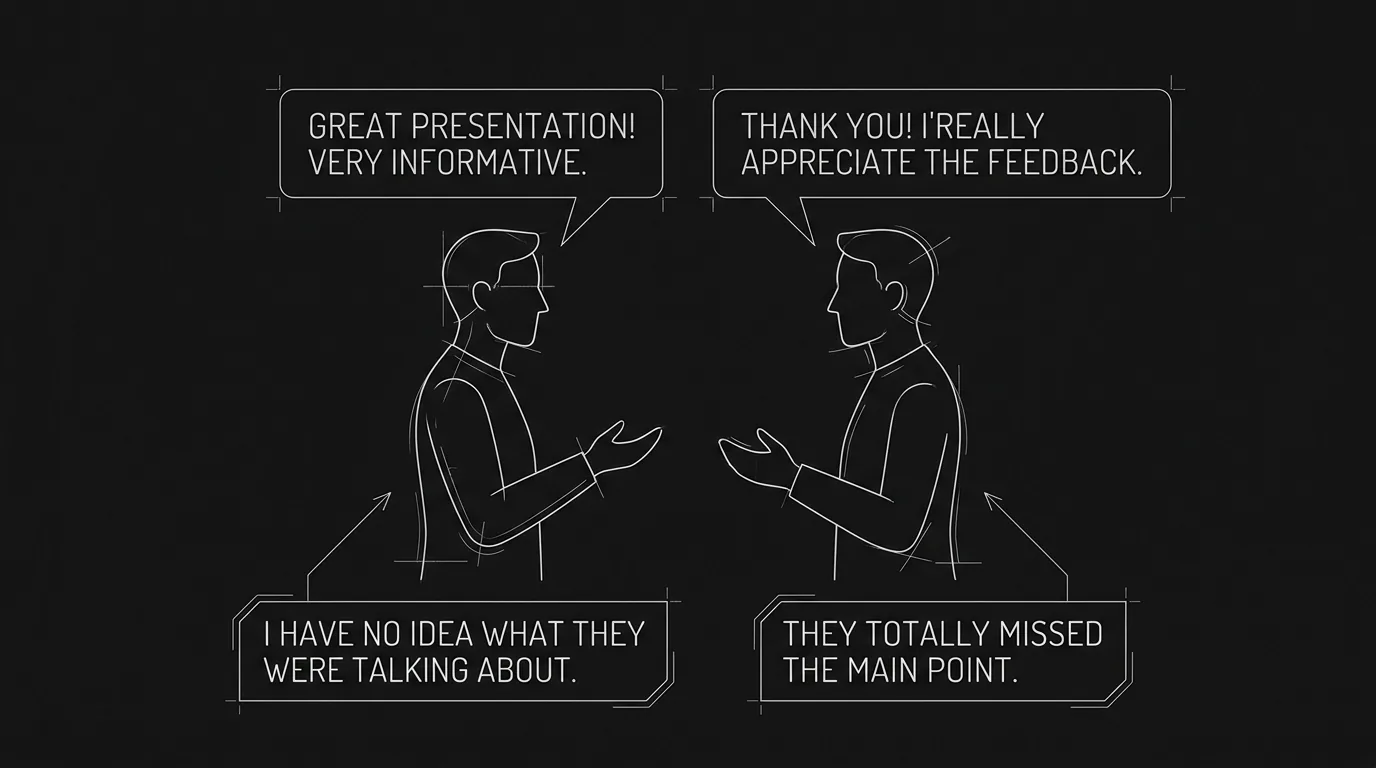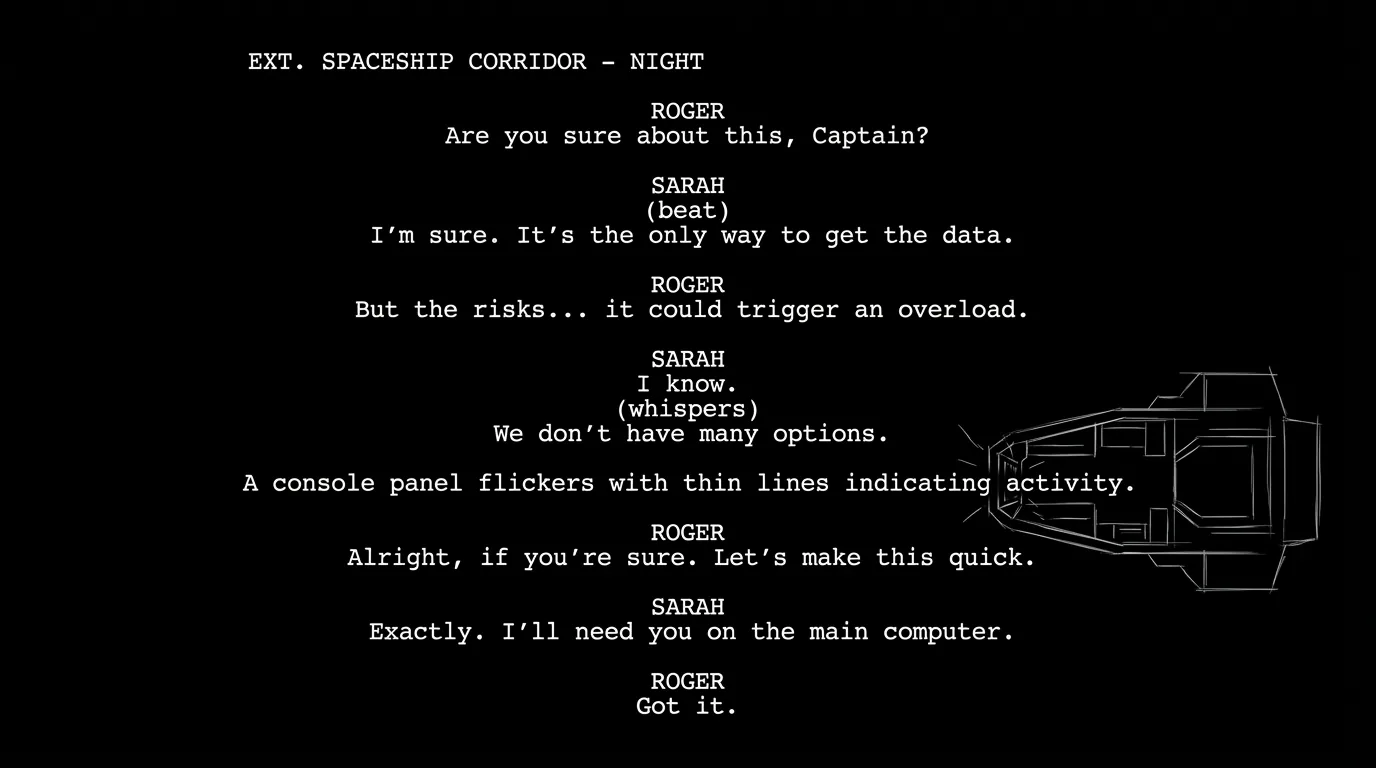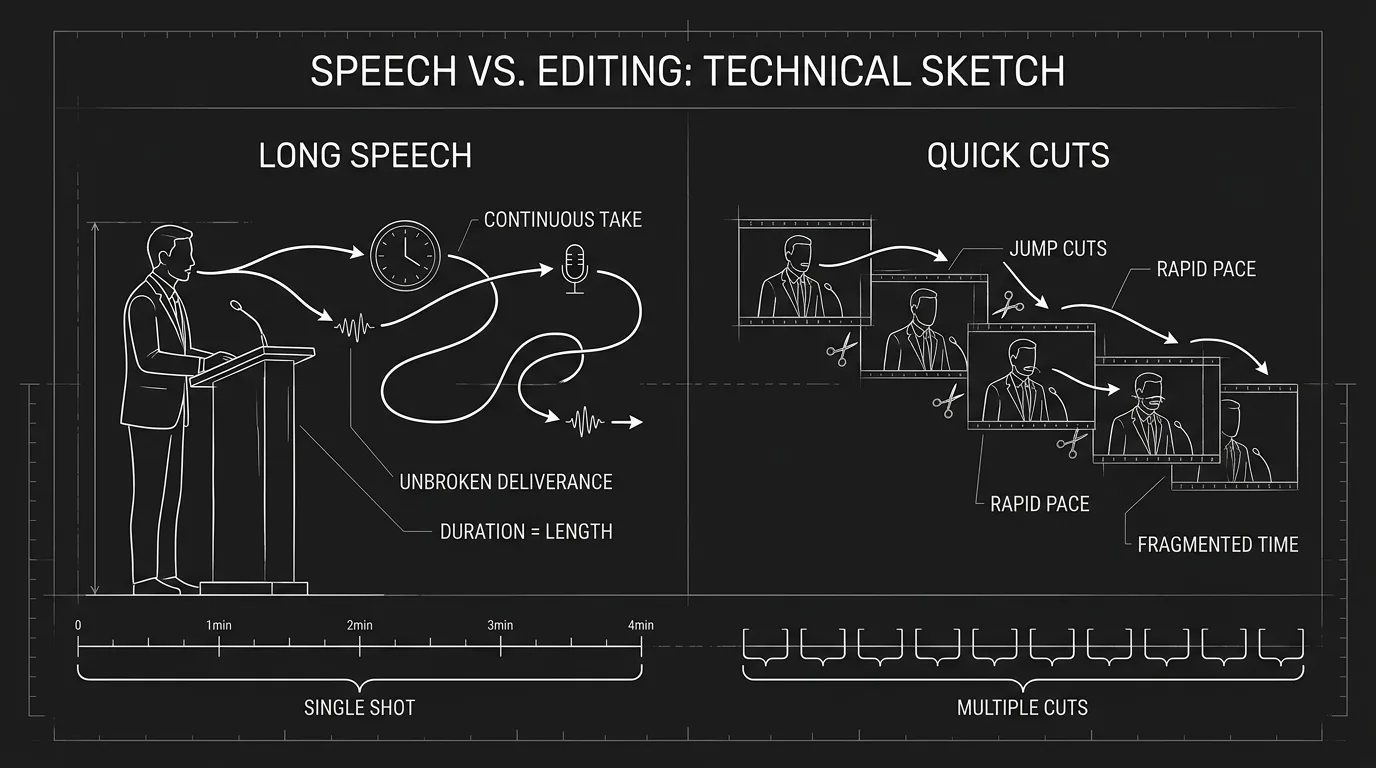

You strip the character names from the dialogue. You read the lines out loud. Can you tell who's speaking? If every voice sounds the same, same sentence length, same rhythm, same vocabulary, your ensemble is blurring. Distinct voices aren't about accent or quirk. They're about syntax: how each character constructs a thought, what they avoid, what they repeat. The blind read test is the fastest way to see if you've built that. Here's how to run it and how to fix the voices that fail.
If you can't tell who's talking without the name, the reader won't either. And the reader has a hundred other scripts to open.
Think about it this way. In life we recognize people by how they talk. The friend who never finishes a sentence. The boss who speaks in bullet points. The parent who asks questions that aren't really questions. On the page, that recognition has to happen without the face. The syntax does the work. Short sentences vs long. Questions vs statements. Formal vs broken. When each character has a recognizable pattern, the dialogue does double duty: it advances the scene and it reminds us who we're with. Our guide on keeping characters consistent tackles voice drift across acts; this piece is about making each voice different enough to pass the blind read. For ensemble balance, see ensemble casts.
Why the Blind Read Test Matters
Readers and execs skim. They don't always look at the character name before the line. If the dialogue could belong to anyone, the page feels generic. When the voices are distinct, the reader hears the cast. They don't have to work to remember who's who. The script feels written, not filled in. The blind read test is simple: take a scene. Remove or cover the character names. Read the dialogue in order. If you can assign each line to the right character without peeking, the voices are doing their job. If you can't, if two characters could swap lines and nothing would change, you've got work to do. The test doesn't care about story. It cares about differentiation. One character might speak in fragments. Another in long, qualified sentences. Another in questions. Another in commands. The variety is the point.
Another benefit: distinct voices reduce dialogue attribution fatigue. When every line sounds the same, you need "John says" and "Mary says" constantly. When the voices are distinct, the reader often knows who's talking from the shape of the line. You can drop a few character cues and the scene still reads clear. That keeps the page clean and the pace up.
Relatable Scenario: The Writers' Room Script Where Everyone's the Same
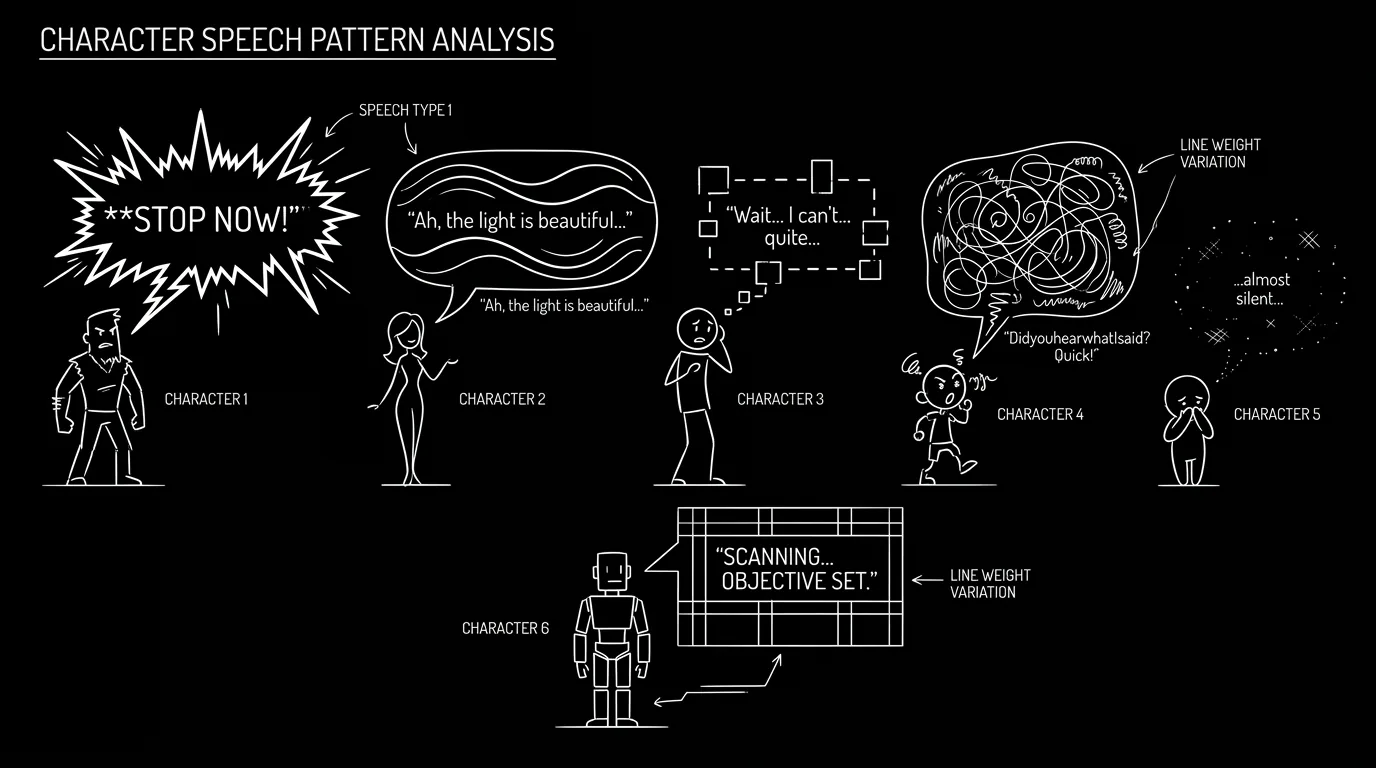
You've got a show with five regulars. In the draft, they all crack jokes the same way. They all use the same level of slang. They all react with the same rhythm, setup, then punch. In the blind read, you can't tell the cynical one from the hopeful one. Fix: Assign each character one syntactic habit. Character A never uses a sentence longer than ten words. Character B always qualifies, "I mean," "kind of," "I guess." Character C asks questions. Character D states. Character E interrupts. You're not changing what they say. You're changing how they say it. Run the blind read again. The lines should land in the right mouth. For more on giving actors room to play, see writing for actors: distinct syntax gives them something to hold onto without you directing the performance.
Relatable Scenario: The Duo Where the Lead and Sidekick Sound Alike
Two characters. Same sense of humor. Same vocabulary. Same sentence structure. The sidekick exists to support the lead, but on the page they're interchangeable. Fix: Give the sidekick a contrasting voice. If the lead is terse, the sidekick might ramble. If the lead uses big words, the sidekick might simplify or get it wrong. If the lead asks questions, the sidekick might answer in stories. The contrast makes both voices clearer. For foil design, see designing character foils: voice is one way to foil.
Relatable Scenario: The Period Piece Where Everyone Sounds "Old"
You're writing 1920s or 1940s. Every character uses the same period-appropriate phrasing. The dialogue feels researched but flat. Fix: Period is the baseline. Within that, each character still needs a distinct syntax. One might be formal and long-winded. One might be clipped and modern-feeling for the era. One might use slang; another might avoid it. The era gives you the pool of words. The character gives you the pattern. For dialect and readability, see dialect and slang: the same principle, differentiate within the rules.
The Trench Warfare Section: What Beginners Get Wrong
Confusing voice with catchphrases. "She always says 'literally.'" "He says 'you know' a lot." That's one word. It's not syntax. Fix: Build a pattern. Does she speak in short bursts or long flows? Does he ask or tell? Does she start with "I think" or jump to the point? The pattern is what survives the blind read. Catchphrases can be part of it, but they're not the whole voice.
Making every character sound "writerly." Everyone is clever. Everyone has a metaphor. Everyone speaks in complete, elegant sentences. Fix: Let some characters be plain. Let some be messy. Let some be inarticulate. Variety makes the articulate ones stand out and makes the page feel real.
Only differentiating the lead. The protagonist has a voice. The rest are functional. Fix: Run the blind read on scenes with two or three characters. Every speaking part in that scene should be identifiable from the lines alone. If the scene has five people, all five need a recognizable pattern.
Using the same rhythm for conflict. When two characters argue, they might fall into the same rhythm, back and forth, same length lines. Fix: Even in conflict, keep one character's habit. Maybe one asks and one states. Maybe one builds and one cuts. The argument is more dynamic when the voices don't merge.
Forgetting to re-test after rewrites. You passed the blind read in draft two. You've rewritten half the scenes. Fix: Run the test again on the rewritten scenes. Voice drift happens when you're focused on plot. The blind read catches it.
Try it free
Try Screenweaver for free on your script
It is free. Import your existing project, get a clearer view of your outline, and regain control of your story structure in minutes.
Start FreeVoice Differentiation: A Practical Table
| Element | Character A | Character B | Character C |
|---|---|---|---|
| Sentence length | Short. Fragments. | Long, qualified. | Medium, direct. |
| Questions vs statements | Asks. | States. | Both, but leads with one. |
| Openings | "I think..." | "Look,..." | (No opener; jumps in.) |
| Formality | Colloquial. | Formal or technical. | Mixed. |
| Rhythm | Staccato. | Flowing. | Uneven (nervous or thoughtful). |
Pick one or two elements per character. You don't need five different traits for everyone. You need enough that the blind read works.
Step-by-Step: Running the Blind Read and Fixing Voices
First: Pick a scene with at least two characters. Copy the dialogue into a new doc. Remove all character names. Second: Read the dialogue in order, out loud if you can. After each line, guess who said it. Third: Check against the original. Where did you get it wrong? Those lines could belong to more than one character, they're not distinct. Fourth: For each character in the scene, write one syntactic rule. "A speaks in short sentences." "B always qualifies." "C asks questions." Fifth: Rewrite the lines that failed the test. Apply the rule. Don't change the meaning, change the shape. Sixth: Re-run the blind read. Repeat until you can assign every line. For keeping that voice consistent across the script, see voice consistency. For ensemble balance, see ensemble casts.
Voice and Cast Size
The bigger the cast, the harder it is to keep every voice distinct. You don't need ten completely different syntaxes. You need groups that differ. The lead might have one voice. The antagonist another. The comic relief another. Within a group (e.g. two cops), you still want a way to tell them apart, one terse, one verbose. For large casts, see ensemble casts: voice differentiation is part of balancing screen time and clarity.
The Perspective
The blind read test is the standard: can you tell who's talking without the name? Distinct voices come from syntax, sentence length, question vs statement, rhythm, formality, not just catchphrases. Give each character one or two habits. Run the test. Fix the lines that fail. When the reader can hear the cast without looking at the names, the script has done its job. So strip the names. Read. And fix what blurs.
Final Step
Build your next script with Screenweaver
Move from ideas to production-ready pages faster with timeline-native writing and AI-assisted story flow.
Try Screenweaver