
Your protagonist has a goal. So does your antagonist. But when a reader puts down the script and can’t say why either of them wants what they want, you’ve got a problem. Motivation isn’t a line of dialogue. It’s the engine under the hood. The Enneagram, a system of nine personality types, each with a core fear and a core desire, gives you a vocabulary for that engine. Not as a box to stuff characters into, but as a way to ask the right questions before you write a single scene. Here’s how to use it without turning your cast into types.
The Enneagram doesn’t tell you who your character is. It tells you what they’re running from and what they’re running toward. That’s the stuff that moves plot.
Think about it this way. In the old days, you might have built a character from the outside in: job, look, one quirk. The Enneagram pushes you to start from the inside. What does this person fear most? What do they believe they need to be safe or worthy? Once you know that, their choices in the script stop being random. They become consistent, even when they’re surprising. A character who fears being worthless will make different choices than one who fears being controlled. Same situation, different story. That’s the power of typing with intention. Our guide on character arcs pairs well: the Enneagram gives you the starting point; the arc is the journey from that fixation toward growth or disintegration.
The Nine Types in One Paragraph Each
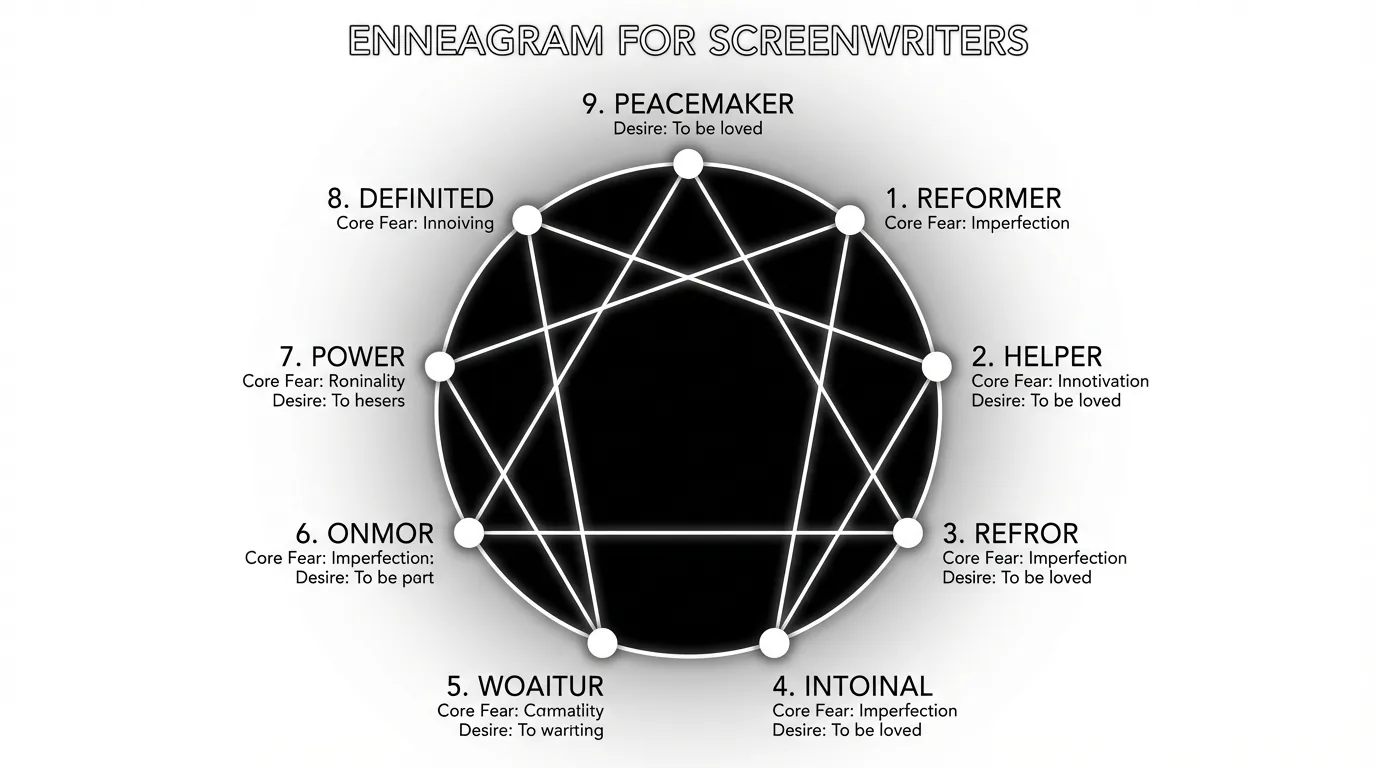
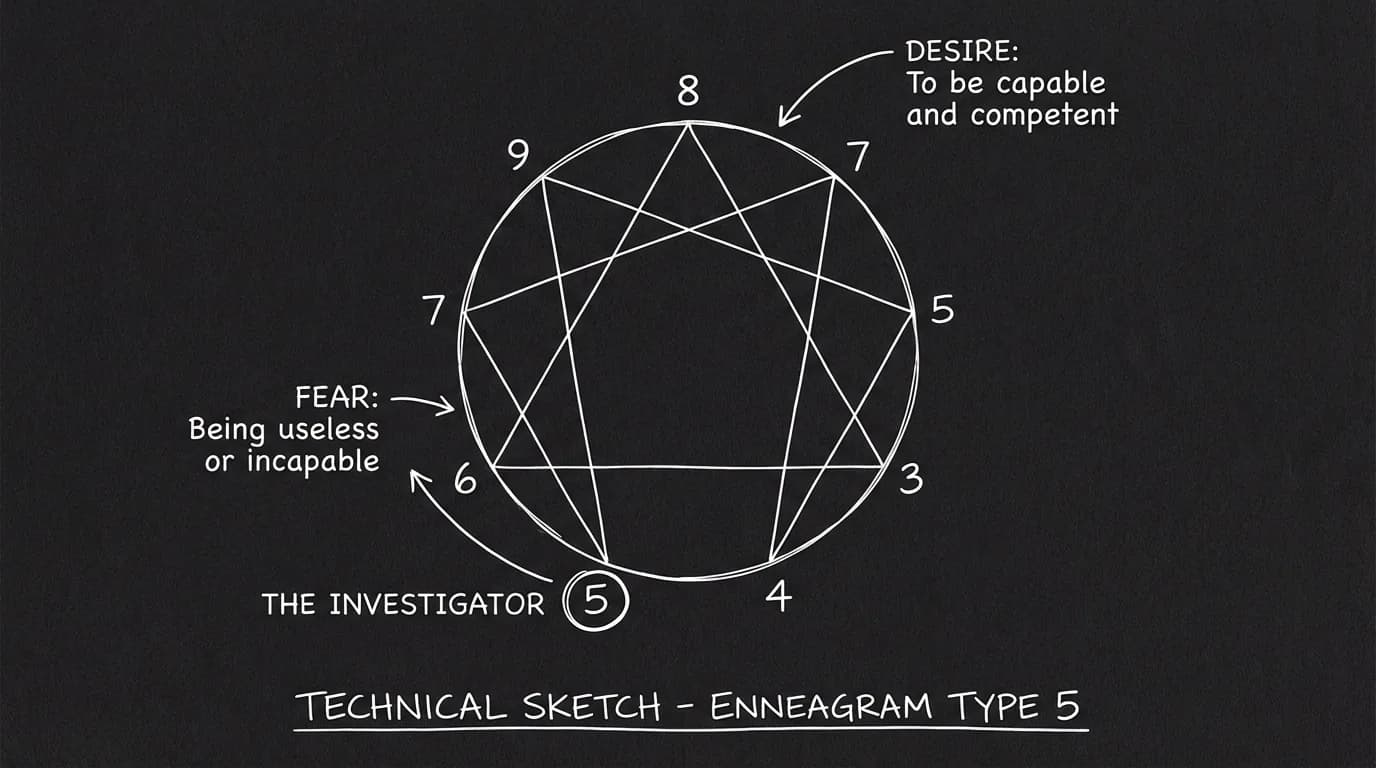
You don’t need to memorize the full system. You need a working map. Type 1 (The Reformer) fears being corrupt or bad; they desire to be good and right. Type 2 (The Helper) fears being unlovable; they desire to be loved and needed. Type 3 (The Achiever) fears being worthless; they desire to be valuable and admired. Type 4 (The Individualist) fears having no identity; they desire to be unique and understood. Type 5 (The Investigator) fears being useless or overwhelmed; they desire to be capable and knowledgeable. Type 6 (The Loyalist) fears being without support or guidance; they desire security and certainty. Type 7 (The Enthusiast) fears pain and deprivation; they desire satisfaction and freedom. Type 8 (The Challenger) fears being harmed or controlled; they desire to protect themselves and determine their own fate. Type 9 (The Peacemaker) fears loss and conflict; they desire peace and unity. One sentence per type. The rest is nuance. When you’re building a character, pick the fear and desire that fit the story you’re telling. Then let the type show up in behavior, not in labels.
Why Core Fear and Desire Beat “Backstory”
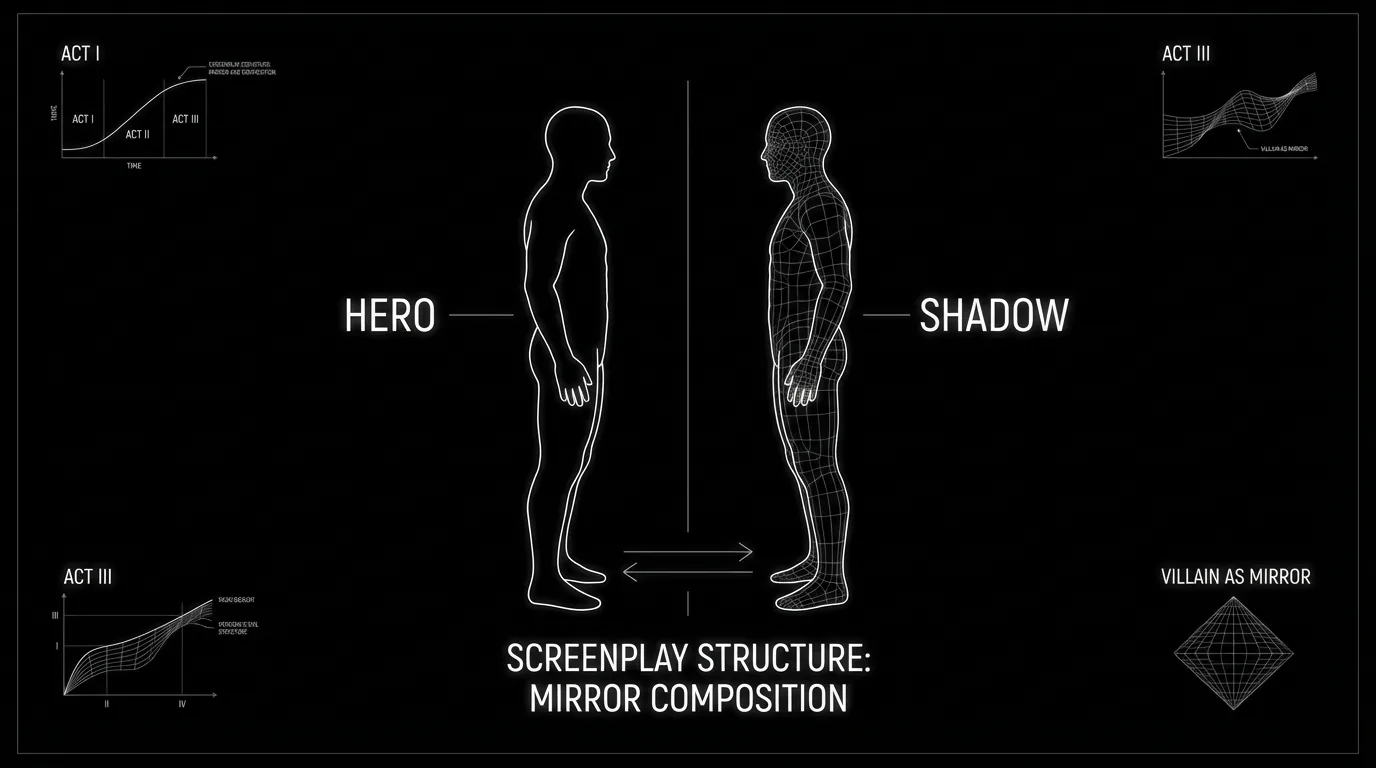
Backstory is what happened. Motivation is what they do with what happened. A character who was betrayed as a child might become a 6 (anxious, loyal, seeking safety) or an 8 (controlling, confrontational, refusing to be vulnerable again). The same backstory, different type, different movie. So when you’re outlining, don’t stop at “she had a rough childhood.” Ask: What does she fear now? What does she think she must do or be to feel okay? That’s your Enneagram entry point. From there, her reactions to the inciting incident, the midpoint, and the climax will feel earned. She’s not doing things because the plot needs her to; she’s doing them because her type would. That’s the difference between a character who moves the story and a story that drags the character. For antagonists, the same logic holds. Our guide on building complex villains aligns with this: the villain’s fear and desire should be clear and opposed to the hero’s, so the conflict is psychological as well as situational.
Relatable Scenario: The Writer With a “Generic” Lead
You’ve got a detective. He’s good at his job. He’s got a dead body and a list of suspects. But in every scene he feels interchangeable. Put another actor in the role and nothing changes. Here’s the fix. Give him a type. Say he’s a 1: he needs to be right and good. So he’s not just solving the case; he’s punishing the wrong and restoring order. When he bends the rules, it costs him. When the killer turns out to be sympathetic, his need to be “good” collides with the truth. Or make him a 6: he needs security and a team. So he’s not just solving the case; he’s trying to keep his world from falling apart. He trusts the wrong person. He doubts the right one. The case becomes a test of who he can rely on. Same premise. Different fear, different desire. Suddenly the detective has an engine. The plot pushes on his type; his type pushes back. That’s when the reader cares.
Relatable Scenario: The Ensemble That Feels Samey
Five friends. One wedding. Comedy or drama, it doesn’t matter. If they all want the same thing (to be happy, to be loved), they’ll all react the same way to conflict. Spread the types. The 2 needs to be needed, she’s organizing everything and resenting it. The 3 needs to be admired, he’s performing even when no one’s watching. The 7 needs fun and escape, she’s the one who wants to skip the awkward dinner. The 6 needs safety, he’s worried something will go wrong and it will be his fault. The 9 needs peace, he’s mediating and avoiding his own feelings. Now the same event (toast, fight, revelation) lands differently for each. You’re not writing five versions of “nervous guest.” You’re writing five different engines. The Enneagram gives you that spread without inventing five full psychologies from scratch.
The Trench Warfare Section: What Beginners Get Wrong
Using type as a label instead of a driver. You decide your hero is a 4 and then you write “she’s so Type 4” in the outline. That’s useless. The type is useful when it dictates choices. What does a 4 do when rejected? When overlooked? When forced to conform? Write those moments. Don’t name the type in the script. Let the behavior show it. Fix: For every major beat, ask “What would this type do here?” If the answer is “whatever the plot needs,” you’ve either chosen the wrong type or the beat isn’t testing the character.
Making every character the same type as you. Writers often default to their own number. Your whole cast starts to share one fear and one desire. The script feels narrow. Fix: Intentionally assign different types. Use the Enneagram as a way to differentiate characters. If you’re a 5, force yourself to write a 2 and an 8. Research how those types think. The tension between types is where scenes come alive.
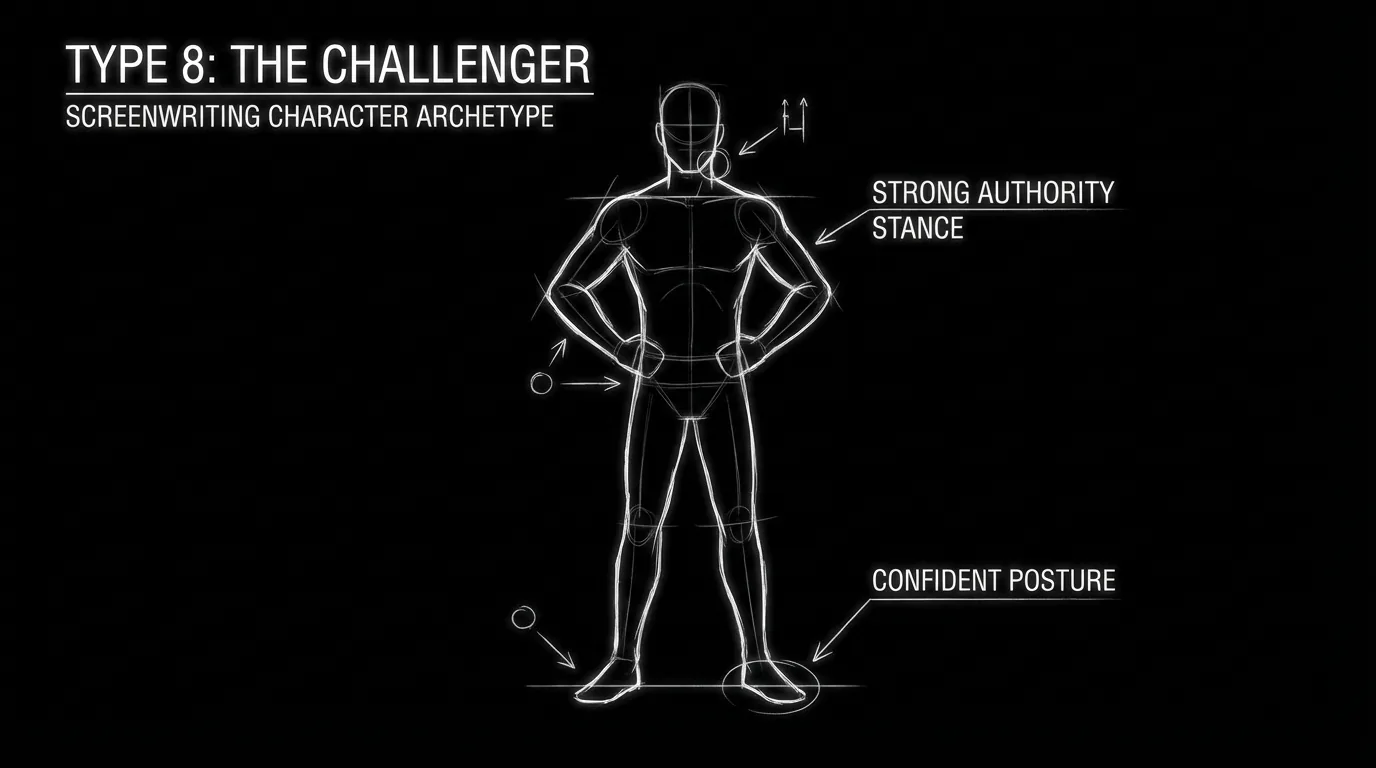
Confusing type with stereotype. Type 8 isn’t “angry boss.” Type 2 isn’t “saintly helper.” Each type has a range. Healthy 8s are protective leaders; unhealthy 8s are bullies. Healthy 2s are genuinely caring; unhealthy 2s are manipulative. Fix: Use the type for the underlying fear and desire. Let the surface behavior vary. A 8 might be quiet and still; what matters is that they can’t stand being controlled. A 2 might be cold on the outside; what matters is that they’re terrified of being unlovable.
Ignoring the wing and the stress/growth lines. The Enneagram has nuance: wings (the type next to yours) and lines (how you move under stress or growth). You don’t need to master them for every character. But for a lead or antagonist, a wing can add flavor. A 3 with a 2 wing needs to be admired and needed. A 3 with a 4 wing needs to be admired and unique. That small addition can keep a character from feeling like a textbook type. Fix: Pick one type. Then ask: Does this character lean toward the number next to it? If yes, you have a wing. Use it to complicate one or two key scenes.
Using the Enneagram to justify unearned change. “She’s a 6, so in Act 3 she becomes brave.” That’s not how it works. Types don’t flip. Growth is slow and hard. If your character moves from fear to courage, we need to see the steps: the moment they’re forced to act without security, the failure, the choice to try again. Fix: Use the Enneagram to know where they start. Use character arc craft to earn where they end. The type tells you the cost of change. The script has to show the payment.
Try it free
Try Screenweaver for free on your script
It is free. Import your existing project, get a clearer view of your outline, and regain control of your story structure in minutes.
Start FreeA Practical Table: Type at a Glance
| Type | Core Fear | Core Desire | Good For |
|---|---|---|---|
| 1 | Being bad, corrupt | Being right, good | Moral dilemmas, rule-breakers, perfectionists |
| 2 | Being unlovable | Being needed, loved | Sacrifice, manipulation, caregiving stories |
| 3 | Being worthless | Being valuable, admired | Ambition, image, success-at-all-costs |
| 4 | Having no identity | Being unique, understood | Art, envy, longing, authenticity |
| 5 | Being overwhelmed, useless | Being capable, knowing | Secrets, isolation, expertise, observation |
| 6 | Being without support | Security, certainty | Loyalty, paranoia, trust, authority |
| 7 | Pain, deprivation | Freedom, satisfaction | Escape, addiction, fun, avoidance |
| 8 | Being controlled, harmed | Self-determination, strength | Power, conflict, protection, dominance |
| 9 | Loss, conflict | Peace, unity | Mediation, inertia, denial, harmony |
Use this as a cheat sheet when you’re stuck. Don’t let the table replace the work. Let it point you to the right question: What does this person fear? What do they want? Then write the script.
Step-by-Step: Applying the Enneagram to a New Character
Open a blank page. Write the character’s name and role (protagonist, antagonist, supporting). In one sentence, state the story’s central conflict. Now ask: What would this character fear most in that conflict? Not in life, in this story. If the conflict is “lose the company,” one character might fear being worthless (3), another being controlled (8), another being abandoned (6). Pick the fear that fits. Write it down. Then ask: What do they believe they need to feel okay? That’s the desire. Write it down. You now have a type. Don’t name it if you don’t want to. You have the engine. Next: List five key moments in the script where this character must make a choice. For each moment, ask: Given this fear and this desire, what would they do? If the answer is “whatever I need for the plot,” revise the moment or the type. When every key choice is driven by the same engine, the character will feel real. When you’re done, read one scene aloud. If you could swap this character for another and the scene wouldn’t change, the type isn’t in the behavior yet. Go back. Put the fear and desire in the action and the dialogue (through subtext), not in the stage directions.
When to Use the Enneagram (and When to Put It Away)
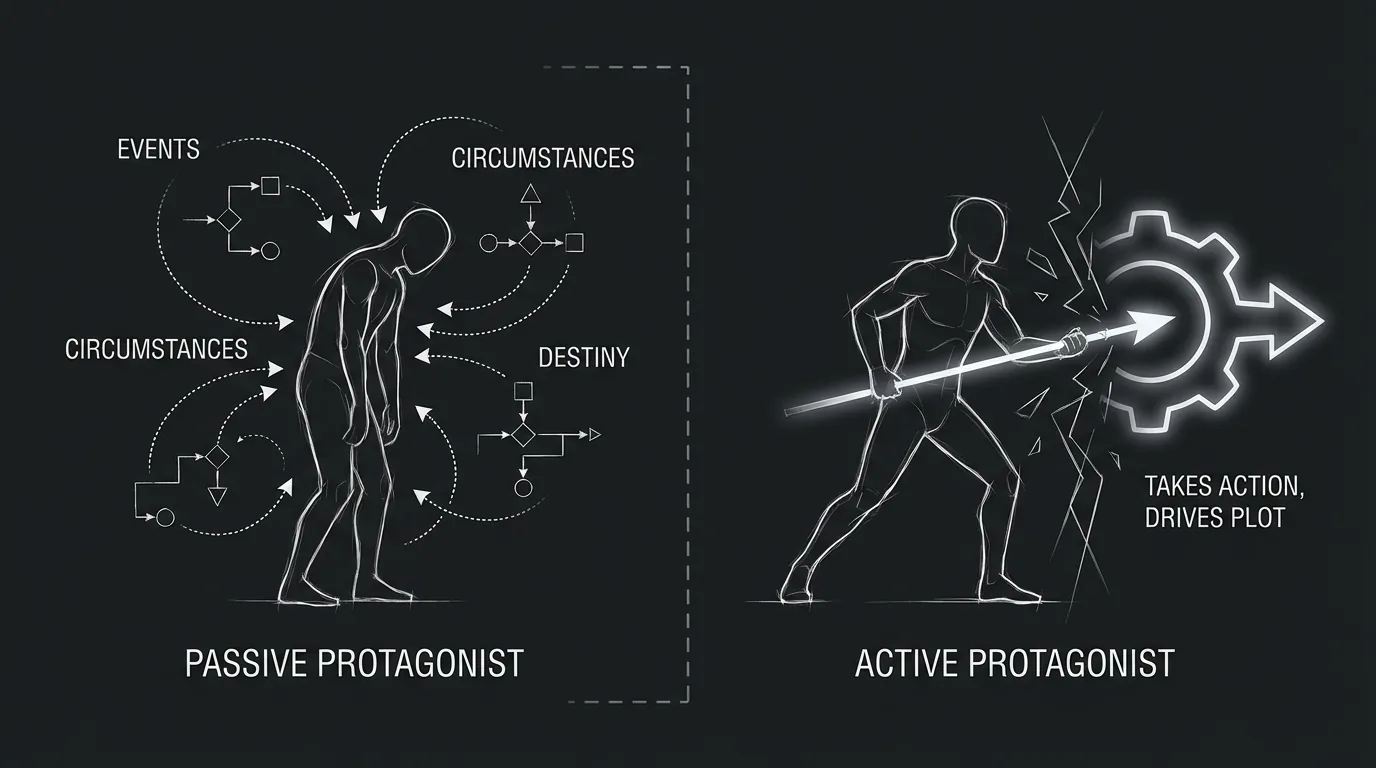
Use it in development. Use it when a character feels flat or when two characters blur together. Use it when you need a quick way to give an antagonist a coherent psychology. Don’t use it as a crutch for every character; minor roles can stay simple. Don’t announce the type in the script. Don’t let the system override your gut. If the story wants a character who doesn’t fit a type neatly, follow the story. The Enneagram is a tool. The script is the thing. Our guide on protagonist vs. main character is useful here: sometimes the protagonist (plot driver) and main character (emotional center) differ, and each might have a different type. That’s a rich source of tension.
The Perspective
The Enneagram for screenwriters isn’t about putting numbers on people. It’s about giving yourself a shared language for fear and desire so that every character in the script has an engine. When the reader can’t name the type but can feel that the character would do that, you’ve used it right. When the character does things because the plot said so, you’ve got more work to do. Start with one question: What do they fear? What do they want? Answer that before you write the first scene. The rest is craft.
Final Step
Build your next script with Screenweaver
Move from ideas to production-ready pages faster with timeline-native writing and AI-assisted story flow.
Try Screenweaver