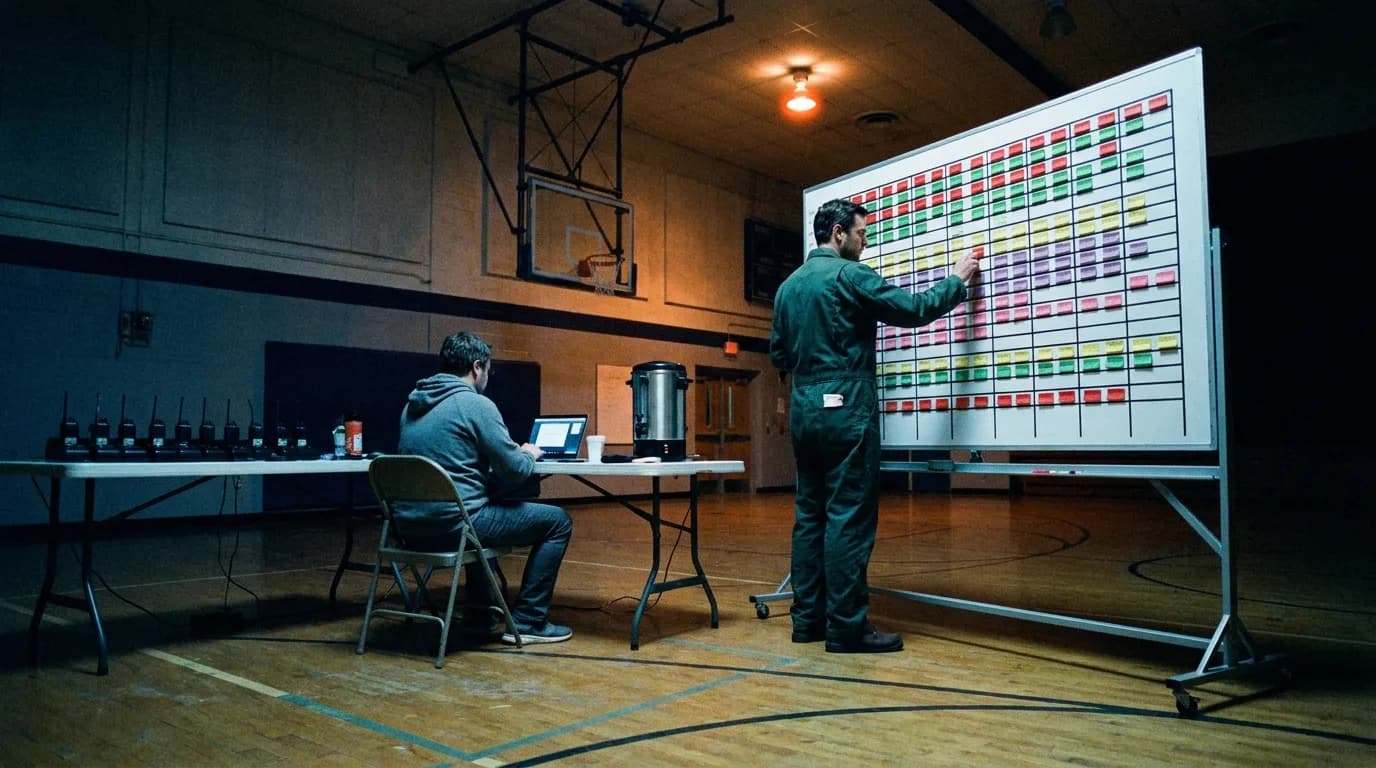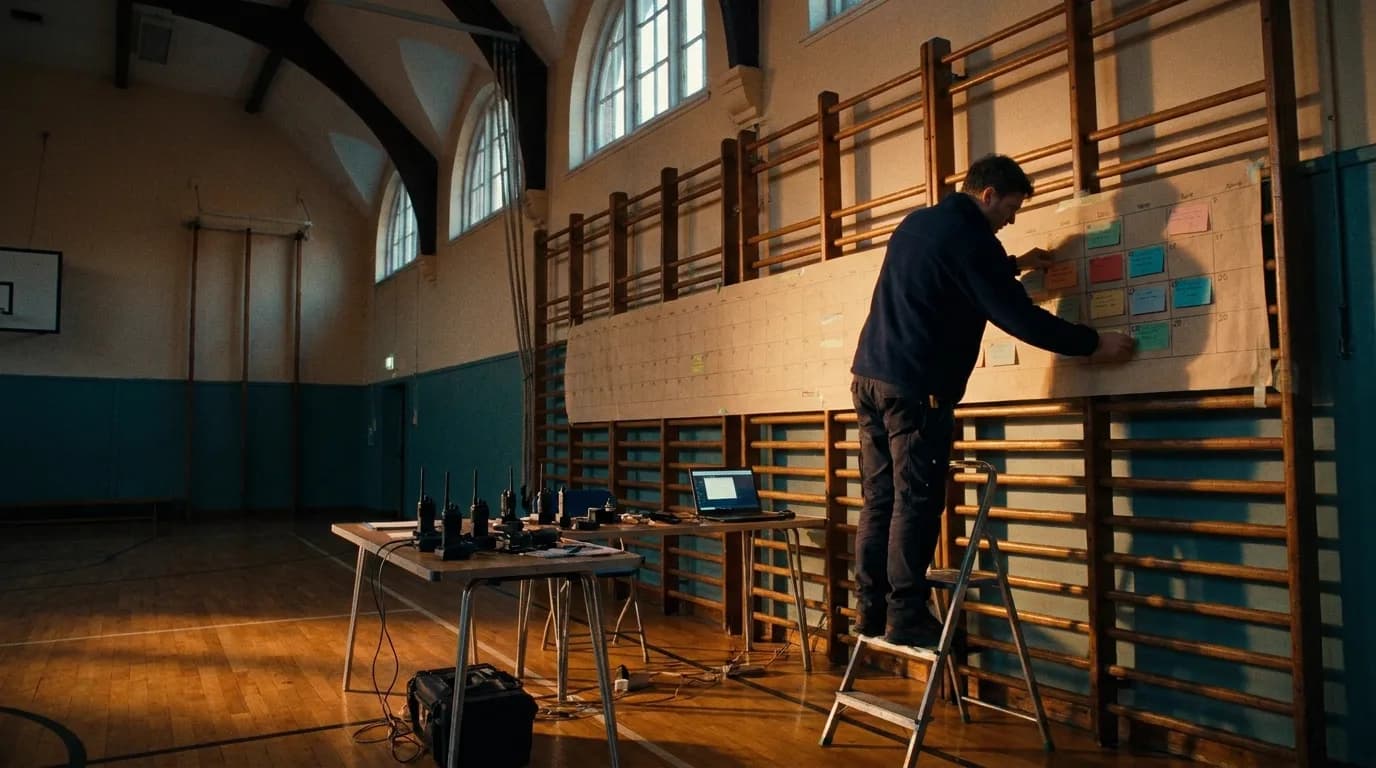

An eight-week pre-production timeline for an indie short or micro-budget feature runs backwards from your first shoot day. Weeks 8 and 7 lock the script and the money. Weeks 6 and 5 find the people and places. Weeks 4 and 3 turn the breakdown into a schedule and file the paperwork. Weeks 2 and 1 rehearse and confirm.
Below: what goes in each block, which outside deadlines decide the order, and what to cut when you only have four weeks. This guide belongs to our film pre-production section and picks up where the independent filmmaker workflow leaves off.
Why eight weeks, and why you count backwards
We use eight weeks because it's the shortest prep that leaves room for the slow things you don't control: an actors' union reviewing your paperwork, a city processing a permit, a location owner who takes ten days to answer an email. Everything you control (breakdown, shot list, call sheets) can be done in days. The things other people approve set the pace.
So you don't plan from today forward. You pick Day One, write it at the right edge of a calendar, and work leftwards. Every task gets a "must be done by" date, not a start date.
One more rule before the weeks: the script has to be locked before the schedule means anything. A schedule is built from scene headings, page counts and cast lists. If page 40 is still moving, the schedule moves with it. Our guide to managing scene numbers and locked revisions covers how to keep changes from scrambling everything downstream.
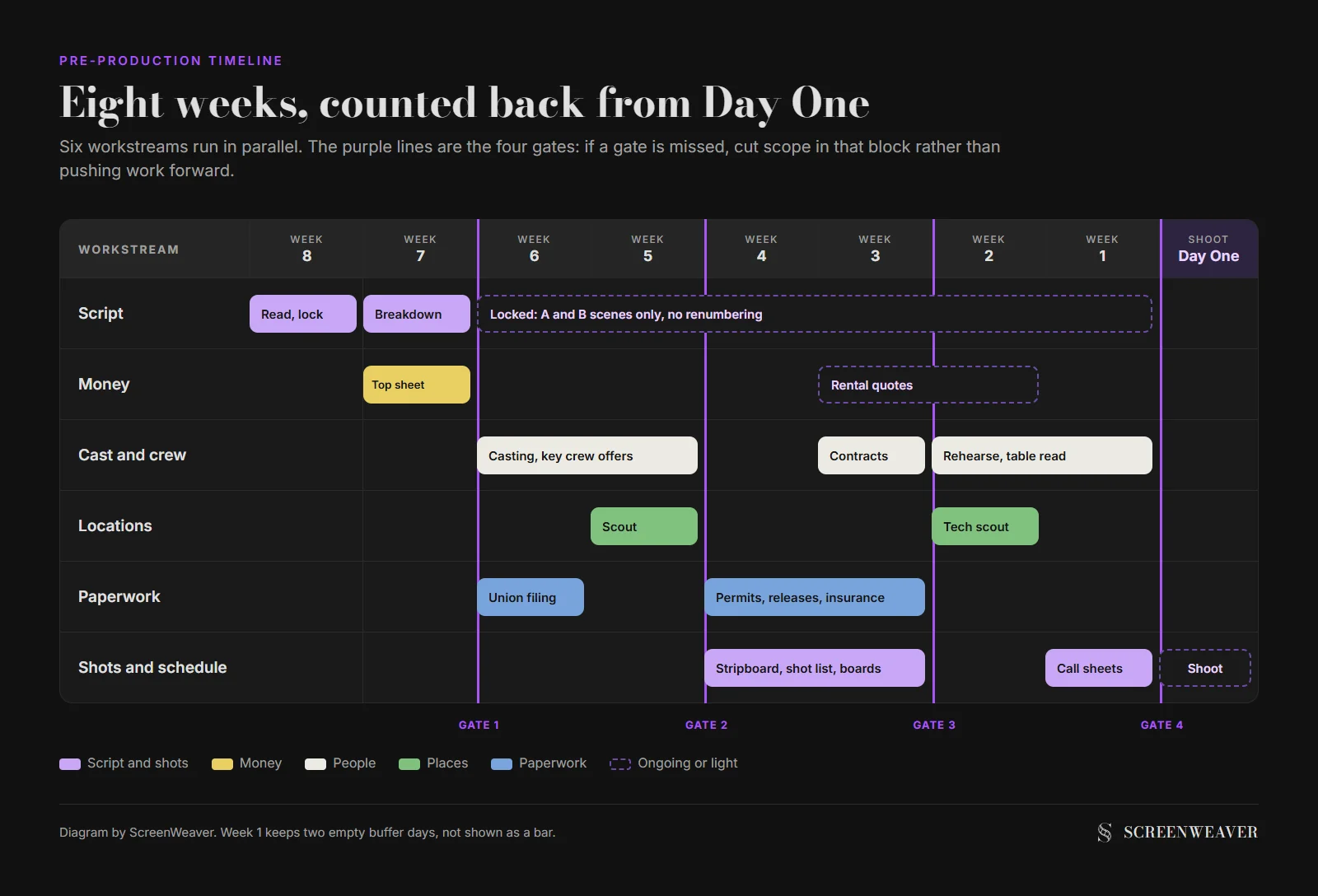
The 8-week pre-production timeline at a glance
| Week (before Day One) | Main job | Done when | Tool or guide |
|---|---|---|---|
| 8 | Lock the script, read it aloud once | Page count frozen, scene numbers set | Script breakdown checklist |
| 7 | Breakdown and first budget | Every scene tagged, budget top sheet exists | Film budget template |
| 6 | Casting call, key crew offers | Leads auditioned, DP and sound mixer asked | Union paperwork started (see below) |
| 5 | Location scouting, first schedule draft | Every location has a first and second choice | Location scouting checklist |
| 4 | Stripboard schedule, permits filed | Draft schedule shared with cast and crew | Shooting schedule calculator |
| 3 | Shot list, storyboards, insurance, contracts | Shot list per scene, signed releases | Shot list template |
| 2 | Tech scout, rehearsals, equipment booked | Crew has walked every location | Day out of days |
| 1 | Table read, call sheets, buffer | Day One call sheet sent the evening before | Call sheet template |
Weeks 8 and 7: lock the script, then price it
Week 8 is about the page. Hold one read-through, even if it's just you and two friends at a kitchen table, and listen for scenes that drag or lines nobody can say. Fix them now. After this week, every rewrite costs schedule time.
When the draft is locked, number the scenes and don't renumber them. Add A and B scenes if you must insert something.
Week 7 is the breakdown. Go through the script one scene at a time and tag cast, props, wardrobe, locations, vehicles, special effects and anything that needs a permit. Our complete script breakdown process walks through the tagging pass, and the free checklist tool gives you the categories so you don't forget extras or animals.
The breakdown is what you price. A budget made before the breakdown is a guess. One made after it is a list of things you can go and get quotes for.
By the end of week 7 you want three things on the table: a locked script, a tagged breakdown and a budget top sheet. If the budget is twice what you have, this is the moment to cut scenes, not week 2.
Weeks 6 and 5: people and places
Casting and locations run side by side, because each one limits the other. An actor who is free only on weekends changes which locations you can use. A location available only on Tuesdays changes who you can cast.
Start the union paperwork in week 6 if you're hiring SAG-AFTRA performers. For its Short Project Agreement (projects up to a $50,000 budget and 40 minutes of run time), SAG-AFTRA's getting-started page says: "We recommend you submit your project at least 4 -6 weeks before the start of principal photography, rehearsals or traveling performers." The same page says you're assigned a business representative within 2-3 business days, and that a late application can mean delays or no clearance at all. Six weeks out is the earliest point in that window, which is why it lands here and not in week 3.
For crew, make offers to the two people you can't replace easily: the person behind the camera and the person recording sound. Everyone else can be confirmed later.
Locations in week 5 means a first and second choice for every place in the breakdown. Visit at the hour you'll shoot, listen for traffic and air conditioning, and find where the power sockets and toilets are. The location scouting checklist has the full list of what to photograph and ask.
Don't move on until the leads are cast, the key crew have said yes and every location has a backup.
Weeks 4 and 3: schedule, permits and the paperwork pile
Week 4 turns the breakdown into a shooting schedule. Group scenes by location first, then by cast, then by time of day. Our stripboard basics for small crews shows how to lay it out, and the shooting schedule calculator gives you a realistic page count per day before you promise anything to actors.
Then file the permits, and don't wait for the minimum. If you're filming on public property in Los Angeles, FilmLA's knowledge base gives typical processing times in business days, and late applications are rejected outright.
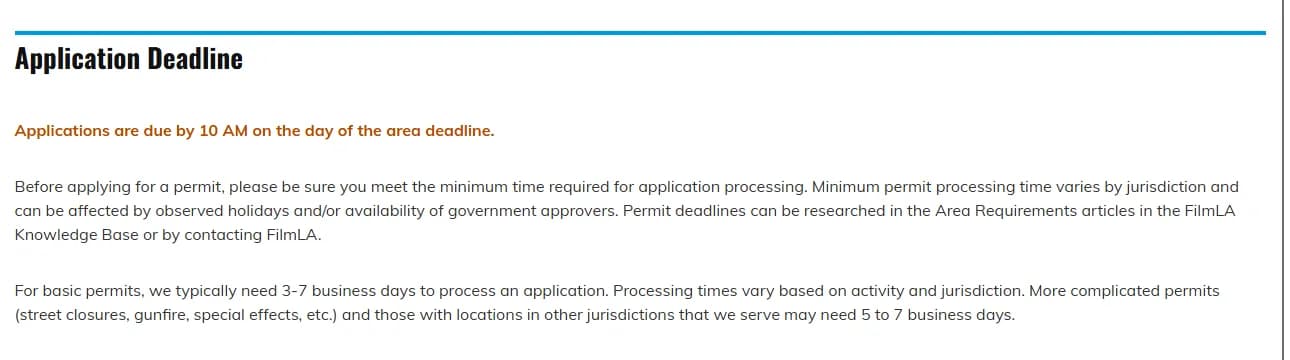
Three to seven business days sounds short. Business days skip weekends and holidays, and the same article warns that late applications are rejected and the application fee isn't refunded. Filing in week 4 gives you time to fix a rejected form. Filing in week 1 doesn't. Outside LA, check your own city's film office; the numbers differ, but the logic is the same.
Week 3 is paper. Location agreements, actor releases, crew deal memos, insurance certificates, the equipment rental quote. Nobody enjoys this week. Skip it and a location manager asks for an insurance certificate on the morning of the shoot and you're on the phone to your insurer while the crew waits.
Week 3 is also when the director builds the shot list and storyboards. You need the schedule first, because the number of setups per day decides how ambitious each scene can be. If you're not sure how far to take the visuals, our guide to previs, storyboards and animatics helps you pick the right level for your budget.
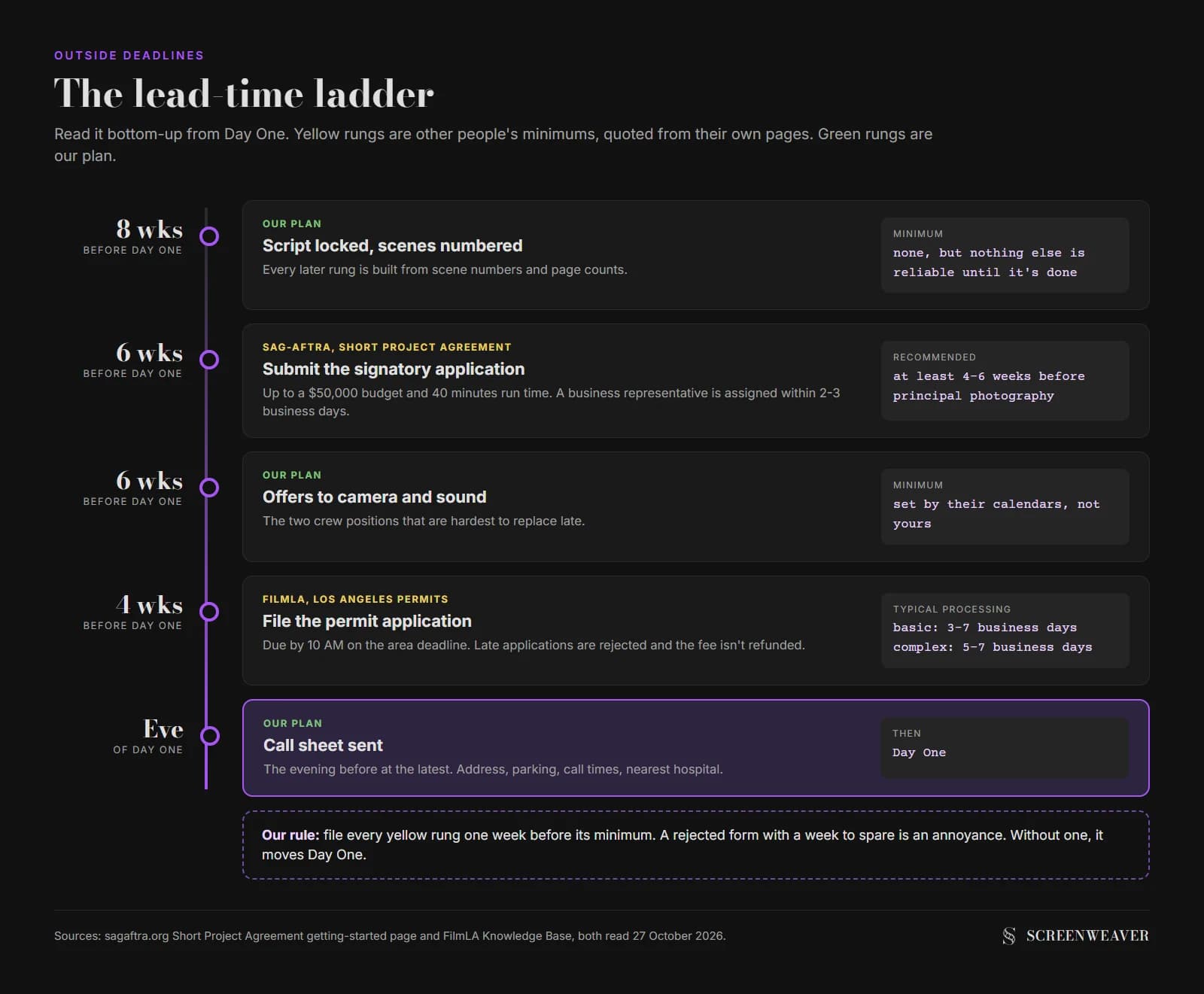
Week 3 ends with the schedule shared, the permits filed and a signature from every person who'll be on set.
Try it free
Try Screenweaver for free on your script
It is free. Import your existing project, get a clearer view of your outline, and regain control of your story structure in minutes.
Start FreeWeeks 2 and 1: rehearse, confirm, protect the buffer
Week 2 is the tech scout. Take the camera operator, the sound person and whoever is lighting to every location, with the shot list in hand. This is where you find out the window faces the wrong way at 3pm, or that the corridor is too narrow for the dolly you rented. Changing a shot on paper costs nothing. On the day it costs an hour.
Rehearse with the actors in week 2 as well, even for a single afternoon. Blocking a scene in a living room before you shoot it in the real location saves setups, because you'll already know where people stand.
Week 1 is confirmation. Table read with the full cast, final schedule, equipment pickup times, the catering order, weather checks for exterior days. Send the Day One call sheet the evening before at the latest, with the address, parking, call times and the nearest hospital. Our call sheet template lists every field.
Keep two days of week 1 empty. Something will slip: a prop that doesn't arrive, an actor who gets sick, a location that wants a different date. Those two days are where you absorb it without moving Day One.
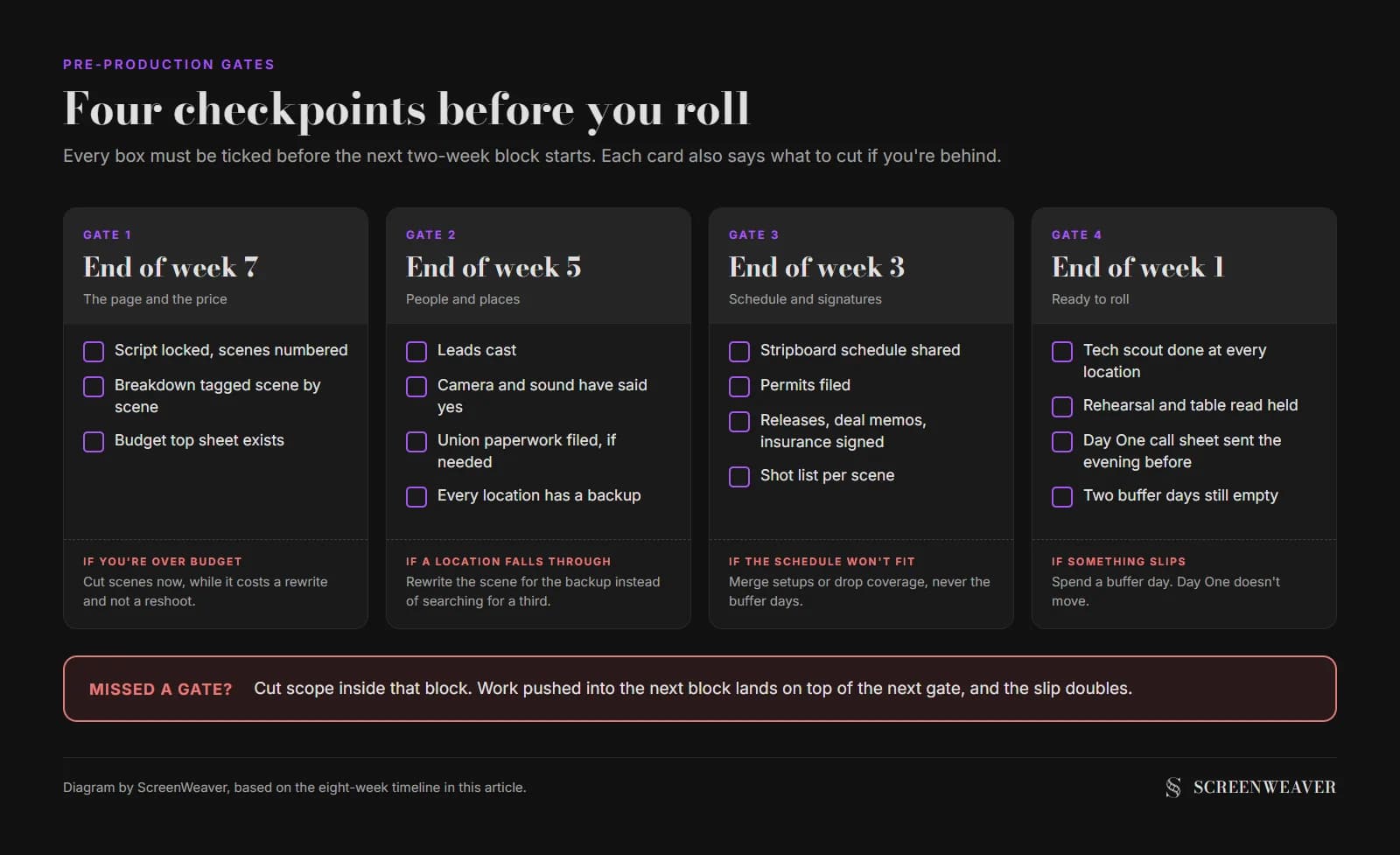
When you only have four weeks
You can compress prep, but not evenly. Keep the script lock and the permit and union lead times at full length. Those dates belong to someone else, and squeezing them just gets you a rejection.
Compress casting hard (people you know, or self-tapes), and scouting too: one location per scene, picked from photos, visited once. The budget can be a one-page top sheet. Fold the tech scout and rehearsals into one long day at the main location.
What we'd never cut is the buffer days and the call sheets. Without them, one late actor turns into a lost day.
A four-week prep still runs backwards from Day One. You just have fewer weeks to fit the same gates into. If the SAG-AFTRA window says four to six weeks and you have four, file on day one of prep.
What changes when the film is AI-generated
If your production is generated rather than shot, a lot of this timeline disappears. No permits, no union clearance, no tech scout, no catering. What stays is the top half: a locked script, a breakdown of characters and places, and a shot list or storyboard before any footage gets made.
The prep moves to a different bottleneck. On an AI film, the slow part is keeping a character's face and a location's look the same from one shot to the next, so prep time goes into character references and storyboard frames instead of contracts. In ScreenWeaver, the script, the breakdown into shots and the storyboard live in the same project, so a scene you rewrite in week 7 sits next to the shots it affects, not in a separate file you have to retype.
Lost Garden, the anime series made in ScreenWeaver by one person, is an example of that shape of prep: script, storyboard and production all built in the same tool before generation. Our guide to the one-person film crew stack compares the live-action and AI-generated versions of solo production side by side.
FAQ
How long should pre-production take for a short film?
For a short with a few locations and a small cast, four to eight weeks is realistic. Eight weeks leaves room for union paperwork and permits. Four works if you use people you already know, shoot on private property and file any paperwork on the first day of prep.
What is the first step in a pre-production timeline?
Locking the script. Every later step (breakdown, budget, schedule, shot list) is built from scene numbers and page counts, so if the script is still changing, everything built on it changes too.
How far ahead do I need to apply to SAG-AFTRA for a short film?
For the Short Project Agreement, SAG-AFTRA recommends submitting at least 4 to 6 weeks before principal photography, rehearsals or traveling performers. The Micro-Budget Project Agreement, for projects of $20,000 or less, has its own, simpler process; check SAG-AFTRA's page for your agreement before you set dates.
How long does a film permit take?
Each city sets its own timing. FilmLA, which handles permits for Los Angeles and other jurisdictions, says basic permits typically need 3 to 7 business days, and more complicated ones with street closures, gunfire or special effects may need 5 to 7. Late applications are rejected, so file at least a week before the minimum.
What's the difference between a pre-production timeline and a shooting schedule?
The pre-production timeline covers the weeks before filming: script lock, casting, locations, paperwork. The shooting schedule covers the filming days themselves, which scenes you shoot on which day. You build the shooting schedule during prep, usually around week 4.
Can I skip pre-production for an AI film?
No, but it gets shorter. Permits and casting go away. The script lock, breakdown and storyboard remain, and you add character and location references so generated shots stay consistent.
Final Step
Build your next script with Screenweaver
Move from ideas to production-ready pages faster with timeline-native writing and AI-assisted story flow.
Try Screenweaver