Shooting Schedule Calculator
Estimate your shoot days in seconds
Enter your script's page count and the kind of production you are actually running, and get a defensible estimate of shoot days, contingency, and calendar weeks. Built for producers, first ADs, and indie filmmakers planning before the stripboard exists.
The industry plans shoots in pages per day: studio features average 2 to 3, professional indies 3 to 5, low-budget shoots 4 to 6, and micro-budget productions often push past 6 by simplifying coverage. Action, night work, and company moves all slow that rate down, which is exactly what the complexity settings model.
Everything runs in your browser. No script content or production data is sent to any server.
Each factor slows down how many pages your crew can realistically shoot in a day.
Your schedule estimate
22 total days
Shoot days: 18
Contingency days: 4
5-day weeks: 5
6-day weeks: 4
Based on an effective rate of 5 pages per day after complexity adjustments.
How it works
The calculator divides your page count by a pages-per-day baseline for your production tier, then adjusts that rate for action complexity, night work, and location moves. Contingency adds one buffer day per five shoot days, the common planning floor. The result is a planning estimate, not a stripboard: a real schedule still gets built scene by scene, but this tells you which conversation to have with your budget first.
How many days does it take to shoot a film?
The core planning unit is pages per day. A 90-page feature at a low-budget pace of 5 pages per day needs about 18 shoot days; the same script on a studio schedule shooting 2.5 pages per day needs 36. Neither number is right or wrong: they describe different amounts of coverage, lighting time, and moves per scene.
Complexity moves the estimate more than talent does. Night scenes force turnaround gaps and slower lighting. Company moves between locations burn half a day each. Stunts, VFX plates, and choreography multiply setups. Two scripts with identical page counts can need schedules that differ by weeks.
Contingency is not padding, it is the difference between a weather delay costing one day or cascading through your cast's availability. One buffer day per five shoot days is the common floor on professional productions, and the shoots that skip it are usually the ones that wish they had not.
Who this is for
- Producers: sanity-check whether a proposed budget actually covers the days the script needs, before committing to dates.
- First ADs: frame the schedule conversation before building the detailed scene-by-scene stripboard.
- Film students and first-time filmmakers: understand why a 10-page short is not a one-day shoot before promising a crew a single weekend.
From script to shots,in one place.
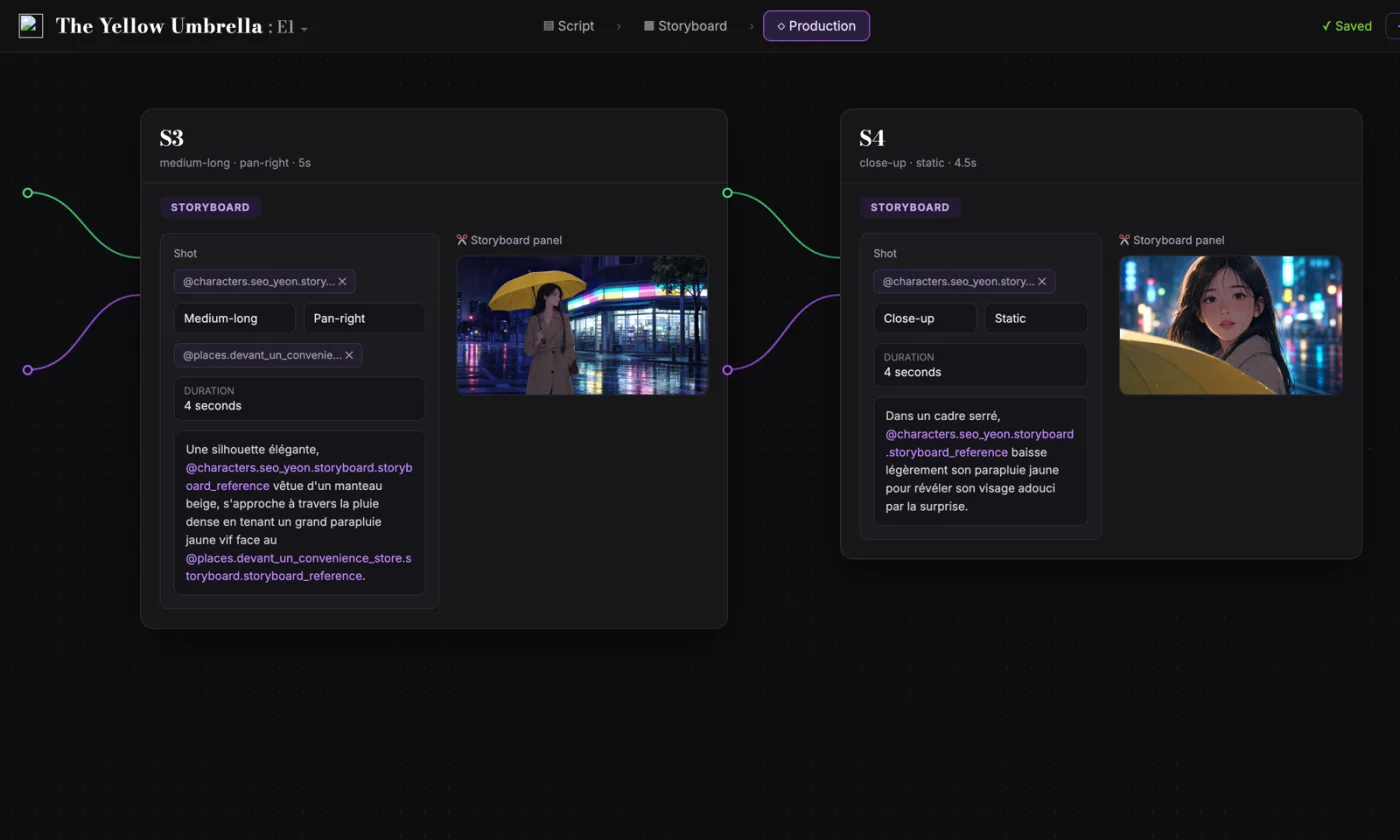
ScreenWeaver turns your screenplay into an automatic shot breakdown, then a storyboard. Characters, locations and references carry from shot to shot.
- $0, does not expire
- PDF and Final Draft export
- Mac, Windows, Linux, iPad
Shooting Schedule Calculator: the complete guide
It converts your script's page count into estimated shoot days, contingency days, and calendar weeks, adjusted for how your specific production actually moves through pages.
For this workflow, the central problem is clear: shoot day estimates are usually guessed from page count alone, ignoring production tier, action complexity, night work, and company moves. Left unresolved, this creates downstream friction and slower decisions. The practical target is a defensible shoot day and calendar estimate you can bring to budget conversations, crew planning, and location booking.
Limitation to keep in mind: It cannot read your script's individual scenes, so treat the output as a planning baseline: a stunt-heavy day or a child actor's restricted hours can still reshape a real schedule.
Advanced workflow: Experienced ADs run the calculator per act or per location group, then compare the aggregate against a full scene-by-scene stripboard to catch where the average hides an expensive day.
Step-by-Step Workflow
- Enter your script's page count from a standard-format PDF, not an estimate from a word processor.
- Pick the production tier that matches your crew size and equipment, not the one you aspire to.
- Set the complexity sliders honestly: action, night work, and location moves each eat shooting hours.
- Compare the 5-day and 6-day week projections against your cast and location availability windows.
Use Cases By Profile
- Producer: sanity-check whether the proposed budget actually covers the days this script needs.
- First AD: get a starting frame before building the detailed stripboard in scheduling software.
- Film student: understand why a 10-page short is not a one-day shoot before promising a crew a weekend.
Common Mistakes To Avoid
- Using studio pages-per-day rates for a micro-budget crew that moves much faster with less coverage.
- Ignoring night shoots, which slow every department and force turnaround gaps into the calendar.
- Skipping contingency days and discovering the buffer was needed on the first weather delay.
Professional Best Practices
- Schedule your hardest material early in the week, never on day one or after a company move.
- One contingency day per five shoot days is the common floor, not a luxury.
- If the calculator says more weeks than your budget allows, cut locations before cutting scenes.
Treat this tool output as a decision support layer, not a replacement for authorship. Great scripts are remembered for specific choices, emotional precision, and clarity of dramatic movement. Tools help by removing noise so your energy can go where it matters: character, conflict, escalation, and payoff. If you review outcomes after each pass and keep an explicit log of accepted changes, your workflow becomes faster and more predictable from draft to draft. That consistency is exactly what professional collaborators value: fewer surprises, clearer rationale, and a script that evolves with intent.
Extended FAQ
How many pages can a film crew shoot per day?
Studio features average 2 to 3 pages per day, professional indies 3 to 5, low-budget shoots 4 to 6, and micro-budget or student productions often push 6 to 8 by simplifying coverage. Complexity moves these numbers more than crew talent does.
How many shoot days does a 90-page script need?
At a typical low-budget pace of 5 pages per day, a 90-page feature needs about 18 shoot days, plus 3 to 4 contingency days. A studio production shooting 2.5 pages per day would need 36 or more.
What slows a shooting schedule down the most?
Company moves between locations, night shoots with their mandatory turnarounds, and action or VFX-heavy scenes that need many setups. Each factor compounds the others.
Should I plan 5-day or 6-day shooting weeks?
Five-day weeks are standard for union and professional shoots. Six-day weeks are common on low-budget productions but increase fatigue risk, so most experienced producers cap them at two or three consecutive weeks.
How accurate is a pages-per-day estimate?
It is a planning baseline, reliable for budgeting conversations and initial calendars. A real schedule still needs a scene-by-scene stripboard, since one stunt day or restricted actor availability can reshape a week.
What is a contingency day in a film schedule?
A buffer day held in reserve for weather, illness, equipment failure, or scenes that ran over. The common rule of thumb is one contingency day per five scheduled shoot days.
Frequently asked questions
Studio features average 2 to 3 pages per day, professional indies 3 to 5, low-budget shoots 4 to 6, and micro-budget or student shoots often reach 6 to 8 by simplifying coverage. Complexity factors like night work and stunts lower every tier's rate.
At 5 pages per day, about 18 shoot days plus 3 to 4 contingency days. On a studio schedule at 2.5 pages per day, 36 or more. The production tier matters more than the page count itself.
A reserve day for weather, illness, equipment failure, or scenes that ran over. The common rule of thumb is one contingency day per five scheduled shoot days.
Five-day weeks are the professional standard. Six-day weeks are common on low budgets but increase fatigue and safety risk, so experienced producers avoid running them for more than a few consecutive weeks.
It is a planning baseline built on standard pages-per-day conventions, reliable for budget conversations and initial calendars. A final schedule still needs a scene-by-scene breakdown, since a single stunt day or restricted actor can reshape a week.
Related tools
Script Eighths Calculator
Measure every scene in page eighths from pasted script text.
Day Out of Days Generator
Build a DOOD cast scheduling grid with SW, W, H, WF codes and auto totals.
Script Breakdown Checklist Generator
Create per-scene production breakdown checklists.
Storyboard Template Generator
Create printable storyboard sheets in any aspect ratio.
You can also browse the full library on /tools.
Core blog guides
- Idea → first draft (process hub)
- Screenplay format guide 2026
- Hidden costs of “free” software
- Affordable software & TCO
- Revision passes (structure → dialogue)
Film techniques
Film techniques to explore
Each one with a short clip, a screenplay excerpt and the shot list line.