Annecy 2027 · AI animation guide

Can you submit an AI film to Annecy?Nothing forbids it. The rules ask for more.

The terms for films in competition have no clause on AI. The Mifa Pitches market requires you to disclose it and justify it. The 2027 call opens in October 2026: here is what the 2026 documents say, where an AI film can fit, and how to get ready. Then take the film from screenplay to storyboard to footage in ScreenWeaver.
  • 2027 call opens October 2026
  • No AI ban in the 2026 terms
  • Mifa Pitches: AI statement required
Lost Garden · Episode 1

Independent guide. ScreenWeaver does not organise Annecy and is not affiliated with CITIA or the Annecy International Animation Film Festival. Rules read on 1 October 2026. Official submission help

Available today in ScreenWeaver: free screenwriting, and a storyboard generated from your screenplay with Storyboard Beta, $9.99 a month.

Rolling out: video generation of each shot, powered by Seedance, with the Filmmaker plan.

Annecy at a glance

What the 2026 terms say, while 2027 is not out.

The festival helpdesk says film submissions for 2027 open in October 2026. No 2027 terms, fees or deadlines were online on the day of reading, so this page works from the 2026 documents. Expect the same frame and check the numbers when the call opens.
Next festival
13 to 19 June 2027 (Mifa 15 to 18 June)
Call for 2027 films
Opens in October 2026
Deadline
Not announced. Shorts closed 15 February in 2026
Short film fee
€30 excl. VAT in 2026, no refund
Eligible works
“Frame-by-frame” animated films, any technique
Short film length
Under 59 min 59 s, credits included
Completion date
After 1 January 2025 (2026 rules)
AI clause for films
None in the 2026 terms

Source: the 2026 Terms and Conditions for Short Films (published 17 November 2025) and Feature Films, the Mifa Pitches 2026 regulations and the Annecy helpdesk, read on 1 October 2026. The 2027 festival dates come from annecyfestival.com. The 2027 documents can differ: check them before you pay.

What the rules say about AI

Two rulebooks, two different answers.

Annecy runs a film competition and a project market, and they treat AI differently. The competition is silent. The market asks you to say everything. Wording from the 2026 documents, read on 1 October 2026.
  • Films: no AI clause

    The 2026 Terms and Conditions for Short Films and Feature Films, published in November 2025, do not mention AI. They accept “frame-by-frame” animated works made with any technique, and they do not say whether generated video counts as that. Write to inscription@citia.org before you pay the fee.

  • Mifa Pitches: disclose and justify

    The Mifa Pitches 2026 regulations say any substantial use of AI “must be stated in your submission”. When AI has a significant impact on the work, a statement of intent is required: the artistic reason, the tools, the legal issues and the effect on how the production is organised.

  • Original graphic concepts required

    For projects, “Submissions without original graphic concepts will not be eligible.” Projects with visuals generated by AI must specify and justify the creative process and the tools. A file made only of generated images is not enough.

  • What the artistic director said in 2024

    In April 2024, Marcel Jean told the trade site 3DVF that Annecy has “no rule prohibiting” AI, and that most AI works he received showed no vision behind the tool. A minority, he said, open a useful debate. It is a 2024 statement reported by a trade site, not a rule.

  • Mifa AI, new for 2026

    The Mifa launched Mifa AI, a programme devoted to AI in animation, with a European think tank called AI4Animation. It covers the technological, creative, ethical and environmental questions. The festival studies the subject in public, and its project rules ask the same openness from you.

  • A win here counts for the Oscars

    The Cristal for a Short Film and the Jury Award of the Short Films competition are on the Academy’s qualifying list for the 99th Academy Awards (list updated 10 April 2026). The Academy’s own AI rule then applies to the film.

Key dates

One call to come, one cycle to copy.

Only the October 2026 opening is announced. The dates marked “last cycle” are the 2026 calendar: <b>use them to plan, not as promises</b>.
  1. October 2026

    The 2027 call opens

    The helpdesk says film submissions for 2027 open in October 2026. Films are registered through your user account on the festival site, and a draft can be saved.

  2. 22 Jan 2026, last cycle

    Mifa Pitches closed

    Projects in development needed a complete PDF file under 50 MB. The fee was a flat €20 for a short film project.

  3. 15 Feb 2026, last cycle

    Short films closed

    Works in progress were accepted if advanced enough to judge and finished by 15 May. The private viewing link had to stay active until 15 July.

  4. 15 Mar 2026, last cycle

    Feature films closed

    Features paid €100 excl. VAT, ran over 60 minutes, and could not have screened in France before the festival ended.

  5. 21 to 27 Jun 2026, last cycle

    The festival

    Selected films were shown as DCPs, and the presentation copy was due on 15 May. Several competitive categories ran side by side.

Who decides

Selectors first, then juries named by CITIA.

Annecy does not publish the names of its selectors. The 2026 terms and the helpdesk say how a film travels, which is enough to plan around.
  • Selection committees by category

    The helpdesk says animation films are shortlisted by committees for each category. The Artistic Director oversees the process and several selectors take part, to bring varied opinions, parity and diversity. The festival gives no individual reasons for a refusal.

  • An international jury

    CITIA’s management designates the international jury members. The terms list seven official prizes for shorts, from the Cristal to the Audience Award, and partner prizes such as the SACEM award for best original soundtrack.

  • A pitch jury for projects

    Mifa Pitches files go to a jury made of a CITIA member and professionals or partners of the festival and the market. In the 2026 cycle, deliberations began at the end of March and results came by e-mail before the end of April.

Four doors

Where an AI film can enter Annecy.

Annecy has competitions for finished films and a market for projects. Each is a different bet. After each description, what we would do.
  • 01

    Short Films

    Finished animated shorts under 59 min 59 s, in five competitive categories: Official, Off-Limits, Young Audience, Perspectives and Midnight Shorts.

    AI-assisted work reached the 2024 selection through Off-Limits. Choose the category that matches what your film does, and say how it was made in the form.

  • 02

    Graduation Films

    For films made as part of academic studies. The school or university must be named at registration.

    Only if you are a student: the helpdesk sends student films here, not to Short Films. Do not use it for a professional film.

  • 03

    TV and Commissioned Films

    Series, specials and commissioned work. The 2026 prizes included a Jury Award for a TV Series and one for a TV Special.

    The helpdesk says another episode of a series already selected cannot be entered. Pick the episode that stands alone. If you are unsure where an episode belongs, ask.

  • 04

    Mifa Pitches

    For projects in development, not finished films. Scripts alone are not accepted. A short film project sends up to 15 pages of narrative, a full or partial storyboard and its graphic elements.

    The closest fit for a ScreenWeaver project: screenplay, storyboard and look development are the file. A selected short film project gets an 8 minute live pitch.

The 2026 awards

What 2026 and 2024 teach.

The 2026 short film prizes went to Paper Trail (Cristal), God Is Shy (Jury Award and Audience Award), CORE DUMP (Off-Limits), Please (first film) and My Bellyaching Skin (Alexeïeff-Parker). The festival’s awards page does not say whether any of them used generative AI.

  1. 01

    One film can win the jury and the public. God Is Shy took both. Aim for a film that holds a trained eye and a full theatre at once.

  2. 02

    Seven official prizes and seven partner prizes exist for shorts. A first film, an off-limits idea, an original soundtrack: decide which door your film is built for.

  3. 03

    AI was kept when it questioned something. The artistic director said in 2024 that the few AI works worth selecting provoke a debate. A film that only shows off a tool is the majority he described.

  4. 04

    The tool was one part, not the whole. The 2024 graduation film using AI was said by its maker to use Stable Diffusion for 50 seconds of about 19 minutes, the rest being Blender and Unreal Engine. That is a creator statement reported by 3DVF.

Design before pixels

The Source Tree: six shots, one design.

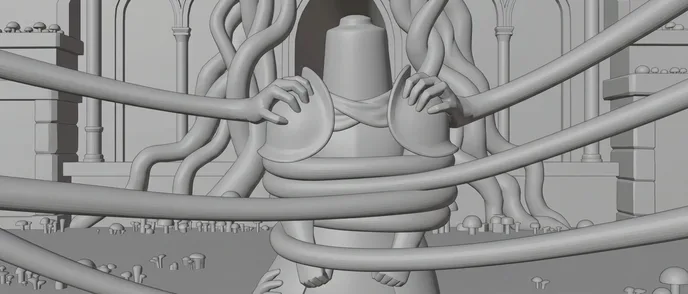
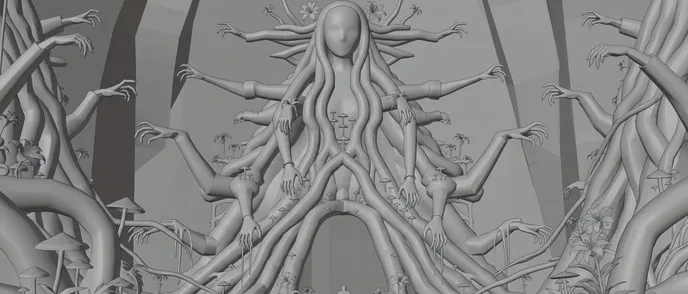
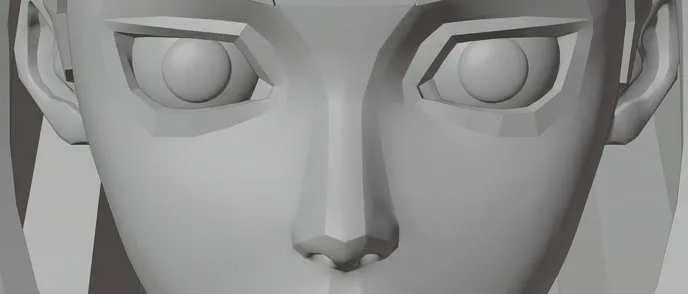
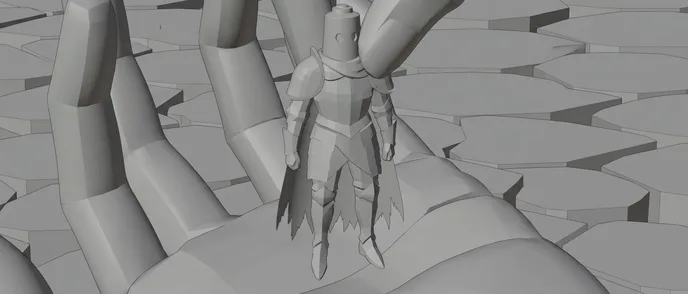
A Mifa file asks for original graphic concepts and a storyboard. This scene is from Lost Garden, episode 1, an animated series made by the ScreenWeaver team with Seedance: the screenplay page, each shot as a storyboard frame, then as the final image. The knight’s helmet hides his face, so every emotion lives in posture and framing, a choice made in the storyboard and not left to the model.

Logline. A small knight wakes up in a dead world and learns he is the last guardian of a seed that could bring the garden back.

Screenplay · episode 1 · the Source Tree

INT. HEART OF THE ROOTS - NIGHT

Living roots coil around LANTERN and pin him down. A voice stops them.

THE SOURCE TREE

Stop. He is my guest.

A giant woman of roots and white lilies opens her arms over the cavern.

Her eyes open. Blue, and vast.

THE SOURCE TREE

Welcome to you, Lantern Knight.

She lifts him in her palm, like a lamp.

THE SOURCE TREE

Do not be afraid. I will not harm you.

In the dark, a seed of light opens. Inside the flower, a sleeping child.

THE SOURCE TREE

You must find yours. Protect her.

CUT TO:

  1. A small lantern-helmed knight bound by thick roots in a ruined hall
    Storyboard frame of the trap shot, in grey
    01

    Medium · the trap

    Medium shot, Lantern bound by thick living roots in a ruined hall, glowing blue mushrooms on the floor, cold light

  2. A giant woman made of roots and white lilies spreads her many arms in a dark cavern
    Storyboard frame of the wide shot, in grey
    02

    Wide · the Source Tree

    Symmetrical wide shot, a giant woman made of roots, arms spread with many hands, white lilies, blue glyphs

  3. Extreme close-up of a giant pale face with piercing blue eyes
    Storyboard frame of the eyes close-up, in grey
    03

    Extreme close-up · the eyes

    Extreme close-up on the giant's face, piercing blue eyes opening, pale skin, soft light from below

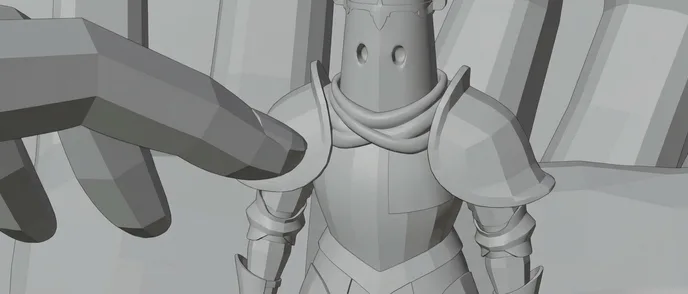
  4. A tiny armored knight stands in the middle of a giant open hand
    Storyboard frame of the palm shot, in grey
    04

    High angle · the palm

    High angle, the tiny knight standing in the center of a giant open palm, stone floor far below

  5. A giant fingertip gently touches the chest of a small armored knight
    Storyboard frame of the touch close-up, in grey
    05

    Close-up · the touch

    Close-up, a giant fingertip gently touches the knight's armored chest, faceless helm, emotion through posture

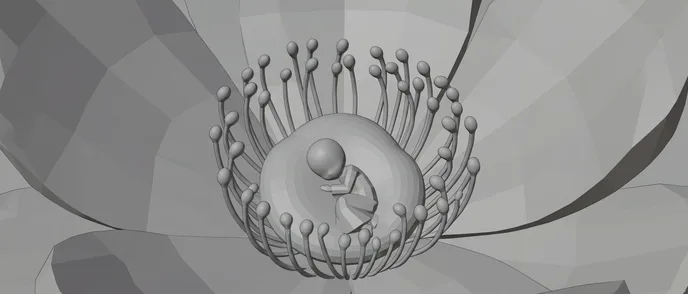
  6. A sleeping pink-haired child curled inside a glowing blue flower
    Storyboard frame of the seed insert, in grey
    06

    Insert · the seed

    Top-down insert, a glowing pale blue flower opening, a sleeping child with pink hair curled inside

Lost Garden, episode 1, 17 minutes, a series pilot by the ScreenWeaver team made with Seedance and a finalist at the AI London Festival. That length sits under the 59 min 59 s ceiling for shorts. Annecy has a category for TV productions and another for short films, so where an episode belongs is a question for the festival’s helpdesk. Press play to land on this scene.

The script

A 9 minute short in five movements.

Annecy sets only a ceiling. Selectors view a long list of films, so a short of about 9 minutes means 9 screenplay pages and 90 to 130 shots of 4 to 6 seconds.
  1. 0:00 to 0:45

    The look

    In animation the design is the signature. Show it in the first shot: a shape language and a palette that belong to this film only.

  2. 0:45 to 2:30

    The rules of the world

    Who moves, what moves, what cannot. Fix the character designs now and keep them identical to the end.

  3. 2:30 to 6:00

    Movement with a reason

    Every shot should move for a purpose. The shot that only shows what the model can do is the one to cut.

  4. 6:00 to 8:00

    The turn

    One feeling carried by gesture and sound. Annecy gives a prize for original soundtrack, so write the score into the screenplay.

  5. 8:00 to 9:00

    The echo

    End on an image that answers the first one. Credits count inside the 59 min 59 s, so leave them room.

A film in a language other than French or English must carry English or French subtitles. Keep a clean master and a subtitled version, and prepare a DCP only if you are selected.

Before the call

From now to the day you submit.

No 2027 deadline is public, so count backwards from last time: 15 February for shorts, 22 January for Mifa Pitches. If 2027 follows the same rhythm, the call stays open about four months. Check the dates the day it opens.
  1. 01

    Now

    Pick the door

    A finished short, a short in progress or a project for Mifa Pitches? Each has its own file and fee. If you do not have a finished film, Mifa Pitches is the route.

  2. 02

    Before the call

    Write to the festival

    Ask inscription@citia.org, or pitchsmifa@citia.org for projects, whether a film made with video models counts as “frame-by-frame” work. Keep the answer: it protects you later.

  3. 03

    Weeks 1 and 2

    Design the film yourself

    Character sheets, set designs and a colour script, approved once. They are the original graphic concepts the Mifa file asks for, and they hold the look across every shot.

  4. 04

    Weeks 3 and 4

    Storyboard it in full

    Generate the shot breakdown and the storyboard from the screenplay, then adjust framing, angle and movement shot by shot. A full or partial storyboard is a required document for a short film project.

  5. 05

    Weeks 5 to 8

    Make the footage or the pilot

    For a finished film, generate scene by scene with Seedance. For a project, a teaser or a pilot is a welcome production element. Log every tool and version as you go.

  6. 06

    The week of the call

    Write the AI statement, then submit

    Name the tools, give the artistic reason, state the rights position and say what AI changes in how you work: the four points the Mifa regulation lists. Pay once, in the right category.

Ways to lose a spot

Seven mistakes the terms make easy.

Annecy’s documents are short and exact. Most traps are administrative, not artistic.
  • The wrong category

    A saved draft cannot change category, and fees for a submission in the wrong category are never refunded. Students must use Graduation Films.

  • Hiding AI in a project file

    The Mifa regulation makes disclosure a condition of the file. Hiding AI breaks the rule you signed, whatever the quality of the images.

  • A project made only of generated images

    Files without original graphic concepts are not eligible. Show designs you control: model sheets, backgrounds, a colour script, references.

  • A script on its own

    Mifa Pitches takes projects in development that are advanced enough to meet the market. The regulation says scripts alone are not taken into account.

  • No subtitles

    A film whose language is neither French nor English must come with English or French subtitles so that it can be understood.

  • Paying before the form is right

    You cannot change a submission once it is paid, and fees for duplicates or retractions are never refunded. Finish the form, check the category and the file, then pay once.

  • Rights you cannot claim

    The submitter declares being the author or legal owner and holding all literary, dramatic and musical rights. Check the terms of every tool, voice and track.

Why ScreenWeaver

Annecy reads design. Start with the storyboard.

ScreenWeaver keeps the screenplay, the designs, the storyboard and the footage in a single project. Annecy imposes no tool, so what you can show and explain counts.
  • A storyboard is part of the file

    Mifa Pitches asks short film projects for a full or partial storyboard. ScreenWeaver generates it from the screenplay, each frame linked to its scene, and you adjust every shot by hand.

  • A design that stays yours

    Characters, locations and references are defined once and reused in every shot. That is the opposite of a pile of unmatched clips, and it speaks to Annecy’s graphic requirement.

  • A record of how it was made

    The AI statement asks for tools, justification and impact on the production. Each shot traces back to its scene, its storyboard frame and its prompt, so the answers are already in the project.

  • Begin before October

    The free Screenwriter plan costs $0 and has no end date. The storyboard stage is Storyboard Beta at $9.99 a month, and Seedance footage follows with the Filmmaker plan. October is close: the screenplay can start today.

Real productions

International festival-recognized films have been written and produced with ScreenWeaver.

ScreenWeaver is already being used as a creative workspace for real AI film productions, from cinematic shorts to animated series pilots selected, nominated, and awarded by international festivals.

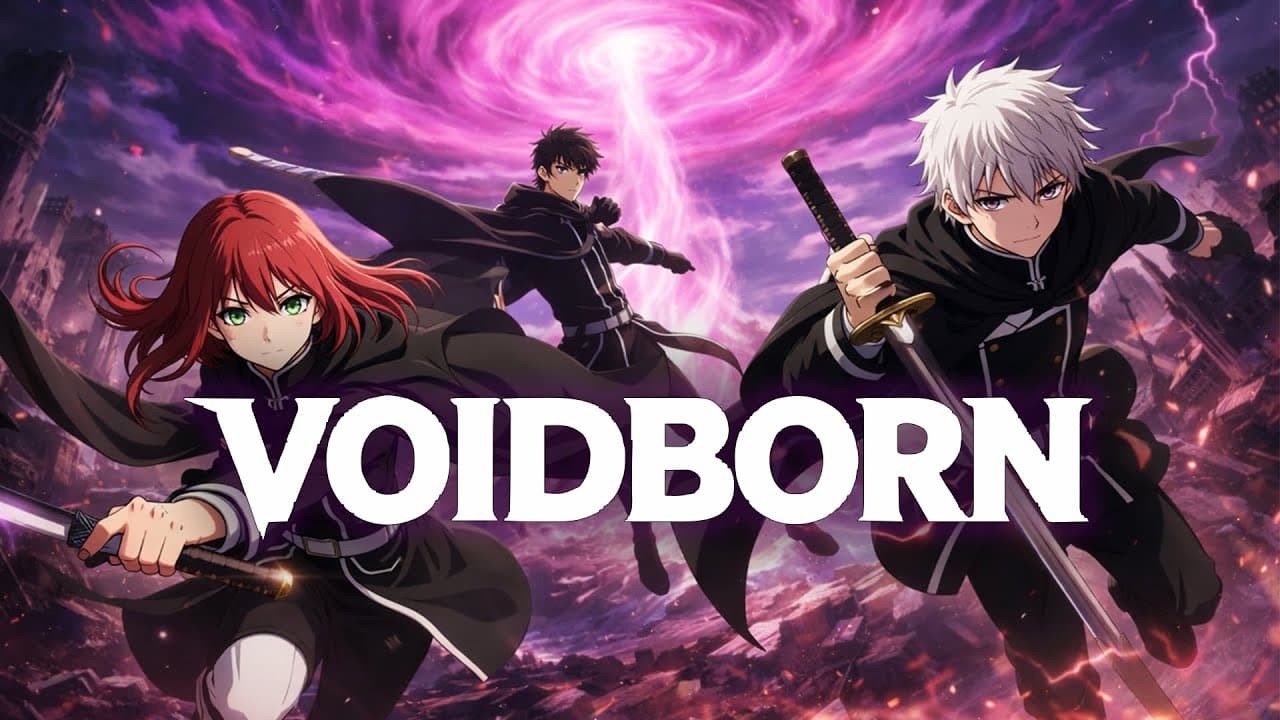
  • Video thumbnail for VOIDBORN

    VOIDBORN

    AI animated / cinematic short

    Festival recognition

    • 1st Place Silver

      Mondial Chroma Awards

    • 2nd Place Dreamina

      Mondial Chroma Awards

    • Award Winner

      Seoul International AI Film Festival

  • Video thumbnail for Les Fils du Vinnana

    Les Fils du Vinnana

    AI short film

    Festival recognition

    • Honorable Mention

      Top Quark Film Festival

    • People's Choice Nominee

      Illuminate Oneness of Humanity

    • Nominee

      ALTFF Supershort

  • Video thumbnail for Lost Garden

    Lost Garden

    AI animated series pilot

    Festival recognition

    • Finalist

      AI London Festival

The pipeline

Write. Board. Produce.

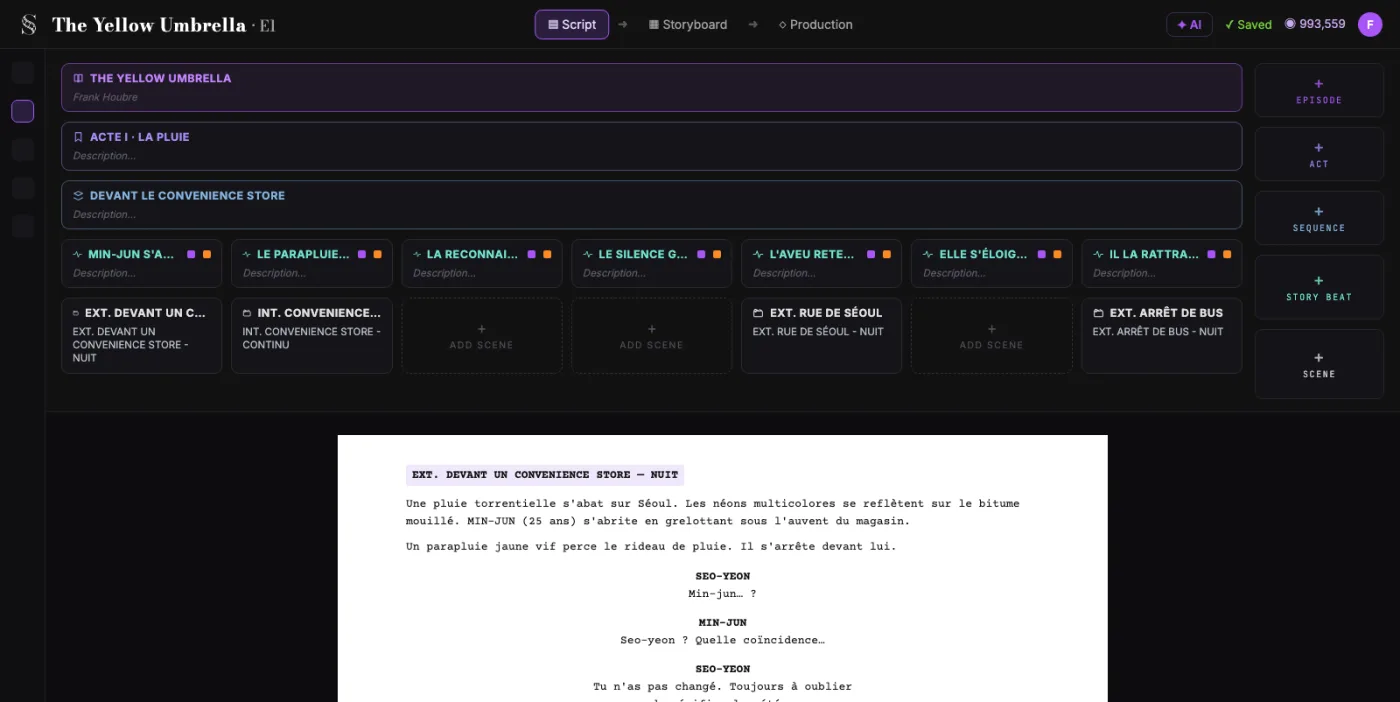
  1. ScreenWeaver screenplay editor: acts, sequences and beats above the formatted script of The Yellow Umbrella

    01The screenplay, enriched

    An industry-standard screenplay editor, and more: a visual outline and beat editor, your writing inspirations (notes, photos, audio) kept next to the page, and an AI researcher to support your writing, not replace it.

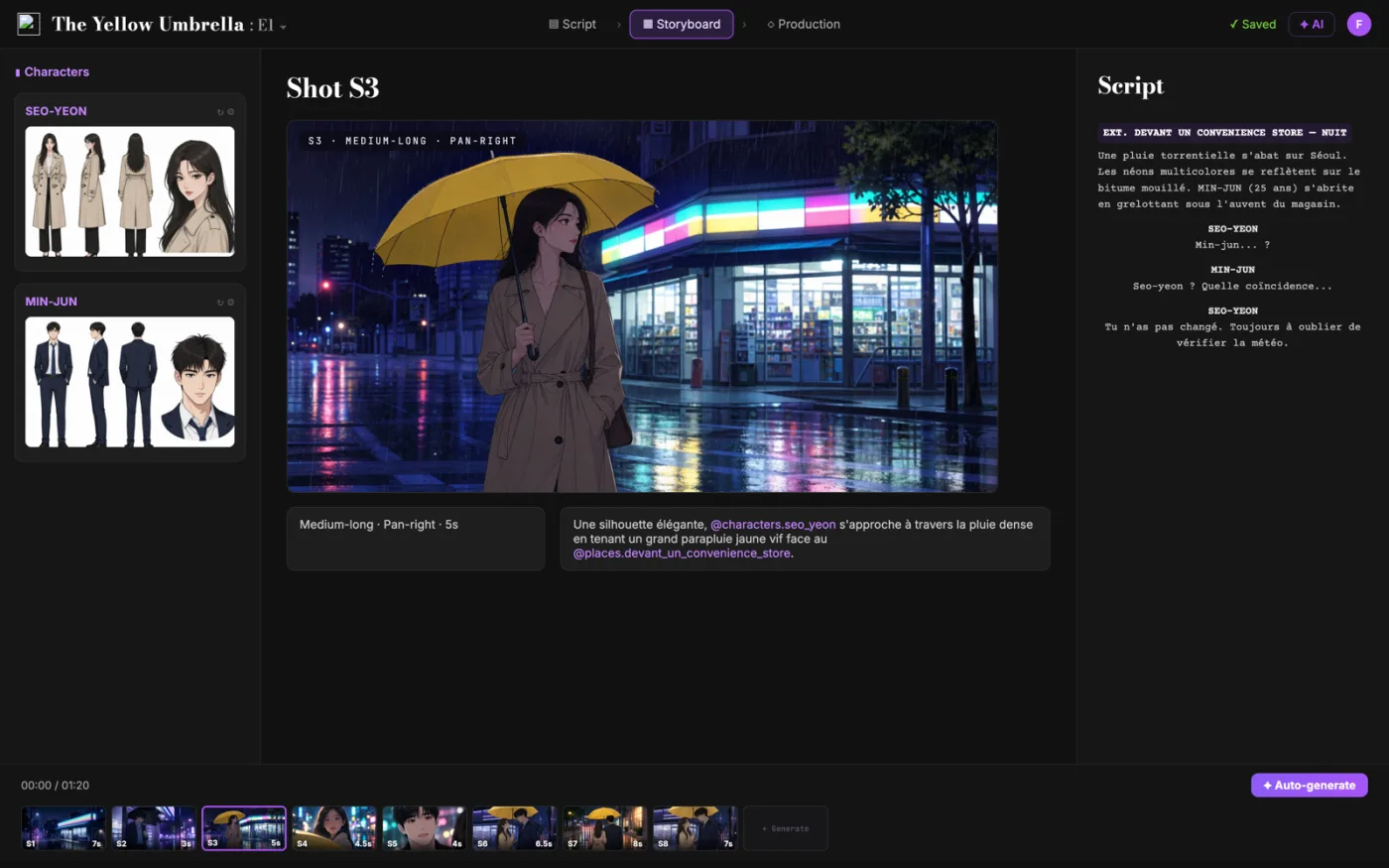
  2. ScreenWeaver storyboard: shot S3 of The Yellow Umbrella with characters, shot settings and the script beside it

    02The storyboard, made easy

    Shot breakdown generated from your screenplay, manual control over every shot (frame, angle, movement, duration), and generative AI previsualization in one click.

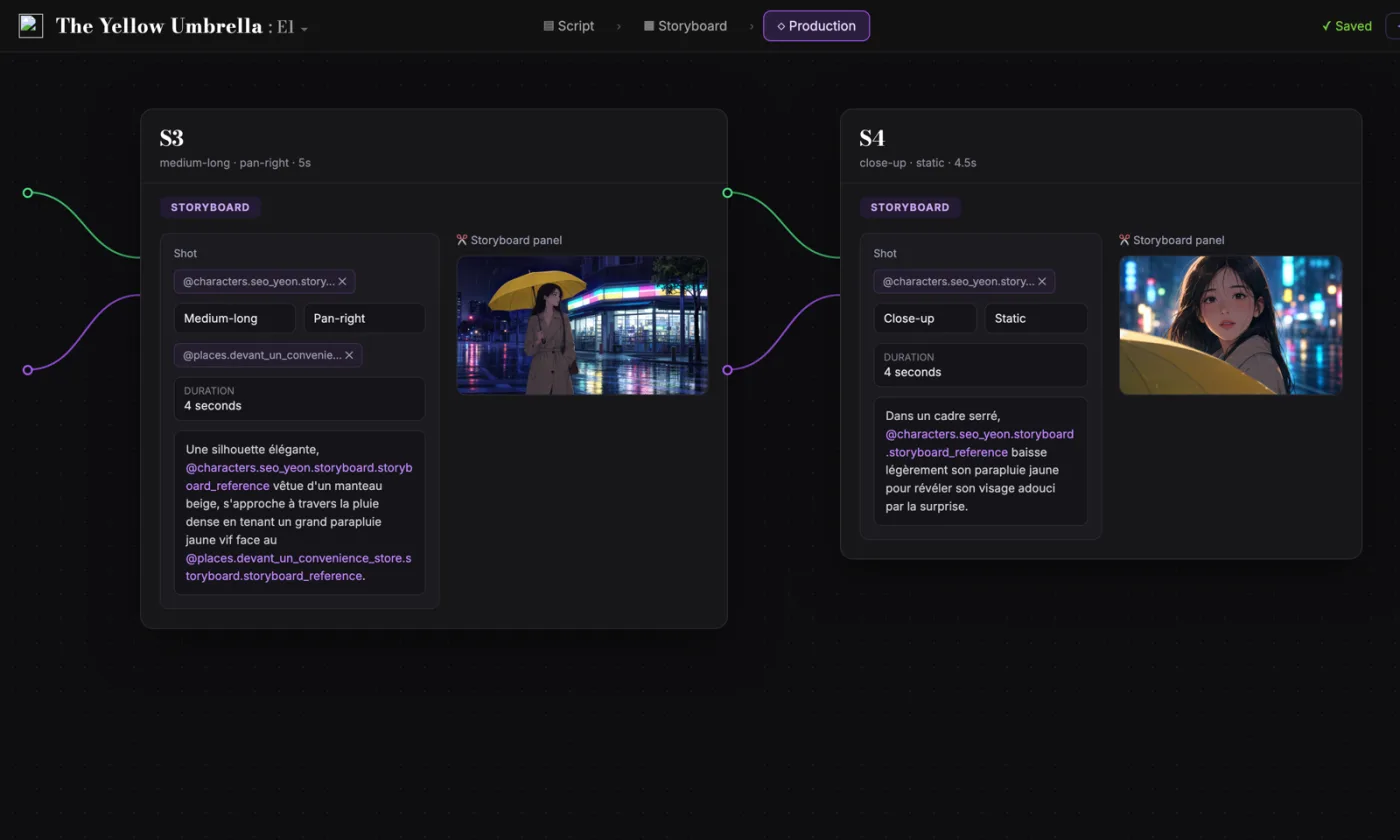
  3. ScreenWeaver production canvas: shots S3 and S4 as connected nodes carrying their storyboard panels and prompts

    03AI production, with finesse

    Footage generation pipelines connected to your screenplay and storyboard. Optimized out of the box, fully editable workflow.

FAQ

Annecy and AI films, your questions

Can you submit an AI film to Annecy?
Nothing in the 2026 terms for short and feature films forbids it, and they hold no clause on AI. The artistic director said in 2024 that there is no rule prohibiting it. The terms accept “frame-by-frame” animated works and do not say whether generated video counts, so ask the festival before you pay.
Do I have to declare AI at Annecy?
For films, the 2026 terms ask for no declaration. For Mifa Pitches projects, substantial use of AI must be stated, with a statement of intent when the impact is significant. Be open in both cases.
When can I submit a film for Annecy 2027?
The festival helpdesk says film submissions for 2027 open in October 2026. No 2027 deadline or fee was online on 1 October 2026. In 2026, short films closed on 15 February and features on 15 March.
How much does it cost?
In 2026 the fee was €30 excl. VAT for short films and €100 for feature films, with no refund. Mifa Pitches charged a flat €20 for short film and immersive projects, €30 for TV series and specials, and €40 for features. The 2027 fees are not out.
What is Mifa Pitches, and can an AI project enter?
Mifa Pitches is the market’s showcase for animation projects in development. An AI project can enter if it states its use of AI, justifies it and shows original graphic concepts. A selected short film project gets an 8 minute live pitch, and up to two authors, or one author and one producer, receive a Mifa accreditation.
Which Annecy awards qualify a short for the Oscars?
The Cristal for a Short Film and the Best Jury Award of the Short Films competition are on the Academy’s list for the 99th Academy Awards, updated on 10 April 2026. Check the list for the next awards year.
Has Annecy selected films made with AI?
Yes. According to 3DVF, the 2024 selection held three shorts in Off-Limits and one graduation film made partly with generative AI, each combined with other techniques. The 2026 terms for films still contain no AI clause.

The call opens this month.

The screenplay and the storyboard are the part you can start now. Write it free today, then design and generate.