AI London Film Festival · Guide

How to win at the AI London Film Festival.A short, a London screen, a jury award.

The rules, the June 2026 winners, how the festival works and a plan for the 7 October 2026 final deadline. Then write, storyboard and generate your short in ScreenWeaver.
  • Final deadline 7 October 2026
  • Screening 14 and 15 November
  • Any AI tool accepted
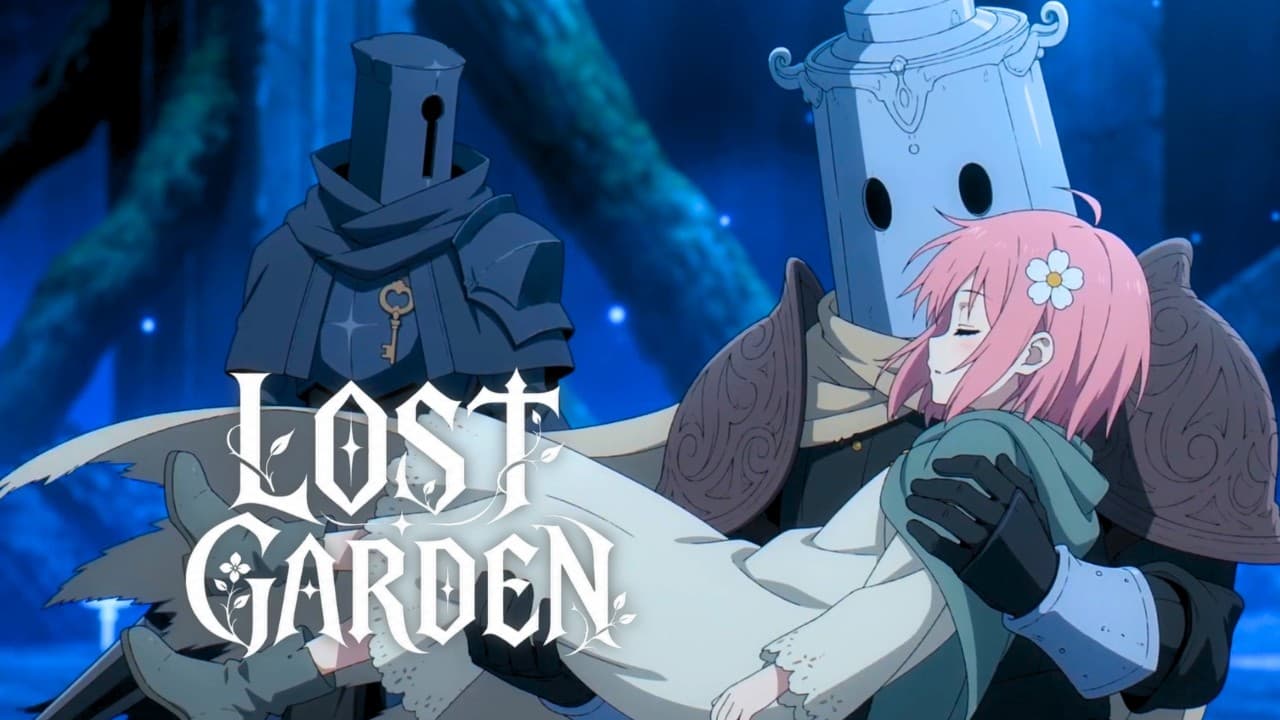
Lost Garden · Episode 1

Independent guide. ScreenWeaver does not organise the AI London Film Festival and is not affiliated with it or with its director. Rules read on 1 October 2026. Official site

Available today in ScreenWeaver: free screenwriting, and a storyboard generated from your screenplay with Storyboard Beta, $9.99 a month.

Rolling out: video generation of each shot, powered by Seedance, with the Filmmaker plan.

The rules on one card

What the festival asks for.

The AI London Film Festival shows short films made with AI in a London cinema. Its rules are short, and most of the judgment is left to the programme: little is published, so what you can learn is worth learning.
Screening
14 and 15 November 2026, Close-Up Cinema, London
Final deadline
7 October 2026
Notification
16 October 2026
Films
Shorts with AI in writing, visuals, animation or production
Runtime
No limit set, most AI films run 1 to 15 minutes
AI tools
Any tool, hybrid films welcome
Who can enter
Anyone, worldwide, students included
Rights
Filmmakers keep full rights

Source: film-festival.ai (home page, FAQ and winners list), read on 1 October 2026. The site lists four deadlines but states no fees, and the award list for November is not published yet. Check FilmFreeway before you pay.

Key dates

Six days to the last window.

The festival runs deadlines in tiers, from early to final. Only the last one is left.
  1. 8 Jun 2026

    Submissions open

    The call for the November edition opened. The early and regular deadlines, on 15 July and 12 August, have passed.

  2. 9 Sep 2026

    Late deadline

    The last but one window has closed.

  3. 7 Oct 2026

    Final deadline

    The last day to submit on FilmFreeway for the November screening.

  4. 16 Oct 2026

    Notification

    Filmmakers hear whether the film is in the official selection.

  5. 14 to 15 Nov 2026

    Festival screening

    A special AI cinema showcase at Close-Up Cinema in central London. After that, the festival says it meets quarterly.

Who decides

A director, a jury and a room.

The festival names no jurors on the pages read. What it does say is who runs it and what a screening looks like, and that is enough to write for.
  • The festival director

    Erich Schultz directs the festival. He founded the London Independent Film Festival and taught filmmaking and screenwriting at the University of London. Expect a screenwriter's eye: structure and clarity before spectacle.

  • Jury awards

    Selected films screen in the programme and compete for jury awards. In June the festival gave 19 of them, most by genre. The jury is not named, so the film has to speak for itself.

  • The room in London

    Screenings include conversations among filmmakers and attendees. Be ready to say how the film was made in two sentences. A cinema audience is not a feed: it sees every flaw on a big screen.

The award categories

Nineteen awards in June.

The June 2026 edition gave 19 awards, from Best Film to Best Micro Short. The November list is not published on the pages read. Six categories that suit a ScreenWeaver short, with the June winner and the angle we would take.
  • 01

    Best Animation

    June 2026: Hugo and the Stray, by Sylvan Siyuan Zhao.

    A stylised world holds together from shot to shot. Fix the character sheets before the first generation.

  • 02

    Best Fantasy Film

    June 2026: Vaelena, by Kenneth Ching.

    Fantasy builds worlds a camera cannot film, which is where AI earns its place. One magic rule, stated early and kept to the end.

  • 03

    Best Sci-Fi Film

    June 2026: Balance: Zero, by Kirill Zeynalov.

    Sci-fi invites spectacle and cliché. Pick one idea and one location and let the concept carry the film.

  • 04

    Best Drama Film

    June 2026: For Sunday, by Giacomo Alberto Mallamaci.

    Drama lives on faces. Keep to two characters and three places so faces stay stable, and let a silence do the work of a line.

  • 05

    Best Micro Short

    Under one minute. June 2026: Terminus, by Varian Qua.

    A 45 second film with one image and one turn is a real entry. It also costs the fewest generations, so you can refine it.

  • 06

    Best Trailer

    June 2026: No Skip Available, by Grigory Androsov.

    A trailer has its own award here, so a teaser for your series can compete. Cut it as a piece of its own, not as a recap.

June 2026

What the June winners tell us.

The June 2026 edition listed 26 films in its official selection and gave 19 awards. Double Happiness, by Di Wu, won Best Film.

  1. 01

    Awards are mostly by genre. They covered drama, comedy, horror, sci-fi, fantasy, crime, action, sport, dance, nature, music, documentary, mockumentary, art, buddy film, animation, trailer and micro short. A film with a clear genre has a clear door.

  2. 02

    Selection is a guide, not a count. Fifteen of the 19 winners appear on the selection list of 26 films shown on the site. Four do not, so the list may be partial.

  3. 03

    Short is welcome. A micro short under one minute has its own award. A tight film beats a long one on a shared screen.

  4. 04

    Odd formats win too. Best Mockumentary, Best Buddy Film and Best Dance Film are on the list. The festival rewards range, not one house style.

  5. 05

    It is a quarterly series. A film that misses the November deadline can aim for the next screening: the festival says it meets every quarter at Close-Up Cinema after November.

Our own finalist

Lost Garden: the Source Tree scene.

The festival awards by genre, and a short has to look like one film. Lost Garden, episode 1 is an animated fantasy made by the ScreenWeaver team with Seedance, and it was a finalist at the AI London Festival 2026. Here is its Source Tree scene: the screenplay page, then each shot as a storyboard frame and as the final image.

Logline. A small knight wakes up in a dead world and learns he is the last guardian of a seed that could bring the garden back.

Screenplay · episode 1 · the Source Tree

INT. HEART OF THE ROOTS - NIGHT

Living roots coil around LANTERN and pin him down. A voice stops them.

THE SOURCE TREE

Stop. He is my guest.

A giant woman of roots and white lilies opens her arms over the cavern.

Her eyes open. Blue, and vast.

THE SOURCE TREE

Welcome to you, Lantern Knight.

She lifts him in her palm, like a lamp.

THE SOURCE TREE

Do not be afraid. I will not harm you.

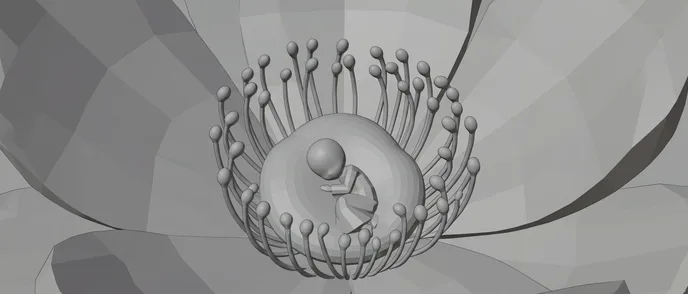
In the dark, a seed of light opens. Inside the flower, a sleeping child.

THE SOURCE TREE

You must find yours. Protect her.

CUT TO:

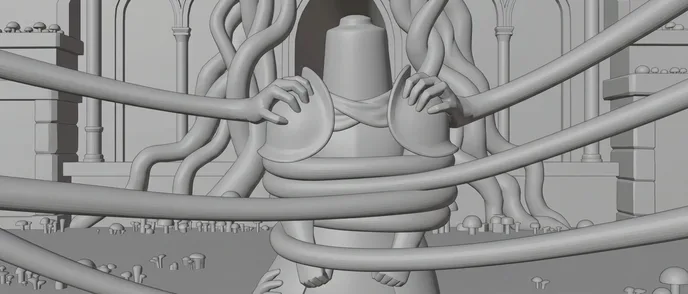
  1. A small lantern-helmed knight bound by thick roots in a ruined hall
    Storyboard frame of the trap shot, in grey
    01

    Medium · the trap

    Medium shot, Lantern bound by thick living roots in a ruined hall, glowing blue mushrooms on the floor, cold light

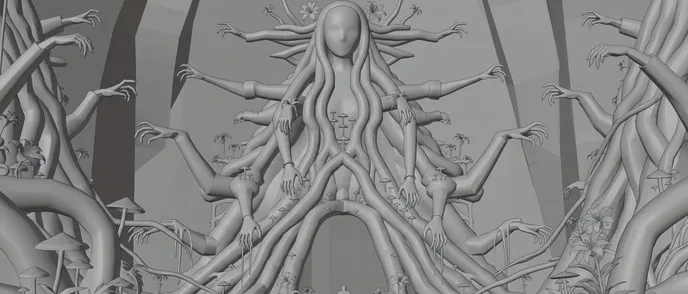
  2. A giant woman made of roots and white lilies spreads her many arms in a dark cavern
    Storyboard frame of the wide shot, in grey
    02

    Wide · the Source Tree

    Symmetrical wide shot, a giant woman made of roots, arms spread with many hands, white lilies, blue glyphs

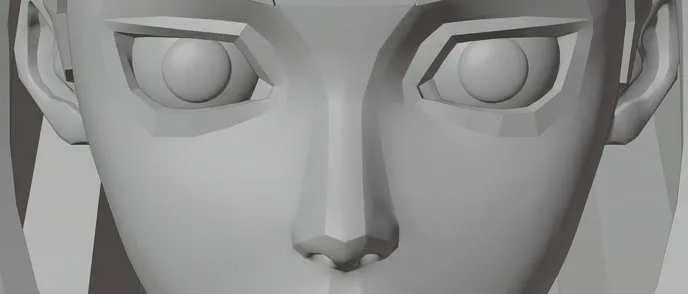
  3. Extreme close-up of a giant pale face with piercing blue eyes
    Storyboard frame of the eyes close-up, in grey
    03

    Extreme close-up · the eyes

    Extreme close-up on the giant's face, piercing blue eyes opening, pale skin, soft light from below

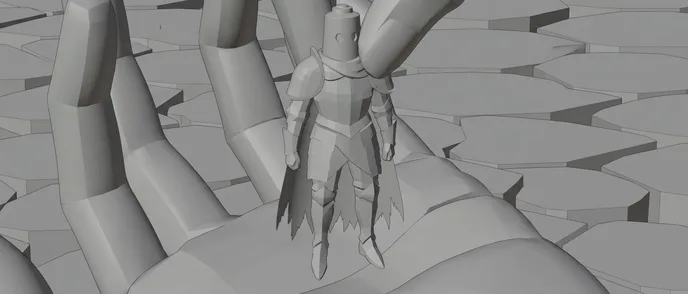
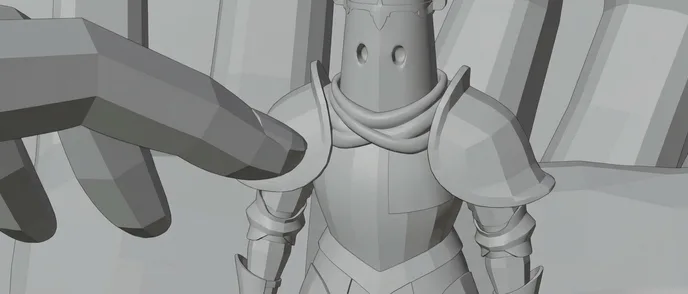
  4. A tiny armored knight stands in the middle of a giant open hand
    Storyboard frame of the palm shot, in grey
    04

    High angle · the palm

    High angle, the tiny knight standing in the center of a giant open palm, stone floor far below

  5. A giant fingertip gently touches the chest of a small armored knight
    Storyboard frame of the touch close-up, in grey
    05

    Close-up · the touch

    Close-up, a giant fingertip gently touches the knight's armored chest, faceless helm, emotion through posture

  6. A sleeping pink-haired child curled inside a glowing blue flower
    Storyboard frame of the seed insert, in grey
    06

    Insert · the seed

    Top-down insert, a glowing pale blue flower opening, a sleeping child with pink hair curled inside

Lost Garden, episode 1, 17 minutes, a finalist at the AI London Festival 2026. The FAQ calls 1 to 15 minutes typical and says longer works may be considered, so the Source Tree scene shows how you would cut a short from it. The player opens on this scene.

The script

A seven minute short in four movements.

The FAQ says most AI films run 1 to 15 minutes. Seven minutes sits in the middle of that range, and fits a programme where many films share a screen. That is 7 screenplay pages and 70 to 105 shots of 4 to 6 seconds.
  1. 0:00 to 1:00

    Setup

    Who, where, what they want. Open on a genre signal, since awards go by genre.

  2. 1:00 to 3:00

    The turn

    The want meets an obstacle that changes the plan.

  3. 3:00 to 5:30

    The escalation

    Raise the cost twice. Keep to a few locations so faces stay consistent.

  4. 5:30 to 7:00

    The landing

    The decision, then an image that answers the opening one.

A cinema screen shows what a phone hides. Check faces, hands and text in a full-screen export before you upload.

Day by day

From today to the 7 October deadline.

Six days. If you have a finished short, this plan gets it in. If you do not, use it as the route to the next quarterly screening: the festival says it meets every three months.
  1. 01

    1 October

    Choose the film and its genre

    Pick a finished short, hybrid or fully AI. Name its genre in one word: that is the award you are aiming for.

  2. 02

    2 October

    Cut to length

    The FAQ calls 1 to 15 minutes typical. Longer works may be considered, but a screening shares its time among many films. Trim whatever repeats itself.

  3. 03

    3 October

    Watch it on a big screen

    Play the export full screen on a TV. Fix faces, hands, flicker and garbled text. Check the sound at low and high volume.

  4. 04

    4 and 5 October

    Write the project page

    The submission asks for information about the project and the AI tools used. Write a short synopsis, name each tool and say what it did. Be exact and be honest.

  5. 05

    6 October

    Submit on FilmFreeway

    Use the link on film-festival.ai. Check the fee tier on the form before you pay, and keep your confirmation.

  6. 06

    7 October

    Final deadline

    Last day. Do not count on the last hour: a form that fails at the end of the day cannot be redone.

  7. 07

    16 October to 15 November

    Notification and screening

    Notification is on 16 October. If selected, plan to attend on 14 and 15 November: the festival adds conversations with filmmakers.

Rejection traps

Eight ways to lose a place.

The rules are short, so the traps are mostly about what is not said. Read the form, not only the front page.
  • Mistaking it for another London festival

    London has several AI film events with similar names, such as AIMA London. Each has its own organiser, rules and dates. Submit only through the link on film-festival.ai.

  • Fees nobody states

    The site lists four deadlines, early to final, and states no fees. Check the amount on FilmFreeway before you pay. The final deadline is 7 October.

  • No meaningful AI

    The festival wants films where AI played a meaningful role. Hybrid films are welcome, but a live-action film with one AI shot is not what the call describes.

  • A vague list of AI tools

    The submission asks about the AI tools used. An empty or fuzzy answer weakens a film that deserves better.

  • Too long for a shared screen

    The FAQ calls 1 to 15 minutes typical and says longer works may be considered depending on the programme. A 25 minute film is a gamble in a two day event.

  • A genre you cannot name

    Awards go by genre. A film that is nothing in particular has no door. Decide what yours is before you submit.

  • Flaws a big screen shows

    A phone hides flicker, warped hands and unreadable text. A cinema does not. Check the film full screen.

  • Planning on unpublished dates

    The festival meets quarterly, but the next call is not announced. Do not plan around dates the site has not published.

Why ScreenWeaver

Any tool is welcome. One project holds the whole film.

ScreenWeaver keeps screenplay, storyboard and footage in one connected project, built for films and series. The festival accepts any AI tool, so you choose how far to go.
  • From the page to the final shot

    ScreenWeaver gives you the screenplay and the storyboard today, and the footage, powered by Seedance, as the Filmmaker plan rolls out. Hybrid films fit too: bring your own live shots.

  • A route a finalist took

    Lost Garden, episode 1 was made by the ScreenWeaver team with Seedance and was a finalist at the AI London Festival 2026. The workflow is the one the pipeline gives you.

  • Your tool list, easy to write

    The submission asks which AI tools you used. In a connected project, each shot traces back to its scene and its storyboard frame, so the answer is already on file.

  • Write before you decide

    The Screenwriter plan costs $0 and does not expire. Storyboard Beta adds the storyboard for $9.99 a month. You can start on the page this evening and pick the call later.

Real productions

International festival-recognized films have been written and produced with ScreenWeaver.

ScreenWeaver is already being used as a creative workspace for real AI film productions, from cinematic shorts to animated series pilots selected, nominated, and awarded by international festivals.

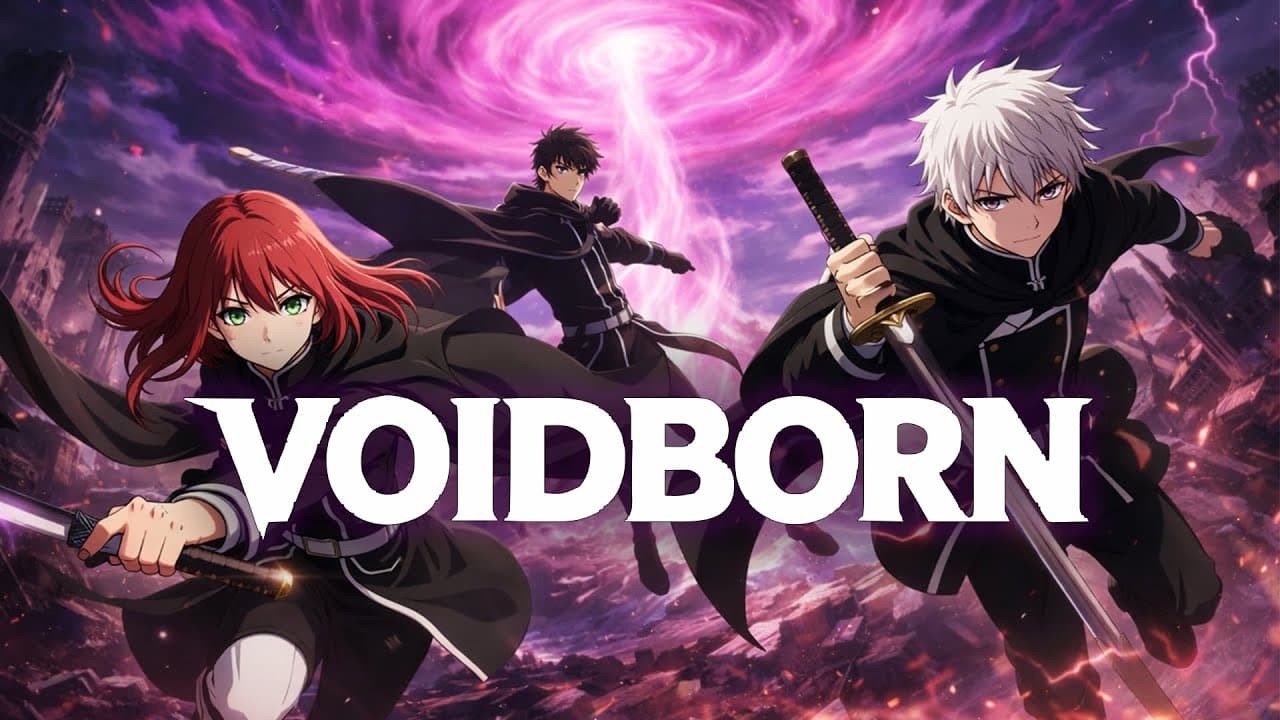
  • Video thumbnail for VOIDBORN

    VOIDBORN

    AI animated / cinematic short

    Festival recognition

    • 1st Place Silver

      Mondial Chroma Awards

    • 2nd Place Dreamina

      Mondial Chroma Awards

    • Award Winner

      Seoul International AI Film Festival

  • Video thumbnail for Les Fils du Vinnana

    Les Fils du Vinnana

    AI short film

    Festival recognition

    • Honorable Mention

      Top Quark Film Festival

    • People's Choice Nominee

      Illuminate Oneness of Humanity

    • Nominee

      ALTFF Supershort

  • Video thumbnail for Lost Garden

    Lost Garden

    AI animated series pilot

    Festival recognition

    • Finalist

      AI London Festival

The pipeline

Write. Board. Produce.

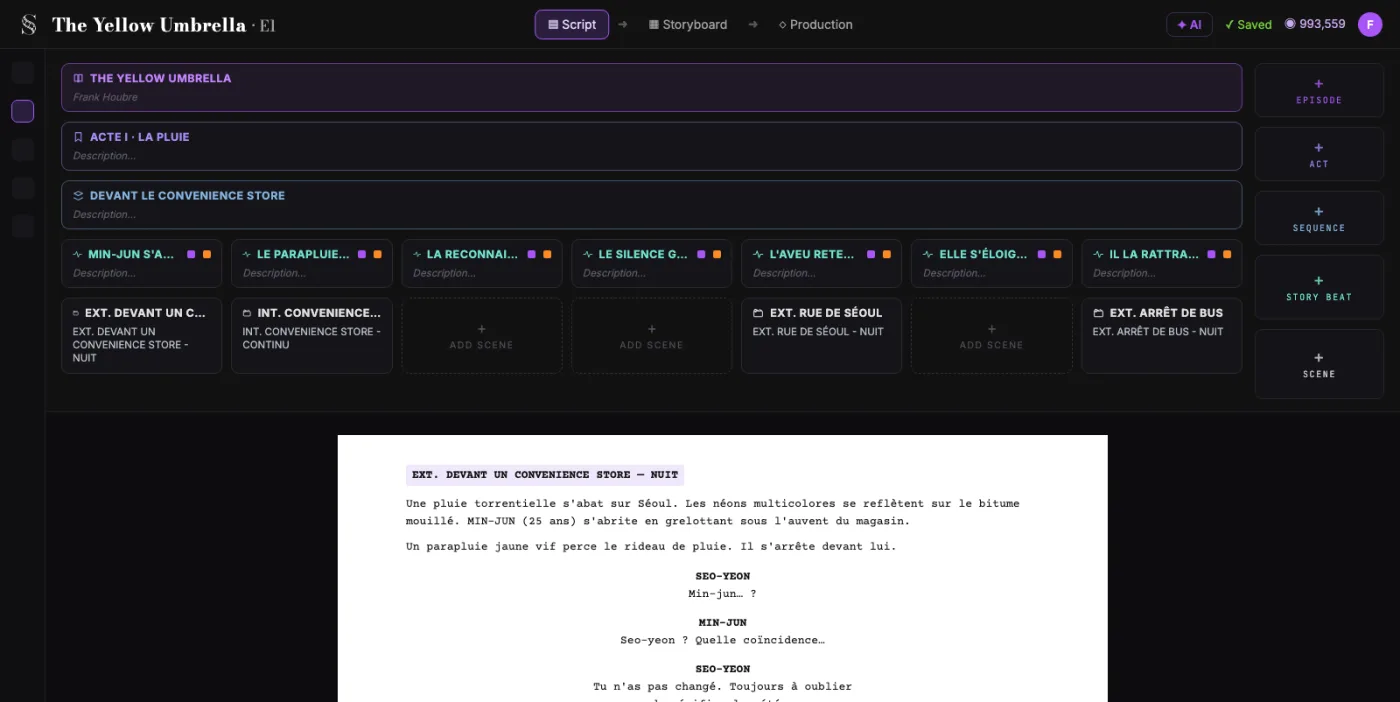
  1. ScreenWeaver screenplay editor: acts, sequences and beats above the formatted script of The Yellow Umbrella

    01The screenplay, enriched

    An industry-standard screenplay editor, and more: a visual outline and beat editor, your writing inspirations (notes, photos, audio) kept next to the page, and an AI researcher to support your writing, not replace it.

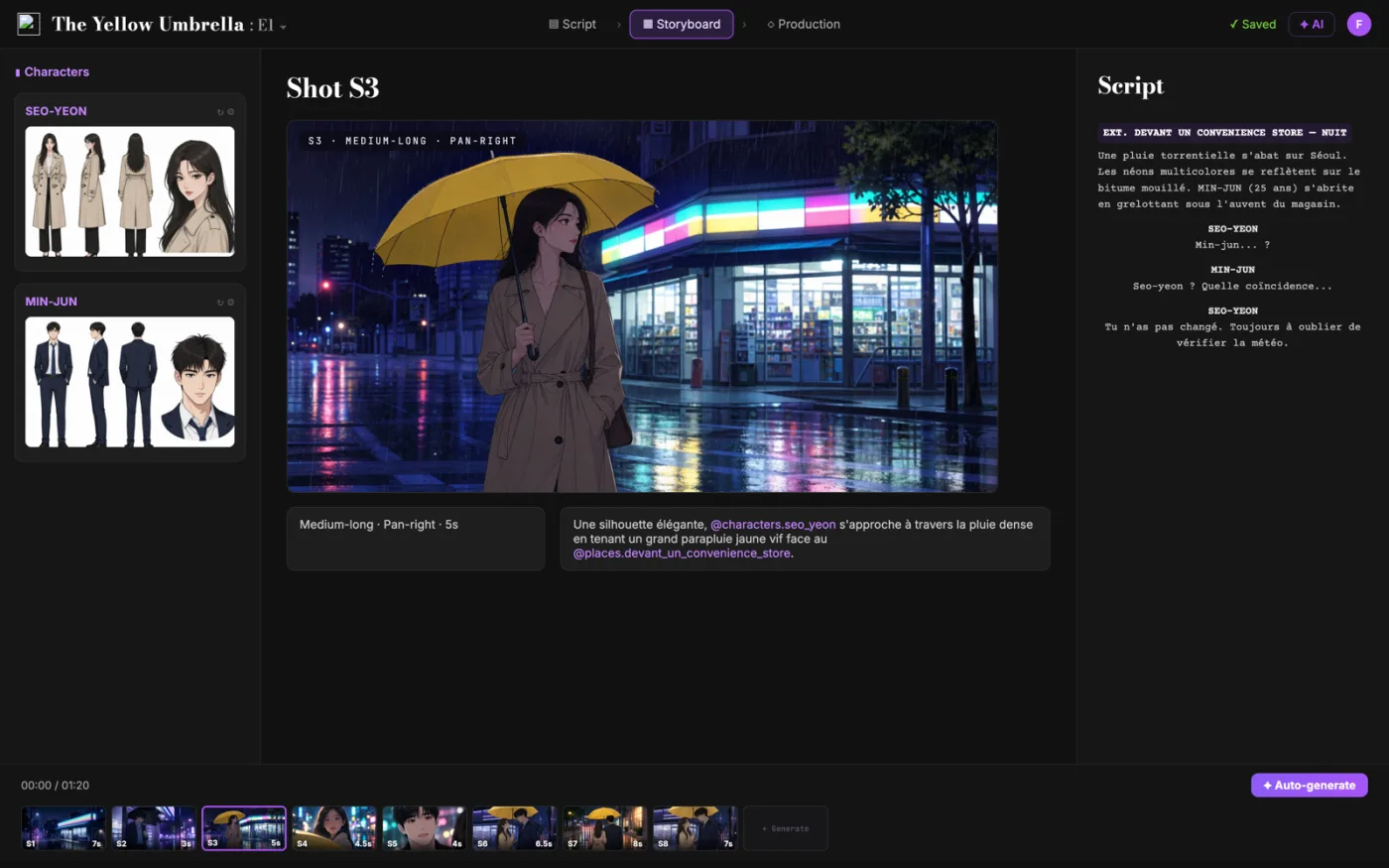
  2. ScreenWeaver storyboard: shot S3 of The Yellow Umbrella with characters, shot settings and the script beside it

    02The storyboard, made easy

    Shot breakdown generated from your screenplay, manual control over every shot (frame, angle, movement, duration), and generative AI previsualization in one click.

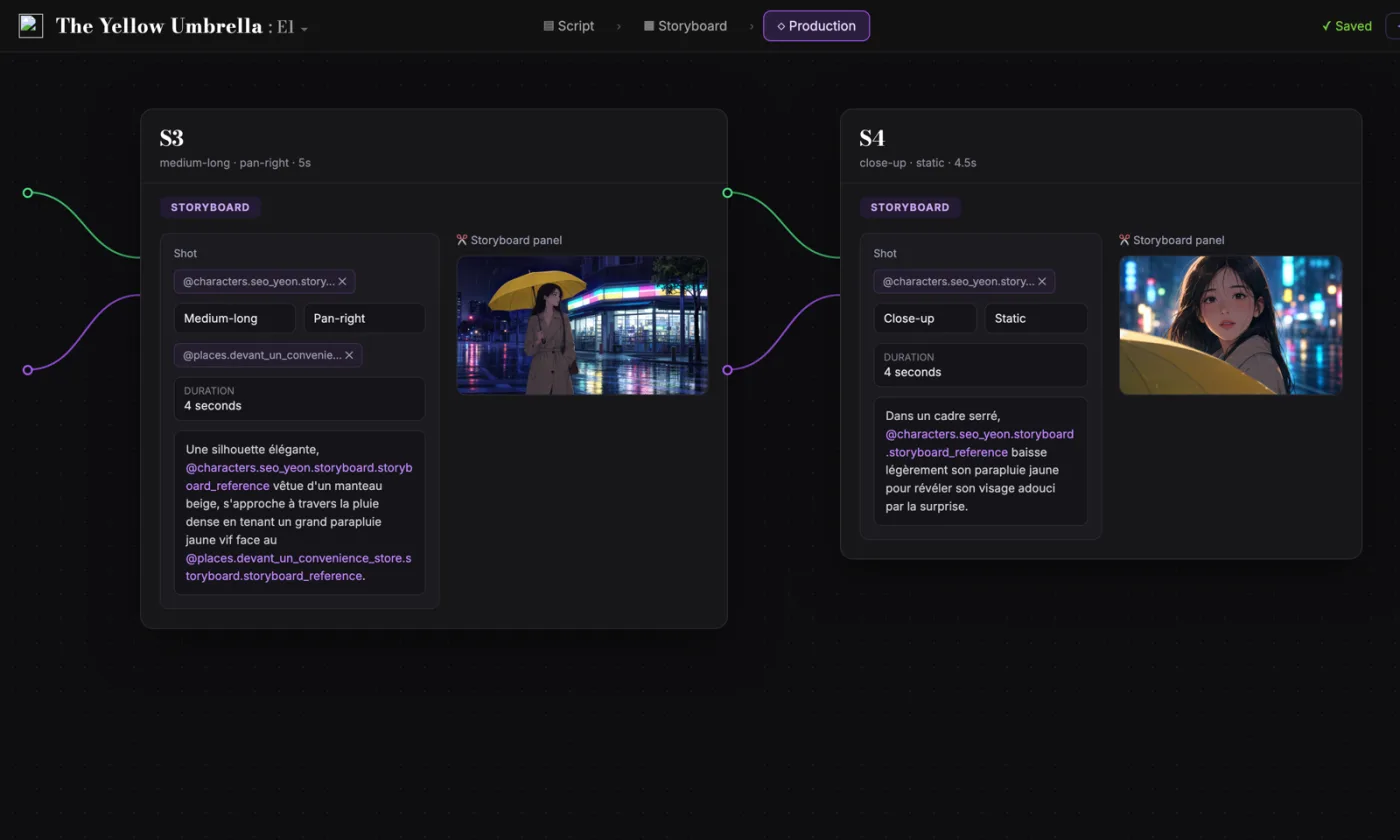
  3. ScreenWeaver production canvas: shots S3 and S4 as connected nodes carrying their storyboard panels and prompts

    03AI production, with finesse

    Footage generation pipelines connected to your screenplay and storyboard. Optimized out of the box, fully editable workflow.

FAQ

The AI London Film Festival, your questions

How do you win at the AI London Film Festival?
Selected films compete for jury awards, and in June the awards were mostly by genre, from Best Film to Best Micro Short. The festival publishes no scoring grid. Pick a clear genre, tell one story with a turn, and finish a clean file that holds up on a cinema screen.
When does the last window close?
The final deadline is 7 October 2026, with notification on 16 October. The festival screens on 14 and 15 November at Close-Up Cinema in central London. Earlier deadlines were 15 July, 12 August and 9 September.
Can I use any AI tool?
Yes. The FAQ says filmmakers may use any AI tools: generative video models, image generators, voice synthesis and AI-assisted editing. Hybrid films are accepted as long as AI plays a meaningful role.
How long should the film be?
No limit is set on the site. The FAQ says most AI films run between 1 and 15 minutes, and that longer works may be considered depending on the programme.
Do I need to live in London?
No. Filmmakers from anywhere can submit, and students and independent creators are welcome. Selected films screen in London on 14 and 15 November.
Do I keep my rights?
Yes. Filmmakers retain full rights. Submitting only gives the festival permission to screen the film in its programme.
How much does it cost to submit?
The site states no fee. Submissions go through FilmFreeway, where the amount depends on the deadline you choose. Check the form before you pay.
Is it the same as AIMA London?
No. AIMA London is a different event, with its own organiser, rules and dates, on 7 and 8 November. The AI London Film Festival is run from film-festival.ai and screens at Close-Up Cinema.

Six days. Or the next screening.

Start the screenplay tonight, free. Storyboard it, then generate it with Seedance.