African AI Film Festival 2026 · Guide

How to win the African AI Film Festival.One African story. Ten minutes. Hollywood and Kampala.

Who may enter, the five criteria the jury uses, nine awards and a plan to the late deadline of 20 October 2026. Then write the story, storyboard it and build the film in ScreenWeaver.
  • Late deadline 20 October 2026
  • African connection required
  • Free for African-based filmmakers
Lost Garden · Episode 1

Independent guide. ScreenWeaver does not organise the African AI Film Festival and is not affiliated with the African AI Arts and Culture Institute. Rules read on 1 October 2026. Official festival site

Available today in ScreenWeaver: free screenwriting, and a storyboard generated from your screenplay with Storyboard Beta, $9.99 a month.

Rolling out: video generation of each shot, powered by Seedance, with the Filmmaker plan.

The rules on one card

What the inaugural edition requires.

The first African AI Film Festival is run by a California nonprofit and calls itself the first global stage for African and diaspora filmmakers working with AI. Two conditions come before any craft question: an African connection, and AI at the centre of the film.
Late deadline
20 October 2026, when submissions close
Fee
$5 to $10 late, always free for African-based and student entrants
Running time
1 to 10 minutes, documentary 5 to 20
AI requirement
AI central to the film, minor colour correction does not count
African connection
At least one of three: heritage, subject, collaboration
Delivery
H.264 MP4, 1080p minimum, 24 to 30 fps
Eligibility
18 and over, finished on or after 1 January 2024
The festival
Hollywood on 21 November, Kampala on 12 December

Source: the festival’s home page and FAQ on africanaifilmfestival.org, read on 1 October 2026. The FilmFreeway page could not be opened for this guide. The organiser can change its rules: check it the week you submit.

Key dates

Nineteen days to the late deadline.

Submissions opened on 16 June 2026 and the free regular window has closed. Count backwards from 20 October, not forwards from your idea.
  1. 16 Jun 2026

    Submissions open

    Entries go through FilmFreeway. You upload the film, name your AI tools and pick one category.

  2. 30 Sep 2026

    Free regular deadline

    Closed on 30 September. After it, non-African entrants pay a late fee of $5 to $10.

  3. 20 Oct 2026

    Late deadline, submissions close

    Final day for entries. Africa-based filmmakers and Student and Emerging entrants still pay nothing.

  4. Early Nov 2026

    Selections announced

    Selected films are told in early November, a few weeks before the first screening.

  5. 21 Nov and 12 Dec 2026

    Hollywood, then Kampala

    Selected films screen live at the Hollywood premiere on 21 November and at the Kampala premiere on 12 December.

How films are judged

Five criteria, weights unpublished.

The festival lists five criteria and does not give their weights. Two of them are about Africa and about AI, which makes this grid unlike a general festival’s. Below each, our advice.
  • Storytelling and emotional impact

    The festival’s own question is whether the film moves you. One character, one wish, one change, in a few minutes. Write the ending first, then work back to the opening.

  • Creative and innovative use of AI

    The rules ask if AI is used inventively and not as a gimmick. Use it for what a small crew cannot film: a vanished city, a spirit, a scale. Then say how, in your disclosure.

  • Cultural authenticity and resonance

    This asks whether the film genuinely connects to African stories and voices. A name, a mask or a landscape is not enough. Work with people who know the language, the clothing and the place, and credit them.

  • Technical craft

    Coherence, editing, sound and visual quality. Faces that stay the same, clean subtitles and a mix that does not clip. The spec is firm: 1080p, H.264 MP4.

  • Originality of vision

    Fresh, distinct, memorable. With a first edition, there is no past winner to copy, so a film that follows a clear personal idea stands out.

AI disclosure is mandatory and, says the festival, never counts against your score. The Audience Award is a separate public vote, independent of the jury.

Who decides

Four named judges, from four countries.

The festival names its jury and its advisory board. A journalist, a director, a cinematographer and an AI filmmaker look at the films, and the public votes separately for the Audience Award.
  • Amira Sayed, Egypt

    An award-winning journalist and media educator, with a master’s in Television and Digital Journalism from the American University in Cairo. Her documentary Ladies of The Nile won the 2025 BEA Festival of Media Arts Award of Excellence. Her own work is factual, so a documentary entry meets a trained eye.

  • Joan Kabugu, Kenya

    A director and the founder of ECILA Films, honoured as a WIFA Best Director and a FortyUnder40 Africa laureate. A working director reads a film for direction and clarity of intent.

  • T.J. Seaman, Nigeria

    A cinematographer with nearly three decades of feature and documentary work, and CEO of CineCulture Films. Expect an eye for light and framing, so give every shot a consistent light.

  • Pauline Nabbosa, Uganda

    An AI filmmaker, digital creator and founder of the AI media firm Kreator Mastery. She will notice the difference between a film that uses AI well and one that shows off its tools.

The four categories

Pick one category. A film enters only one.

There is no theme beyond the African connection, but four categories with their own length limits. Choose before you write, since the category fixes the running time. Beneath each card is the angle we would take.
  • 01

    AI Short Film

    1 to 10 minutes. Narrative fiction brought to life with generative tools.

    The default choice and the busiest one. Open on a strong image with a question, and finish before the ten minute line, with room for credits.

  • 02

    AI Animation

    1 to 10 minutes. Animated work in any style: 2D, 3D, experimental.

    Any style is allowed, so pick one and keep it. A single held look beats a mix of styles, and a stylised world forgives generation glitches that realism does not.

  • 03

    AI Documentary

    5 to 20 minutes. Non-fiction and factual storytelling, AI-enhanced.

    The longest category and the one with the strictest ethics rule: no generated depiction of a real person without documented consent. Use AI for reconstruction and atmosphere, and keep real faces real.

  • 04

    Student and Emerging

    1 to 10 minutes. First-time filmmakers and enrolled students, with guardian consent under 18.

    Always free to enter, at any deadline. A first film should stay small and finished: two characters, one place, one clear change.

From script to screen

Lost Garden: one scene, six shots.

The festival’s first question is “does it move you?”. This is the Source Tree scene from Lost Garden, episode 1, an animated series made by the ScreenWeaver team with Seedance: the screenplay page, then each shot as a storyboard frame and as the final image.

Logline. A small knight wakes up in a dead world and learns he is the last guardian of a seed that could bring the garden back.

Screenplay · episode 1 · the Source Tree

INT. HEART OF THE ROOTS - NIGHT

Living roots coil around LANTERN and pin him down. A voice stops them.

THE SOURCE TREE

Stop. He is my guest.

A giant woman of roots and white lilies opens her arms over the cavern.

Her eyes open. Blue, and vast.

THE SOURCE TREE

Welcome to you, Lantern Knight.

She lifts him in her palm, like a lamp.

THE SOURCE TREE

Do not be afraid. I will not harm you.

In the dark, a seed of light opens. Inside the flower, a sleeping child.

THE SOURCE TREE

You must find yours. Protect her.

CUT TO:

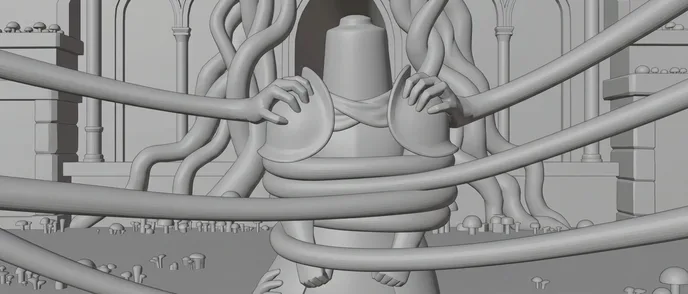
  1. A small lantern-helmed knight bound by thick roots in a ruined hall
    Storyboard frame of the trap shot, in grey
    01

    Medium · the trap

    Medium shot, Lantern bound by thick living roots in a ruined hall, glowing blue mushrooms on the floor, cold light

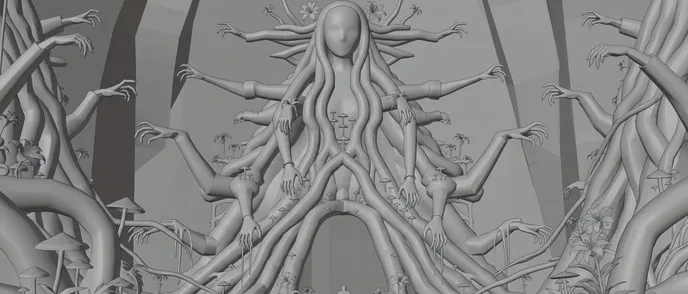
  2. A giant woman made of roots and white lilies spreads her many arms in a dark cavern
    Storyboard frame of the wide shot, in grey
    02

    Wide · the Source Tree

    Symmetrical wide shot, a giant woman made of roots, arms spread with many hands, white lilies, blue glyphs

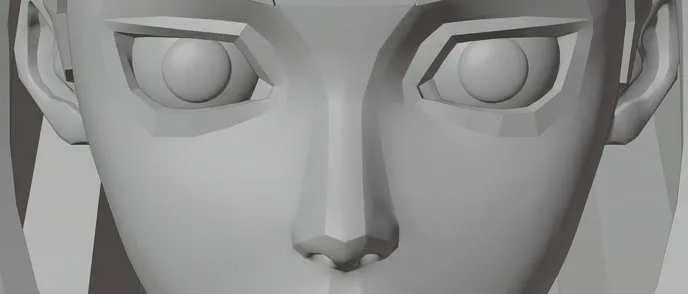
  3. Extreme close-up of a giant pale face with piercing blue eyes
    Storyboard frame of the eyes close-up, in grey
    03

    Extreme close-up · the eyes

    Extreme close-up on the giant's face, piercing blue eyes opening, pale skin, soft light from below

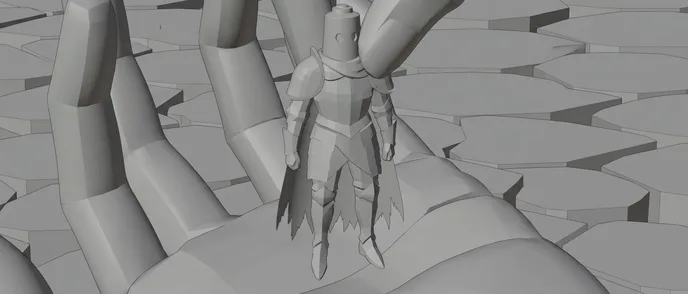
  4. A tiny armored knight stands in the middle of a giant open hand
    Storyboard frame of the palm shot, in grey
    04

    High angle · the palm

    High angle, the tiny knight standing in the center of a giant open palm, stone floor far below

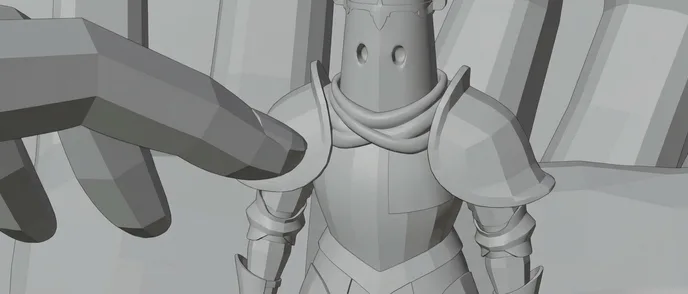
  5. A giant fingertip gently touches the chest of a small armored knight
    Storyboard frame of the touch close-up, in grey
    05

    Close-up · the touch

    Close-up, a giant fingertip gently touches the knight's armored chest, faceless helm, emotion through posture

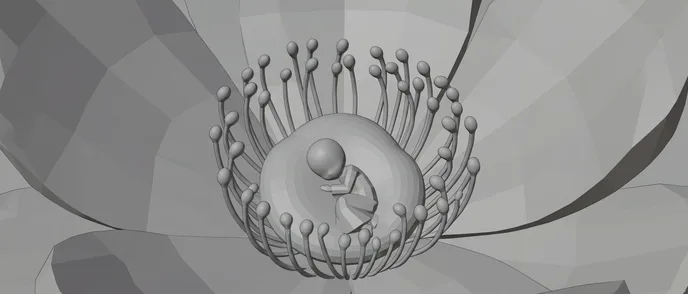
  6. A sleeping pink-haired child curled inside a glowing blue flower
    Storyboard frame of the seed insert, in grey
    06

    Insert · the seed

    Top-down insert, a glowing pale blue flower opening, a sleeping child with pink hair curled inside

Lost Garden, episode 1 runs 17 minutes, so it would need a tight cut to fit the 10 minute limit of the short and animation categories. It shows the festival’s first criterion at work: a scene held by two characters and a feeling. Episode 1 was a finalist at the AI London Festival. The player opens on the Source Tree, about 7 minutes 35 seconds in.

The script

Eight minutes, four movements.

Aim for 8 minutes: two minutes under the limit leaves room for subtitles, a title and credits. That is about 8 screenplay pages and 70 to 100 shots of 4 to 6 seconds.
  1. 0:00 to 0:50

    The image and the question

    A place, a person, and a reason to keep watching.

  2. 0:50 to 2:50

    The place and the longing

    Show where the story lives and what the character wants. If it matters, show it through gesture and sound.

  3. 2:50 to 6:25

    The obstacle

    One event that changes what is possible. The scene people will talk about belongs here.

  4. 6:25 to 8:00

    The change

    What the character has become, shown rather than told. Close on a single image and roll the credits.

A film in a language other than English needs English subtitles, burned in or as an .srt file. Write the dialogue in its language first, then the translation: subtitles written afterwards read as an afterthought.

Day by day

Nineteen days, step by step.

Today is 1 October: nineteen days remain. This plan is tight and realistic for a short if the story is ready in your head. If it is not, aim the same film at the next festival you can reach.
  1. 01

    1 to 3 October

    The connection and the category

    State your African connection honestly: heritage, subject or collaboration. Choose AI Short Film, Animation, Documentary or Student and Emerging, and fix the length.

  2. 02

    4 to 6 October

    The screenplay

    Eight pages, little dialogue. Write it free in ScreenWeaver, in industry format, and read it aloud to someone from the culture you depict.

  3. 03

    7 to 9 October

    Look and shot list

    Pin down one reference per character and per place. Turn the screenplay into a shot list and tune every frame. A consistent look is cheaper to plan than to fix.

  4. 04

    10 to 15 October

    The footage

    Generate scene by scene with the video tools you hold today, since the festival imposes none. ScreenWeaver’s own video generation is rolling out. Keep every prompt.

  5. 05

    16 to 18 October

    Cut, mix and subtitle

    Cut to about 8 minutes, mix the sound, add English subtitles if needed, and export H.264 MP4 at 1080p and 24 to 30 fps.

  6. 06

    19 and 20 October

    Disclose and submit

    List the main AI tools and models and say how you used them. Upload on FilmFreeway before the end of 20 October. Keep the project files in case a question comes after an award.

Disqualification traps

Eight ways to lose the film on a technicality.

Most are on the home page and the FAQ, in short sentences. The festival can disqualify at any stage, even after an award.
  • No real African connection

    An entry must meet at least one condition: a lead filmmaker of African or diaspora heritage, an African subject, language, history or culture, or an African collaboration. Add one by genuine work, never by decoration.

  • AI that is not central

    Generated or augmented video, animation, imagery, voice, music or script must be central to the film. Minor AI colour correction does not qualify.

  • A film in two categories

    A film may be entered in one category only. A 12 minute short does not fit the 10 minute limit and must be cut or sent to the documentary category if it is factual.

  • A real person, generated

    No AI-generated depiction of a real, identifiable person without documented consent, and no deepfake meant to deceive or defame. Create fictional characters instead.

  • A skipped disclosure

    It is mandatory: list the main AI tools and models and describe how AI was used. The festival says it never counts against your score, so hide nothing.

  • Rights nobody granted

    You must own or have secured all rights, including third-party assets, music and likenesses, and warrant the work does not knowingly infringe anyone’s rights. Check each music source.

  • The wrong specification

    H.264 MP4, at least 1080p, 24 to 30 frames per second, with English subtitles burned in or as an .srt file for a film in another language.

  • A film finished too early

    Films must be completed on or after 1 January 2024. Earlier work does not qualify, though a film that has already screened or been released is welcome in Year One.

Why ScreenWeaver

No tool imposed. A story to build well.

The festival lets you use any tool and asks you to name them. ScreenWeaver covers the part tools rarely help with: screenplay, storyboard and footage in one connected project.
  • Your disclosure, already written

    Every shot links to a scene, a frame and a prompt. The list of AI tools and tasks the festival asks for comes from the project, not from memory.

  • A script before the footage

    Storytelling and emotional impact lead the five criteria. A screenplay in industry format, read aloud and storyboarded, shows you the weak minute before you spend on it.

  • Faces that stay faces

    Characters, locations and references carry across the film, which is what makes a short read as direction. It matters in the documentary and animation categories as much as in fiction.

  • Start for free today

    The Screenwriter plan costs nothing and never expires, which suits a nineteen-day sprint. A storyboard is $9.99 a month with Storyboard Beta. Seedance video generation is coming with the Filmmaker plan, now rolling out.

Real productions

International festival-recognized films have been written and produced with ScreenWeaver.

ScreenWeaver is already being used as a creative workspace for real AI film productions, from cinematic shorts to animated series pilots selected, nominated, and awarded by international festivals.

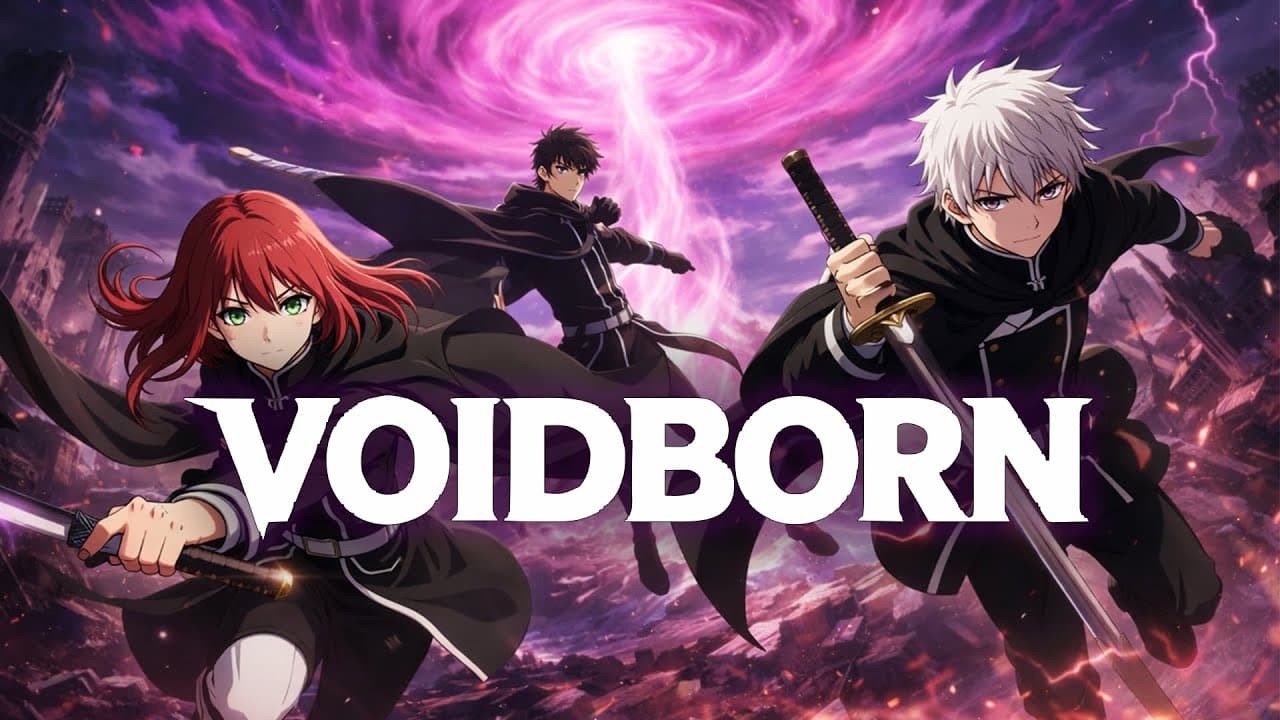
  • Video thumbnail for VOIDBORN

    VOIDBORN

    AI animated / cinematic short

    Festival recognition

    • 1st Place Silver

      Mondial Chroma Awards

    • 2nd Place Dreamina

      Mondial Chroma Awards

    • Award Winner

      Seoul International AI Film Festival

  • Video thumbnail for Les Fils du Vinnana

    Les Fils du Vinnana

    AI short film

    Festival recognition

    • Honorable Mention

      Top Quark Film Festival

    • People's Choice Nominee

      Illuminate Oneness of Humanity

    • Nominee

      ALTFF Supershort

  • Video thumbnail for Lost Garden

    Lost Garden

    AI animated series pilot

    Festival recognition

    • Finalist

      AI London Festival

The pipeline

Write. Board. Produce.

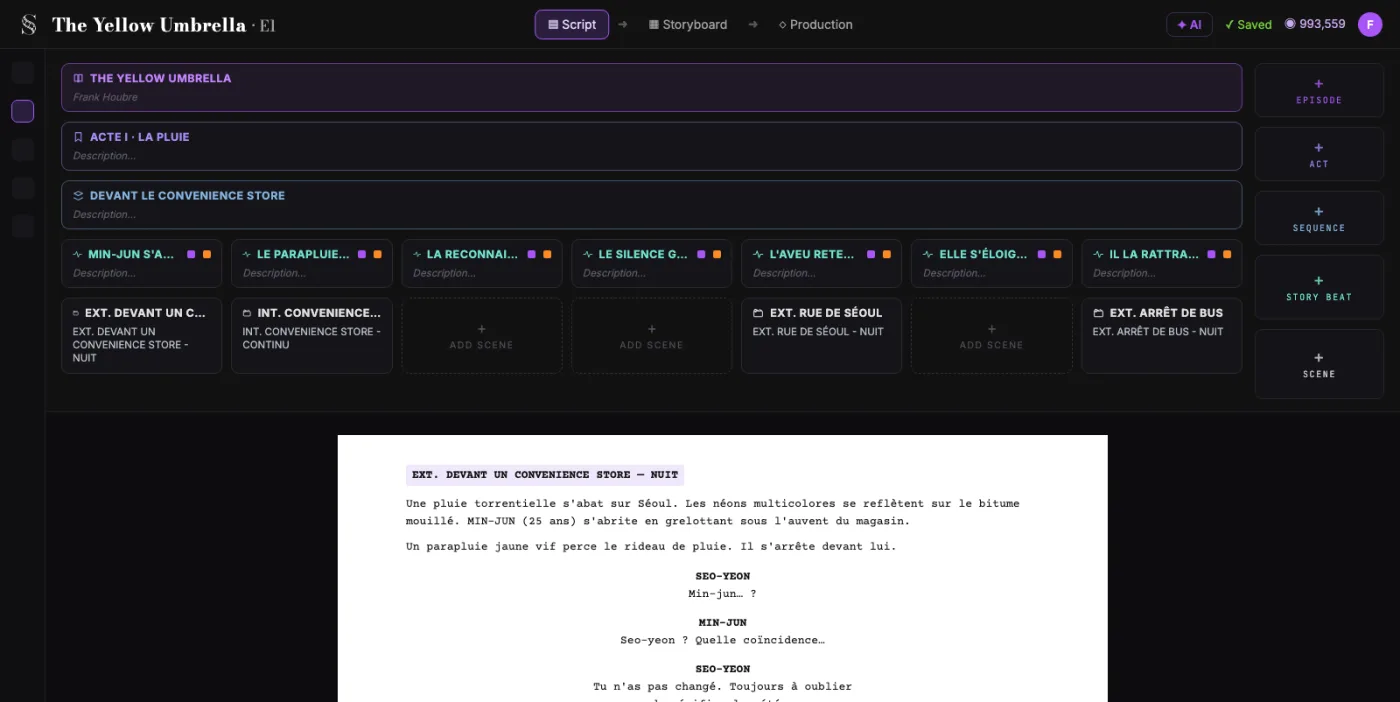
  1. ScreenWeaver screenplay editor: acts, sequences and beats above the formatted script of The Yellow Umbrella

    01The screenplay, enriched

    An industry-standard screenplay editor, and more: a visual outline and beat editor, your writing inspirations (notes, photos, audio) kept next to the page, and an AI researcher to support your writing, not replace it.

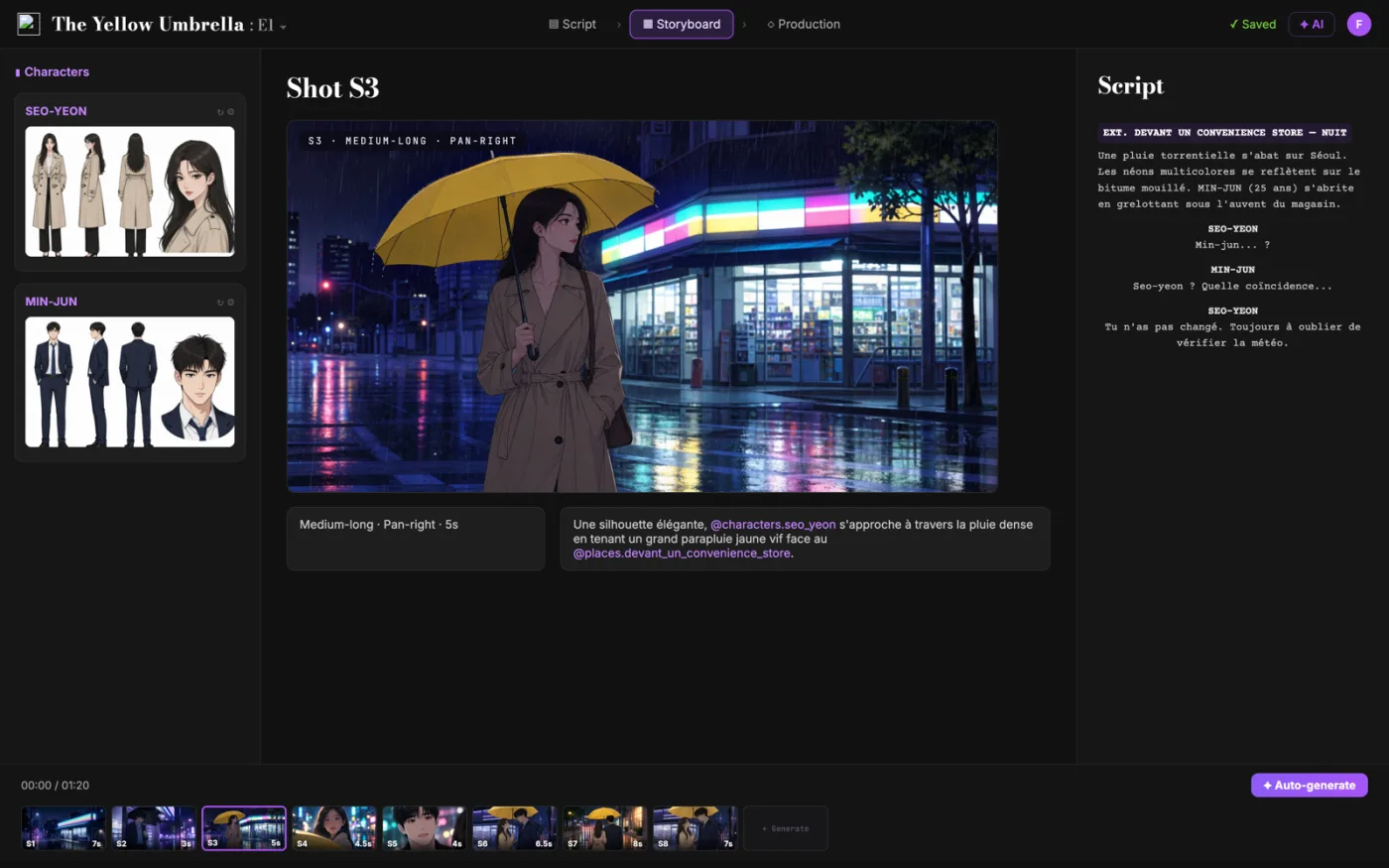
  2. ScreenWeaver storyboard: shot S3 of The Yellow Umbrella with characters, shot settings and the script beside it

    02The storyboard, made easy

    Shot breakdown generated from your screenplay, manual control over every shot (frame, angle, movement, duration), and generative AI previsualization in one click.

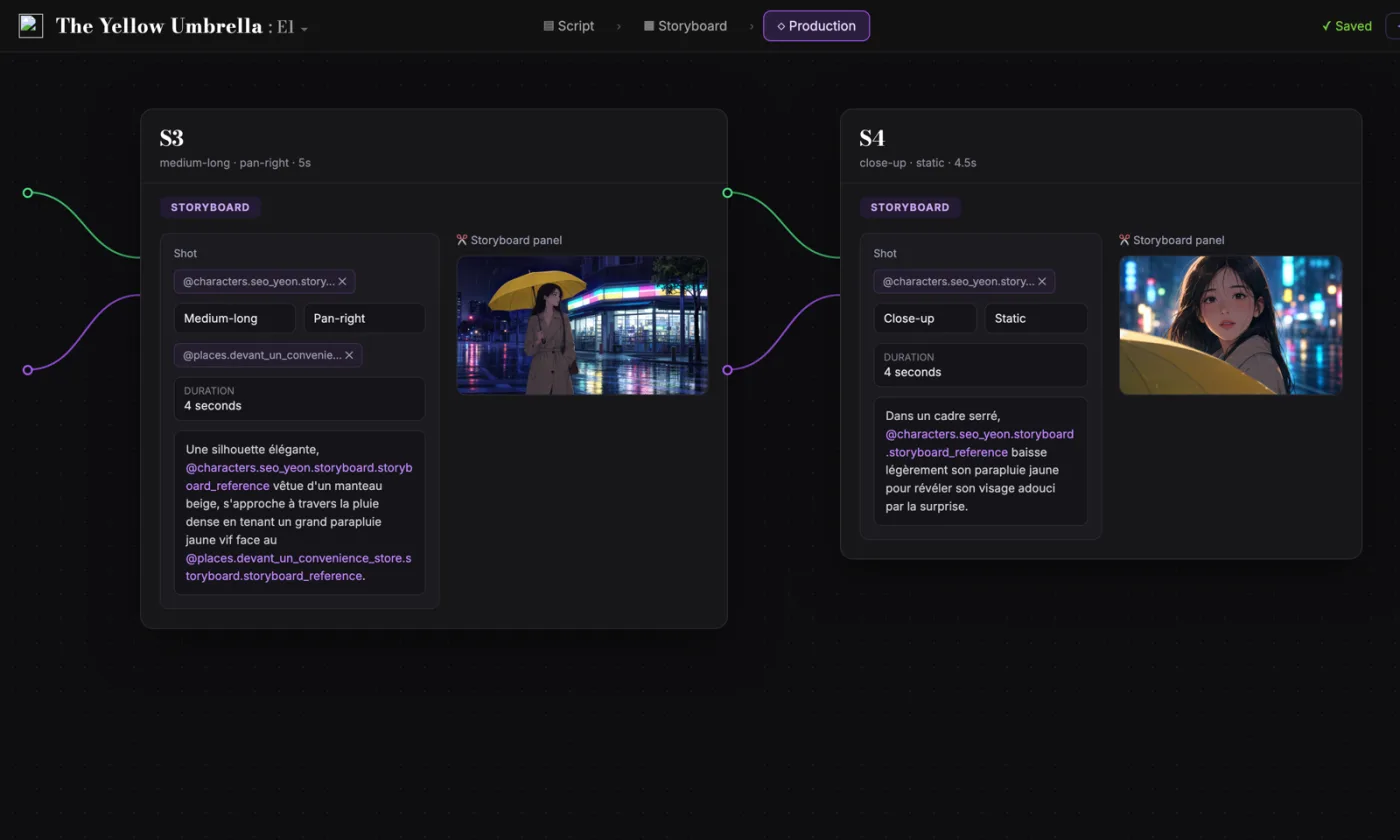
  3. ScreenWeaver production canvas: shots S3 and S4 as connected nodes carrying their storyboard panels and prompts

    03AI production, with finesse

    Footage generation pipelines connected to your screenplay and storyboard. Optimized out of the box, fully editable workflow.

FAQ

The African AI Film Festival, your questions

How do you win the African AI Film Festival?
A four-judge jury scores films on five criteria: storytelling and emotional impact, creative use of AI, cultural authenticity, technical craft and originality. Nine awards include Best of Festival and a public-vote Audience Award. Start with a story that connects to Africa for real, then use AI where it adds something.
Can I enter if I am not African?
Yes, if the film meets at least one condition: an African or diaspora lead filmmaker, an African story, language, history or culture, or an African collaboration. A film with none of the three is not eligible.
Is it free to enter?
It was free through the 30 September regular deadline. After it, a late fee of $5 to $10 applies to non-African entrants. Africa-based filmmakers and Student and Emerging entrants never pay.
What is the deadline?
20 October 2026 is the late deadline, and submissions close that day. Selections are announced in early November, and the festival is on 21 November in Hollywood and 12 December in Kampala.
Which AI tool must I use?
No. The festival names Runway, Sora, Midjourney and ElevenLabs only as examples of what to list in your disclosure. Any tool works if AI is central to the film.
What length limits apply?
AI Short Film, AI Animation and Student and Emerging take 1 to 10 minutes. AI Documentary takes 5 to 20 minutes. A film may be entered in only one category.
Can a film that already played elsewhere enter?
Yes. Previously screened or released films are welcome in Year One, provided they were completed on or after 1 January 2024. They also need English subtitles if they are not in English.
What does a win bring?
Trophies and laurels, credits from sponsors such as Runway and Adobe, mentorship and pitch opportunities, and a live screening at the Hollywood and Kampala premieres. The festival frames its prizes as prestige and opportunity over cash, and lists no cash prize.

Nineteen days. Start with the page.

Write the screenplay for free today. Storyboard it, then make the film your way.