(UN)REAL AI Film Festival 2026 · Guide

How to win (UN)REAL, the Turin AI film festival.Make the film that could not exist without AI.

The rules, the six categories, the four named jurors and a plan to 31 October 2026. (UN)REAL is a first edition, on 27 and 28 November in Turin, and it asks for one thing above all: a film that needs AI to exist. Then write, storyboard and generate it in ScreenWeaver.
  • Deadline 31 October 2026
  • 50 euros per work
  • Festival 27 and 28 November
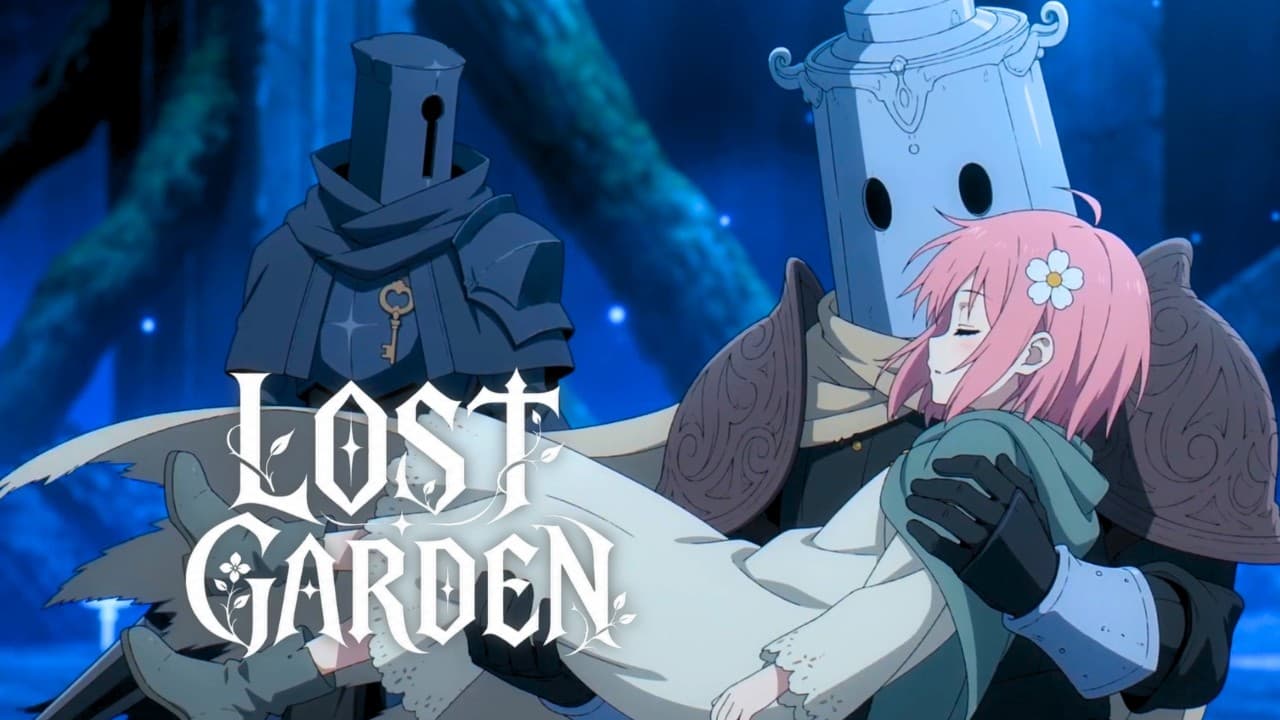
Lost Garden · Episode 1

Independent guide. ScreenWeaver does not organise (UN)REAL and is not affiliated with Feat Venture Studio S.r.l. Rules read on 1 October 2026. Official site and rules

Available today in ScreenWeaver: free screenwriting, and a storyboard generated from your screenplay with Storyboard Beta, $9.99 a month.

Rolling out: video generation of each shot, powered by Seedance, with the Filmmaker plan.

The rules on one card

What (UN)REAL asks for.

(UN)REAL is an Italian festival for cinema made with or through AI, run from Turin by Feat Venture Studio. It is a first edition. It lists five criteria, no weights, and one sentence worth reading twice: it looks for films that could not have existed without AI.
Festival
27 and 28 November 2026, Feat. House, Turin
Deadline
31 October 2026
Finalists
Announced on 14 November 2026
Entry fee
50 EUR per work
AI requirement
A significant artistic role, not a majority
Length
No minimum, Shorts up to 20 minutes
Delivery
MP4, MOV or ProRes, English SRT, 3 stills
Categories
Six, one per work

Source: unrealfilmfestival.com (home page, full rules and manifesto, in Italian and translated by us), read on 1 October 2026. No prize amount is published. The entry form mentions a brief for registered entrants that the rules do not explain: ask the organisers.

Key dates

Thirty days, then four weeks to the stage.

The festival is two days long and shows the finalists. <b>You must be registered to be selected</b>, and only registered entrants receive the brief mentioned on the form.
  1. 31 Oct 2026

    Deadline

    Entries close. The form has three steps: the applicant, the work, then materials and payment of the 50 EUR fee.

  2. 14 Nov 2026

    Finalists announced

    Every participant receives an answer on the selection, and the selected works are announced on the festival’s channels.

  3. 27 Nov 2026

    Day one

    Opening at 17:00, a keynote at 17:30, the first block of finalists at 18:30 and a panel asking if the future of cinema is generative.

  4. 28 Nov 2026

    Day two and awards

    A workshop at 10:15, more screenings, the audience vote closing at 16:30, a panel on ethics, copyright and AI at 16:45, and the ceremony at 17:30.

How films are judged

Five criteria, no weights.

The festival lists five criteria and publishes no weights. Selection runs in two steps: a pre-selection by the festival’s curatorial team, then the official jury.
  • Originality

    A personal vision and the ability to stand out. With a tool everyone has, the idea and the point of view are what separate a film.

  • Cinematic quality

    Photography, editing, direction, performance and sound design. The list is a filmmaker’s list, not a technologist’s: sound and performance count.

  • Use of AI

    An innovative, conscious and coherent use of the technology. Explain in the form why this film needed AI, and what each tool did.

  • Artistic coherence

    The relationship between form, content and language. A style chosen for a reason, and held, reads as coherence.

  • Impact

    The capacity to contribute to the evolution of cinema and of audiovisual storytelling. The most ambitious criterion, and the one a concept piece can win.

The festival says it cares about the quality of the artistic vision, not the quantity of AI used. A film that mixes live action, animation and generated images is welcome if AI plays a significant role.

Who decides

Four jurors who mix film and AI.

The site names four jurors and a four-person board. The official jury makes the final selection after the curatorial team’s pre-selection, and it may add special mentions for innovation and experimentation.
  • Daniele Zennaro

    Listed as film director and creative director, founder of AIYR4 and known as Dan X Zen. Direction and visual language are in the room.

  • Brando Mehdi Mahdloo Torkaman

    Listed as an actor and AI product leader. Someone who knows both performance and how the tools are built: a generated performance must feel played.

  • Matteo Scavetta

    Listed as project manager at Paratissima and Techne Art Service. The site gives no more, so do not guess his taste. Write for all four jurors, not for one.

  • Noah Wagner

    Listed as writer, director and head of AI and innovation at Echobend Pictures. A screenwriter on the jury: the screenplay award is read by someone who writes.

The six categories

One work, one category.

A work can be entered in only one category, and the selection committee assigns it if you are unsure. Below each category, what we would aim for.
  • 01

    Feature films

    Narrative films, hybrid works and long productions.

    A long road for 31 days. Enter a finished feature or a complete episode you already have, not a work in progress.

  • 02

    Shorts

    Narrative films and hybrid works up to 20 minutes.

    The widest door, and the only one with a length cap. Five finished minutes beat twenty unfinished ones.

  • 03

    Animation and Motion

    2D and 3D animation, motion graphics, pixel art, morphing and generative video.

    The category closest to the festival’s test. A style a studio could not afford is your argument.

  • 04

    Documentary

    Documentaries that use AI as a tool for research, storytelling or reconstruction.

    Reconstruction is named in the rules. Label every synthetic image, and keep signed releases for any real face or voice.

  • 05

    Advertising

    Spots, branded content and commercial work with an autonomous artistic value.

    A brand film must stand as a film without its product. Make the idea first and the logo last.

  • 06

    Videoart and Experimental

    Non-linear works, installations, generative art and audiovisual experiments.

    Room for work that is not a story. The process of making with AI can be the subject.

The manifesto

Reading what the festival believes.

A first edition has no past winner to study, so read the manifesto. It rests on three pillars: an expanded idea of reality, parallel universes and new perceptions, and technology as a creative liberation and not a replacement.

  1. 01

    Expansion, not replacement. The festival wants to open a space beside traditional cinema. A film that sets AI against actors or crews works against its own manifesto.

  2. 02

    Stories that could not have been born otherwise. The manifesto says such stories lacked a tool, not talent. Show what only this tool allowed you to do.

  3. 03

    Identity is sacred. The manifesto says AI can generate everything except consent. Cloning the face, voice or identity of a real person without explicit consent is forbidden.

  4. 04

    Ethics is on the programme. A panel on ethics, copyright and AI in cinema, with academics, filmmakers and lawyers, runs on 28 November. Expect the question in the room.

From script to screen

Lost Garden: a world a camera could not film.

(UN)REAL looks for films that could not exist without AI. Lost Garden, episode 1 is an animated fantasy by the ScreenWeaver team, and this scene sets a tiny knight in the palm of a giant woman of roots and lilies. The screenplay page, each shot as a storyboard frame, then as the final image.

Logline. A small knight wakes up in a dead world and learns he is the last guardian of a seed that could bring the garden back.

Screenplay · episode 1 · the Source Tree

INT. HEART OF THE ROOTS - NIGHT

Living roots coil around LANTERN and pin him down. A voice stops them.

THE SOURCE TREE

Stop. He is my guest.

A giant woman of roots and white lilies opens her arms over the cavern.

Her eyes open. Blue, and vast.

THE SOURCE TREE

Welcome to you, Lantern Knight.

She lifts him in her palm, like a lamp.

THE SOURCE TREE

Do not be afraid. I will not harm you.

In the dark, a seed of light opens. Inside the flower, a sleeping child.

THE SOURCE TREE

You must find yours. Protect her.

CUT TO:

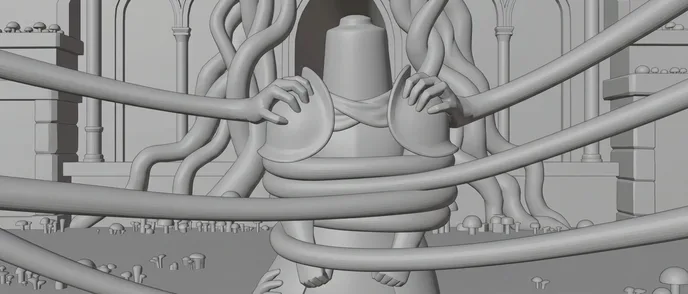
  1. A small lantern-helmed knight bound by thick roots in a ruined hall
    Storyboard frame of the trap shot, in grey
    01

    Medium · the trap

    Medium shot, Lantern bound by thick living roots in a ruined hall, glowing blue mushrooms on the floor, cold light

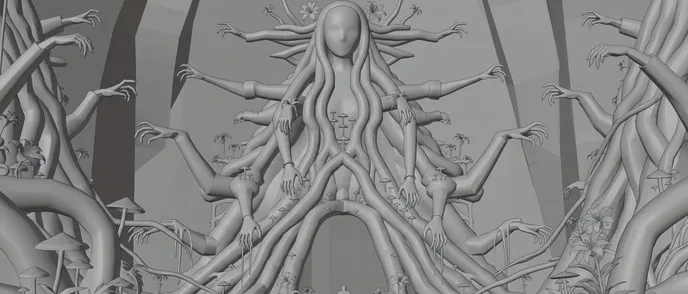
  2. A giant woman made of roots and white lilies spreads her many arms in a dark cavern
    Storyboard frame of the wide shot, in grey
    02

    Wide · the Source Tree

    Symmetrical wide shot, a giant woman made of roots, arms spread with many hands, white lilies, blue glyphs

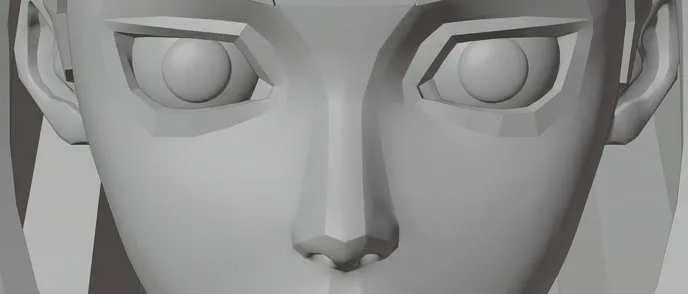
  3. Extreme close-up of a giant pale face with piercing blue eyes
    Storyboard frame of the eyes close-up, in grey
    03

    Extreme close-up · the eyes

    Extreme close-up on the giant's face, piercing blue eyes opening, pale skin, soft light from below

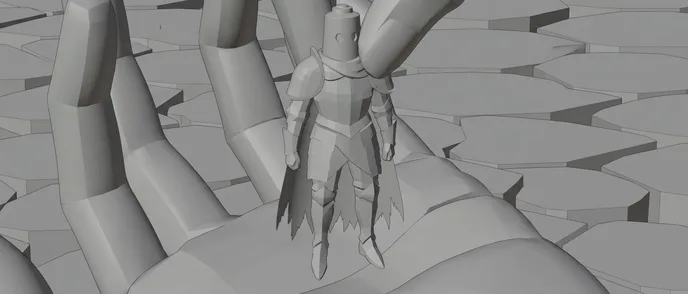
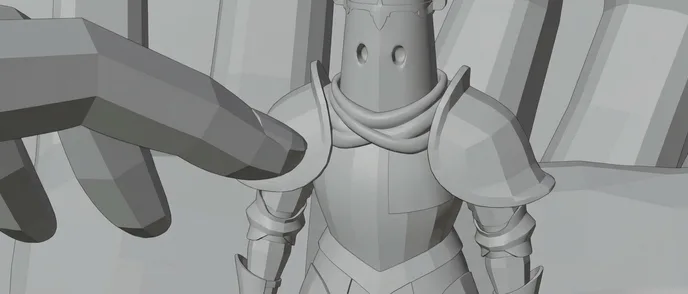
  4. A tiny armored knight stands in the middle of a giant open hand
    Storyboard frame of the palm shot, in grey
    04

    High angle · the palm

    High angle, the tiny knight standing in the center of a giant open palm, stone floor far below

  5. A giant fingertip gently touches the chest of a small armored knight
    Storyboard frame of the touch close-up, in grey
    05

    Close-up · the touch

    Close-up, a giant fingertip gently touches the knight's armored chest, faceless helm, emotion through posture

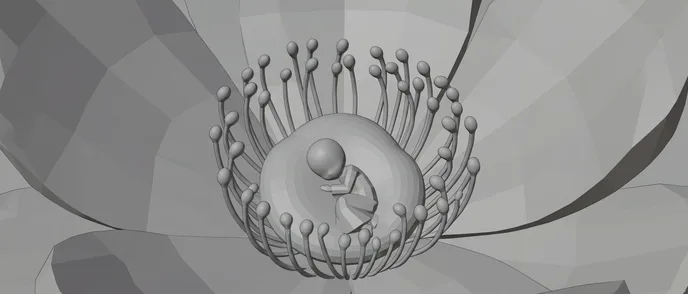
  6. A sleeping pink-haired child curled inside a glowing blue flower
    Storyboard frame of the seed insert, in grey
    06

    Insert · the seed

    Top-down insert, a glowing pale blue flower opening, a sleeping child with pink hair curled inside

Lost Garden, episode 1: 17 minutes of animated fantasy made with Seedance by the ScreenWeaver team, and a finalist at the AI London Festival. At 17 minutes it sits under the 20 minute cap of the Shorts category, and it is shaped for Animation and Motion. Playback starts at the Source Tree.

The script

A short of five minutes, in five beats.

There is no minimum length, so five minutes is a complete film, and a feasible one in 30 days. That is about 5 screenplay pages and 50 to 75 shots of 4 to 6 seconds.
  1. 0:00 to 0:20

    The impossible image

    Open with something a camera could not film, and ask the question it raises.

  2. 0:20 to 1:20

    The rule

    Who we follow, and the one law of this world that makes it strange.

  3. 1:20 to 3:20

    The crossing

    The character goes further into the strange. Each image goes one step beyond the last.

  4. 3:20 to 4:30

    The cost

    What the crossing takes from them. This is the beat the jurors will remember.

  5. 4:30 to 5:00

    The open question

    A last image that asks, instead of answering. The festival likes a work that leaves a question.

The English SRT file is a required field, as are three high-resolution stills and, if a real likeness appears, a signed release. Have them ready well before the last week.

Day by day

From the idea to the form, in thirty days.

Thirty days from 1 October is short, and the rule makes the idea the work. Spend the first week on the film that only AI can make.
  1. 01

    1 to 5 October

    Find the film only AI can make

    Ten ideas, each tested with one question: could this exist without AI? Keep the one that cannot, and write its logline.

  2. 02

    6 to 12 October

    Screenplay and statements

    Five pages, written free in ScreenWeaver. Write the synopsis (150 words at most) and the artistic statement (300 words at most) now, while the idea is clear.

  3. 03

    13 to 17 October

    References and storyboard

    One approved reference per character and place, then a storyboard for every shot. They carry into every shot and keep a face the same for five minutes.

  4. 04

    18 to 25 October

    Generate

    Scene by scene with Seedance, as video generation reaches your plan. Keep every prompt: the form asks which tools you used and how.

  5. 05

    26 to 29 October

    Edit, sound, subtitles

    Cut, mix, export an English SRT with timecodes and pick three high-resolution frames.

  6. 06

    30 to 31 October

    Submit

    A private Vimeo or Drive link with its password, the signed release if a real likeness appears, and the 50 EUR fee. Do not leave it to the last evening.

  7. 07

    14 November

    Prepare for the finals

    Finalists are announced on 14 November. Prepare to be asked about your process on 27 or 28 November.

Why films get rejected

Eight ways to be out.

They come from the rules and the entry form. The two that end an entry at once involve real people.
  • A film made with AI, not because of it

    The festival does not look for films made with AI. It looks for films that could not have existed without it. A film that AI merely speeded up misses the point.

  • A cloned face or voice

    Cloning the voice or face of a real person without consent, or making an identifiable person say something false, is forbidden. The rules say a breach means immediate exclusion.

  • No signed release

    If a work uses faces, voices or likenesses of real people, generated or modified by AI, a signed release is required. It is a required upload on the form.

  • The role of AI left unsaid

    The rules require the role of AI in the creative process to be stated, and the form asks for the tools and the workflow. A vague answer weakens your Use of AI score.

  • More than one category

    A work can be entered in only one category. If you hesitate, the selection committee assigns it.

  • A short over 20 minutes

    Shorts are capped at 20 minutes. Feature films have no cap, so a 25 minute film belongs elsewhere.

  • Missing files

    The English SRT and at least three high-resolution images are required fields. A video of 512 MB or less can be uploaded, but the festival prefers a private link.

  • Too many words

    The synopsis allows 150 words and the artistic statement 300 words. Write them to the limit, not past it.

Why ScreenWeaver

(UN)REAL asks why. ScreenWeaver keeps the answer.

The festival imposes no tool and no AI quota. It wants a reason. ScreenWeaver is one connected project: screenplay, storyboard and footage, with each choice written down along the way.
  • The idea in the screenplay

    The festival’s test is a story question, so it starts on the page. Write the logline and the five pages free, and check that the film still needs AI after the second draft.

  • A workflow you can describe

    The form asks for tools and workflow. Every shot keeps a link to its scene, storyboard frame and prompt, because the pipelines are connected to the script.

  • Footage powered by Seedance

    The footage pipelines are powered by Seedance 2.0 and 2.5, from your script and storyboard, as video generation rolls out with the Filmmaker plan. Any tool is allowed here.

  • Start for free today

    Start free: the Screenwriter plan is $0 with no end date. The storyboard beta is $9.99 a month, and the Filmmaker plan will add video generation.

Real productions

International festival-recognized films have been written and produced with ScreenWeaver.

ScreenWeaver is already being used as a creative workspace for real AI film productions, from cinematic shorts to animated series pilots selected, nominated, and awarded by international festivals.

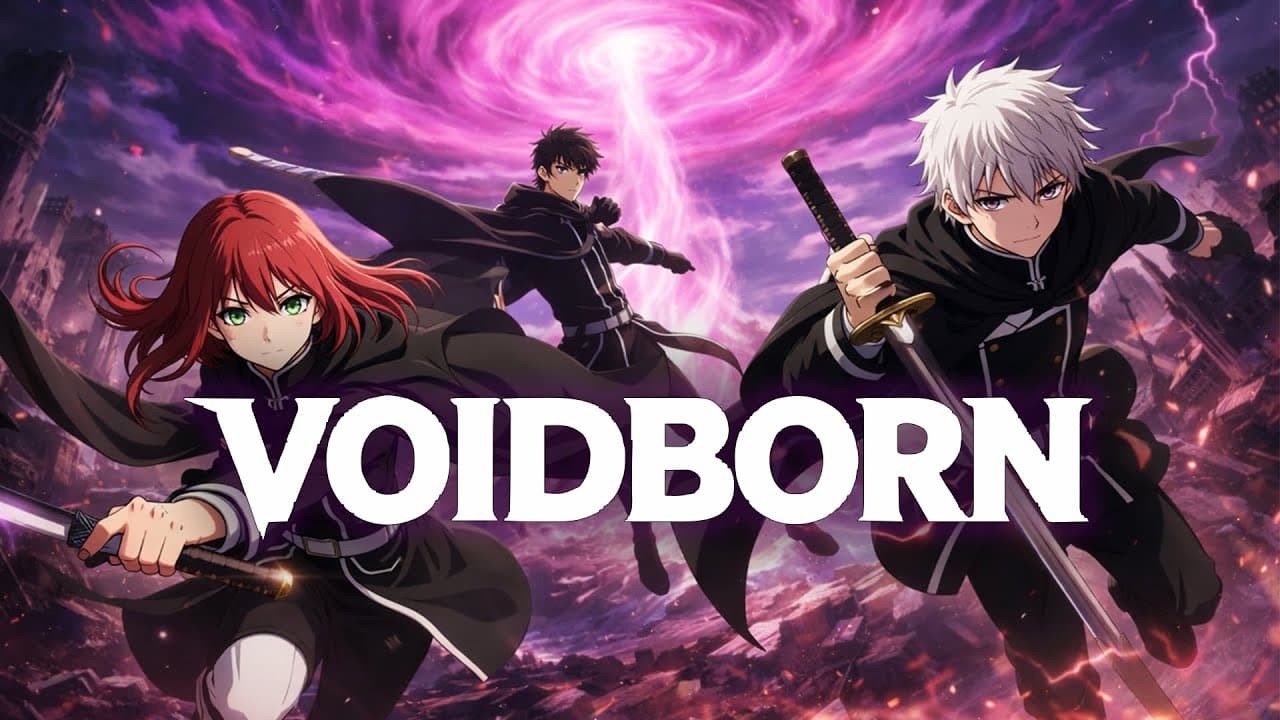
  • Video thumbnail for VOIDBORN

    VOIDBORN

    AI animated / cinematic short

    Festival recognition

    • 1st Place Silver

      Mondial Chroma Awards

    • 2nd Place Dreamina

      Mondial Chroma Awards

    • Award Winner

      Seoul International AI Film Festival

  • Video thumbnail for Les Fils du Vinnana

    Les Fils du Vinnana

    AI short film

    Festival recognition

    • Honorable Mention

      Top Quark Film Festival

    • People's Choice Nominee

      Illuminate Oneness of Humanity

    • Nominee

      ALTFF Supershort

  • Video thumbnail for Lost Garden

    Lost Garden

    AI animated series pilot

    Festival recognition

    • Finalist

      AI London Festival

The pipeline

Write. Board. Produce.

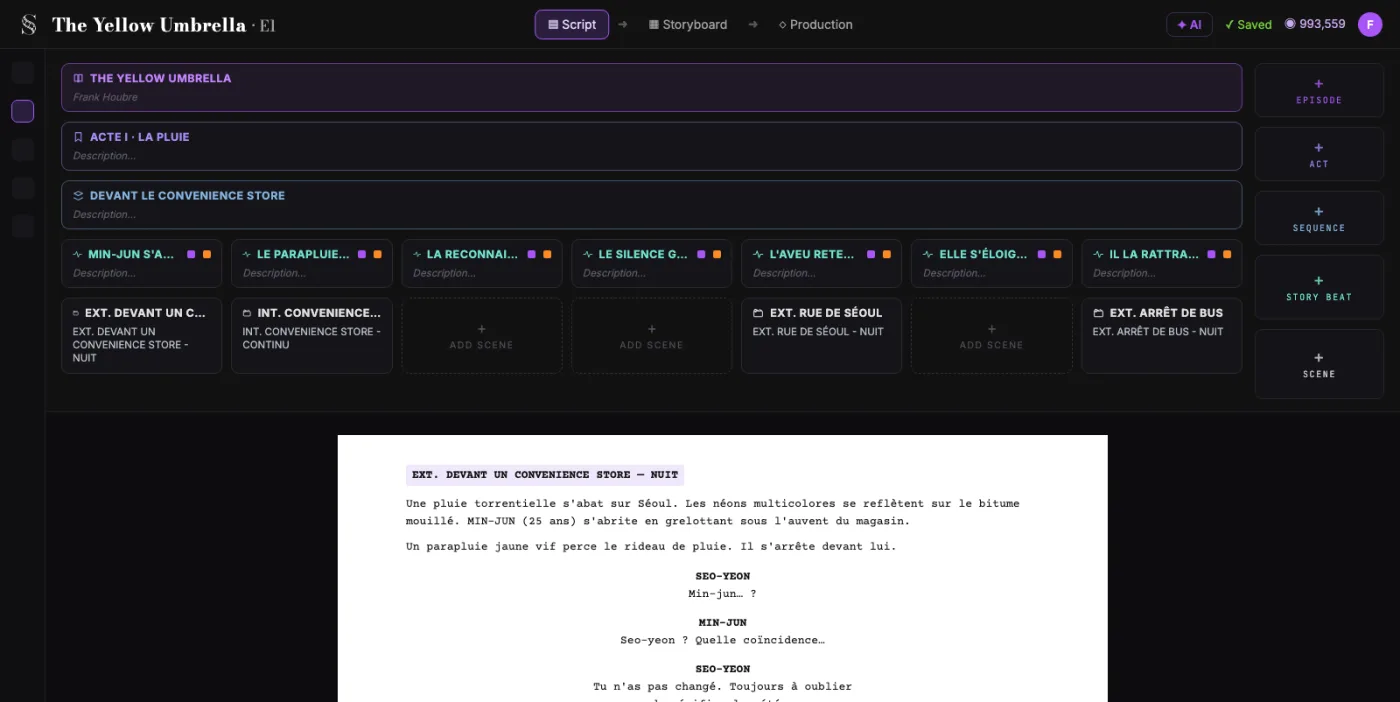
  1. ScreenWeaver screenplay editor: acts, sequences and beats above the formatted script of The Yellow Umbrella

    01The screenplay, enriched

    An industry-standard screenplay editor, and more: a visual outline and beat editor, your writing inspirations (notes, photos, audio) kept next to the page, and an AI researcher to support your writing, not replace it.

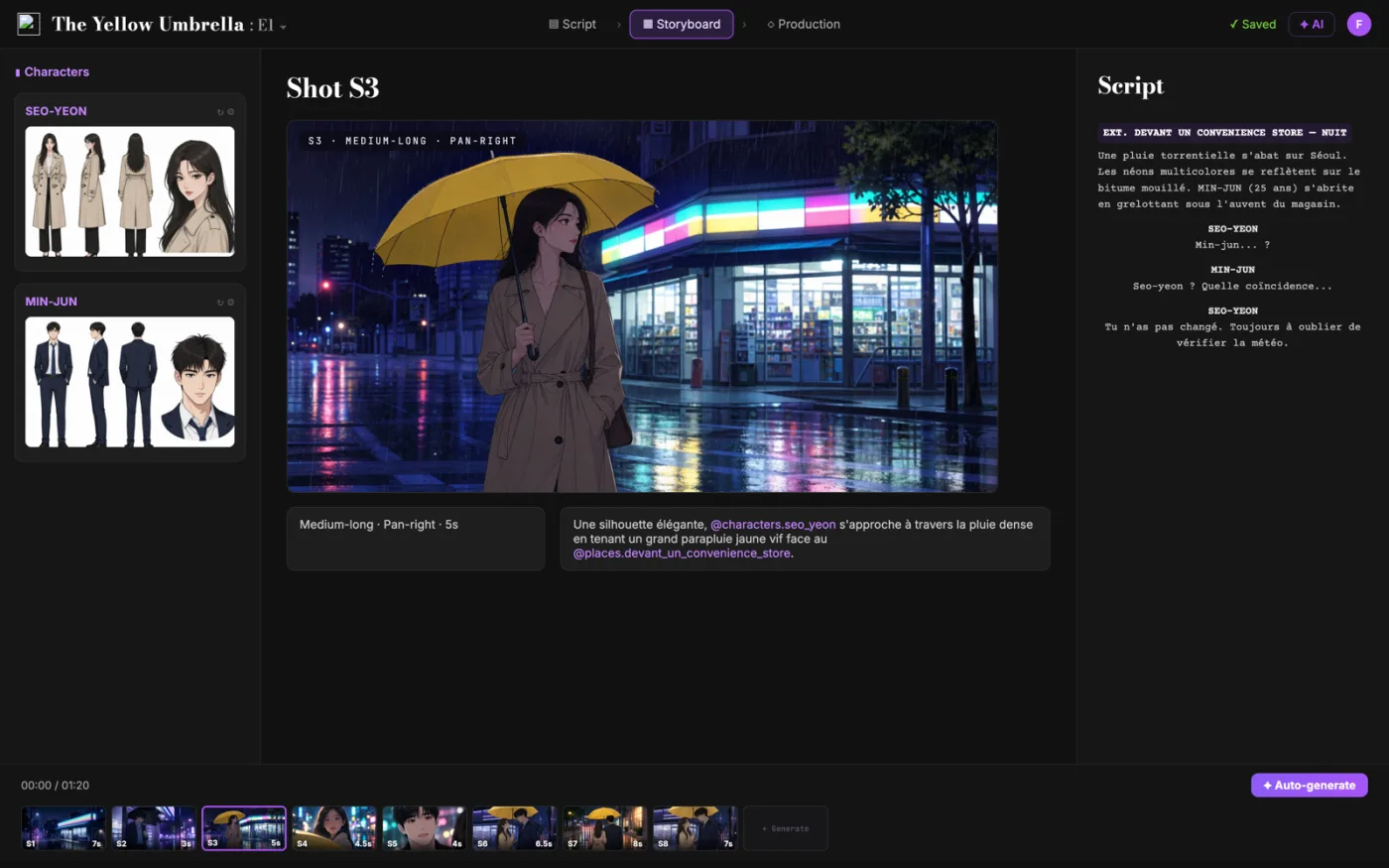
  2. ScreenWeaver storyboard: shot S3 of The Yellow Umbrella with characters, shot settings and the script beside it

    02The storyboard, made easy

    Shot breakdown generated from your screenplay, manual control over every shot (frame, angle, movement, duration), and generative AI previsualization in one click.

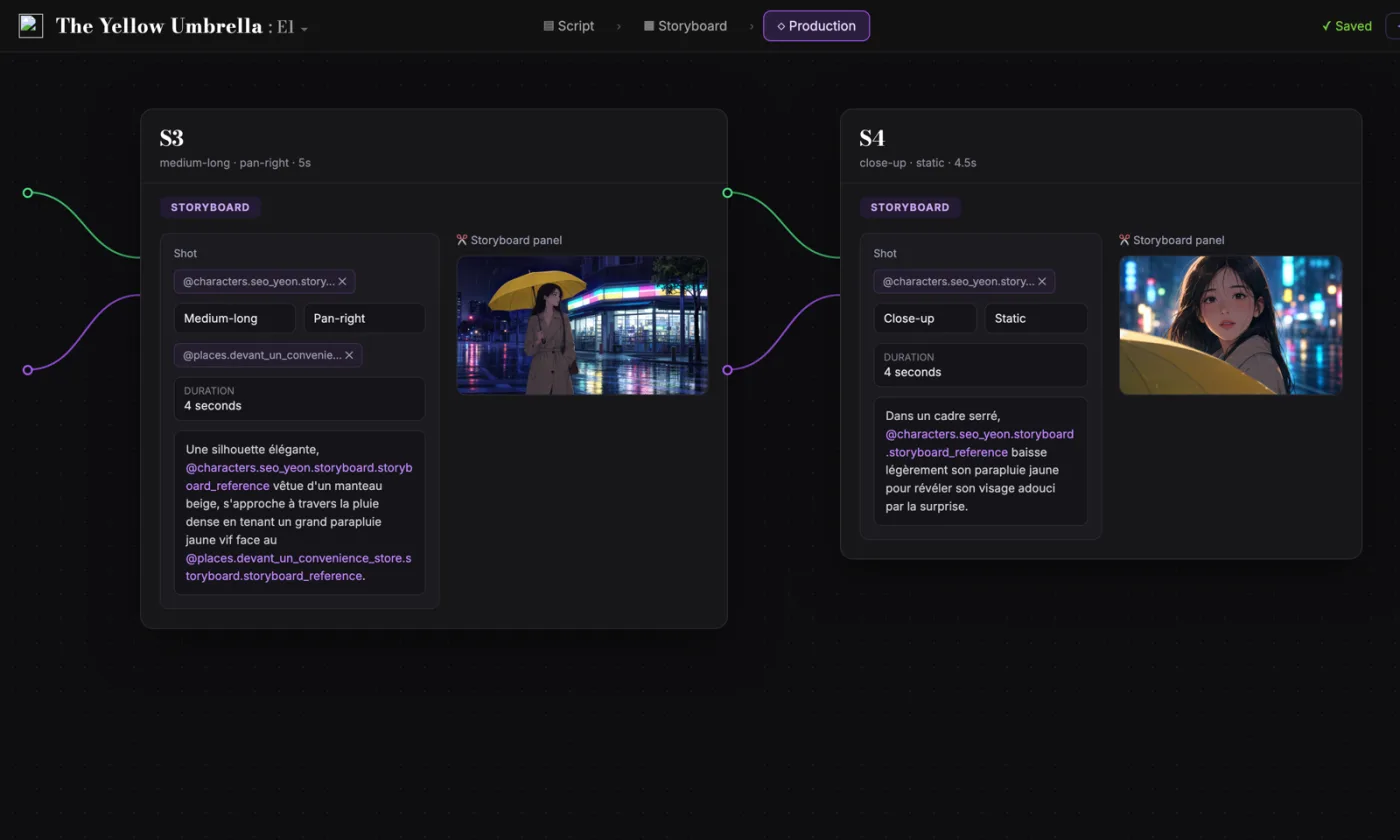
  3. ScreenWeaver production canvas: shots S3 and S4 as connected nodes carrying their storyboard panels and prompts

    03AI production, with finesse

    Footage generation pipelines connected to your screenplay and storyboard. Optimized out of the box, fully editable workflow.

FAQ

The (UN)REAL AI Film Festival, your questions

How do you win the (UN)REAL AI Film Festival?
Make a film that could not have existed without AI. Five criteria are listed, without weights: originality, cinematic quality, use of AI, artistic coherence and impact. A curatorial team pre-selects, then the official jury picks the finalists and the winners of the Grand Prix and five other awards.
What is the deadline for (UN)REAL 2026?
31 October 2026. Finalists are announced on 14 November and the festival takes place on 27 and 28 November 2026 at Feat. House, Via Giuseppe Giacosa 15, in Turin.
What does entry cost?
50 EUR per work, paid in the last step of the online form. You can enter a work in one category only.
Does my film have to be fully generated with AI?
No. It need not be entirely generated. Live action, traditional animation and hybrid productions are welcome as long as AI has played a significant artistic role. Quantity of AI does not matter to the festival, quality of vision does.
Who judges (UN)REAL?
Four people are named: Daniele Zennaro, Brando Mehdi Mahdloo Torkaman, Matteo Scavetta and Noah Wagner. They come from direction, acting, project management and writing, and two work in AI.
Can I use real actors or real people’s faces?
Real actors are welcome. What is forbidden is cloning a real person’s voice, face or likeness without explicit consent, and deepfakes of identifiable people. If AI generates or alters a likeness, you must upload a signed release.
What are the prizes?
Grand Prix (best film of the festival), Best of Category, Best Original Screenplay, Best Technical Achievement, Best Acting and an Audience Award, plus special mentions. No prize amount is published.
Is any AI tool allowed?
Any. The festival says you can use any AI-based tool for generation, animation or compositing. You describe the tools and the workflow in the form, and nothing is imposed.

Thirty days. Start with the idea AI alone can tell.

Begin the screenplay at no cost. Storyboard it, then make it with Seedance, keeping your workflow from the first prompt.