Practical lightingLamps that belong to the story
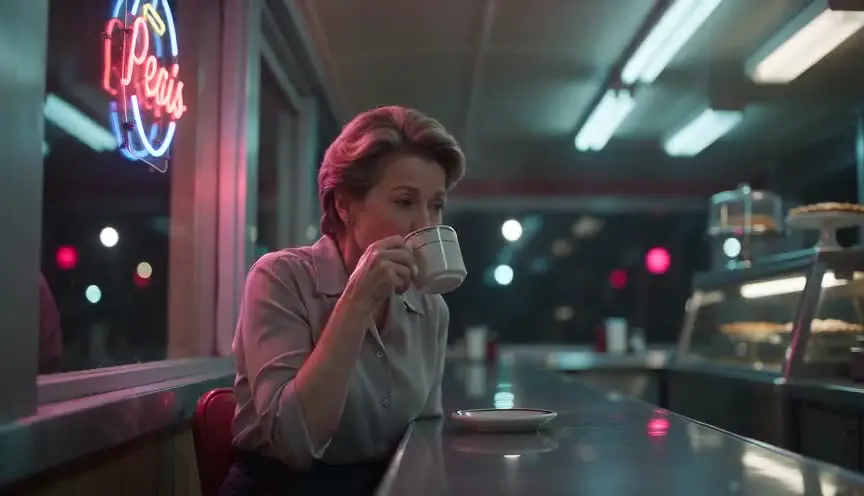
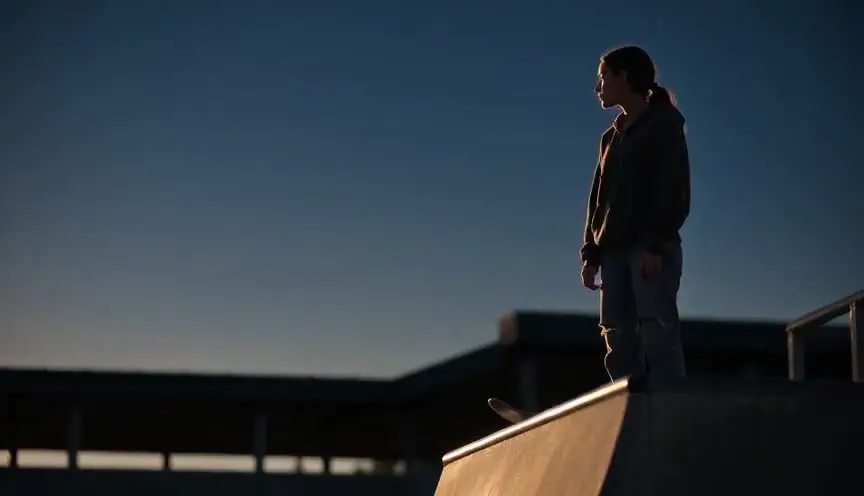
Practical lighting uses light sources that appear inside the frame, such as lamps, candles, neon signs, screens and bulbs, to light the scene or to look as if they do. The audience sees where the light comes from, so the world feels lived in and real.
Also calledPracticalsIn-frame lightingVisible light sources
Lighting
Why it works on screen
Practicals do two jobs at once: they dress the set and they tell the audience what time it is, where we are and how people live. A single bare bulb says poverty or a hideout. A row of green bankers' lamps says a library or a firm. A string of fairy lights says a party or a teenager's room. They also give characters something to do: switch it on, knock it over, cup a flame. A scene earns careful practicals when the light source is part of the story or the character, and when the audience should feel the room at night rather than a lit set.
The shot list line
- Size
- Medium wide shot
- Angle
- Eye level
- Movement
- Slow dolly or static
- Lens
- 35mm
- Duration
- 5 to 8 s
Put dimmable bulbs in every practical, set them just below clipping on the monitor, and add hidden soft sources from the same directions to hold faces.
Screenplay
On the page
Practicals are one of the few lighting elements a writer can name freely, because they are objects in the scene. A flickering sign, a lava lamp, a string of bulbs over a patio: write them as set dressing and, when useful, as props. Do not describe how they light the actors. Let characters use them if it serves the story. The crew decides what wattage, dimmer and color they need, and how much hidden help they get, in the shot list.
INT. BASEMENT RECORD STORE - DETROIT - NIGHT
Closed sign on the door. Inside, three lamps with orange shades, a buzzing Pabst sign, and the glow of a turntable's strobe.
WALTER GRIMES (60s) flips through a crate he has flipped through a thousand times.
NIA (19), in a delivery jacket, stands at the counter with a record in a plastic sleeve.
Walter reaches up and pulls the chain on the lamp above her. It swings. He looks at the label.
WALTER
Where did your grandmother get this?
Storyboard
In the storyboard
Draw each practical clearly in the frame (lamp, sign, strobe) and circle it. Add short rays around each circled source and arrows toward the faces it should appear to light. In the margin, list the practicals with color temperature, bulb type and whether they are on a dimmer. Mark any practical a character touches, and draw a second panel for after the change, such as the swinging lamp or a switched-off sign.
Pairs well with
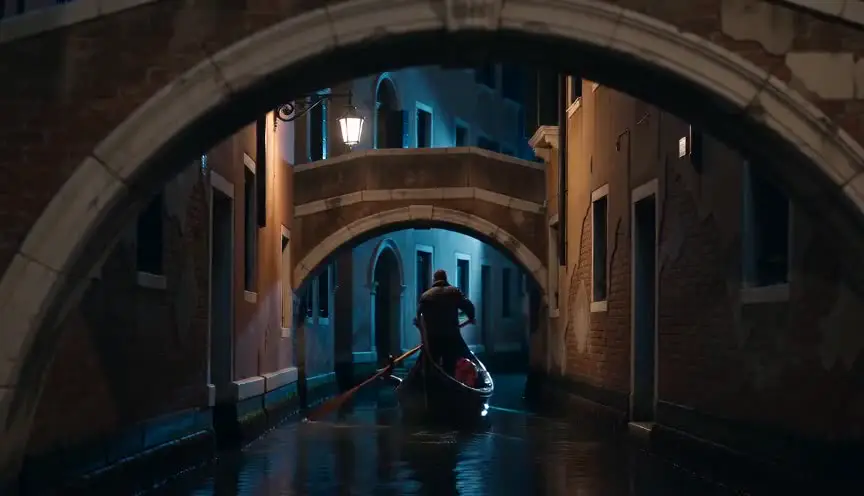
Once the practicals are visible, motivated lighting takes over in the close-ups. Hidden lamps match the direction and color of the practicals, so the faces look lit by the room.
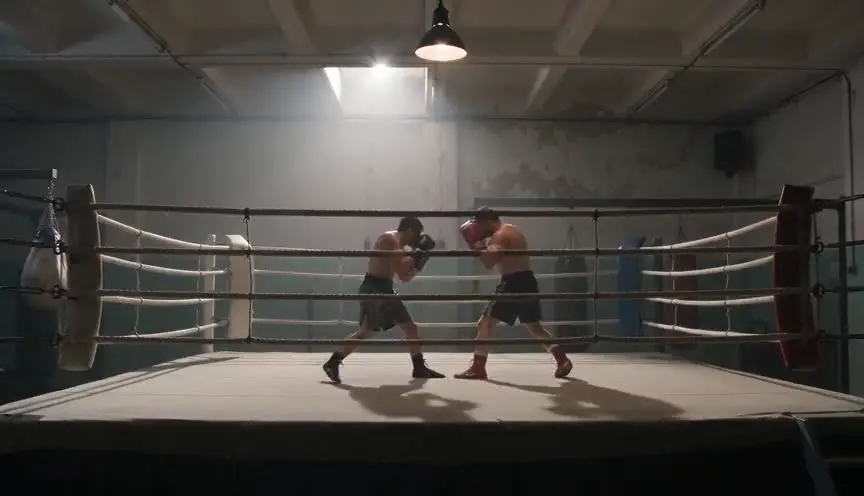
A wide shot shows the practicals in their place and sets the geography of the light. Closer shots can then cheat the lamps without the audience losing its sense of the room.
Reference
Watch it in
Barry Lyndon (1975)
The candles on screen really do light the interiors, thanks to very fast lenses adapted to expose at that low level.
Collateral (2004)
The night streets of Los Angeles are lit by what is there: neon, streetlights and office windows shape each frame from inside it.
ScreenWeaver
Set it up in ScreenWeaver
Name the lamps, signs and screens in your action lines, and ScreenWeaver breaks the scene down into shots automatically. Open each shot and set framing, angle, movement and duration so the practicals sit where you want them in the frame. Add a note on which practicals are on and their color. The location carries from shot to shot, so the lamps stay in place, and the AI previsualization lets you judge whether the room feels lived in.
Start writing for freeThe prompt behind this clip
This is the exact prompt that rendered the clip at the top of the page. Keep the description of the camera and the light, change the subject and the place.
Practical lighting fills a ballet rehearsal room at dusk, using only a row of round vanity bulbs along a tall mirror and a brass desk lamp on the pianist's stand as visible sources, their warm tungsten glow spilling across the wood floor while the rest of the room falls into shadow. A static medium shot on a 50mm lens frames a woman in her thirties stretching at the barre, the bulb light catching the sheen on her skin, while a man in his sixties sits blurred near the lamp in the background. The camera holds still; only her slow stretch and a faint bulb flicker move. No text.
Common mistakes
- 01
Clipping bulbs
A household bulb at full power burns out to a white blob on camera. Dim it or swap to a lower wattage until the shade and filament keep some detail.
- 02
Practical that lights nothing
If a lamp sits beside an actor but the face is lit from the opposite side, the audience feels the cheat. Match the hidden key to the practical's direction.
- 03
Too many sources
A frame full of lamps, signs and screens becomes noisy and loses its focus. Choose two or three practicals that tell the story and lose the rest.