Cameo lightingOne face, and nothing else
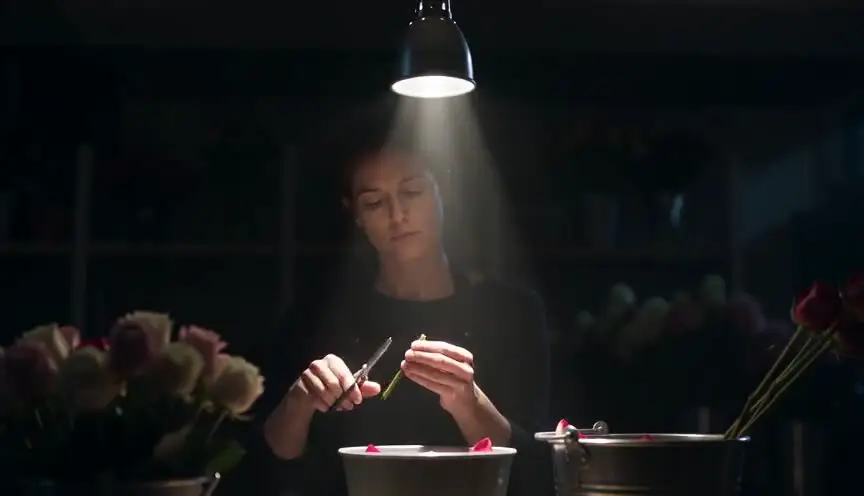
Cameo lighting lights only the subject, usually a face or a figure, and lets the background fall to pure black, like a carved portrait on a dark stone. The world disappears, and the audience has nowhere to look but at the person.
Also calledPortrait lighting on blackCameo effect
Lighting
Why it works on screen
Cameo lighting removes place and time. What is left is a human being and what they feel. Use it for monologues, confessions, memories, dreams, testimony and moments of total isolation: a character on trial, a performer before an audience they cannot see, a person speaking to the dead. It also gives a stylized, theatrical feeling, suited to musicals, stage adaptations and highly designed films. A scene earns it when the story steps out of realism for a moment and everything around the character stops mattering.
The shot list line
- Size
- Close-up or medium close-up
- Angle
- Eye level
- Movement
- Static or very slow push in
- Lens
- 85mm
- Duration
- 6 to 12 s
Use one focused or heavily flagged key on the face, keep the actor far from any wall, and cover every reflective surface in black so the background reads pure black.
Screenplay
On the page
Cameo lighting is a stylistic break, so a spec script can only suggest it through the situation: a stage with one light, a dark room where the character speaks alone, a memory with no setting. You can also write that the room around the character vanishes, once, if the moment leaves realism. The black background, the tight beam and the flagging are for the director and the cinematographer, recorded in the shot list.
INT. BLACK BOX THEATER - KRAKÓW - DAY
An audition. One lamp on a stand, aimed at a single chair. The rest of the room is black, the casting panel invisible beyond it.
MAGDALENA WÓJCIK (40s) sits in the light, script on her lap. She puts it on the floor.
A voice from the dark says she can start whenever she wants.
She waits until the room is perfectly still.
MAGDALENA
My father taught me to lie. I'm here to show you how well.
Storyboard
In the storyboard
Fill the whole panel with solid black, then draw only the lit face or figure in white and gray. Leave no line for walls, floor or furniture. Mark the key with a lamp symbol and a tight cone to the face. Note "cameo, black background, no spill" and the distance between the actor and the back of the room. If the scene returns to the real setting, draw the next panel with the room restored.
Pairs well with
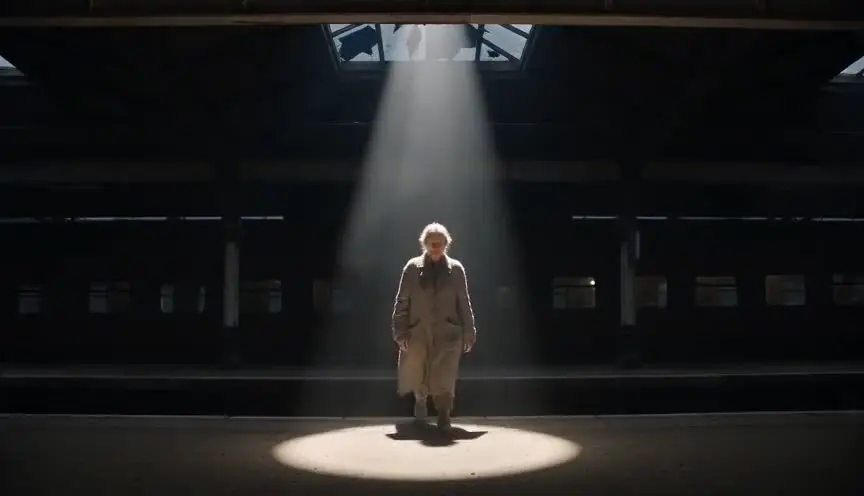
A spotlight picks the character out of a stage or a crowd. Pushing in until only the lit face remains in black turns the spotlight into cameo lighting and takes us inside the character.
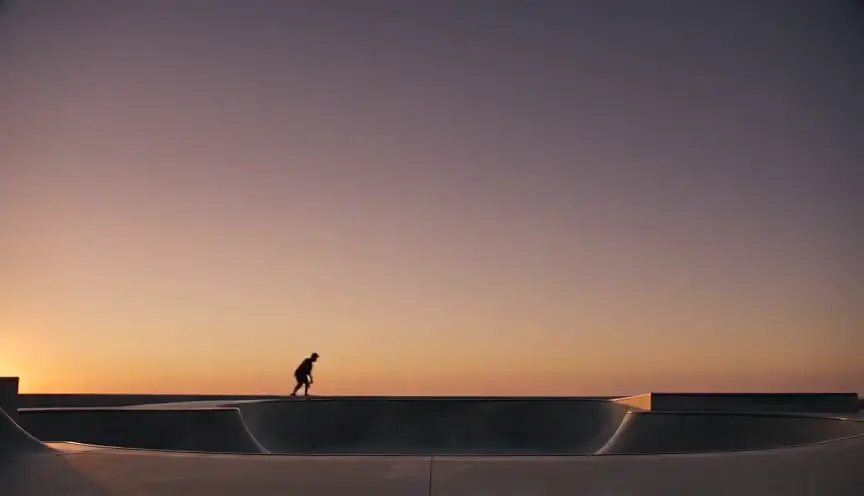
Leaving large areas of black around the lit face gives the character room to feel alone. The empty space becomes part of the emotion rather than a gap in the frame.
Reference
Watch it in
Shanghai Express (1932)
Josef von Sternberg lifts faces out of black studio backgrounds with tight hard beams, a key to his glamour style.
The Scarlet Empress (1934)
Von Sternberg once again carves faces out of total darkness with a single sculptural source, for a highly stylized court.
ScreenWeaver
Set it up in ScreenWeaver
Write the moment when the world falls away, and ScreenWeaver breaks the scene down into shots automatically. Open the shot, set a close framing, an eye-level angle, a static or slow push-in movement and a long duration for the monologue. Note "cameo lighting, black background" on the shot. The character carries from shot to shot, so the stylized close-up and the realistic shots around it show the same person, and the AI previsualization lets you judge the break.
Start writing for freeThe prompt behind this clip
This is the exact prompt that rendered the clip at the top of the page. Keep the description of the camera and the light, change the subject and the place.
Cameo lighting on a lone boatman poling a wooden canoe down a dark rainforest river at night. A narrow shaft of moonlight breaks through a small gap in the dense canopy, falling as a hard, tightly edged beam only on his face and shoulders; the water, banks, and trees around him stay completely black, with no ambient light and no fill reaching them. The camera is locked on a tripod at eye level in a static medium shot as he drifts slowly through the beam, his features sharp and lit while the rest of the frame remains true black. No text.
Common mistakes
- 01
Gray instead of black
Spill on walls or floor turns the background dark gray and the effect weakens. Move the actor away from surfaces and flag the key tightly.
- 02
Losing the edges
On a black background, dark hair and dark clothes merge into the void. Add a thin rim or choose costume colors that separate from the black.
- 03
Staying too long
Cameo lighting is a break from the world. Held for a whole scene without reason, it tires the eye. Return to the real space when the moment ends.