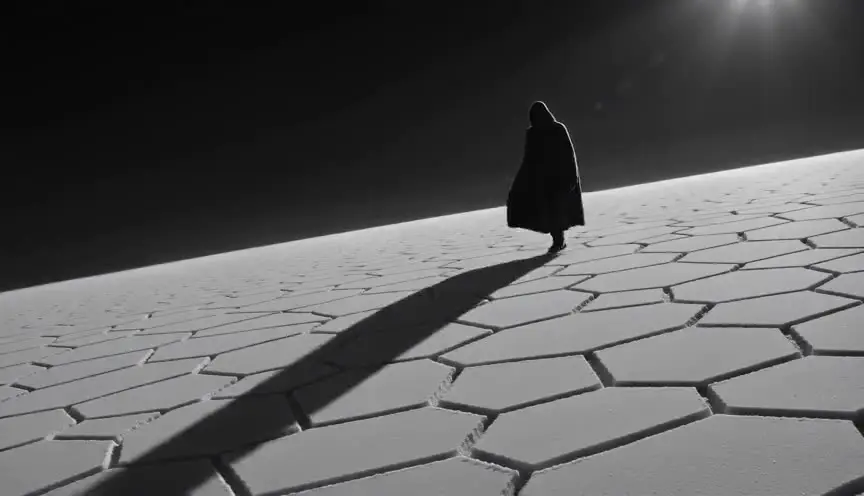
UnderlightingThe face turned upside down
Underlighting places the source below the face, so shadows climb upward over the nose, cheeks and brow instead of falling down. Because daylight never does this, the face looks unnatural, and the audience feels unease, menace or the thrill of a ghost story.
Also calledUplightingGhoul lightingCampfire lightMonster lighting
Lighting
Why it works on screen
Underlighting borrows from the campfire and the flashlight under the chin. It turns a familiar face into a mask. Use it for horror, for the moment a gentle character shows a dangerous side, for storytelling around a fire, for a villain leaning over a lamp or a screen. It also works for wonder: a face lit by a glowing object in the hands, treasure, a phone, a magic stone. A scene earns it when something about a character suddenly feels wrong or otherworldly, or when the source below them is part of the story and they are gazing into it.
The shot list line
- Size
- Close-up
- Angle
- Eye level or slightly low
- Movement
- Static or slow push in
- Lens
- 35mm to 50mm
- Duration
- 3 to 6 s
Keep the practical source (flashlight, fire, screen) below chin level and add a small hidden unit from the same direction if needed; no top or side fill that would normalize the face.
Screenplay
On the page
Underlighting is easy to suggest honestly, because it almost always comes from a visible source: a flashlight, a campfire, a phone, a glowing object, a floor lamp. Write the source and what the character does with it. Do not write "lit from below" as an instruction; write the flashlight under the chin, which is action. Keep it rare in the script, so it keeps its strangeness. The exact height and brightness go in the shot list.
INT. TENT - ALGONQUIN PARK CAMPGROUND - NIGHT
Four sleeping bags, one flashlight, rain on the canvas.
PRIYA (12) holds the flashlight under her chin. Her cousins, OWEN (10) and the twins MAYA and JONAH (8), stare at her.
Priya's face has turned into someone else's.
Outside, a branch cracks. The twins grab each other.
PRIYA
And the last camper to fall asleep... is the one she takes.
Storyboard
In the storyboard
Draw the source below the face, inside the frame if visible, with short arrows pointing up. Shade the upper parts of the face that would normally be lit: above the eyes, the top of the nose's shadow climbing toward the brow, the forehead fading to dark. Leave the underside of the chin and nose bright. Note "underlight, source below chin" and the practical that motivates it. Add a reaction panel if the scene cuts to someone watching.
Pairs well with

Cut from the underlit face to the listeners reacting. Their normal, softer light makes the storyteller or the villain feel even stranger by contrast.
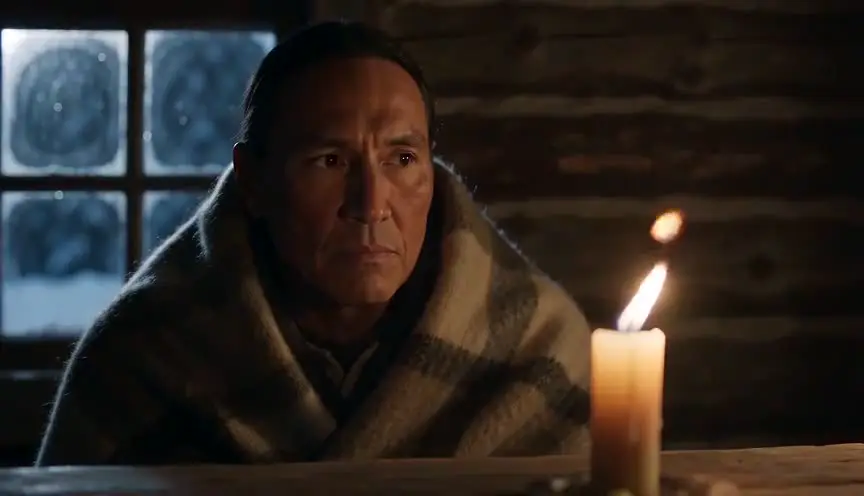
Candles and fire held low produce natural underlighting. Establish the flame in a wider candlelit shot, and the upward shadows in the close-up feel true to the room.
Reference
Watch it in
The Blair Witch Project (1999)
In the confession scene, a flashlight held below the actor's chin lights her face from underneath, a cheap trick that horror films still quote.
The Lord of the Rings: The Fellowship of the Ring (2001)
When Galadriel is tempted, a light from below transforms her calm face into a sudden, frightening power.
ScreenWeaver
Set it up in ScreenWeaver
Write the low source as action, the flashlight under the chin, the phone in the dark, and ScreenWeaver breaks the scene down into shots automatically. Open the close-up, set framing and angle, a static or slow push-in movement and a short duration. Note "underlight" on the shot and the practical that causes it. Characters carry from shot to shot, so you can place normally lit reactions next to it, and the AI previsualization shows how strange the face becomes.
Start writing for freeThe prompt behind this clip
This is the exact prompt that rendered the clip at the top of the page. Keep the description of the camera and the light, change the subject and the place.
Underlighting: a static shot at eye level shows a hooded traveler standing still in a narrow medieval stone alley at night, a single lantern resting on the cobblestones at waist height in front of him, its warm flame throwing light upward across his chin, nose and brow while carving deep shadows into his eye sockets and the underside of the stone archway above. No other light source is visible; the rest of the alley stays in near darkness. The lantern flame flickers slightly, causing the upward shadows on his face and the wall behind him to shift and breathe, but neither the camera nor the man moves. No text.
Common mistakes
- 01
Unintentional horror
A low bounce from a white table or a bright floor can underlight a face by accident and make a romantic scene creepy. Watch for upward shadows and flag the surface.
- 02
Overuse
Underlighting is a strong signal. Used on every scary moment, it turns into a joke. Keep it for the one beat where a face should become a mask.
- 03
Source not in the frame
Without a visible flashlight, fire or screen, underlighting feels like a stylistic trick. Show the source at least once so the audience accepts the look.