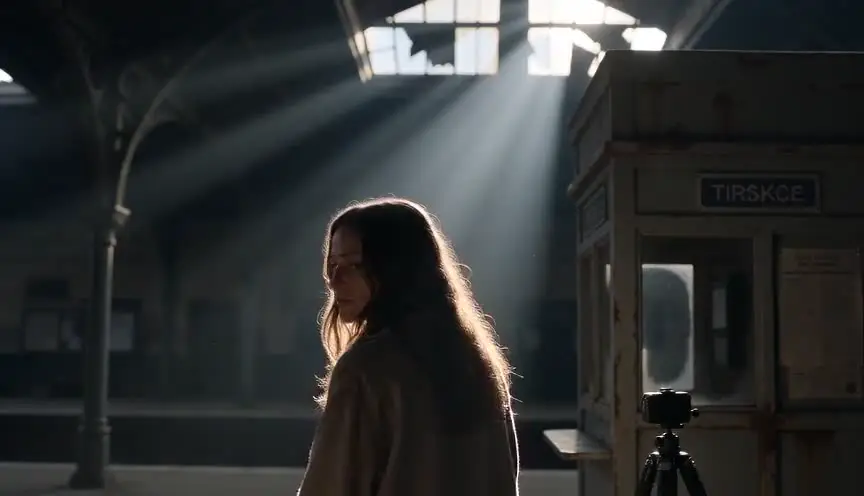
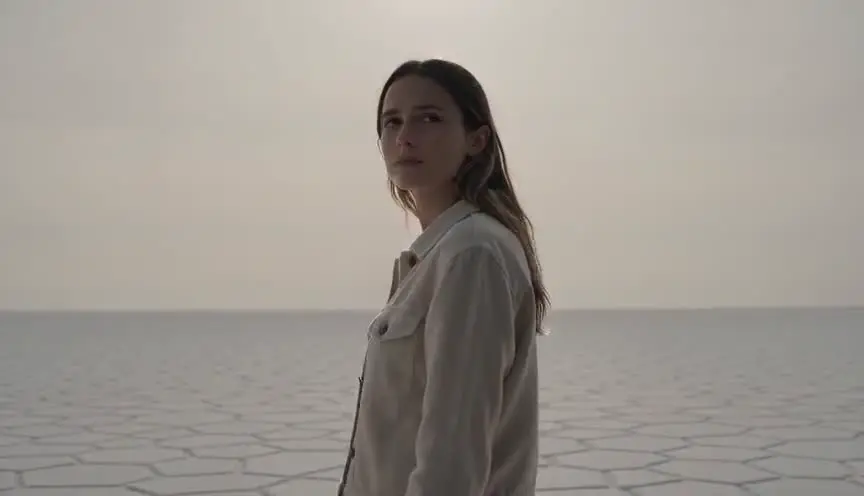
Eye lightThe spark that makes eyes live
An eye light is a small, soft source placed near the camera to put a bright reflection, a catchlight, in the actor's eyes. The eyes look wet, alert and alive, and the audience feels a direct connection to the person behind them.
Also calledCatchlightEyelightObie light
Lighting
Why it works on screen
Eyes without a catchlight look dull, flat or dead, and audiences sense it even without knowing why. An eye light brings back the spark. It serves wonder, hope, love, attention and inner life, especially in close-ups where the eyes do the acting. Removing it is also a choice: a character who has given up, a killer, a ghost can be lit with no catchlight at all. A scene earns a careful eye light when the audience must read thought in the eyes, or when the film wants to make a character feel suddenly awake after a long darkness.
The shot list line
- Size
- Close-up or extreme close-up
- Angle
- Eye level
- Movement
- Static, or a very slow push in
- Lens
- 85mm to 100mm
- Duration
- 3 to 6 s
Place a small soft source close to the lens axis, slightly above it, and dim it until it shows a clean catchlight in the eyes without adding visible light to the face.
Screenplay
On the page
An eye light is invisible on the page and should stay that way. What you can write is the source and the look: a candle held close, a glowing screen, a puppet show reflected in a child's eyes, or eyes that suddenly shine. Those details tell the cinematographer the eyes must catch light. If a character's eyes should look empty, write that instead. The position, size and shape of the eye light belong in the shot list.
INT. MARIONETTE THEATER, PRAGUE - EVENING
Twenty folding chairs. A tiny stage lit by one warm lamp.
In the front row, VOJTĚCH (6) sits on his grandfather's lap, a paper cone of chestnuts forgotten in his hand.
On stage, a wooden knight bows to a wooden princess.
The lamp's reflection dances in Vojtěch's wide eyes.
His grandfather, MILOŠ (70s), watches the boy, not the stage.
Storyboard
In the storyboard
Draw the eyes large and clear, with a small white dot or shape in each pupil at the same position, usually upper side. Note the shape of the catchlight, round, square or window-like, since it reflects the source. Add a side diagram with the eye light next to or on top of the camera. Write the story reason next to the panel, wonder, recognition or life returning, and whether any shot in the scene deliberately lacks a catchlight.
Pairs well with

An extreme close-up on the eyes makes the catchlight the focus of the frame. Pairing them turns the spark in the eyes into the whole emotional beat.

A candle held near a face gives a warm, moving catchlight that feels natural. Motivating the eye light with a flame keeps the intimacy real rather than studio-lit.
Reference
Watch it in
The Lodger (1944)
Lucien Ballard built the camera-mounted Obie light for Merle Oberon, smoothing her skin while placing a bright catchlight in her eyes.
Blade Runner (1982)
Jordan Cronenweth aimed light through a half-silvered mirror so the replicants' eyes shine with a distinctive glow in close-ups.
ScreenWeaver
Set it up in ScreenWeaver
Write the light source near the face or the shine in the eyes into your action lines, and ScreenWeaver breaks the scene down into shots automatically. Open the close-up, set the framing to a close-up or extreme close-up, the angle to eye level, the movement static or a slow push in, and a duration of three to six seconds. Note the eye light on the shot. The character and the location carry from shot to shot, and the AI previsualization helps you judge the look.
Start writing for freeThe prompt behind this clip
This is the exact prompt that rendered the clip at the top of the page. Keep the description of the camera and the light, change the subject and the place.
Eye light (catchlight). Extreme close-up of an old sailor's eyes and weathered face in a dark ship cabin. A small round light next to the camera puts a crisp bright white dot of reflection in each of his dark pupils, making his eyes shine while the rest of his face stays in soft shadow. He slowly looks up into the lens and the two sparkling catchlights come alive. Static camera, shallow depth of field. No text.
Common mistakes
- 01
Too many catchlights
Several lights reflecting in the eyes create multiple dots and look busy or artificial. Keep one clean catchlight per eye, and flag other sources.
- 02
Eye light lighting the face
An eye light that is too strong adds flat frontal light and erases the shadows of the key. Dim it until only the reflection remains.
- 03
Catchlights that move between cuts
If the catchlight jumps from upper left to lower right between shots, the eyes look inconsistent. Keep the eye light in the same position for a scene.