SymmetryOrder the audience can feel
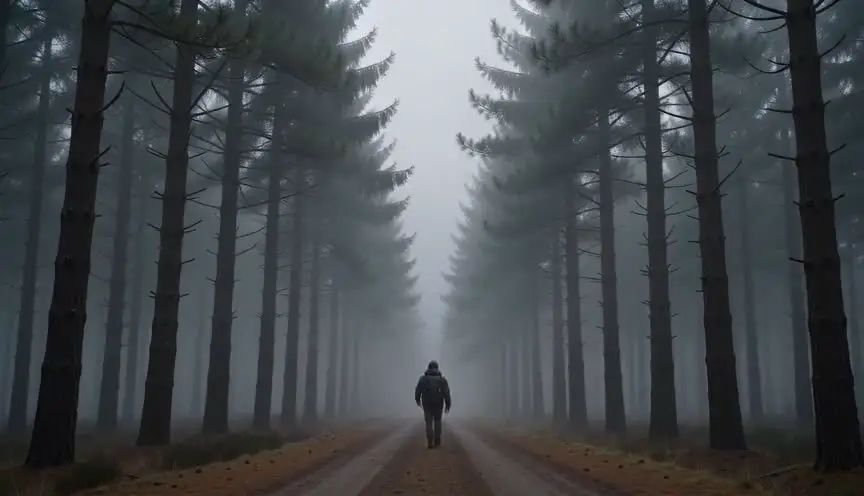
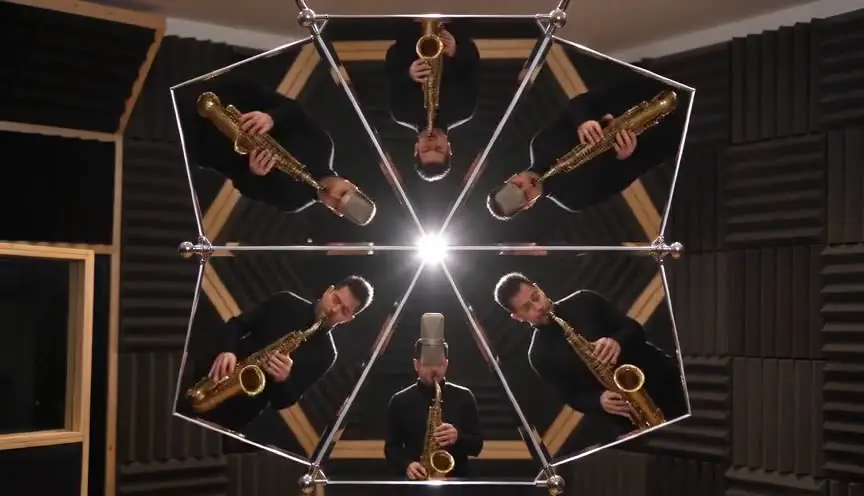
A symmetrical frame mirrors itself across a central axis, with matching shapes, lines and often people on each side. It reads as control, ceremony or perfection, and any small break in the pattern jumps out at the audience.
Also calledSymmetrical compositionMirror compositionSymmetrical framing
Composition
Why it works on screen
Symmetry tells the audience that a world is ordered, and that tension comes from what does not fit. It serves institutions, rituals, weddings, courts, palaces, cults and families with strict rules. It also makes a place feel too perfect, which is why horror and satire use it so well. A scene earns a symmetrical frame when its subject is the order itself, or when a character is about to disturb it. Two rivals on either side of a doorway, a bride between two rows of guests, a guard at each end of a bridge: each is a balance waiting to tip.
The shot list line
- Size
- Wide shot
- Angle
- Eye level on the center axis
- Movement
- Static or straight dolly along the axis
- Lens
- 32mm or 40mm
- Duration
- 5 to 8 s
Put the camera exactly on the center line of the set and level it with a bubble; any tilt or offset breaks the mirror.
Screenplay
On the page
A spec script should not say "symmetrical frame." Write the order into the world instead: matching gates, two rows of chairs, twin staircases, guests standing in lines on both sides. When the place itself is balanced, the director will find the axis. If one element breaks the pattern, give it its own sentence, because that break is usually the story. Framing notes about the exact axis and lens go into the shot list and storyboard, not the screenplay.
EXT. HAVELI COURTYARD - DUSK
Two carved gates face each other across a tiled courtyard. Marigold garlands hang in identical loops on both.
Guests stand in two neat lines, aunties on the left, uncles on the right.
Down the middle walks HARLEEN SANDHU (28, red wedding suit), eyes on the far gate.
One garland on the right gate has fallen. It lies across her path.
She steps over it without slowing.
Storyboard
In the storyboard
Draw a dashed vertical axis through the middle of the panel first. Sketch one half of the set, then mirror it on the other side, so doors, lamps and people match. Circle any deliberate break in the pattern and label it. If the camera moves, add a straight arrow along the axis and draw the end frame below. Note the lens, the camera height and the exact position on the center line for the grip team.
Pairs well with
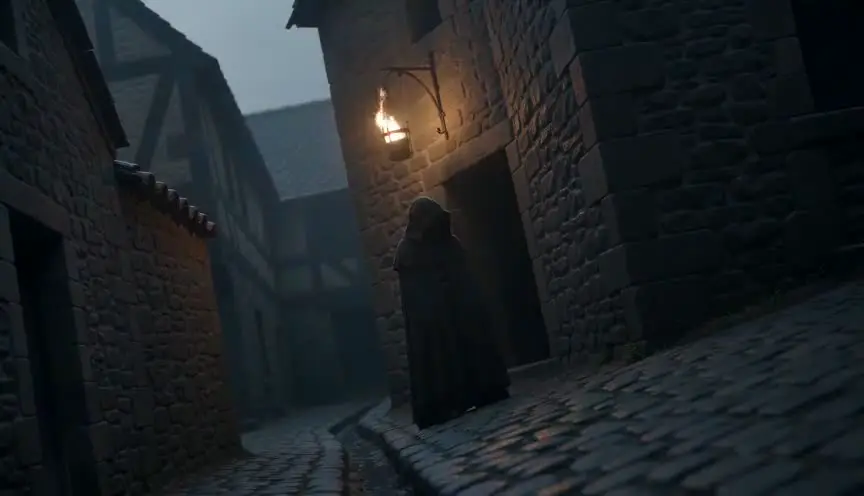
Follow a perfect symmetrical frame with a tilted one when the order breaks. The contrast turns a stable world into a crooked one in a single cut.

An overhead shot reveals the full pattern of a symmetrical space, like a floor plan, and makes the ritual or institution feel designed from above.
Reference
Watch it in
The Grand Budapest Hotel (2014)
Wes Anderson builds his hotel world on strict mirrored frames, so the characters live inside a controlled, storybook order.
The Shining (1980)
Kubrick's matched corridors and hotel rooms feel clinical and unnerving because every side answers the other a little too perfectly.
2001: A Space Odyssey (1968)
Kubrick frames spacecraft interiors as mirrored corridors, which makes the machines look calm, cold and in charge.
ScreenWeaver
Set it up in ScreenWeaver
Describe the balanced place in your action lines, and ScreenWeaver breaks the scene down into shots automatically. Open the shot, set the framing to a wide shot at eye level on the central axis, with a static movement or a straight dolly, and a duration that lets the pattern register. Build the storyboard frame so both halves match. The location and characters carry from shot to shot, keeping the geometry consistent, and the AI previsualization shows whether the balance reads before you shoot.
Start writing for freeThe prompt behind this clip
This is the exact prompt that rendered the clip at the top of the page. Keep the description of the camera and the light, change the subject and the place.
Symmetry: a locked-off camera faces a boxing ring dead center, its four ropes and corner posts mirrored perfectly on the left and right of the frame. A boxer in gray shorts stands motionless at the exact center of the ring, arms raised, while two identical hanging heavy bags sway in matching rhythm on either side of the background. Even fluorescent light from overhead fixtures spreads evenly across both halves of the gym, casting matching shadows. The camera stays completely static for the full shot, level and centered, holding the mirrored composition without a single cut. No text.
Common mistakes
- 01
Camera slightly off axis
A few centimeters off the center line and the perspective lines no longer meet in the middle. The result looks careless. Measure the axis and mark it on the floor.
- 02
Symmetry with no break
Perfect balance held too long becomes wallpaper. The shot gets its power from a figure or detail that disturbs the pattern, so plan that disturbance.
- 03
Ignoring the actors
A mirrored set with actors placed casually loses the effect. Block people as part of the pattern, matching heights, spacing and posture on both sides.