Overhead top-down shotTurn a table into a stage
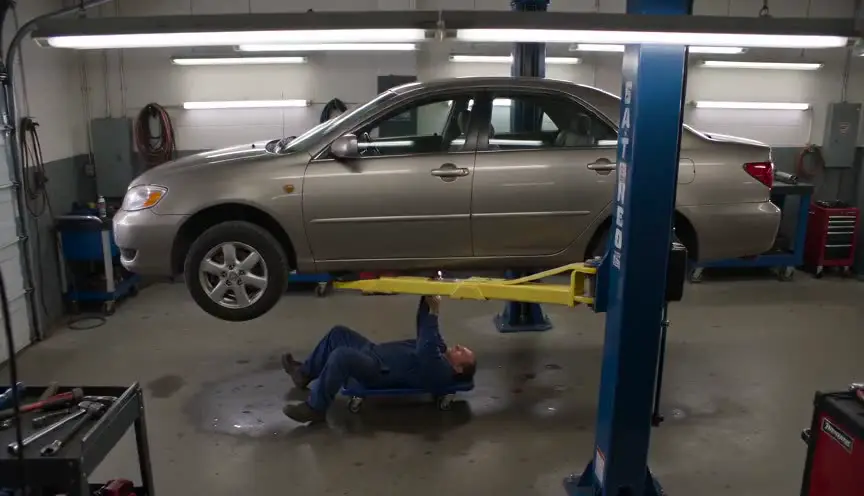
An overhead shot looks straight down onto a surface close below the camera: a desk, a bed, a board game, hands at work. The scene flattens into a clean graphic layout, and the audience reads every object in its place.
Also calledTop shotFlat lay shotGod's-eye shotTop-down shot
Camera angles
Why it works on screen
Where a bird's-eye view shows landscapes, the overhead top-down shot shows the small world of a table. It serves process and ritual: a cook's hands, a forger's tools, a card game, a letter being written. It also serves control, since the flat layout feels arranged, exact, sometimes obsessive. Lying characters seen from above look exposed or peaceful, like someone on a bed after bad news. A scene earns it when the order of objects tells us something, when a routine is about to break, or when the film wants a moment of stillness and design before the drama returns.
The shot list line
- Size
- Medium shot or close-up of a surface
- Angle
- Overhead, 90 degrees straight down
- Movement
- Static, or a slow slide across the surface
- Lens
- 35mm to 50mm
- Duration
- 3 to 6 s
Square the frame to the edges of the table or board, and light from the side so objects cast short shadows and keep their volume.
Screenplay
On the page
The shot does not need to be named in a spec script. Describe the surface and what sits on it, in the order the eye should read it. An INSERT heading is accepted when an object needs its own frame, and it often ends up as a top shot. Use it sparingly, a few times per script at most. If a character lies down, write their stillness and the space around them. The overhead rig and the exact framing belong in the shot list.
EXT. MAIDAN PARK, KOLKATA - EARLY MORNING
A stone table under a banyan tree. A chessboard, worn to gray at the center squares.
AROOP SEN (70s) and his granddaughter MISHTI (10) face each other. He takes his time. She does not.
INSERT - THE BOARD
Her knight lands next to his king. Every piece around it is hers.
BACK TO SCENE
Aroop laughs, then stops laughing.
Storyboard
In the storyboard
Draw the surface as a flat rectangle filling the frame, with objects laid out as seen from the top. Show hands entering from the frame edges with small arrows for their moves. Keep straight lines parallel to the panel border. In a corner, add a side view of the camera directly above, with the height noted. If the camera slides, draw the travel arrow and the end frame. Note which object must be sharp and when it moves.
Pairs well with

Follow the overhead layout with a tighter insert on one object from the side. The top shot shows how things are arranged, the insert makes one detail count.
Cut from the top shot back to a medium shot of the people at the table. The flat, controlled image gives way to faces, which brings the human reaction to what the surface revealed.
Reference
Watch it in
Gold Diggers of 1933 (1933)
Busby Berkeley puts the camera overhead and turns the chorus into a spinning kaleidoscope, an early model of the pattern top shot.
The Grand Budapest Hotel (2014)
Wes Anderson returns again and again to top-down inserts of desks, suitcases and pastry boxes, giving the film its flat, storybook precision.
ScreenWeaver
Set it up in ScreenWeaver
Describe what sits on the surface in your action lines, and ScreenWeaver breaks the scene down into shots automatically. Open the shot, set the framing to a close-up or medium shot of the table, choose the overhead angle, keep the movement static or a slow slide, and give it three to six seconds. Add key props as references so they keep the same look from shot to shot. Check the layout in the AI previsualization before dressing the set.
Start writing for freeThe prompt behind this clip
This is the exact prompt that rendered the clip at the top of the page. Keep the description of the camera and the light, change the subject and the place.
Overhead top-down shot of a bakery kitchen at 5 am, camera locked directly above a stainless steel worktable, looking straight down at 90 degrees. A middle-aged baker's hands shape rows of dough into round loaves, flour dusting the table in a fine layer, steam drifting faintly from a nearby proofing basket. Warm tungsten light falls in from the sides, casting soft shadows around each loaf. The frame stays static and the table fills the shot; only the hands and dough move, turning the routine task into a graphic pattern of circles and light. No text.
Common mistakes
- 01
Camera shadow on the set
A camera and rig above the table often throw their own shadow on it. Move the key light to the side, or lift the rig higher with a longer lens.
- 02
Messy layout
From above, clutter becomes noise. Dress the surface for the lens: fewer objects, clear spacing, a strong shape, and a reason for each item.
- 03
Angled, not overhead
A slight tilt breaks the flat graphic effect and makes table edges converge. Level the camera so the surface is parallel to the sensor.