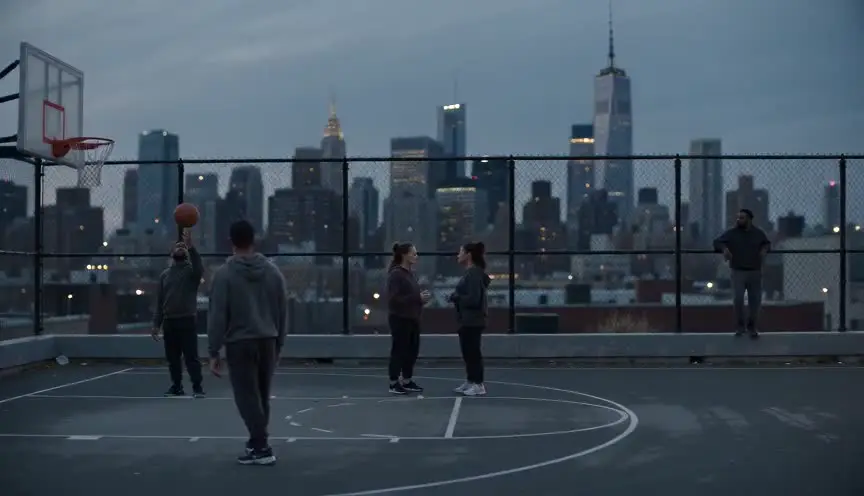
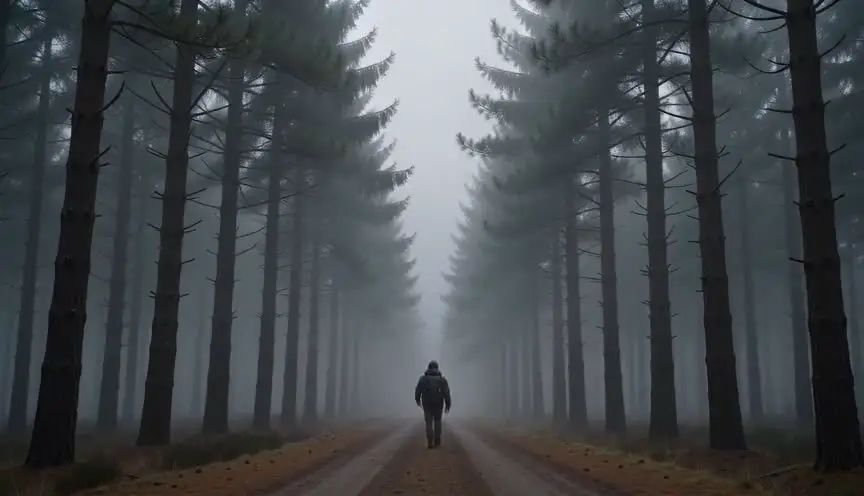
Repetition and patternRhythm, order, and the one exception
Pattern composition fills the frame with repeating shapes: rows of desks, identical windows, uniforms, tiles, lockers. The eye reads rhythm and order, and anything that breaks the pattern becomes the first thing the audience sees.
Also calledPatterned compositionVisual rhythmRepeating motif
Composition
Why it works on screen
Repetition shows a system. Rows of identical workstations say that people have become parts of a machine. Matching doors in a corridor suggest a maze or a routine with no exit. A crowd in the same uniform erases individuals, until one person turns the wrong way. Use pattern for satire, dystopia, institutional drama, comedy of routine and horror built on sameness. A scene earns it when the story is about conformity, repetition or a world that runs on rules, and it becomes powerful the moment a character breaks the rhythm.
The shot list line
- Size
- Wide shot
- Angle
- High angle or eye level down the rows
- Movement
- Static or slow lateral track
- Lens
- 35mm to 50mm, or longer to compress the rows
- Duration
- 5 to 8 s
Align the camera with the rows so the repetition is clean, then make sure the single break in the pattern falls on a strong point of the frame.
Screenplay
On the page
Patterns live in locations and costumes, so you can write them plainly: three hundred identical desks, rows of drying uniforms, a wall of mailboxes. Keep it to one clear image per scene, not a list. Then give the exception its own line: the one empty chair, the one person standing. That contrast is what the director will frame. Do not describe the camera placement or symmetry. The exact angle and lens that flatten or deepen the pattern belong in the shot list.
INT. CALL CENTER - MAKATI - 3 A.M.
Rows of identical cubicles under flat white light. Hundreds of headsets. The same script glowing on every screen.
A murmur of the same greeting in a hundred voices.
In row forty, one chair is turned away from its desk.
JOMAR REYES (26) sits in it, headset around his neck, staring at the dark window.
A SUPERVISOR's footsteps approach down the aisle.
Jomar doesn't turn around.
Storyboard
In the storyboard
Draw the repeating elements with a quick stamp-like rhythm, the same shape again and again, keeping spacing even. Then draw the exception in a heavier line or a different tone and circle it. Label the pattern and what breaks it. If the camera tracks along the rows, draw a lateral arrow and a second panel showing where the exception enters the frame. Note whether the lens should compress the rows or show their depth.
Pairs well with

Seen from above, rows of desks, beds or cars become a pure pattern. Open with the overhead, then drop to eye level to find the person who does not fit.

A long lens stacks repeating elements tightly together, making a row of windows or a crowd feel endless and airless. It sharpens the sense of a system.
Reference
Watch it in
The Grand Budapest Hotel (2014)
Rows of identical doors, matching uniforms and repeated architectural details feed the hotel's fussy, storybook sense of order.
The Shining (1980)
The hotel carpet's geometric motif and the repeated corridor doors turn a simple hallway into a hypnotic, disorienting trap.
Playtime (1967)
Tati fills the screen with rows of the same glass cubicles and furniture, mocking the sameness of modern offices through sheer repetition.
ScreenWeaver
Set it up in ScreenWeaver
Describe the repeated rows and the single exception in your action lines, and ScreenWeaver breaks the scene down into shots automatically. Open the shot, set a wide framing with a high or eye-level angle down the rows, static or a slow lateral track, with a duration long enough to feel the rhythm. The location carries from shot to shot, so the pattern stays consistent, and the AI previsualization shows whether the break in the pattern lands where the eye goes.
Start writing for freeThe prompt behind this clip
This is the exact prompt that rendered the clip at the top of the page. Keep the description of the camera and the light, change the subject and the place.
Repetition and pattern: a slow lateral truck shot along a narrow Venetian canal at midday, camera moving right to left at a steady walking pace, framing a row of identical striped wooden mooring poles rising from the water, spaced about one meter apart, each casting the same diagonal shadow on the green water. Behind them a continuous line of shuttered windows on a pastel stone facade repeats the same rhythm. The even spacing holds constant across the frame until a single unpainted, crooked pole breaks the sequence near the end of the shot. Flat overcast daylight, no tilt, no zoom. No text.
Common mistakes
- 01
A pattern with no break
Pure repetition quickly becomes wallpaper. The shot needs an exception, a movement or a change, so the pattern has something to push against.
- 02
Messy alignment
Rows seen at a random angle look like clutter, not pattern. Align the camera with the lines of the set so the rhythm reads clearly.
- 03
Busy costume on a busy set
A patterned shirt against a patterned wall makes the character disappear. Keep the lead in plain tones when the background repeats.