WuxiaCombat as poetry in the air
Wuxia is a Chinese genre of martial heroes, codes of honor and sword fights that defy gravity, filmed with wires, flowing fabric and landscapes full of wind. The audience watches a duel as a dance that carries feelings words cannot.
Also calledWire-fuChinese sword fantasyFlying swordsman genre
Genre looks
Why it works on screen
Wuxia stories are about honor, loyalty, forbidden love, revenge and the price of mastery. The wandering swordsman or swordswoman lives by a code in a world that does not. Fights are not only action: each duel expresses a relationship, a debt or a heartbreak. The style serves longing, discipline, grace and melancholy. A story earns it when its conflicts are emotional as much as physical, when two fighters say more with their blades than with dialogue. Nature often joins the fight, bamboo, water, leaves, rain, so landscape and emotion move together.
The shot list line
- Size
- Wide for the flight, medium for exchanges, close for faces and blades
- Angle
- Low angles for leaps, high angles over landscapes
- Movement
- Crane and tracking moves following the fighters through the air
- Lens
- Wide for landscapes, telephoto for compressed exchanges
- Duration
- 2 to 6 s per shot, occasional long flowing takes
Plan wire rigs and safety with the stunt team, and let wind, fabric and leaves move in every frame.
Screenplay
On the page
A screenwriter should describe the meaning of a fight, not its choreography. Write who wins each exchange, what the fight reveals, and the environment that shapes it: a lake, a bamboo slope, a rooftop at dusk. One or two striking images, such as a blade cutting a falling leaf, can set the tone. Leave wire work, moves and angles to the fight choreographer and the director. They will design the sequence in the shot list and the storyboard.
EXT. TEA TERRACES - WUYI MOUNTAINS - DAWN
Mist sits between the rows. Pickers' baskets lie abandoned.
LAN XIAOYU (19, a tea picker's smock, a sword wrapped in cloth) climbs toward the top terrace.
An old woman waits there, MADAM GU (70s, white hair tied with red thread), sipping from a cup.
Madam Gu sets the cup down on the stone wall. It does not spill.
MADAM GU
If it falls before we finish, you lose.
Storyboard
In the storyboard
Draw fighters in fluid, stretched poses, with dotted lines showing the wire arcs and flight paths. Add flowing fabric and wind lines. Place landscape elements (bamboo, water, rooftops) around the fighters to show their role in the fight. Mark crane or tracking moves with long curved arrows. Write the emotional meaning of each exchange under the panel, and note the color palette if the sequence uses a dominant hue.
Pairs well with
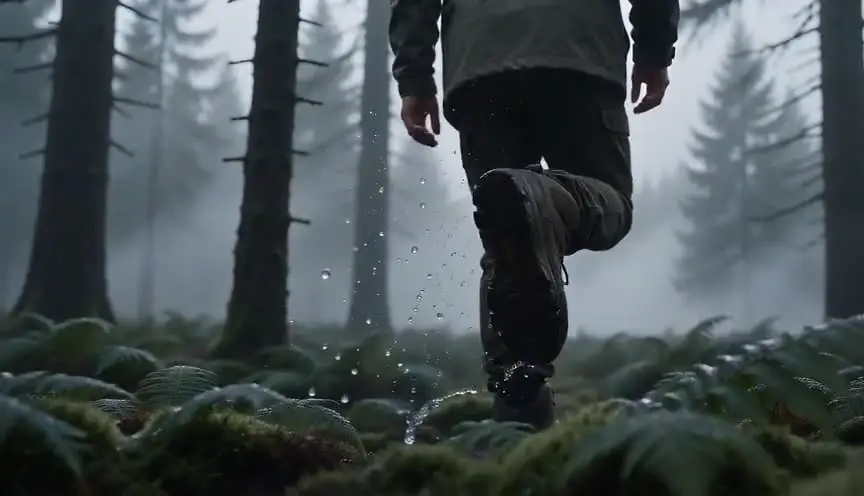
Slow motion stretches the moment a blade meets a falling leaf or a fighter hangs in the air. It turns combat into poetry and lets the audience feel weightlessness.
A crane rising with a leaping fighter keeps them in frame as they defy gravity, and reveals the landscape around them, the space that makes the duel mythic.
Reference
Watch it in
Crouching Tiger, Hidden Dragon (2000)
Wire-assisted duels over rooftops and through a bamboo forest make combat light and almost dance-like between two disciplined fighters.
House of Flying Daggers (2004)
Rich seasonal color, fabric in the wind and floating fights merge romance and swordplay into one visual poem.
Hero (2002)
Each fight sequence is shaped around a single color and flying blades, so every duel works as a separate emotional chapter.
ScreenWeaver
Set it up in ScreenWeaver
Write the duel as a sequence of meaningful exchanges in your screenplay, and ScreenWeaver breaks the scene down into shots automatically. Open each shot and set the framing from wide to close, low or high angles, crane or tracking movements and short durations. Add notes on wind, fabric and palette. Characters, locations and references carry from shot to shot, so costumes and landscapes stay consistent, and the AI previsualization lets you judge the flow of the fight before the choreographer builds it.
Start writing for freeThe prompt behind this clip
This is the exact prompt that rendered the clip at the top of the page. Keep the description of the camera and the light, change the subject and the place.
Wuxia duel: a lone swordsman in pale grey robes leaps from a snow-covered ridge above a solitary mountain cabin, hanging weightless in mid-air for a beat before drifting down as loose snow spirals around him. The camera holds a locked wide shot on a 35mm lens, low angle, tracking his rise and fall in slow motion at half speed. Cold backlight from a low winter sun rims his robes and sword in silver, thin mist clings to the cabin roof, and his sash and hair ripple as though gravity has eased. Only he and the snow move. No text.
Common mistakes
- 01
Fighting without feeling
A wuxia duel without an emotional stake becomes an empty stunt. Every exchange should change something between the characters, even just who respects whom.
- 02
Visible effort on wires
Leaps that look pulled rather than floating break the magic. Rehearse wire work thoroughly and choose angles that hide the rigging and sell the grace.
- 03
Ignoring the landscape
Fights on a flat, neutral set lose the genre's poetry. Use water, trees, roofs and weather as partners in the choreography.