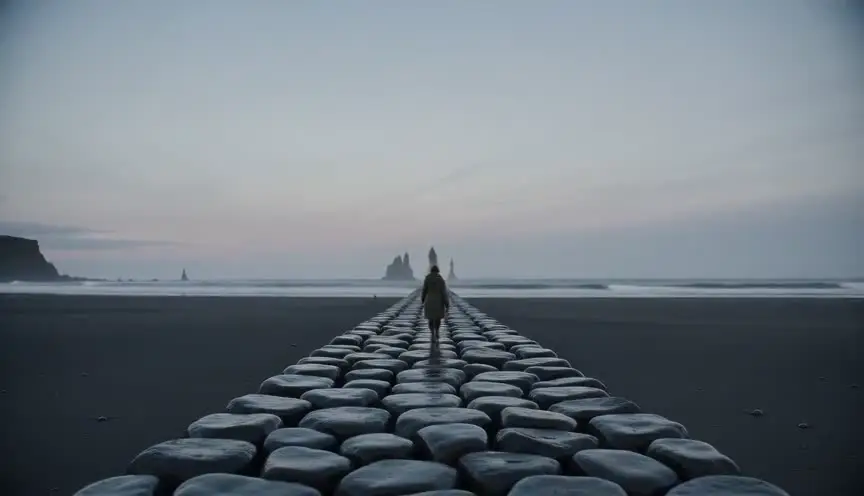
One-point perspectiveEvery line points to one place
One-point perspective places the camera square to a corridor, road or room so that all its receding lines meet at a single vanishing point, usually in the center of the frame. The image feels deep, orderly and inevitable, and the audience's eye is drawn straight to the far end.
Also calledCentral perspectiveVanishing point compositionLinear perspective
Composition
Why it works on screen
A vanishing point is a destination. When a character stands at the near end of a long corridor, the story asks what waits at the far end, and whether they will go. Use one-point perspective for journeys with a clear goal, institutions that feel like machines, horror corridors, final walks and moments of fate. It also suits comic deadpan, since the rigid geometry makes any small human movement look absurd. A scene earns it when the space itself has a direction and the character must choose to follow it or not.
The shot list line
- Size
- Wide shot
- Angle
- Eye level, square to the space
- Movement
- Static or straight dolly toward the vanishing point
- Lens
- 18mm to 28mm
- Duration
- 5 to 8 s
Center the camera on the corridor's axis and level it in both directions, so every receding line meets at one point in the frame.
Screenplay
On the page
Do not write "one-point perspective" in a screenplay. Choose a location that creates it naturally and describe it simply: a long library aisle, a tunnel, a straight avenue of trees, a corridor with a single door at the end. Then write what lies at the end, since that is what the lines point to. A director will square the camera to it. Keep exact placement, lens and height for the shot list.
INT. UNIVERSITY LIBRARY - STACKS - CAIRO - NIGHT
A narrow aisle between shelves that rise to the ceiling and run back into darkness.
At the far end, one reading lamp is on.
YOUSSEF HASSAN (20s, archive badge, a flashlight) stands at the near end, listening.
A page turns somewhere down there.
YOUSSEF
The library closed an hour ago.
The page turns again.
Storyboard
In the storyboard
Mark the vanishing point first with a small cross, usually at the center of the panel. Rule lines from the corners of the frame toward it for walls, floor and ceiling. Place the character on or near the axis, and draw what waits at the vanishing point. If the camera moves, add a straight arrow toward the point and draw the end frame. Note the lens, the exact camera height and that the camera stays perfectly square.
Pairs well with
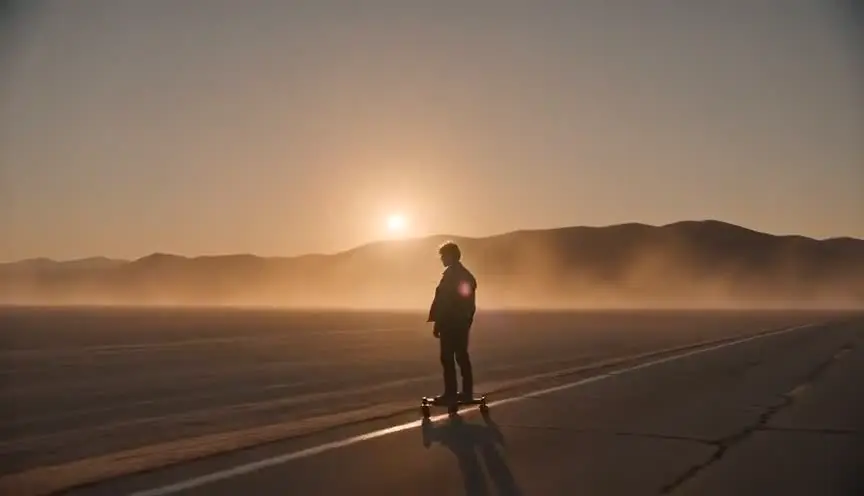
A slow dolly along the axis of a one-point frame pulls the audience toward the vanishing point, turning the destination into a threat or a promise.
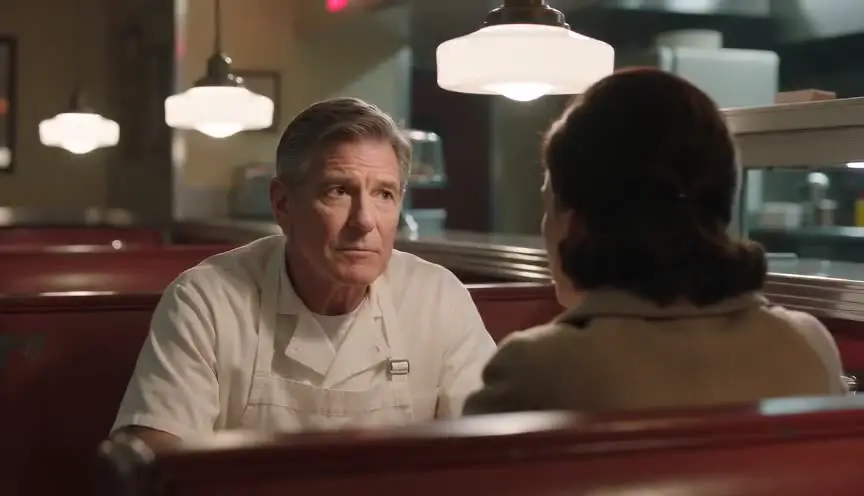
Cut to the reverse from the far end, looking back at the character on the same axis. The second vanishing point shows how far they have to go, or how far they have come.
Reference
Watch it in
The Shining (1980)
Kubrick holds the camera on the axis of the hotel hallways, so the vanishing point stays centered and the building feels like a machine with no way out.
2001: A Space Odyssey (1968)
Kubrick centers the Discovery's white corridors so panels and lights recede to one point, which makes the journey feel sterile and fixed in advance.
ScreenWeaver
Set it up in ScreenWeaver
Set the scene in a corridor, an aisle or a straight road and describe what lies at the far end, and ScreenWeaver breaks it down into shots automatically. Open the shot, set a wide framing at eye level, square to the space, with a static movement or a straight dolly, and a duration that lets the depth register. The location carries from shot to shot, so the reverse matches. The AI previsualization shows whether the lines truly meet at one point.
Start writing for freeThe prompt behind this clip
This is the exact prompt that rendered the clip at the top of the page. Keep the description of the camera and the light, change the subject and the place.
One-point perspective, static locked-off shot at eye level, 28mm lens, centered on a straight dirt trail running dead center through a misty pine forest, rows of tall pines receding symmetrically on both sides toward a single vanishing point where the trail disappears into pale fog. A lone adult hiker in a dark jacket walks away from camera along the exact center of the trail, shrinking steadily toward the vanishing point. The camera does not move at all; only drifting mist and the hiker's distance change across the four seconds. No text.
Common mistakes
- 01
Camera slightly rotated
A small rotation turns one vanishing point into two and the rigid effect falls apart. Level the camera and square it to the walls with care.
- 02
Nothing at the end
Lines converging on an empty wall waste the pull of the composition. Put a door, a light, a figure or a window at the vanishing point.
- 03
Too long a lens
A telephoto flattens the depth and the lines barely converge. One-point perspective needs a wide or moderate lens to feel deep.