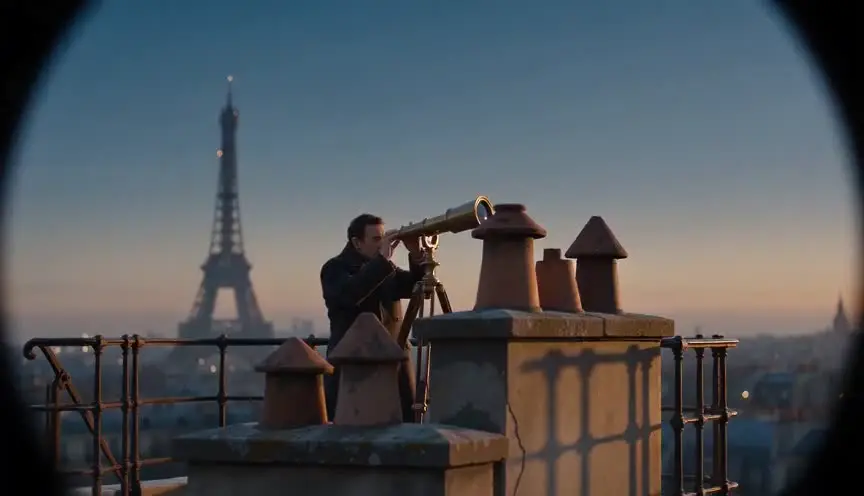
Centered compositionNowhere to look but here
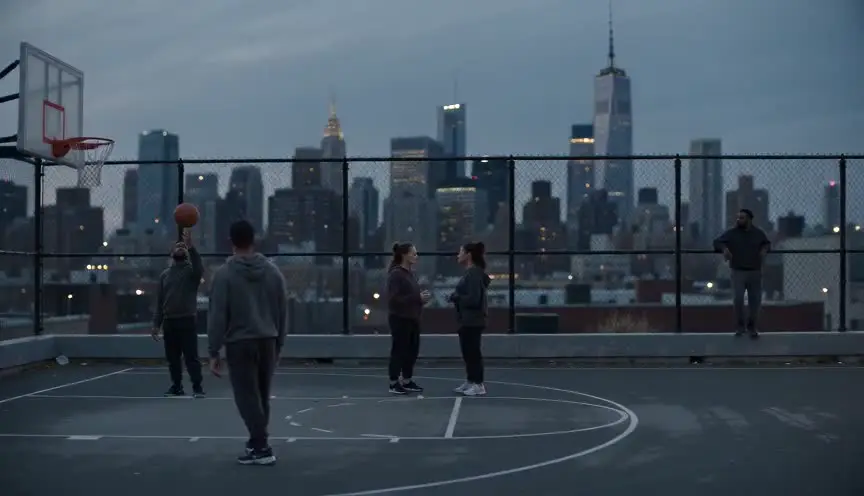
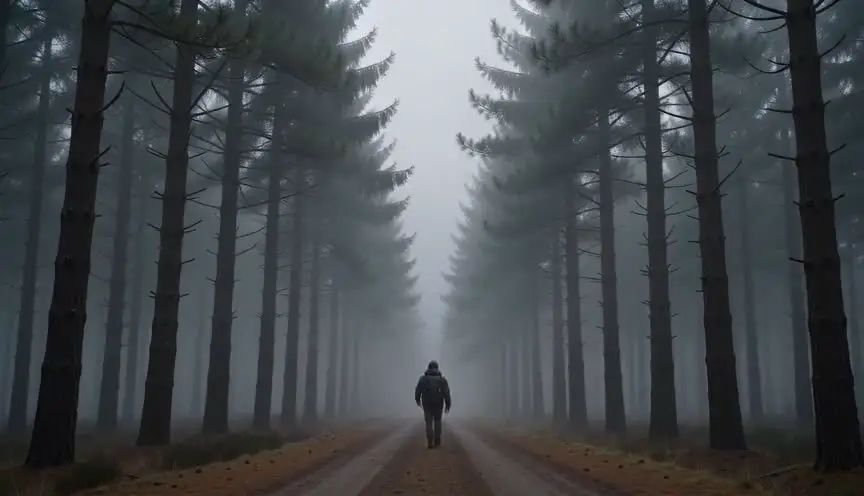
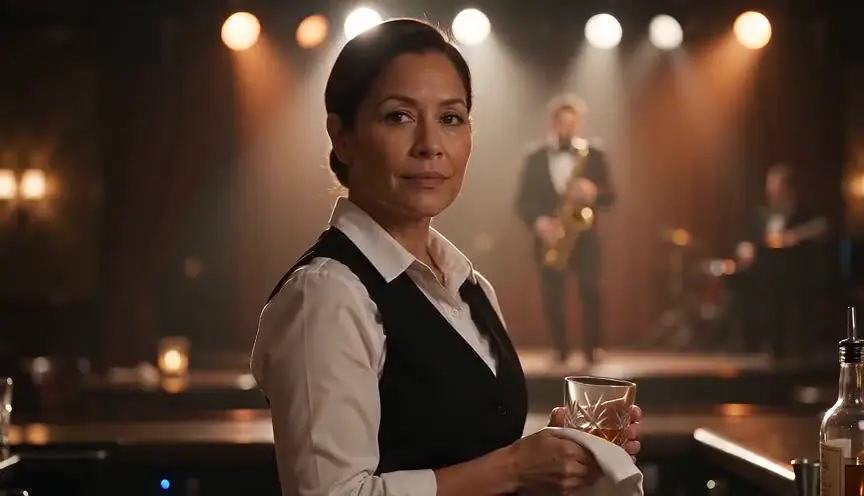
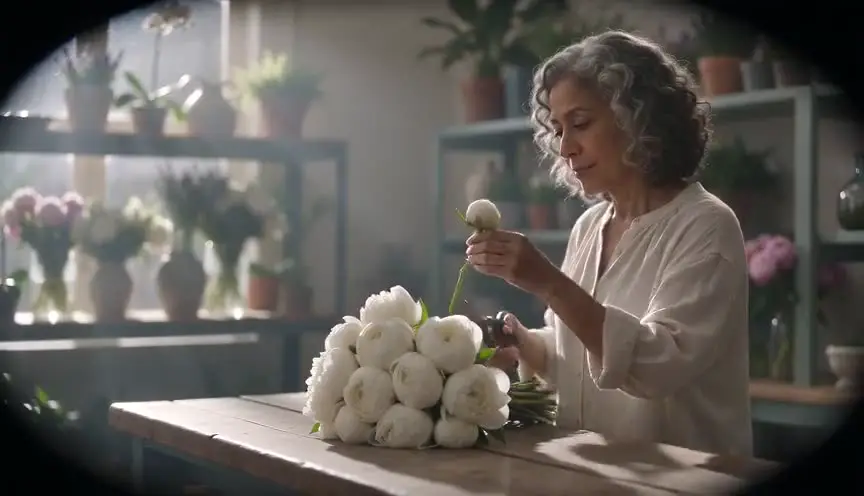
Centered composition puts the subject in the exact middle of the frame, often facing the lens or looking down its axis. The audience cannot drift to the edges, so the shot feels deliberate, confrontational or strangely formal.
Also calledDead-center framingCenter framingCenter punch
Composition
Why it works on screen
A centered frame removes the comfortable imbalance of ordinary coverage, which makes it a strong signal. Use it when a character takes control of a scene, delivers a verdict, faces a choice with no way around it, or stands inside an institution that dwarfs them. It serves authority, confrontation, ritual, deadpan comedy and quiet menace. It also works for isolation: a small person in the middle of a large, empty space has nowhere to hide. A scene earns it when the story reaches a point of no escape, or when the world of the film runs on rules.
The shot list line
- Size
- Medium shot
- Angle
- Eye level, frontal
- Movement
- Static
- Lens
- 40mm or 50mm
- Duration
- 4 to 7 s
Line the lens up on the subject's nose and the vanishing point of the set, and check that verticals on both sides stay parallel.
Screenplay
On the page
Do not write "centered" or "dead center" in a spec script. The page should show the situation that makes the frame feel inevitable: a character sitting alone at the head of a long table, someone standing in the middle of an aisle, a person facing a panel of judges. Those details imply a frontal, central image without telling the director where to put the camera. If the whole film uses centered framing as a style, state it once in a director's note or the look book, not in the action lines.
INT. CORPORATE INTERVIEW ROOM - DAY
A long white table. Three interviewers on one side. One chair on the other.
KANG MIN-JI (24, borrowed blazer, sleeves slightly too long) sits in it. Her hands are flat on the table.
The middle interviewer, MR. HAN (50s), turns a page of her résumé. Then another.
The wall clock behind Min-ji ticks.
MR. HAN
Tell us why we should remember you.
Storyboard
In the storyboard
Draw a vertical center line and a horizontal center line faintly across the panel. Put the subject's nose on the vertical line and match the set elements on either side so the eye returns to the middle. Mark the camera as frontal with a small arrow pointing straight in. If the reverse angle is also centered, draw it next to this panel so the pattern is visible. Note the lens, the camera height at eye level and the duration.
Pairs well with
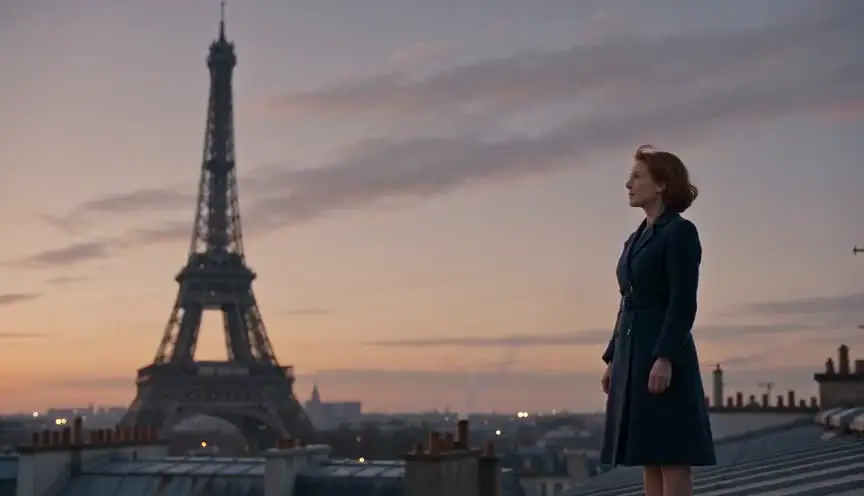
Cover most of the conversation on thirds, then switch to a centered frame for the line that decides the scene. The change in geometry makes the audience feel the turn before they process it.
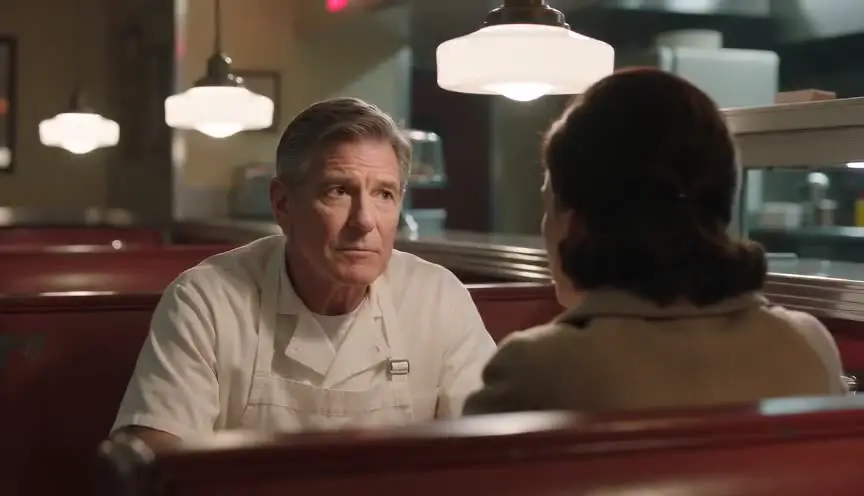
Answer a centered shot with a centered reverse. Two characters each dead center, cutting back and forth, builds the rhythm of a duel or an interrogation.
Reference
Watch it in
The Shining (1980)
Kubrick keeps placing people and corridors in the middle of the frame, so the hotel feels rigid and the dread seems built into its architecture.
The Grand Budapest Hotel (2014)
Wes Anderson frames nearly every setup dead center, which gives the film the neat, staged look of a picture book or a model box.
ScreenWeaver
Set it up in ScreenWeaver
Write the confrontation or the moment of no escape as action, and ScreenWeaver breaks the scene down into shots automatically. Open the key shot, set the framing to a medium shot at eye level, frontal, with a static movement and a duration that lets the stillness land. Place the subject in the middle of the storyboard frame. The character and the location carry into the reverse and the next shots, and the AI previsualization shows whether the symmetry of the set holds.
Start writing for freeThe prompt behind this clip
This is the exact prompt that rendered the clip at the top of the page. Keep the description of the camera and the light, change the subject and the place.
Centered composition: a static locked-off wide shot of a woman in her thirties standing perfectly in the middle of a golden sunflower field that stretches evenly to both edges of the frame, her body aligned exactly on the vertical center line. The camera does not move at all for the full four seconds. Sunflowers sway gently in a light breeze on both sides, symmetrical in density and height, while she stands still, facing the lens directly under soft midday sun. No text.
Common mistakes
- 01
Almost centered
A subject slightly off the middle looks like a mistake, not a style. If you commit to the center, measure it on the monitor and align the set with it.
- 02
Centering without purpose
When every shot is centered for no reason, the frame stops meaning anything. Keep it for authority, ritual, confrontation, or a film whose whole world is built on order.
- 03
Wrong lens for the room
A very wide lens on a frontal shot bends the edges and pulls focus to the distortion. Use a moderate focal length and move the camera to control the background.