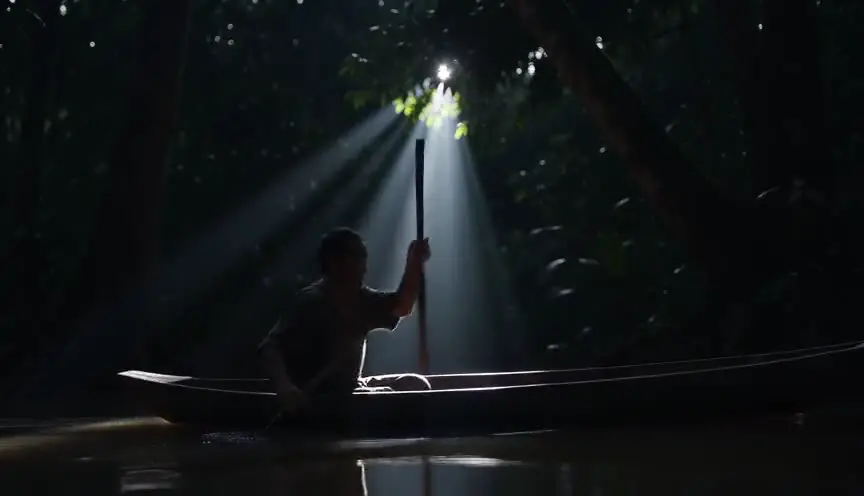
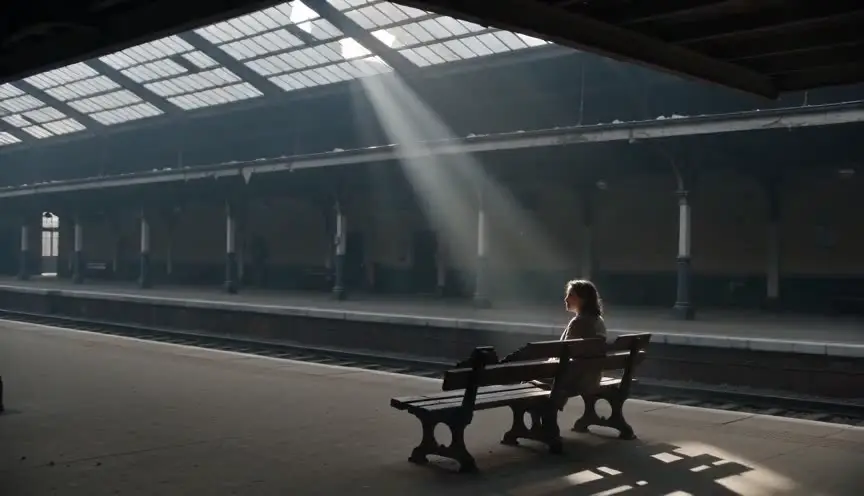
Negative spaceLet emptiness carry the scene
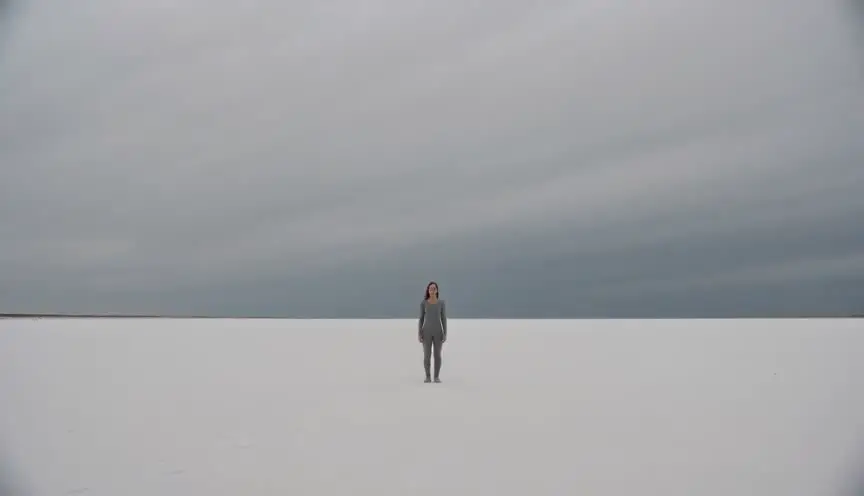
Negative space is the empty area around the subject: sky, snow, water, a bare wall. When it takes up most of the frame, the audience feels the size of the world, and how alone or small the character is inside it.
Also calledEmpty space compositionMinimalist framingBreathing room
Composition
Why it works on screen
Emptiness is a feeling on screen. A tiny figure on a frozen lake reads as solitude, endurance or doom. An empty stretch of wall next to a face reads as the person who is not there. Negative space serves grief, awe, loneliness, waiting and the calm before violence. It also gives the audience time to think, because there is nothing else to look at. A scene earns it after noise and crowds, when a character finally stands alone, or when the land, the sea or the night is as much a character as anyone in the story.
The shot list line
- Size
- Extreme wide shot
- Angle
- Eye level or slightly high
- Movement
- Static
- Lens
- 50mm to 85mm from far away
- Duration
- 6 to 10 s
Keep the subject small, well off center, and remove every stray object from the empty area so nothing competes with the solitude.
Screenplay
On the page
You can write emptiness directly, since it lives in the world, not in the camera. Say how much nothing surrounds the character: a frozen lake with no shore in sight, a bare white wall, a sky with no clouds. Keep the character small in the sentence if they should be small in the frame. Avoid camera words such as "tiny in frame." The director will read the solitude and build the composition. Proportions and exact placement belong in the shot list.
EXT. FROZEN LAKE - MONGOLIA - DAY
Ice in every direction. A pale sky meets it with no line between them.
Far out, one figure: BAATAR (70s, blue deel, fur hat) kneels beside a hole in the ice with a hand line.
No tent. No horse. No sound but the wind.
He pulls the line. Nothing.
He drops it back in and waits.
Storyboard
In the storyboard
Draw the frame nearly blank and place the subject as a small, clear shape near an edge or a corner. Label the empty area with what it is, such as ice, sky or wall, and its tone. Add a note on how much of the frame the subject occupies, for example one twentieth. If the shot holds long, write the duration large. For a sequence, draw the next panel at the same scale so the emptiness reads as a pattern.
Pairs well with
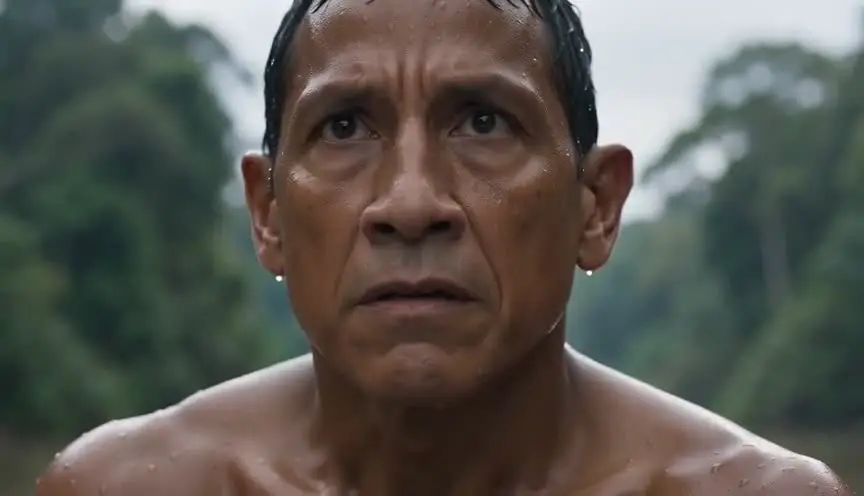
Cut from a figure lost in empty space to a close-up of the face. The jump in scale lets the audience feel the loneliness from outside, then from inside.
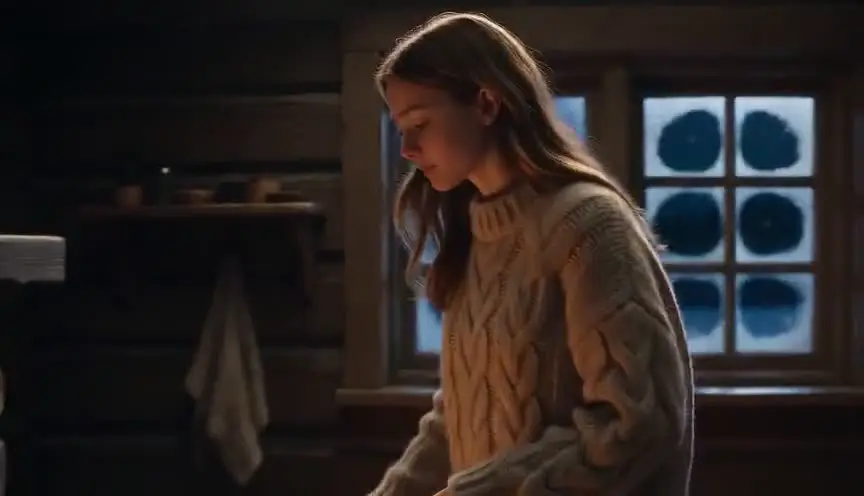
Hold an empty frame as a long take and let the character move slowly through it. Time becomes part of the emptiness, and the audience starts to feel the wait with them.
Reference
Watch it in
Lawrence of Arabia (1962)
Huge stretches of sand and sky swallow Lawrence as a small figure, so the desert itself becomes a measure of his isolation and ambition.
No Country for Old Men (2007)
The Texas plains leave people as tiny marks on empty ground, which makes the violence to come feel patient and unavoidable.
ScreenWeaver
Set it up in ScreenWeaver
Describe the emptiness in your action lines, and ScreenWeaver breaks the scene down into shots automatically. Open the shot, set the framing to an extreme wide shot at eye level, with a static movement and a long duration. Place the character small, near an edge of the storyboard frame. The character and the location carry from shot to shot, so the next closer shot matches. Use the AI previsualization to judge whether the empty area feels intentional and how long to hold it.
Start writing for freeThe prompt behind this clip
This is the exact prompt that rendered the clip at the top of the page. Keep the description of the camera and the light, change the subject and the place.
Negative space: a wide static shot of an empty concrete skate park at sunset, one skater in dark silhouette rolling slowly across the bottom third of the frame while the top two thirds hold only a smooth gradient sky of orange and purple, no clouds, no other people, no signage. The camera does not move; only the skater drifts left to right at a steady, unhurried pace, staying small against the vast, uncluttered background for the full four seconds. No text.
Common mistakes
- 01
Busy empty space
A few stray objects, a road sign or a bright patch can ruin the emptiness. Clean the frame or move the camera until nothing distracts from the subject.
- 02
Subject too small to read
If the audience cannot find the character, the shot becomes a landscape. Use contrast in tone or color so the small figure pops out of the space.
- 03
Cutting too fast
Negative space needs time. A two second hold shows a place, but a longer hold makes the audience feel the silence. Protect these shots in the edit.