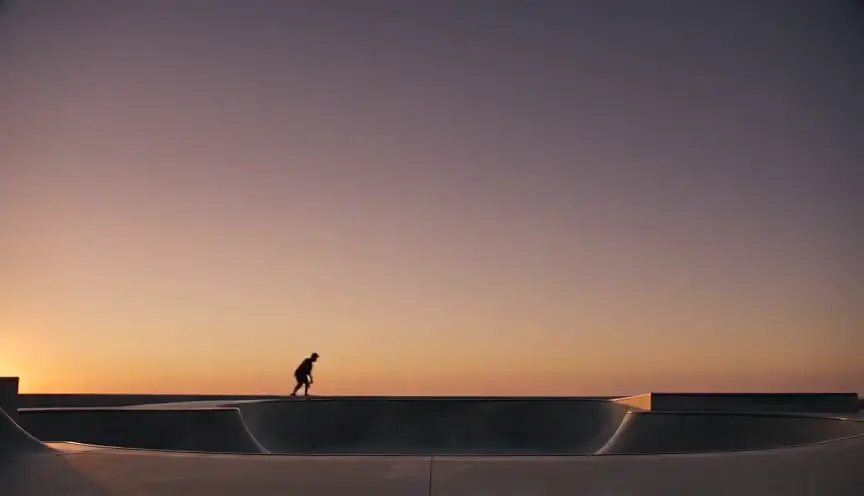
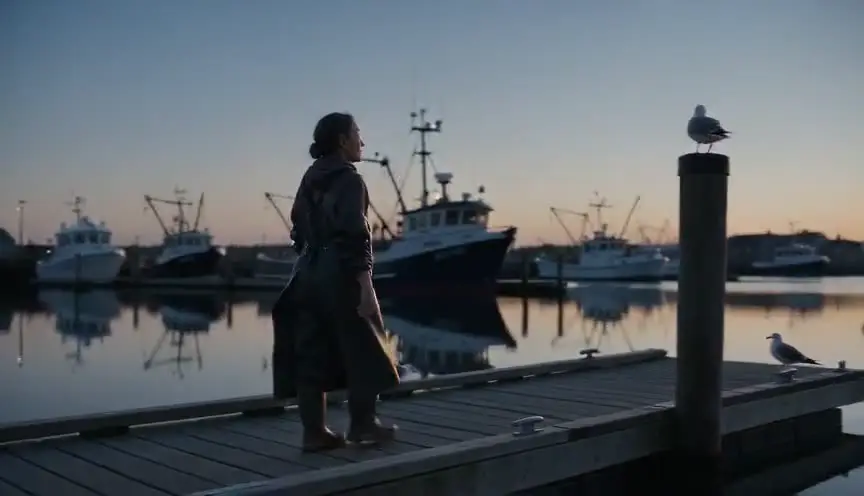
Rule of thirdsOff center, and alive because of it
The rule of thirds divides the frame with two vertical and two horizontal lines and places the subject, the eyes or the horizon on those lines rather than in the middle. The image feels balanced but not frozen, and the audience reads the empty part of the frame as part of the story.
Also calledThirds gridGrid compositionThird lines
Composition
Why it works on screen
Thirds are the default grammar of a scene, so their story value comes from what you put in the other two thirds. A traveler on the left third with open road on the right feels like a journey. A mother on the right third with an empty chair on the left feels like absence. The grid serves ordinary dialogue, arrivals, landscapes that dwarf a person, and quiet moments where the world around a character matters as much as the face. A scene earns a deliberate thirds frame when the space beside the character carries meaning, not just air.
The shot list line
- Size
- Wide shot
- Angle
- Eye level
- Movement
- Static
- Lens
- 35mm
- Duration
- 4 to 6 s
Turn on the thirds overlay, set the horizon on the lower line and the subject on the left vertical, with her look pointing into the open two thirds.
Screenplay
On the page
Never write "rule of thirds" in a screenplay. It is a framing habit, not a story event, and a reader gains nothing from it. What you can write is the relationship between a person and the space around them: a small figure against a wide plain, a man at the edge of a long table, a sky that takes most of the view. The director will translate that into a thirds frame. Keep grid placements for the shot list and the storyboard, where the operator needs them.
EXT. SALT FLAT - DAWN
A white plain to the horizon. The sky takes up most of the world.
RUFINA QUISPE (60s, wool hat, surveyor's tripod on her shoulder) walks along the edge of it.
She stops. Plants the tripod. Looks east, where the sun is not up yet.
Nothing else for miles. She seems glad of it.
RUFINA
(to herself)
Still flat. Still mine.
Storyboard
In the storyboard
Draw a light three by three grid over the panel before sketching anything. Place the horizon on one horizontal line and the subject where a vertical and a horizontal cross. Hatch or label the open two thirds with what they hold: sky, road, an empty chair. Add a small arrow for the character's eyeline so the operator knows which side stays open. Note the lens, the camera height and the duration under the panel.
Pairs well with
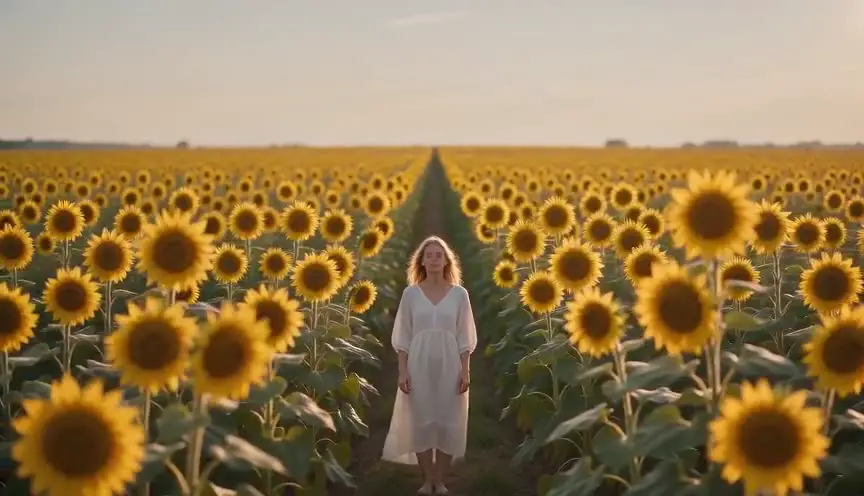
Hold a character on a third through a scene, then cut to them dead center at the decisive line. The sudden shift to the middle tells the audience that something has locked into place.
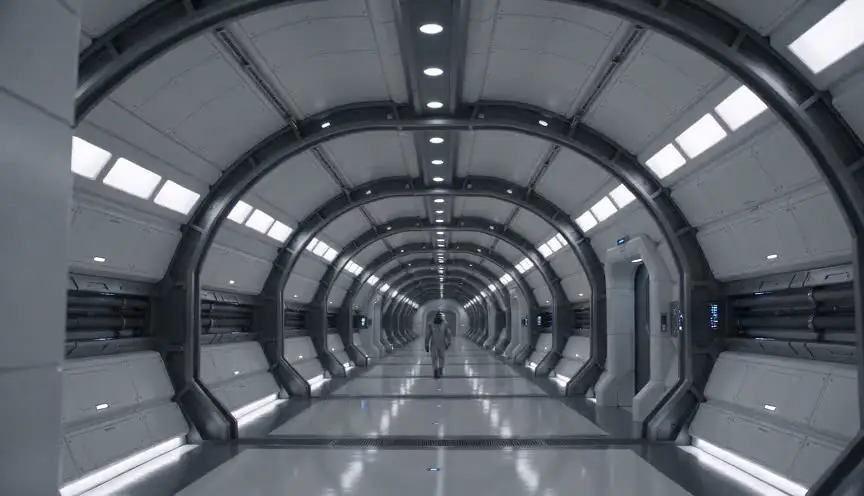
Open with an extreme wide shot where the figure sits on a low third against sky or land, then move closer with the same placement so the geography and the character stay tied together.
Reference
Watch it in
Lawrence of Arabia (1962)
David Lean and Freddie Young keep setting a single rider on a third of the frame, with the desert horizon filling the rest to show how small he is.
Blade Runner 2049 (2017)
Roger Deakins often places characters off center on the grid against enormous structures, so the city seems to outweigh the people inside it.
ScreenWeaver
Set it up in ScreenWeaver
Write the space around the character into your action lines, and ScreenWeaver breaks the scene down into shots automatically. Open the shot, set the framing to a wide or medium shot at eye level, keep the movement static or slow, and choose a duration that lets the empty thirds register. Place the subject off center in the storyboard frame. The character and the location carry from shot to shot, so the placement stays consistent, and the AI previsualization shows whether the balance works before the shoot.
Start writing for freeThe prompt behind this clip
This is the exact prompt that rendered the clip at the top of the page. Keep the description of the camera and the light, change the subject and the place.
Rule of thirds: a static wide shot on a Parisian rooftop at dusk, a woman in her fifties wearing a wool coat stands on the right third of the frame, facing left toward open sky, her body aligned with the vertical grid line and her eyes near the upper right intersection. The left two-thirds of the frame hold the Eiffel Tower silhouette and a soft orange sky, with zinc rooftops receding into the lower third. The camera does not move, the woman remains still, only a faint breeze stirs her coat and distant smoke rises from a chimney. No text.
Common mistakes
- 01
Thirds with nothing in them
Putting a subject on a third only works if the rest of the frame has a job. A blank wall filling two thirds of the image looks like a framing error, not a choice.
- 02
Eyeline facing the wrong way
A character on the right third looking out of the right edge feels cramped and odd. Unless you want that pressure, let the look travel into the open side of the frame.
- 03
Applying it to every shot
Thirds on every setup flatten a film into one rhythm. Break the grid when a moment needs it, with a centered shot, a tight close-up or an unbalanced frame.