Double dolly shotWhen a character floats through the world
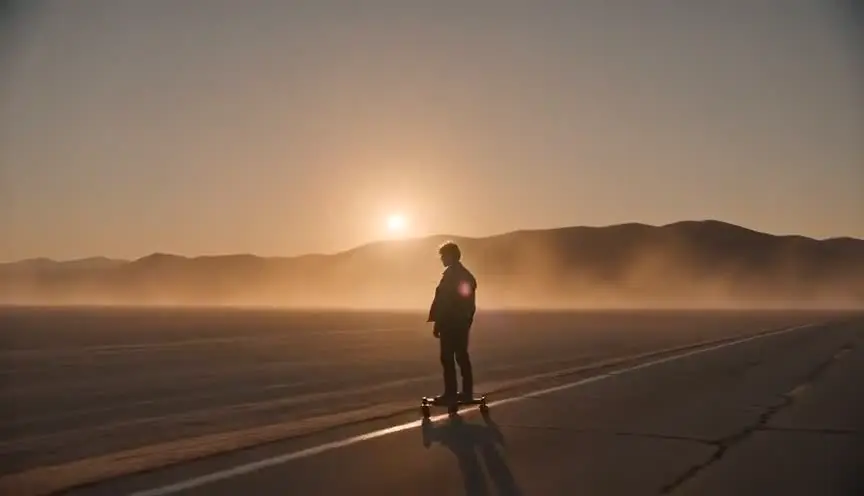
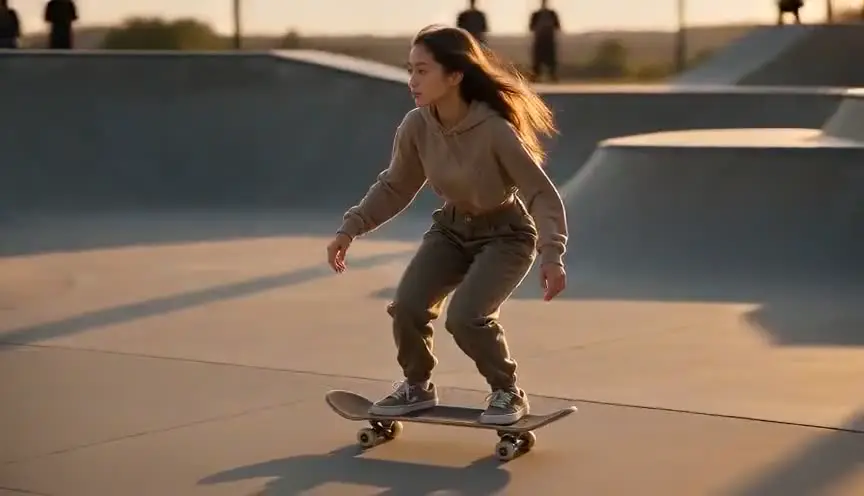
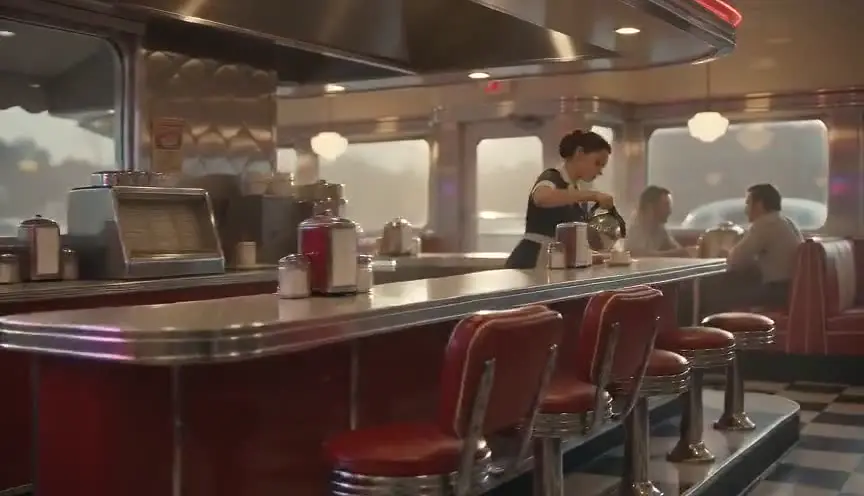
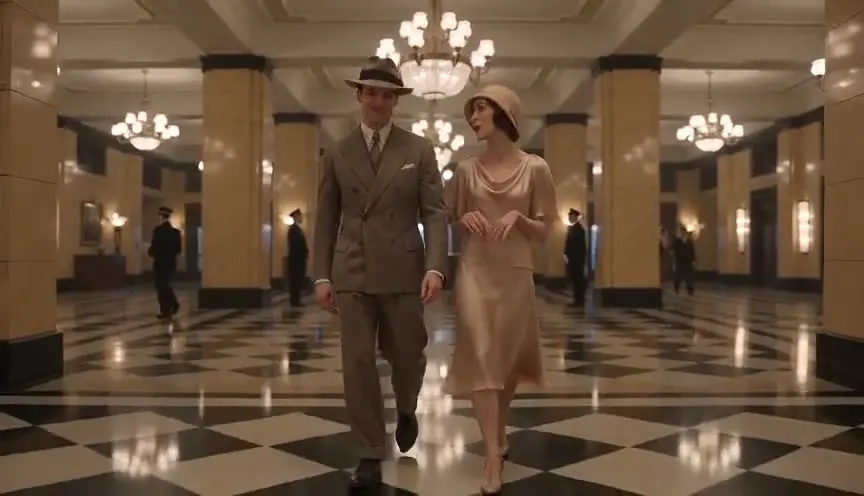
In a double dolly shot, the actor stands on a dolly and moves together with the camera, so they stay fixed in the frame while the world slides past behind them. The audience sees a character gliding without walking, as if carried by fate or lost in a dream.
Also calledParallel dolly shotTwin dolly shotMatched dolly shot
Camera movement
Why it works on screen
This move turns a walk into a state of mind. The character does not step; they drift, and the audience senses that they are no longer fully in control or fully present. It serves destiny, trance, shock, euphoria and the approach to something that cannot be avoided. It can make a character's walk toward a crucial event feel inevitable, or show someone floating through a party in love or in grief. A scene earns it when a character's inner state has separated them from the world around them, and the audience should feel that gap.
The shot list line
- Size
- Medium shot or medium close-up
- Angle
- Eye level
- Movement
- Actor and camera on the same or parallel dollies, moving together
- Lens
- 35mm to 50mm
- Duration
- 6 to 15 s
Hide the actor's feet or the platform in the frame, and move the dolly smoothly so the actor seems to glide without effort.
Screenplay
On the page
Do not write "double dolly" in a spec script. Describe the character's state of being carried: moving through a street as if in a dream, not hearing the voices around them, the world passing by. That inner distance tells a director this is a moment for something unusual. It is a signature move for some directors, so leave the technical choice to the director or the shot list, where the rig and the path go.
EXT. MALECÓN, HAVANA - SUNSET
Waves burst over the seawall. Old cars, fishermen, lovers on the wall.
YANELIS PÉREZ (23, nursing student, backpack) walks along the promenade holding a stamped passport against her chest.
A man sells peanuts. A boy runs past with a kite. Someone calls her name.
She does not hear them. She is smiling at nothing.
The city slides past her, gold in the last light.
Storyboard
In the storyboard
Draw the panel with the character centered in a medium shot, feet out of frame. Add streaks or arrows behind them showing the background moving, labeled DOUBLE DOLLY. Below, draw a top-down diagram with two linked dolly icons, one for the camera and one for the actor, and an arrow for their shared direction. Note the speed, the duration and the moment where the character's state changes.
Pairs well with
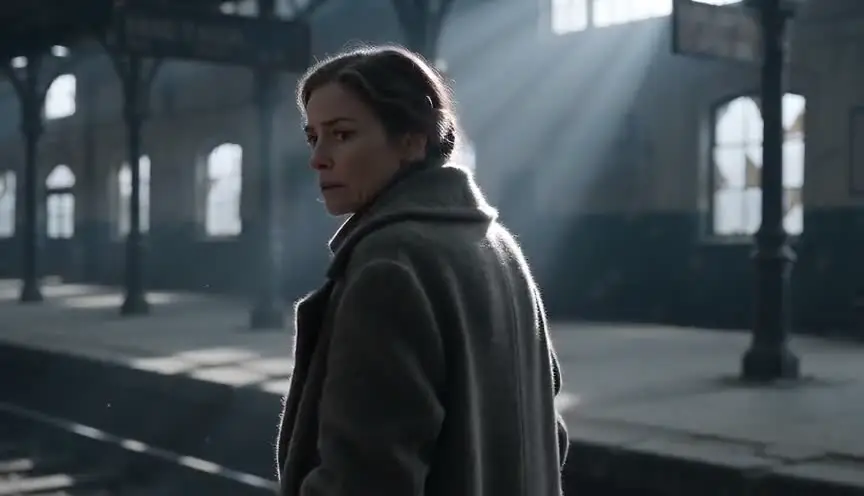
A regular medium close-up with the character walking normally before the double dolly makes the change visible. Suddenly they glide, and the audience feels their state shift.
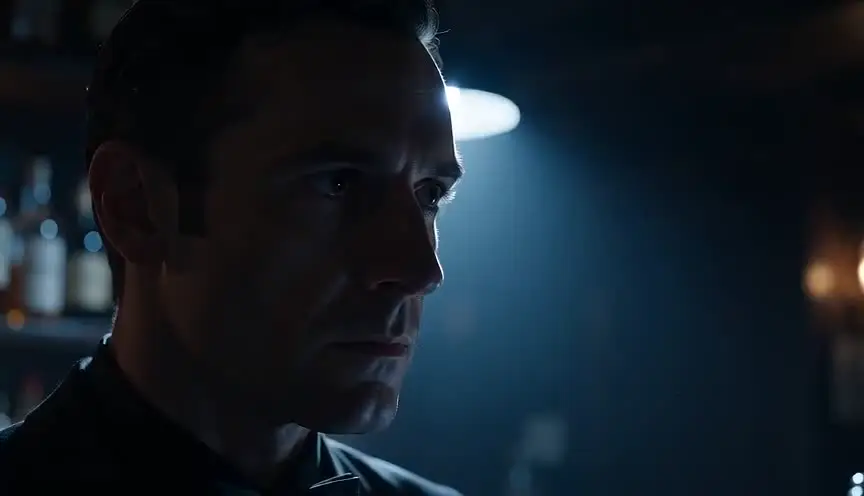
A smash cut out of the floating move back into noise and normal movement breaks the trance. It is a strong way to end a moment of destiny or shock.
Reference
Watch it in
Malcolm X (1992)
On his way to the Audubon Ballroom, Malcolm seems to glide down the street on Lee's trademark rig, fixed in the frame as the city drifts by toward his death.
BlacKkKlansman (2018)
Ron and Patrice drift together down a corridor toward a window, both standing on the rig as it travels with the camera.
ScreenWeaver
Set it up in ScreenWeaver
Write the character's floating state in your screenplay, and ScreenWeaver breaks the scene down into shots automatically. Open the shot, set the framing to medium or medium close-up, set the angle to eye level, choose a double dolly as the movement and give it a duration of six to fifteen seconds. Characters and the location carry from shot to shot, so the street and the people passing by stay consistent. Check the drift in the AI previsualization.
Start writing for freeThe prompt behind this clip
This is the exact prompt that rendered the clip at the top of the page. Keep the description of the camera and the light, change the subject and the place.
Double dolly shot inside a car repair garage: a middle-aged Black male mechanic in gray overalls sits on a low wheeled dolly, sliding along a straight track between parked cars, while a second dolly carries the camera at matching height and speed just ahead of him, keeping his face and shoulders centered and static in frame. Overhead lamps, tool racks and car hoods blur past in the background, but the mechanic stays sharp and still relative to the lens. 35mm lens, eye level, one continuous four second take at a steady even speed. No text.
Common mistakes
- 01
Showing the feet
If the audience sees the actor standing on a platform, the illusion breaks. Frame above the knees or waist, or hide the dolly with the set.
- 02
Actor walking on the dolly
If the actor moves their legs as if walking, the effect turns strange in a bad way. They should stand still, perhaps sway slightly, and let the dolly carry them.
- 03
Using it casually
A double dolly is a strong stylistic signature. Used for ordinary walks, it loses its power and confuses the tone. Keep it for moments of trance, destiny or shock.