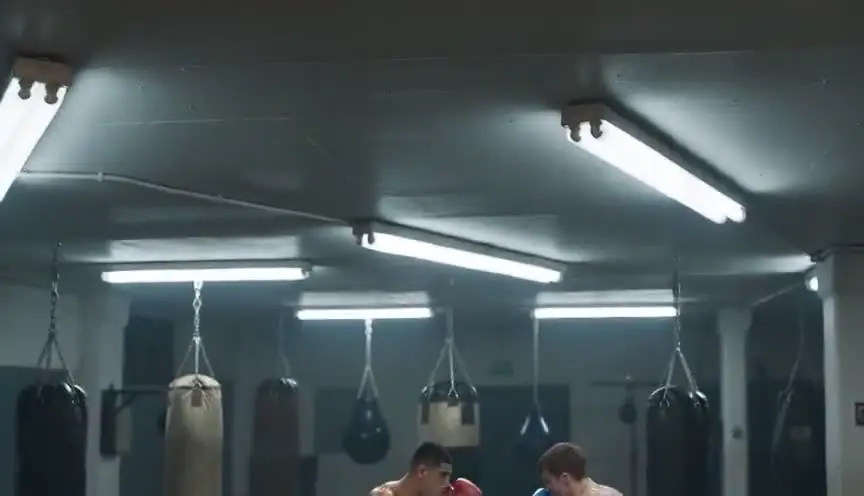
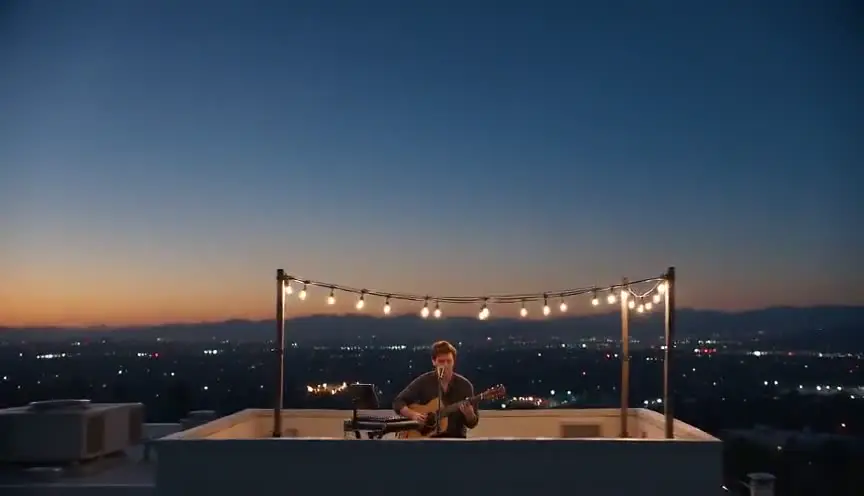
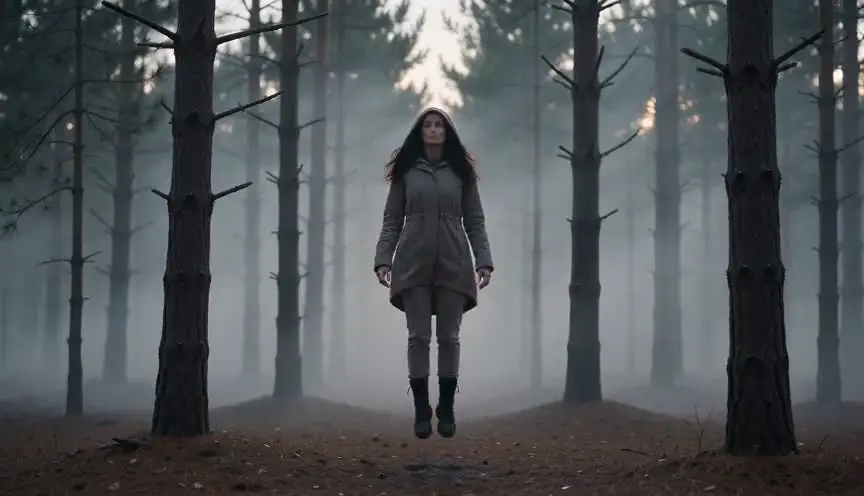
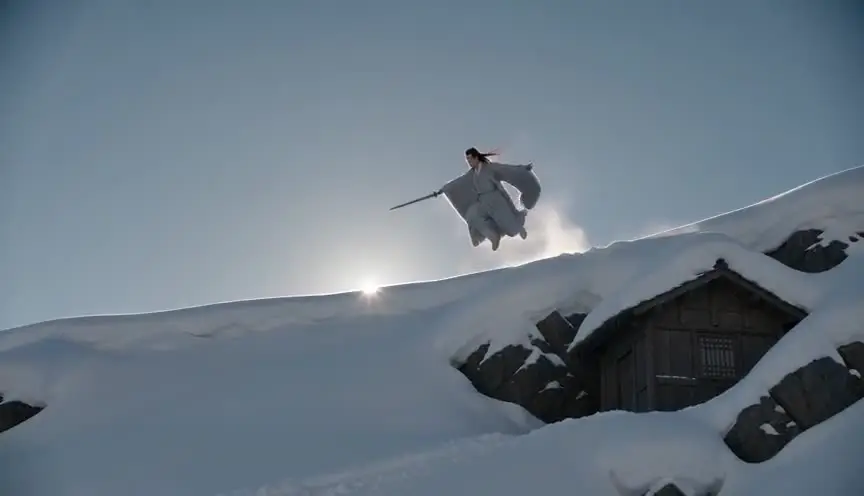
Crane upRising above to show the scale
A crane up lifts the camera high into the air, usually from near a character to far above them, while it keeps looking down at the scene. The audience rises away from one person and sees the bigger picture they belong to.
Also calledBoom upJib upRise shot
Camera movement
Why it works on screen
It is the shot of scale and release. Rising from a single face to a crowd, a battlefield or a city tells the audience how large the story really is and how small this person is inside it. It can close a scene with a feeling of peace or of defeat, as the character is left behind below. It serves epic reveals, endings, funerals, celebrations and the aftermath of catastrophe. A scene earns it when the wider view adds a new emotion: grief multiplied by a hundred, joy shared by a whole town, loneliness in a landscape.
The shot list line
- Size
- Medium to extreme wide shot
- Angle
- Eye level rising to high angle
- Movement
- Crane up, tilting down to keep the scene in frame
- Lens
- 24mm to 35mm
- Duration
- 8 to 20 s
Check the final frame at full height before rolling, and have the operator tilt down gradually so the subject stays in the composition as the arm rises.
Screenplay
On the page
Do not write "crane up" in a spec script. You can build the rise into the description: begin with one person, then widen to the people near them, then to the whole place. Ending a scene that way hints at a rising shot. Use it for a handful of moments in a whole film, because the audience feels its size. For your own shoot, the height, the start frame and the end frame go in the shot list.
EXT. HILLSIDE CEMETERY, DINGLE PENINSULA, IRELAND - DAY
NIAMH COSTELLOE (19) drops a fistful of earth onto a plain pine coffin.
She steps back into the line of mourners: aunts, fishermen, a priest holding his hat.
Beyond them, more people along the stone walls, standing in the wet grass.
Beyond the walls, the whole village, come up the hill in the rain.
Below them all, the grey Atlantic, and one trawler heading home.
Storyboard
In the storyboard
Draw the starting panel at ground level on the character. Draw the ending panel from high above, with the character small among the crowd or landscape. Between them, draw a side view of the crane arm with a curved arrow rising, labeled CRANE UP, and a smaller arrow showing the tilt down. Note the start and end heights, the duration and the beat or line where the rise begins.
Pairs well with

A close-up on the character's face before the crane up gives the audience one person to hold on to. As the camera rises, that person becomes a point in the crowd, and the scale hits harder.
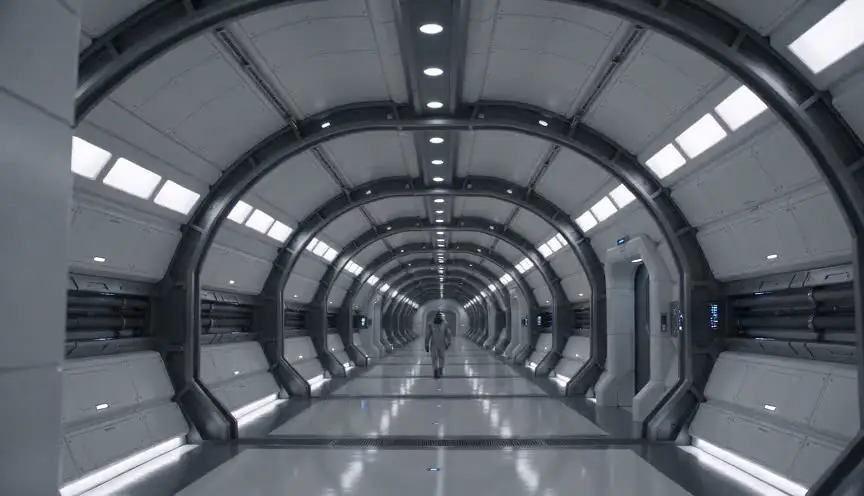
Let the crane end on an extreme wide frame, then hold it or cut to another extreme wide. The static vista after the rise gives the audience time to absorb the scale.
Reference
Watch it in
Gone with the Wind (1939)
The camera lifts away from Scarlett walking among the injured until the whole depot square is carpeted with bodies, a reveal of scale film students still study.
La La Land (2016)
In the freeway opening, the camera soars over drivers dancing on their car roofs, and a traffic jam becomes a giant open-air stage.
ScreenWeaver
Set it up in ScreenWeaver
Write the scene in your screenplay from the character outward, and ScreenWeaver breaks it down into shots automatically. Open the closing shot, set the framing to start at medium, set the angle to eye level, choose a crane up as the movement and give it a long duration. Characters and the location carry from shot to shot, so the crowd or landscape you rise over stays consistent with the rest of the scene. Preview the rise and the final frame in the AI previsualization.
Start writing for freeThe prompt behind this clip
This is the exact prompt that rendered the clip at the top of the page. Keep the description of the camera and the light, change the subject and the place.
Crane up: the camera starts low, close behind a line cook's shoulders as he lifts a bowl of ramen through steam and ladles broth under bright kitchen lights, then rises smoothly on a crane arm from waist height up to eight feet, tilting down as it climbs to reveal the full length of the stainless steel line, five cooks working in rhythm, hanging pots, and steam drifting toward the vents. The rise takes about four seconds, steady and continuous, no cuts, ending on a wide high angle over the whole kitchen. No text.
Common mistakes
- 01
Rising over an empty frame
A crane up needs something worth seeing at the top. If the final wide shows only a car park or a roof, the move deflates. Dress and fill the full vista.
- 02
Losing the character
If the operator does not tilt down as the arm rises, the character slips out of the bottom of the frame too soon. Keep them in view until the end, however small.
- 03
Too many rises
The crane up is a big emotional statement. Used in every scene, it becomes wallpaper. Keep it for the moments when the story truly widens.