Aerial pullbackFrom one person to the whole world
An aerial pullback starts close to a subject and flies backward and upward, usually on a drone, until the person is a speck in a vast landscape or city. The audience feels the scale of the world and the smallness of the life at its center.
Also calledDrone pullbackReveal drone shotRising retreat shot
Camera movement
Why it works on screen
This move shifts perspective from the personal to the immense. It suits endings, moments of isolation, and turns where a character's problem suddenly looks tiny or overwhelming against the size of the world. A castaway on a raft becomes a dot on the ocean; a protester becomes one of thousands; a farmer becomes a mark in a grid of fields. It serves awe, loneliness, fate and reflection. A scene earns it when the story wants the audience to step back and see the character's situation in its full, often humbling, context.
The shot list line
- Size
- Medium or full to extreme wide shot
- Angle
- High angle, becoming bird's-eye
- Movement
- Aerial pullback: drone flies backward and up
- Lens
- Wide, around 24mm equivalent
- Duration
- 10 to 30 s
Start as close to the subject as safety and rules allow, and fly slowly and steadily so the reveal builds rather than jumps.
Screenplay
On the page
A spec script should not say "the drone pulls back". You can write the scale change in words: describe the character, then the place around them, then how the place stretches on forever. End the scene there. The reader pictures the widening view, and the director sees an aerial move. Use it rarely, often for an ending. In the shot list, note the start distance, the final altitude and the direction of flight.
EXT. INDIAN OCEAN - DAY
An orange lifeboat, canopy torn, rocks on a flat blue swell.
Inside, FARAH HASSAN (40s, ship's cook) scratches a ninth line into the fiberglass with a spoon.
Beside her, a boy of ten sleeps under a life jacket.
She looks up. Blue water. Blue sky. Nothing in between.
The sea goes on, and on, and on.
Storyboard
In the storyboard
Draw a start panel close on the subject and an end panel showing them as a tiny point in a huge landscape. Between them, add a side-view diagram with a curved arrow going backward and upward, labeled AERIAL PULLBACK. Note the start distance, the final altitude, the duration and any landmark that must appear at the end. Mark the subject as a dot in the final panel.
Pairs well with
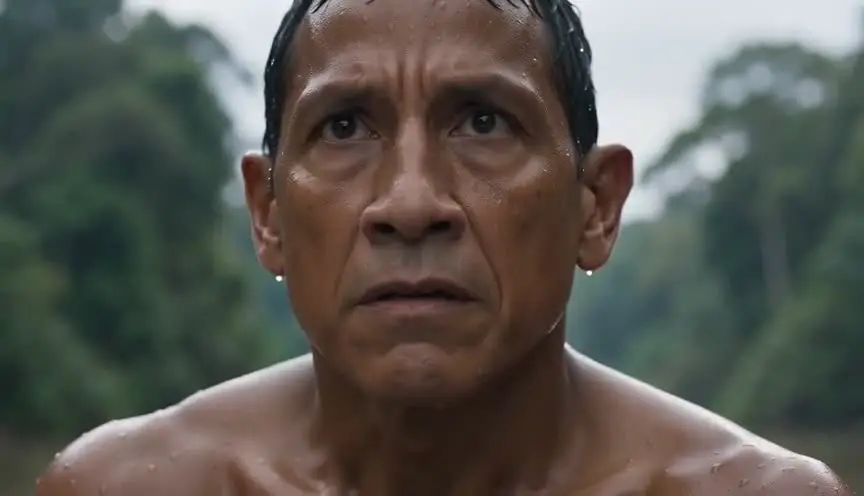
A close-up before the pullback lets the audience connect with the character's face. When the drone rises away, the loss of that closeness makes the vast space feel lonely or awe-filled.
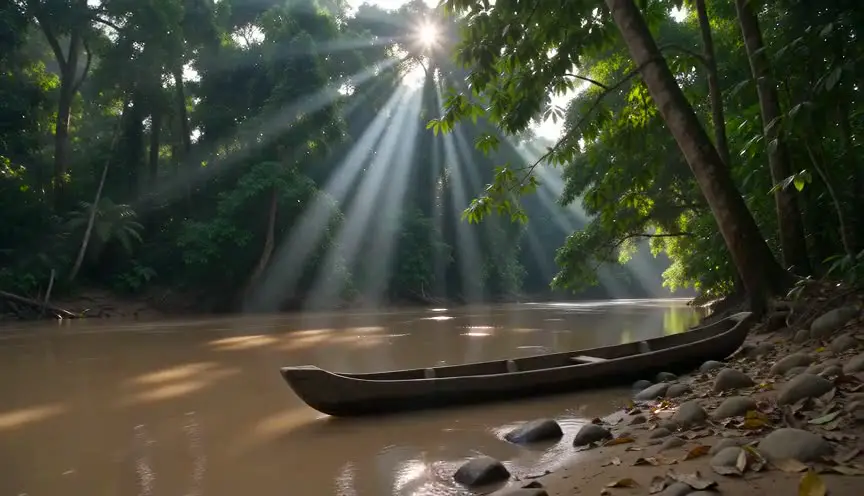
An aerial pullback often ends a film or a chapter. Fading out on the final extreme wide gives the audience time to reflect on the character's place in the world.
Reference
Watch it in
Koyaanisqatsi (1982)
Ron Fricke's camera keeps lifting away from single people and buildings until they dissolve into huge deserts and city grids.
Baraka (1992)
Slow flights rising above sacred sites and crowds move from human detail to patterns on a planetary scale, following the approach of the earlier film.
ScreenWeaver
Set it up in ScreenWeaver
Write the widening view in your screenplay, from the character to the world around them, and ScreenWeaver breaks the scene down into shots automatically. Open the final shot, set the framing to start at medium or full, set the angle high, choose an aerial pullback as the movement and give it a long duration. Characters and the location carry from shot to shot, so the lifeboat or the field stays consistent. Preview the scale in the AI previsualization.
Start writing for freeThe prompt behind this clip
This is the exact prompt that rendered the clip at the top of the page. Keep the description of the camera and the light, change the subject and the place.
Aerial pullback: the camera starts close to a solo guitarist standing on the rooftop terrace of a recording studio at dusk, framed at eye level near a string of hanging lights above a small mixing desk. In one continuous shot, the drone rises and pulls back at the same steady speed, the wide-angle lens keeping the terrace in frame as it shrinks against the widening rooftop, then the studio building, then the surrounding city rooftops and glowing windows spreading into view. The guitarist stays centered but grows smaller, the motion never speeds up or stutters. No text.
Common mistakes
- 01
Starting too far
If the drone begins already high, the reveal has no journey. Start close enough to read the character's face or posture, so the pullback has somewhere to go.
- 02
Nothing at the end
An empty field or a bland rooftop at the top of the move kills the reveal. The final frame should show the landscape or crowd that gives the story its scale.
- 03
Cutting early
Cutting before the subject becomes tiny throws away the payoff. Let the pullback reach its full scale and hold a beat.