High angle shotShrink a character before our eyes
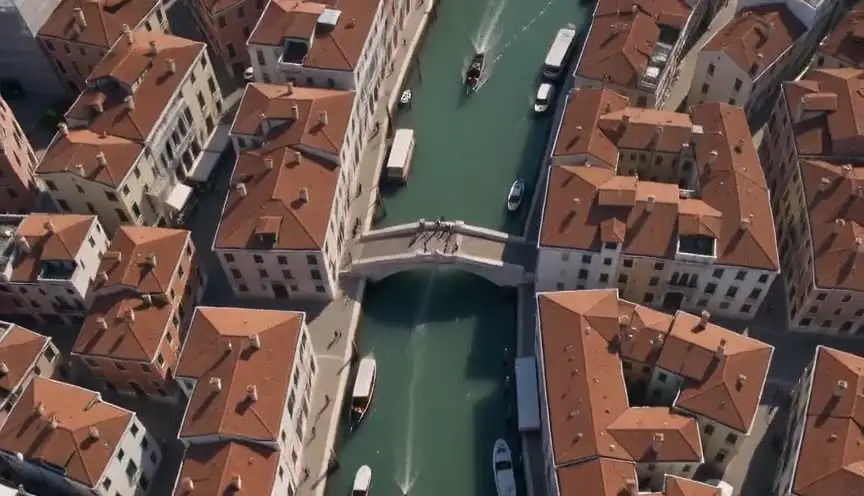
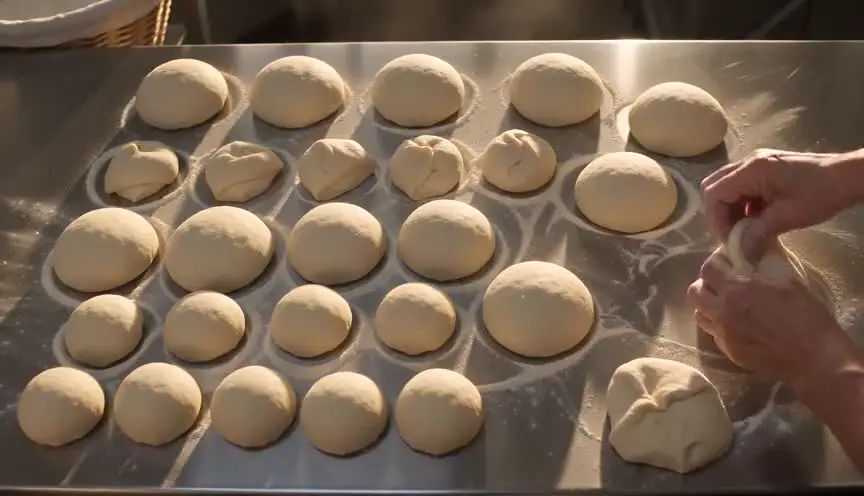
A high angle shot places the camera above the subject and tilts it down. The character looks smaller, more exposed and more alone, and the audience feels they are watching from a position of power or pity.
Also calledHigh shotDownward angleLooking-down shot
Camera angles
Why it works on screen
Use it when a character loses ground: after a defeat, in a place too big for them, under the weight of an institution or a crowd. Looking down compresses the body against the floor and makes the surroundings dominate, so the space itself seems to press on the person. It serves vulnerability, humiliation, loneliness and dread, and it can also suggest surveillance, as if someone above is watching. A scene earns it when the story has taken something from the character, or when danger is coming that they cannot see. Held on a strong character, it signals that their control is slipping.
The shot list line
- Size
- Wide shot or medium shot
- Angle
- High angle, 30 to 45 degrees down
- Movement
- Static, or a slow crane down toward the subject
- Lens
- 24mm to 35mm
- Duration
- 4 to 7 s
Raise the camera well above the subject's eyes and tilt down until the floor fills most of the background, so the character reads as small in the space.
Screenplay
On the page
Avoid naming the angle in a spec script. Write what makes it natural instead: a character seen from a balcony, a stairwell, a gallery above a hall, or simply dwarfed by the space around them. Readers feel the smallness and directors see the angle. If another character literally looks down on someone, the point of view does the work. Specify the height and the tilt in the shot list, where a crane, a ladder or a jib needs to be booked.
INT. HEADQUARTERS ATRIUM, SEOUL - MORNING
Twelve floors of glass balconies around a white marble floor.
At the center, JI-HO PARK (20s), in a suit a size too big, waits with a paper folder.
Employees cross the balconies above him without looking down.
A security guard points him to a bench at the far wall. He walks the whole length of the floor to reach it.
The folder is the only color on the marble.
Storyboard
In the storyboard
Draw the floor as the main background plane, with lines converging toward the subject, who sits low in the frame and small. Add a side-view diagram in the corner: camera high, a dotted line angled down to the subject, with the height and tilt noted. If the camera moves, draw an arrow for the crane down or up. Note the platform needed, a ladder, a balcony or a jib, and the story beat the angle marks.
Pairs well with
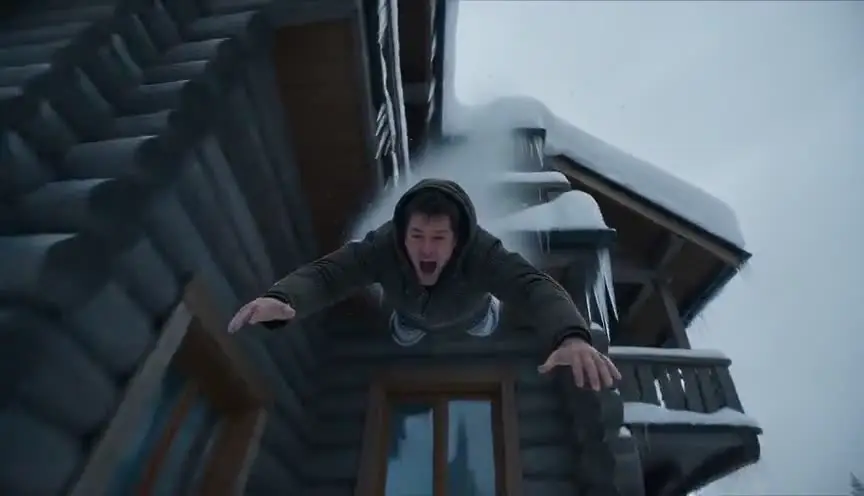
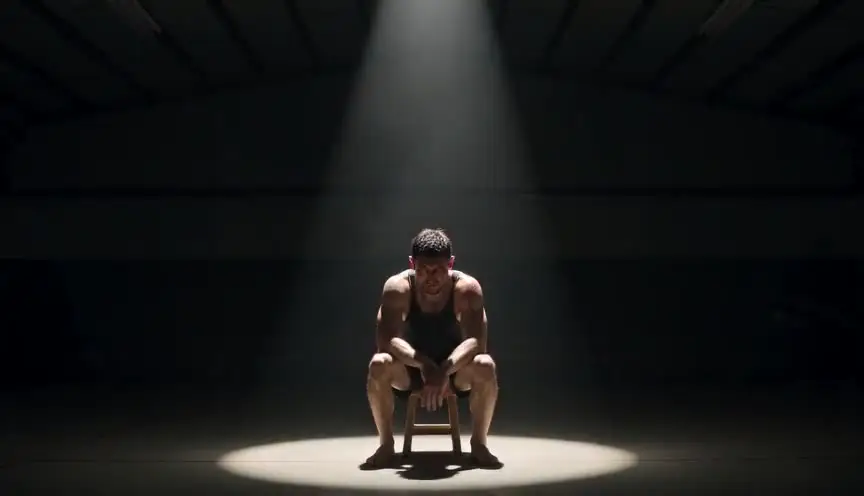
Cut from a high angle on the weaker character to a low angle on the stronger one. The pair of opposite angles turns a power imbalance into geometry the audience feels without any dialogue.
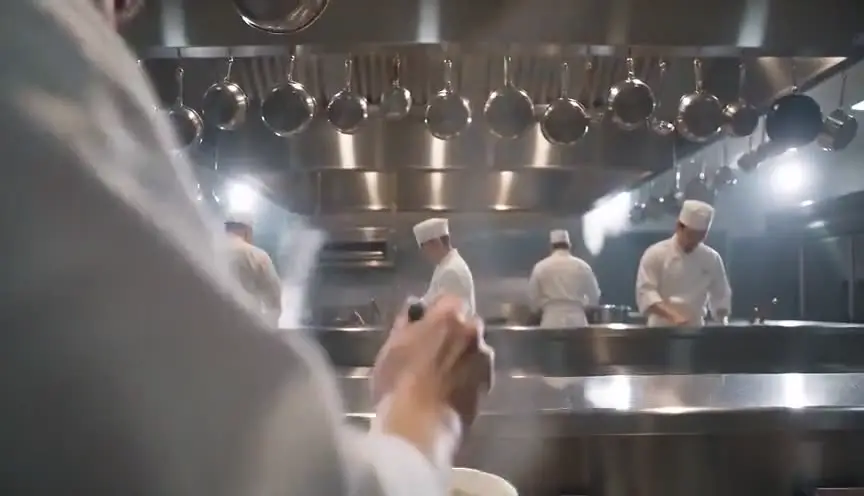
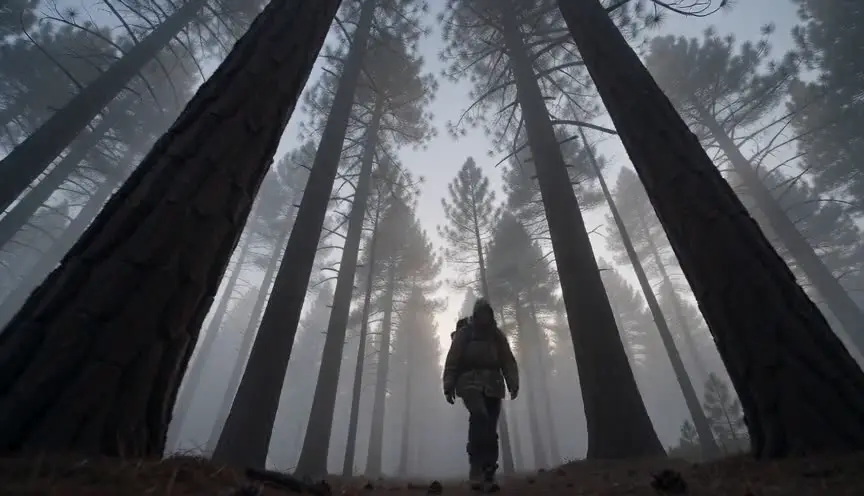
Rise from eye level into a high angle as the character is left alone. The upward move pulls the audience away and makes them watch the person shrink into the space.
Reference
Watch it in
Psycho (1960)
Hitchcock looks down the stairwell as the detective climbs, making him small and unprotected just before the attack.
Vertigo (1958)
Scottie's view down the bell tower stairwell turns the drop into a hostile force and makes his fear of heights physical.
ScreenWeaver
Set it up in ScreenWeaver
Write the space that dominates the character, and ScreenWeaver breaks the scene down into shots automatically. Open the shot, set the framing to a wide or medium shot, choose a high angle looking down, keep the movement static or a slow crane down, and give it four to seven seconds. The character and the location carry from the shots around it, so the space keeps its scale. Use the AI previsualization to judge how small the figure feels before planning the rig.
Start writing for freeThe prompt behind this clip
This is the exact prompt that rendered the clip at the top of the page. Keep the description of the camera and the light, change the subject and the place.
High angle shot of a middle-aged mechanic in blue coveralls lying on a rolling creeper beneath a sedan raised on a lift in a car repair garage. The camera is fixed high on a jib arm about ten feet above the concrete floor, tilted down at roughly thirty five degrees, holding steady with no movement. Overhead fluorescent tubes cast flat, even light across the oil-stained floor, tool carts, and hanging hoses, while the mechanic reaches up into the undercarriage with a wrench. The wide view keeps the whole bay, the lift, and the small figure below clearly visible. No text.
Common mistakes
- 01
Barely high at all
A camera a few centimeters above the eyes changes little and looks like an accident. Commit to the angle, high enough that the floor or the ground takes over the background.
- 02
High angle on everyone
If every character gets the downward look, it stops meaning weakness and becomes a style. Reserve it for the one whose power is dropping, and keep others at eye level.
- 03
Hiding the face
A steep tilt on someone looking down can lose their eyes entirely. Have the actor look up at a key moment, or lower the angle a little, so we still read the emotion.