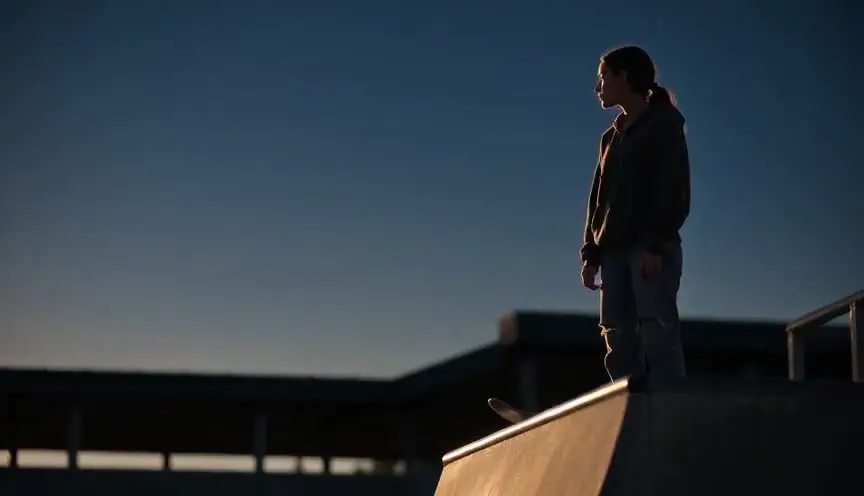
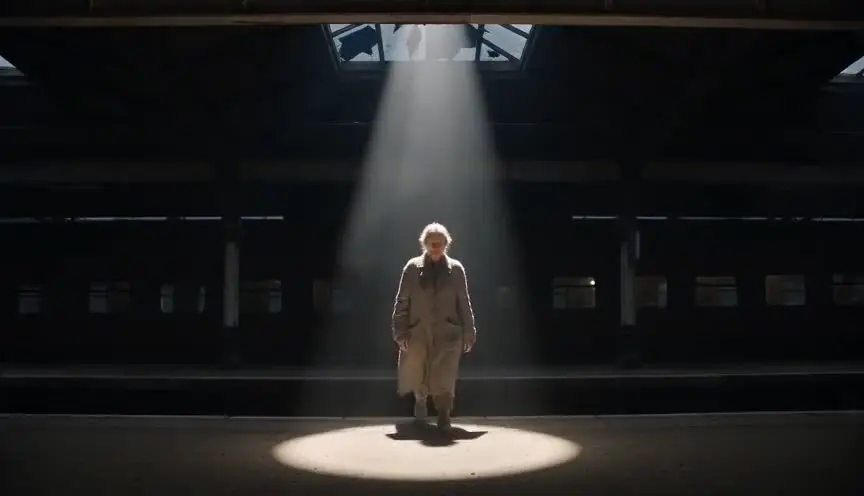
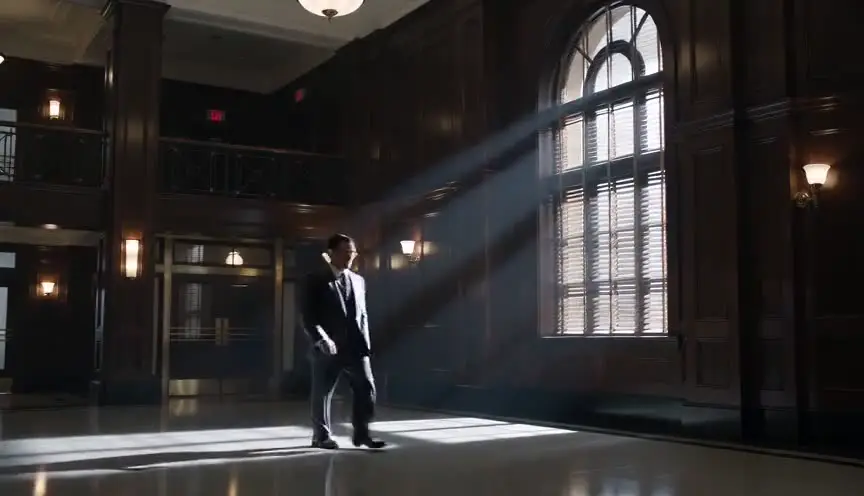
Top lightLight from above, eyes in shadow
Top light falls straight down on the subject from above, so the brow, nose and chin throw shadows downward and the eyes sink into dark hollows. The audience finds the person harder to read, more isolated, sometimes more powerful or more exposed.
Also calledOverhead lightDownlight
Lighting
Why it works on screen
Top light makes people look watched or weighed down. Hollow eyes remove the easy connection with the audience, which suits powerful figures who give nothing away, and it also suits the lonely, the tired and the condemned. It is the light of a pool table, an interrogation lamp, a hospital corridor, a boxing ring, a stage with one bulb. It serves scenes of judgment, isolation and institutional control. A scene earns it when a character sits under a system or above others, and when the audience should feel that no one in the room can hide from what hangs over them.
The shot list line
- Size
- Medium shot
- Angle
- Eye level or slightly high
- Movement
- Static
- Lens
- 35mm to 50mm
- Duration
- 5 to 8 s
Hang the source directly above the actor's mark and flag it so it falls in a tight pool; decide in advance on which line the actor lifts the head to reveal the eyes.
Screenplay
On the page
A writer can name the source freely, since it is part of the set: a single bulb over the table, strip lights in a ward, a lamp above a ring. That is description, not camera direction. Do not write how it shapes the face. If the hollow eyes matter to the story, show the character keeping their head down, or lifting it at a key moment into the light. The height, the size of the source and any eye light go in the shot list.
INT. BOXING GYM - GLASGOW - NIGHT
Everything is off except the one lamp over the ring. Dust hangs under it.
SEAN McALLISTER (19) sits on the canvas, gloves still on, head down.
His trainer, BRIDGET KERR (50s), stands at the ropes, her face out of the light.
Sean looks up. The lamp finds his eyes for the first time.
SEAN
I didn't go down. I sat down.
BRIDGET
Same canvas, son.
Storyboard
In the storyboard
Draw the source above the frame line, or inside it if the lamp is visible, and a cone of light falling straight down. Shade the eye sockets, the area under the nose and the neck in solid tone. Keep the floor around the pool bright and the edges of the frame dark. Note "top light" and the height of the source. If the actor lifts the head, draw a second panel with the eyes revealed.
Pairs well with
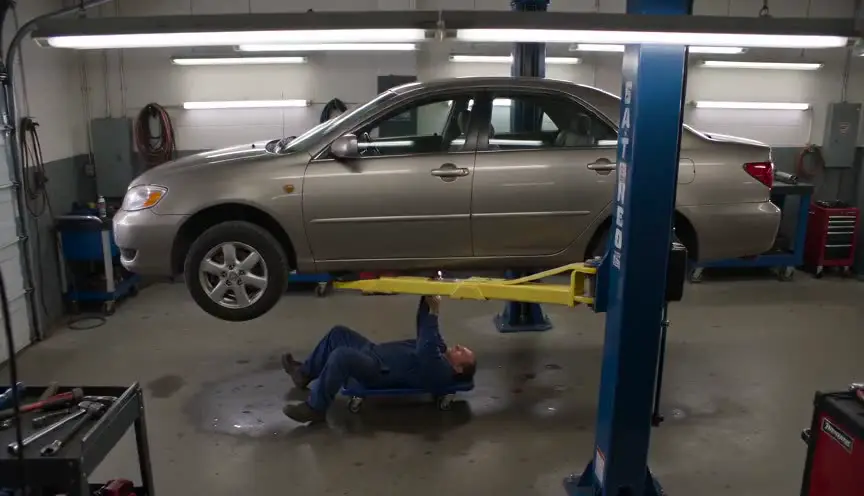
A high angle under a top light pushes a character down into the pool of light, making them look smaller and judged. The two together read as pressure from above.
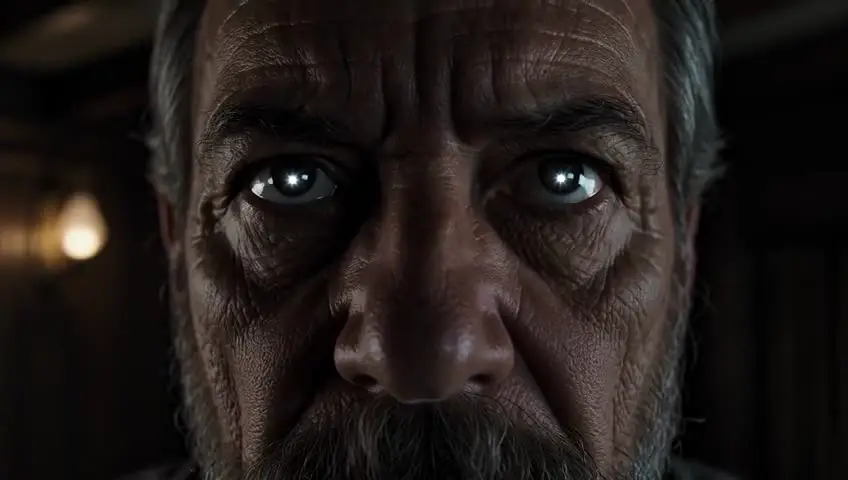
A small eye light near the lens rescues the eyes from top light on the lines that matter, so the audience can still find the character's gaze inside the shadow.
Reference
Watch it in
The Godfather (1972)
Gordon Willis hangs hard sources above Vito Corleone in his office, hollowing the eyes so power sits behind a mask of shadow.
One Flew Over the Cuckoo's Nest (1975)
Flat ceiling fluorescents light the ward from above and drain warmth from every face, a quiet sign of the institution's control.
ScreenWeaver
Set it up in ScreenWeaver
Name the overhead source in your action lines, and ScreenWeaver breaks the scene down into shots automatically. Open each shot, set framing, angle, movement and duration, and add a note on top light and the moment the eyes should be revealed. Characters and the location carry from shot to shot, so the pool of light stays in the same place. The AI previsualization lets you check how dark the eyes can go before the performance is lost.
Start writing for freeThe prompt behind this clip
This is the exact prompt that rendered the clip at the top of the page. Keep the description of the camera and the light, change the subject and the place.
Top light. A boxer sits alone on a stool in the middle of a dark gym, lit only by one hard lamp hanging directly above his head. The light falls straight down: his hair and shoulders are bright, his eyes disappear into dark sockets, deep shadows under his brow, nose and chin, and a circle of light on the floor around him, everything else black. He slowly lifts his head. Static camera. No text.
Common mistakes
- 01
Eyes gone for the whole scene
Top light without any eye light can hide the performance completely. Block key moments where the actor lifts the head, or add a small, low-level eye light.
- 02
Unmotivated overhead
A top light in a room with no ceiling lamp or skylight looks like a studio grid. Put a visible fixture above the action.
- 03
Bright floor, dark faces
The pool on the floor can be brighter than the faces and pull the eye down. Use a darker floor or flag the light to keep attention on the people.