BAFTA 2027 · AI films guide

Can you submit an AI film to BAFTA?Any tool. But the award is for human achievement.

BAFTA’s 2027 rulebook rewards outstanding human achievement, regardless of the tools used, and reserves the right to ask about the extent of human creative involvement. For a short, the British categories add a festival route. Read the clause, the dates and the route first. Then write and storyboard your film in ScreenWeaver, and generate its footage.
  • A tool-neutral rule
  • Human involvement may be asked
  • British short film route
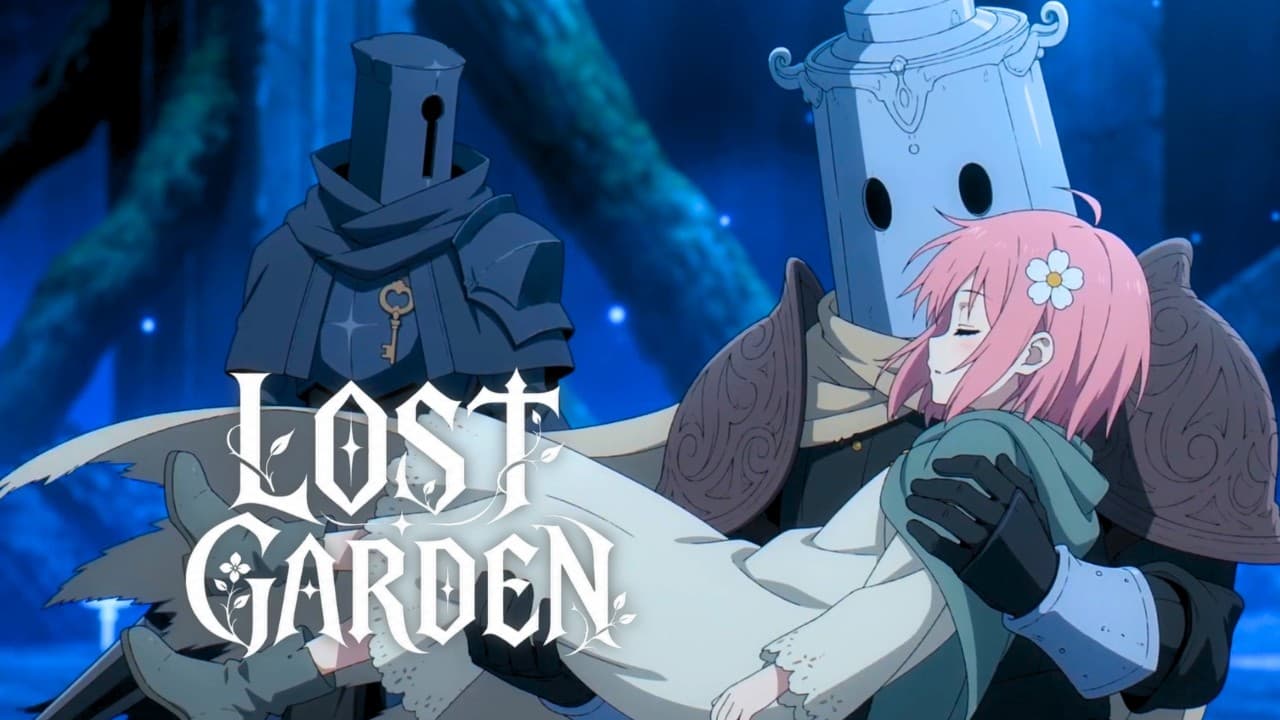
Lost Garden · Episode 2

Independent guide. ScreenWeaver does not organise the BAFTA Film Awards and is not affiliated with the British Academy of Film and Television Arts. Rules read on 1 October 2026. Official BAFTA film rules

Available today in ScreenWeaver: free screenwriting, and a storyboard generated from your screenplay with Storyboard Beta, $9.99 a month.

Rolling out: video generation of each shot, powered by Seedance, with the Filmmaker plan.

The 2027 rules in brief

What the 2027 Film Awards ask for.

BAFTA published its 2027 Film Awards rules on 22 July 2026. The feature film rules are online. The British Short Film and British Short Animation rulebook is a separate download that could not be opened, so what this page says about shorts comes from the 2025 edition. Check the 2027 version.
Ceremony
Sunday 21 February 2027, London
Entries opened
22 July 2026
Round One voting
Opens 4 December 2026
Longlists
Published 7 January 2027
Nominations
Announced 19 January 2027
Voters
8,300 film members, three rounds
Feature films
70 minutes or more, first UK cinema release in the awards year
British shorts (2025 rules)
40 minutes at most, British creative involvement

Source: the 2027 EE BAFTA Film Awards rules page and the press release of 22 July 2026, plus the 2025 British Short Film and British Short Animation rulebook, read on 1 October 2026. BAFTA reviews its rules every year.

What the rules say about AI

Five points on AI, features and shorts.

BAFTA does not ban a tool and does not set a quota. It states what the awards are for and keeps a right to ask. Wording from the 2027 rules and press release, read on 1 October 2026.
  • The AI clause, 2027

    The awards recognise individuals for outstanding human achievement in originating, shaping and realising the final artistic outcome, “regardless of the tools used to bring this work to life”. It is a statement about people, not a ban on a technology.

  • A right to ask

    Where generative AI or other digital tools are relevant to the consideration of the work, BAFTA reserves the right to request additional information on the nature of the use and on the extent of human creative involvement. Keep your records.

  • Reworded after consultation

    BAFTA says it updated the wording after industry consultation, to reaffirm that the awards reward human creative achievement. The clause will also be updated across the other BAFTA Awards rulebooks in 2027.

  • Features: a UK cinema release first

    A feature runs at least 70 minutes and is released theatrically to the UK public for the first time between 1 January 2026 and 19 February 2027. A film whose first public showing is not a theatrical release is not eligible. This route needs a producer or distributor who can book cinemas.

  • Shorts: the British categories

    In the 2025 rulebook, British Short Film and British Short Animation took films up to 40 minutes with significant British creative involvement. A film qualified through BAFTA-qualifying festivals: at least two for a Short Film, at least one for a Short Animation. There was no entry fee.

Key dates

A calendar built around member voting.

The shorts have their own entry deadlines in the shorts rulebook. The dates below are the ones BAFTA published for the Film Awards.
  1. 22 Jul 2026

    Entries open

    For every category of the 2027 Film Awards. Questions go to awards@bafta.org.

  2. 29 Oct 2026

    Appeals deadline

    Entrants must appeal before this date on questions such as a first release that was not theatrical, or an extension to deliver a film on BAFTA View.

  3. 4 Dec 2026

    Round One voting opens

    Films released from 1 July must be on BAFTA View by this date. Each member is given a random sample of 15 films to watch.

  4. 7 and 19 Jan 2027

    Longlists, then nominations

    Longlists are published on 7 January and Round Two opens. Nominations are announced on 19 January.

  5. 21 Feb 2027

    The ceremony

    Round Three voting opens on 26 January. The winners are announced at the ceremony in London.

Who decides

Members, chapters and juries.

BAFTA is voted by its peers, not by a panel of critics. The people judging your film are film professionals who have watched it on BAFTA’s own platform.
  • 8,300 film voting members

    Every category except the EE Rising Star Award is peer-voted by BAFTA’s global voting membership: 8,300 film voting members and practitioners, over three rounds that decide the longlists, the nominations and the winners.

  • Chapters and juries

    Voting mixes all-member votes, specialist Chapter votes and juries of members with varied roles, backgrounds, locations and ages. For 2027 the Casting Chapter joins the Acting Chapter on the performance categories.

  • A jury for British shorts

    In the 2025 rulebook, a jury decided the longlist and the nominations of British Short Film: ten films longlisted, five nominated. British Short Animation had six longlisted and three nominated.

  • Voters must watch

    Members get a random sample of 15 films before Round One, and every voter, chapter and jury member must watch all the longlisted and nominated films in the categories they vote in. The films are seen on BAFTA View, so the opening minutes and the subtitles matter.

Three categories

Where a film like yours could compete.

Most BAFTA film categories are for features released in UK cinemas. Three matter to a small team making a film with ScreenWeaver. Each card ends on what we would do.
  • 01

    British Short Film

    Shorts up to 40 minutes, credits included, with significant creative involvement by British individuals: UK passport holders, or people resident in the UK for at least six years.

    A question of who makes the film, not of tools. If your key creatives are not British, this is not your door.

  • 02

    British Short Animation

    The same British test for animated shorts. A short enters Short Film or Short Animation, never both. In 2025 it needed one BAFTA-qualifying festival.

    The festival bar was lighter than for Short Film, so one good festival could be enough. Check that the 2027 rulebook keeps it.

  • 03

    Family Film

    Renamed from Children’s and Family Film for 2027: films of any genre with a specific inter-generational appeal to children, young people and adults.

    A feature category, 70 minutes or more and a UK cinema release. Out of reach for a short, but a model for an animated story that could grow into a feature.

The 2027 changes

What changed in 2027.

BAFTA announced its 2027 changes on 22 July 2026. Four of them matter to a filmmaker who uses AI.

  1. 01

    The AI wording was rewritten. BAFTA updated the clause after industry consultation. Expect it to move again, and read it again the week you enter.

  2. 02

    The clause travels. It will be updated across the other BAFTA Awards rulebooks, and in the Film Awards rules it sits among the items on which BAFTA collects data.

  3. 03

    Accessibility is now a gate. Films must provide a descriptive subtitled version on the day they go live on BAFTA View, with no 10 day grace period. Appeals are considered.

  4. 04

    The electorate is a body of crafts. The Casting Chapter now votes with the Acting Chapter on performances, and the Outstanding British Film longlist grows from 15 to 20 films.

Craft on the page

Lost Garden: the cavern, shot by shot.

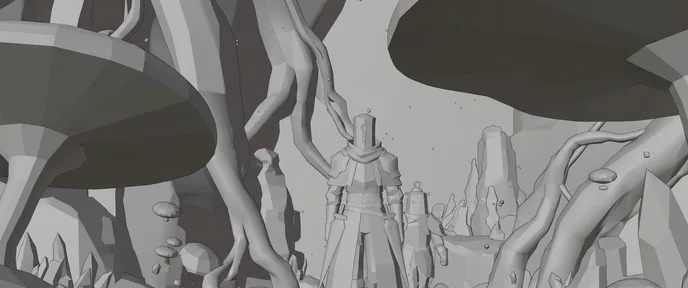
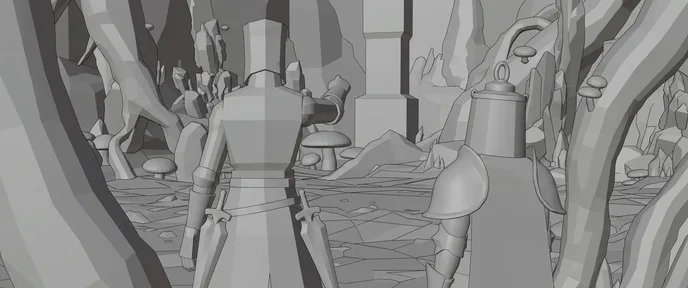
BAFTA voters watch on BAFTA View and judge the human achievement behind the final image. This scene is from Lost Garden, episode 2, an animated series made by the ScreenWeaver team with Seedance: the screenplay page, each shot as a storyboard frame, then as the final image.

Logline. A newborn knight whose inner light is leaking away crosses a world that has stopped hoping, to find the one blacksmith who can seal his armor.

Screenplay · episode 2 · page 1

INT. UNDERGROUND CAVERN - LOWER PATH - CONTINUOUS

Blue mushrooms the size of houses. LANTERN, a small knight with a lantern for a helm, walks alone.

He presses a hand to his chest. Sparks of light slip between his fingers.

SERRURE

Hold on. You're losing something.

Serrure lifts the edge of the cloak. A gash in the armor. Blue light leaks out like smoke.

SERRURE

That's your energy. What keeps you standing.

He grips Lantern's shoulder. Two knights alone among the crystals.

SERRURE

A suit that leaks goes out. Eventually.

Under the giant mushrooms, the road climbs into the dark.

SERRURE

So. We follow the road.

Serrure points the way. Lantern follows.

CUT TO:

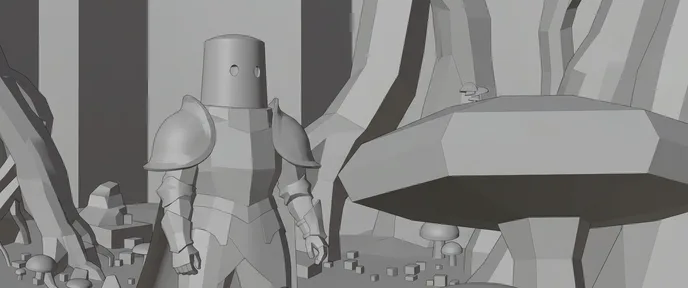
  1. A small knight with a lantern helm stands by a giant glowing blue mushroom in a crystal cavern
    Storyboard frame of the same wide shot, in grey
    01

    Wide · the world

    Wide shot, Lantern alone by a giant glowing blue mushroom, crystal cavern, roots, drifting spores, cold blue light

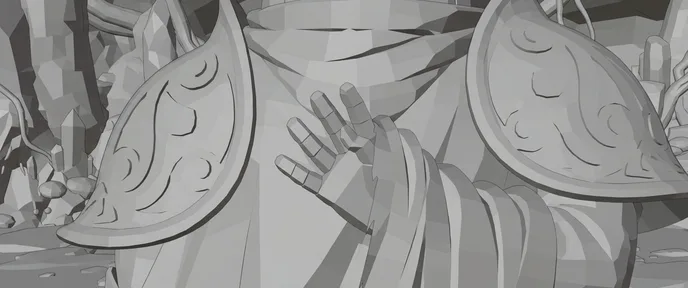
  2. Close-up of an armored chest under a cream cloak, a gloved hand, a spark of light
    Storyboard frame of the chest close-up, in grey
    02

    Close-up · the chest

    Close-up on Lantern's chest, his gloved hand pressed to the cloak, a spark of light escaping between the fingers

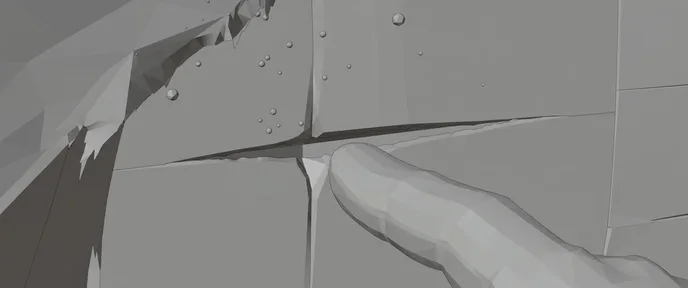
  3. A torn gash in an armor plate leaking bright blue light, a finger pointing at it
    Storyboard frame of the wound insert, in grey
    03

    Insert · the wound

    Extreme close-up, Serrure's finger near a torn gash in the back plate, blue light leaking out like luminous smoke

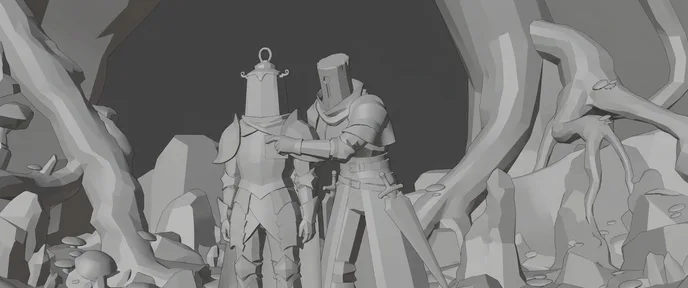
  4. Two armored knights side by side, one with a hand on the other's shoulder, in a crystal cavern
    Storyboard frame of the two-shot, in grey
    04

    Two-shot · the bond

    Medium two-shot among crystals and roots, Serrure's hand on Lantern's shoulder, faceless armors, emotion through posture only

  5. Two small knights walk beneath two giant glowing blue mushrooms
    Storyboard frame of the wide shot, in grey
    05

    Wide · the scale

    Wide low angle, the two knights tiny beneath two giant glowing mushrooms, blue crystals in the foreground, mist

  6. Seen from behind, a tall dark knight points ahead while the small lantern knight looks on
    Storyboard frame of the over-the-shoulder shot, in grey
    06

    Over the shoulder · the road

    Over-the-shoulder from behind, Serrure points ahead into the cavern, Lantern beside him, roots framing the path

Lost Garden, episode 2, 21 minutes, under the 40 minute ceiling of the 2025 shorts rulebook. The British short categories require significant British creative involvement, a matter of who makes a film and not of tools, so this scene shows craft, not eligibility. Playback begins at this scene.

The script

A 15 minute British short in five movements.

The 2025 rulebook caps British shorts at 40 minutes and a jury watches a longlist. Fifteen minutes means 15 screenplay pages and 150 to 200 shots of 4 to 6 seconds.
  1. 0:00 to 1:00

    The signature

    One image that says whose film this is. BAFTA names human achievement, so make the author visible.

  2. 1:00 to 3:30

    The world and the want

    The character, the place and what is missing. Fix the designs now and keep them.

  3. 3:30 to 9:00

    The widening

    The story grows past the first idea. Each scene should earn its place.

  4. 9:00 to 13:00

    The decision

    The character chooses. This is the stretch a juror remembers.

  5. 13:00 to 15:00

    The last image

    An image that answers the first one, then the credits.

The 2027 rules ask features for a descriptive subtitled version on the day they go live on BAFTA View. Shorts are seen on the same platform, so write subtitles that describe sound as well as dialogue for your master.

The short film route

From the British test to the entry form.

This plan is for a British short, the route most open to a small team. It follows the structure of the 2025 rulebook, so check each step against the 2027 version.
  1. 01

    Before you write

    Run the British test

    BAFTA assesses British creative involvement with a points system across nominees, heads of department and key cast, and entrants confirm residence and length of residency. Do this first: no tool can change it.

  2. 02

    Writing

    Own the screenplay

    Own the story. Write it free in ScreenWeaver and keep dated drafts, since BAFTA may ask about the extent of human creative involvement.

  3. 03

    Design and storyboard

    Decide, then document

    Define characters and sets, generate the storyboard from the screenplay and adjust shot by shot. Save the versions you changed.

  4. 04

    Making

    Generate and edit

    Footage with Seedance, scene by scene. Keep the prompts, the versions and your edit notes.

  5. 05

    The festival run

    Aim at qualifying festivals

    A British Short Film needed two BAFTA-qualifying festivals in 2025, an animation one. A film could enter once it was confirmed as programmed, even before the screening. Read each festival’s AI rules first.

  6. 06

    Entry

    Enter with rights cleared

    Entry goes through the BAFTA entry site, with no fee in 2025. You confirm that music, source material and performances are cleared for festival or online screenings, and you complete the BFI Diversity Standards form.

Where films fall out

Seven ways to miss BAFTA.

The AI clause is short. The category rules around it are where films are lost. Read both.
  • Assuming BAFTA bans AI

    It does not. The clause is tool-neutral and asks for human achievement. It reserves a right to ask how much.

  • Assuming tools never matter

    Tool-neutral is not tool-blind. BAFTA can ask about the nature of the use and the extent of human creative involvement. A film with no author to name has no answer.

  • British categories without British creatives

    British Short Film and Short Animation need significant creative involvement by British individuals, with proof of residency. No tool changes that.

  • Skipping the festival run

    In 2025 a British Short Film had to qualify through two BAFTA-qualifying festivals, an animation through one. A festival exemption existed, but a refused exemption made the film ineligible in later years.

  • Entering both short categories

    A short can be submitted into Short Film or into Short Animation, never both.

  • No descriptive subtitles

    Features must provide a descriptive subtitled version before going live on BAFTA View. The old 10 day grace period is gone.

  • Uncleared rights

    In 2025, entrants confirmed that music, source material and performances were cleared for festival or online screenings, or clearable within two weeks if the film was longlisted.

Why ScreenWeaver

BAFTA rewards the people. ScreenWeaver shows them.

ScreenWeaver keeps your writing, your storyboard and your footage in one project with a visible trail of decisions.
  • Authorship you can answer for

    If BAFTA asks about the extent of human creative involvement, the answer sits in the project: your screenplay, your designs, the frames you adjusted and the prompts behind each shot.

  • Tool-neutral, so build the film you want

    BAFTA names no model. ScreenWeaver’s footage pipelines are powered by Seedance, and the screenplay and storyboard stay yours, in industry formats you can export.

  • A short today, a series later

    The same project can hold a British short now and a series after it. Characters, locations and references carry across, which is the difference between a film and a pile of clips.

  • Start free today

    Writing is free with no expiry in ScreenWeaver. Storyboard Beta costs $9.99 a month, and shot-by-shot footage comes with the Filmmaker plan.

Real productions

International festival-recognized films have been written and produced with ScreenWeaver.

ScreenWeaver is already being used as a creative workspace for real AI film productions, from cinematic shorts to animated series pilots selected, nominated, and awarded by international festivals.

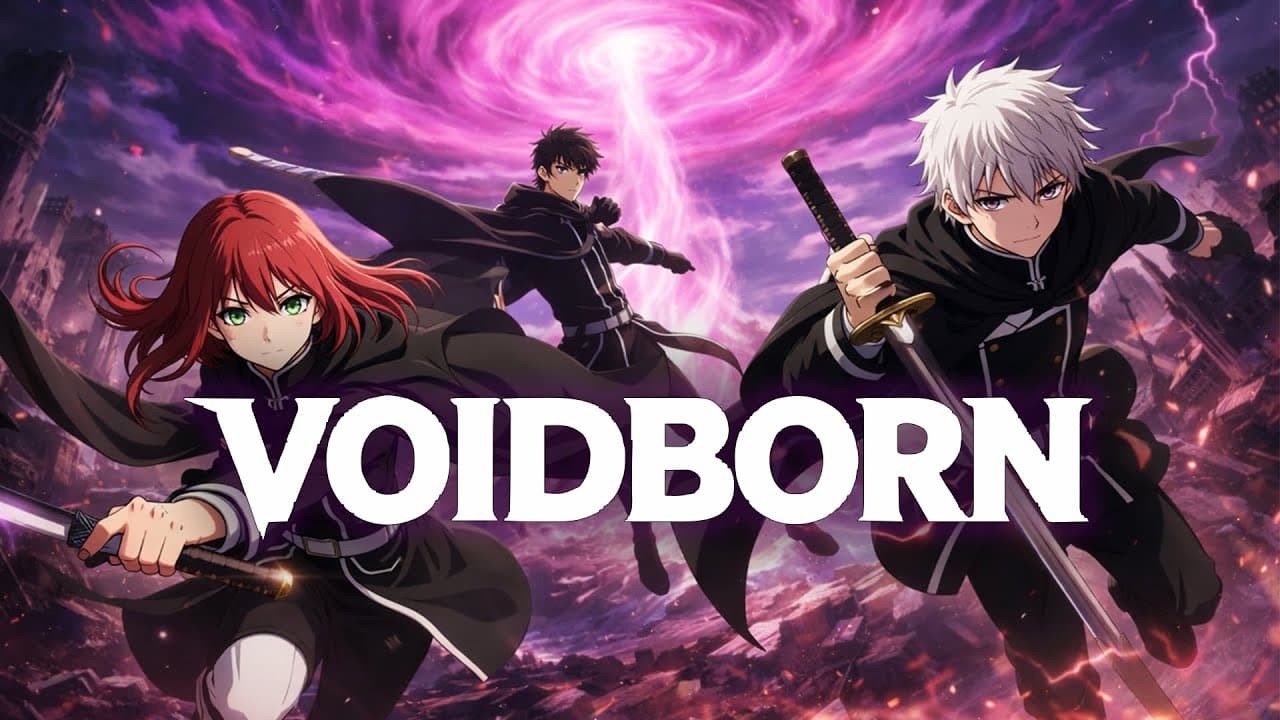
  • Video thumbnail for VOIDBORN

    VOIDBORN

    AI animated / cinematic short

    Festival recognition

    • 1st Place Silver

      Mondial Chroma Awards

    • 2nd Place Dreamina

      Mondial Chroma Awards

    • Award Winner

      Seoul International AI Film Festival

  • Video thumbnail for Les Fils du Vinnana

    Les Fils du Vinnana

    AI short film

    Festival recognition

    • Honorable Mention

      Top Quark Film Festival

    • People's Choice Nominee

      Illuminate Oneness of Humanity

    • Nominee

      ALTFF Supershort

  • Video thumbnail for Lost Garden

    Lost Garden

    AI animated series pilot

    Festival recognition

    • Finalist

      AI London Festival

The pipeline

Write. Board. Produce.

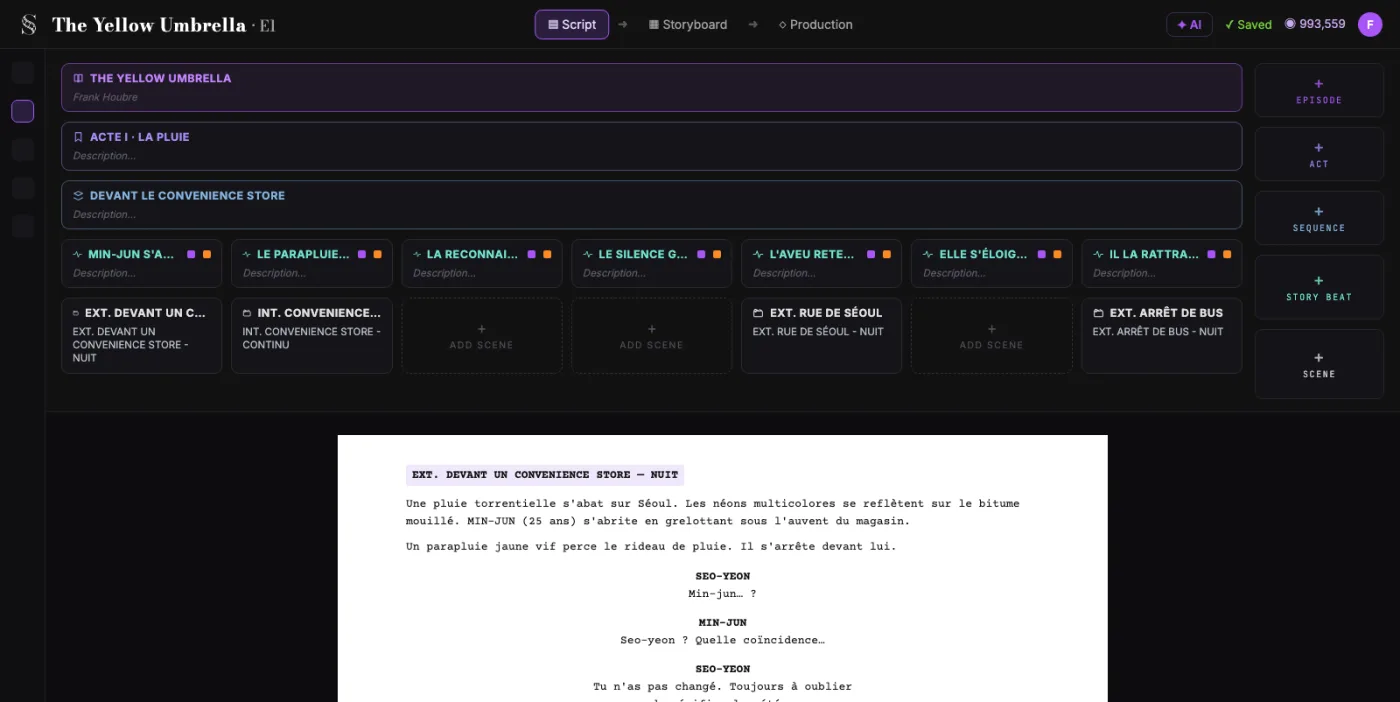
  1. ScreenWeaver screenplay editor: acts, sequences and beats above the formatted script of The Yellow Umbrella

    01The screenplay, enriched

    An industry-standard screenplay editor, and more: a visual outline and beat editor, your writing inspirations (notes, photos, audio) kept next to the page, and an AI researcher to support your writing, not replace it.

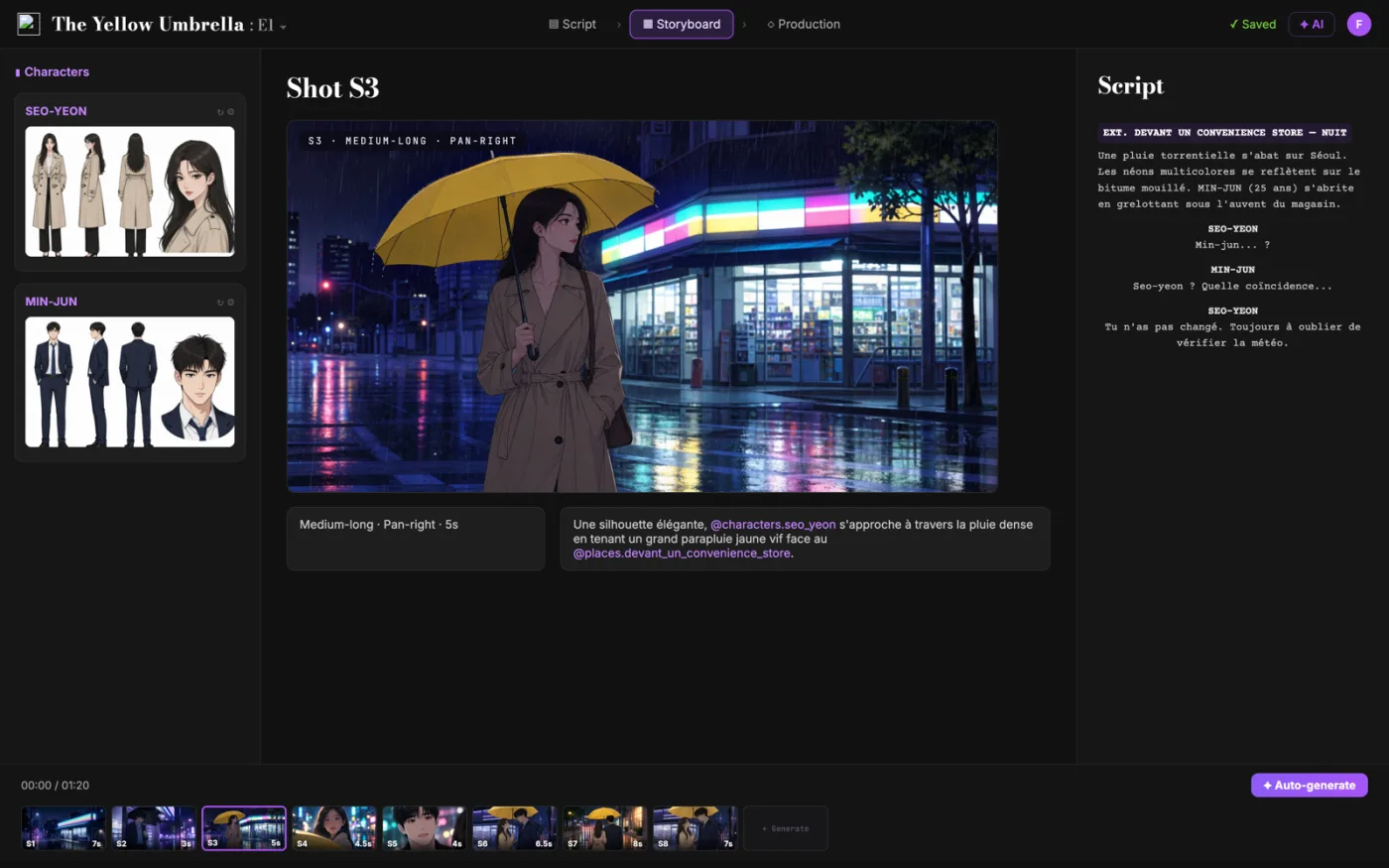
  2. ScreenWeaver storyboard: shot S3 of The Yellow Umbrella with characters, shot settings and the script beside it

    02The storyboard, made easy

    Shot breakdown generated from your screenplay, manual control over every shot (frame, angle, movement, duration), and generative AI previsualization in one click.

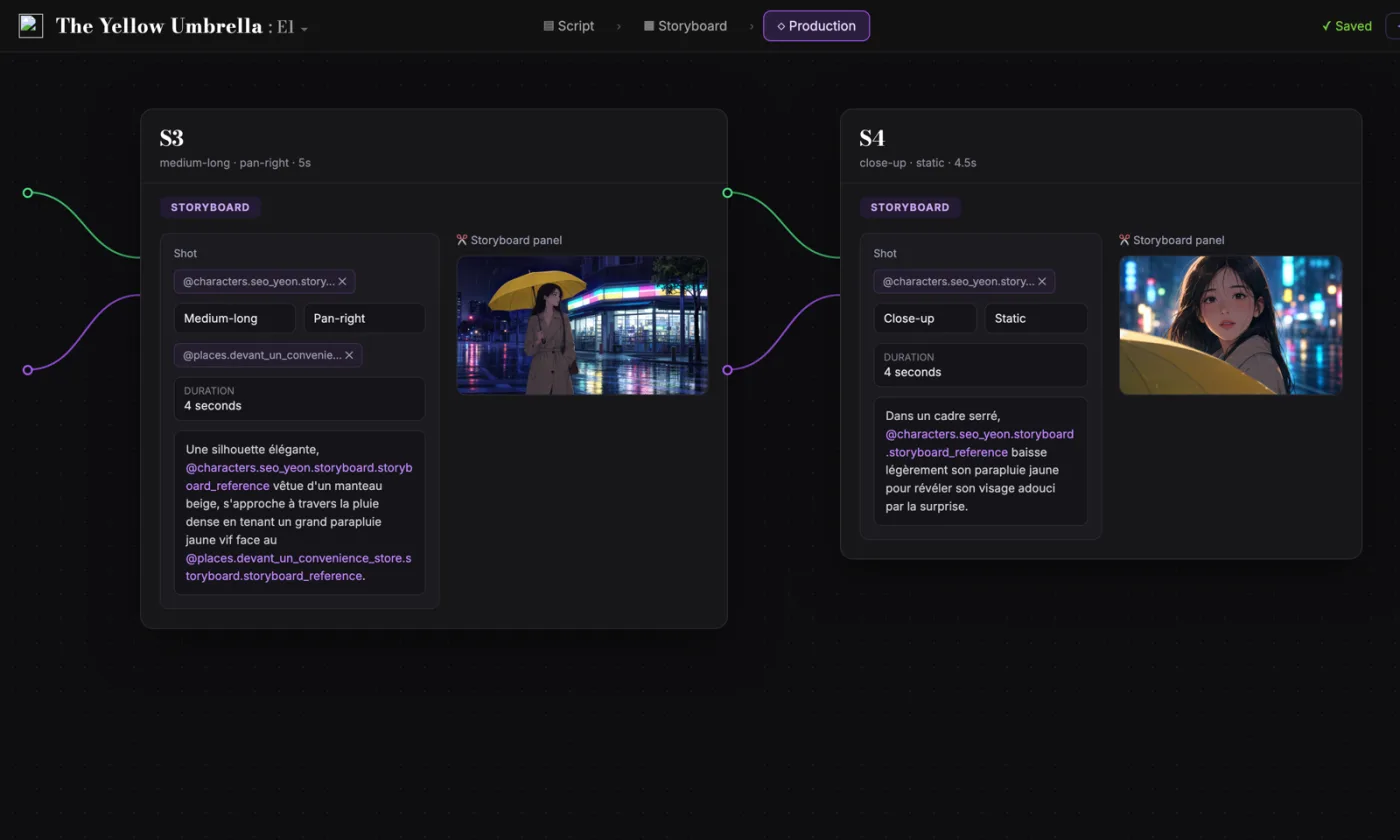
  3. ScreenWeaver production canvas: shots S3 and S4 as connected nodes carrying their storyboard panels and prompts

    03AI production, with finesse

    Footage generation pipelines connected to your screenplay and storyboard. Optimized out of the box, fully editable workflow.

FAQ

BAFTA and AI films, your questions

Can you submit an AI film to BAFTA?
Yes. The 2027 rulebook is tool-neutral: the awards recognise outstanding human achievement in originating, shaping and realising the final artistic outcome, regardless of the tools used. BAFTA can ask for more information on the use of AI and on the extent of human creative involvement. The film must still meet its category rules, such as a UK cinema release for features.
What does BAFTA say about generative AI?
In the 2027 rules, BAFTA reserves the right to request additional information on the nature of any use of generative AI or other digital tools and on the extent of human creative involvement. It updated the wording after industry consultation, and the clause will also appear in the other BAFTA Awards rulebooks in 2027.
Do I have to declare AI when I enter?
The 2027 Film Awards rules page, as read, asks for no AI declaration at entry. BAFTA may ask later where the use is relevant, so keep your prompts, versions and drafts.
Can a short film win a BAFTA?
Yes, through British Short Film and British Short Animation, for films up to 40 minutes with significant British creative involvement, according to the 2025 rulebook. A short qualified through BAFTA-qualifying festivals, and there was no entry fee.
When are the 2027 EE BAFTA Film Awards?
On Sunday 21 February 2027 in London. Entries opened on 22 July 2026, longlists come on 7 January 2027 and nominations on 19 January 2027.
Does my film need to be British?
For British Short Film, British Short Animation, Outstanding British Film and Outstanding Debut, yes. Features from any country can enter the other categories after a UK cinema release.
Is there an entry fee?
The 2025 shorts rulebook said there was no fee for British Short Film and British Short Animation. Feature entry fees were not checked for this guide. Read the 2027 rulebook and the entry site before you plan.

Human achievement starts on the page.

Write the screenplay free today and keep every decision in one project.