Emmy Awards · AI series guide

Can an AI series win an Emmy?The Academy may ask how it was made. Distribution is the real test.

The 78th Emmy rules do not ban AI: the Television Academy reserves the right to inquire about its use, and limits it in three categories. The harder test is eligibility, which needs a national US premiere on air, cable or streaming. Here are the clauses, the categories for a series maker and a plan, starting with the screenplay in ScreenWeaver.
  • The Academy may inquire
  • Three category limits
  • US distribution required
Lost Garden · Episode 2

Independent guide. ScreenWeaver does not organise the Emmy Awards and is not affiliated with the Television Academy. Rules read on 1 October 2026. Official rules (78th Emmys)

Available today in ScreenWeaver: free screenwriting, and a storyboard generated from your screenplay with Storyboard Beta, $9.99 a month.

Rolling out: video generation of each shot, powered by Seedance, with the Filmmaker plan.

The rules on one card

What the Television Academy asks of a series.

The Emmys are for television and streaming, voted by Academy members. The latest rules are for the 78th edition. They are not a festival call: you enter a program that has already aired in the United States.
Rules version
78th Emmys, version 4, 4 July 2026
79th cycle
Rules not published yet
Eligibility year (78th)
1 June 2025 to 31 May 2026
Entry deadline (78th)
7 May 2026
Entry fee
$225 per program plus $100 per entrant
Where it must air
National US broadcast, cable or streaming
Short form series
2 to 20 minutes, six episodes in the year
AI rule
No ban. The Academy may inquire

Source: the 78th Emmy Awards Rules and Procedures, version 4 dated 4 July 2026, 83 pages, read on 1 October 2026. Dates and fees come from that cycle and may change for the 79th. Members of the Academy get an entry discount.

What the Emmy rules say about AI

One notice and three limits.

AI appears four times in 83 pages: once in the introduction and three times in category rules. Everything else applies to an AI series as to any other.
  • The general notice

    The introduction states: “The Television Academy reserves the right to inquire about the use of AI in submissions.” It adds that the core of the recognition stays centered on human storytelling, whatever the tools. There is no ban and no disclosure form, but expect questions.

  • Costume concept art

    For Costume Illustrators, the rule reads that illustrations must be the work of a person and that no AI images are allowed. Concept art must also be made for the submitted episode, never for pitching or promotion. This is the clearest ban in the book.

  • Voice-over

    Eligibility in the voice-over category covers any performance where a character is portrayed, however the visual is made. A production that manipulated a performer's voice with AI must also submit the original recording so the entry can be vetted for eligibility.

  • Stunts

    The stunts submitted may not be completely AI or VFX generated. A scene may use effects, but the stunt itself must be a practical performance that actually aired. This one does not touch a fully animated series, which has no stunt performers to enter.

  • What the rules leave open

    No definition of “use of AI”, no threshold, no ban on AI picture, writing or music, and no label on screen. The Emmy Awards Committee is the final arbiter of any matter the rules do not explicitly address, according to the introduction.

  • Artwork and animation awards

    In the juried animation awards, artwork must be created for the submitted episode, with no stock accepted, and signed by the artist where possible. The rules do not mention AI there, so ask the awards department before you enter AI-made artwork.

Key dates

The 78th cycle, as a calendar for the 79th.

The 79th rules are not published. The 78th calendar shows the rhythm: <b>a spring deadline, a summer vote and a September ceremony</b>.
  1. 19 Feb 2026

    Submissions open

    Entries opened on the Academy's awards site. Entries are modifiable until 31 May in most categories.

  2. 7 May 2026

    Entry and upload deadline

    Every entry and every file had to be in by this date. After it, no new entry could be added.

  3. 11 to 22 Jun 2026

    Nominations voting

    Members vote on the nominating ballots between the 11th and the 22nd, the voting ending at 10 PM.

  4. 8 Jul 2026

    Nominations announced

    Nominees are announced live, with more announced on 15 July for the peer group top ten rounds.

  5. 17 to 26 Aug 2026

    Final voting

    Final-round voting ran from 17 to 26 August. The Creative Arts Awards took place on 5 and 6 September and the telecast on 14 September.

Who decides

Peers, not a jury.

The Emmys have no jury in the festival sense. Academy members vote, group by group, and the group depends on the category.
  • All members, for programs

    National active members vote for the outstanding program nominations, except animated and documentary programs. For a series, the electorate is the whole membership, not film critics.

  • Peer groups, for crafts

    Individual achievements are judged by peer groups only. Writers vote on writing, editors on editing. A craft entry meets the people who do that craft.

  • The animation group

    Animated programs sit outside the all-member vote, and the juried animation awards are decided by a panel from the animation peer group. Expect animators among your judges.

  • Rules of the vote

    Nominees cannot vote for their own category in the final round, and quid pro quo or block voting can invalidate votes. You cannot campaign by trading votes.

Categories

Four doors for a series maker.

The Emmys have no themes. They have categories with length and episode rules. These four fit a series made with ScreenWeaver, and under each is the angle we would take.
  • 01

    Outstanding Animated Program

    A single episode of a series or a special, with at least 65% new animation, for audiences aged 13 and over. A short form track runs from 2 to 20 minutes.

    The natural door for an animated series. A series needs six episodes in the eligibility year. Children's programs go to the Children's and Family Emmys, so decide your audience first.

  • 02

    Short Form Comedy, Drama or Variety Series

    Original series of 2 to 20 minutes per episode on air, cable, satellite or the internet, with at least six episodes in the year and a link to the complete series.

    The most realistic door for a small team. Up to six producers can be credited, and a link to the complete series is required, so the whole run is watched. Plan six short episodes.

  • 03

    Limited or Anthology Series

    All episodes or parts must premiere nationally by 31 May of the eligibility year.

    A closed story told in a few episodes. Finish the whole series before the premiere window, since a missing part pushes everything to the next cycle.

  • 04

    Juried animation awards

    Individual awards for storyboard, character design, backgrounds, color and animation, judged by a panel from the animation peer group.

    Each artist enters the work they made. Credits and signed artwork matter more than the tool, and the rules do not mention AI here. Check first.

From script to screen

Lost Garden: six shots from one episode.

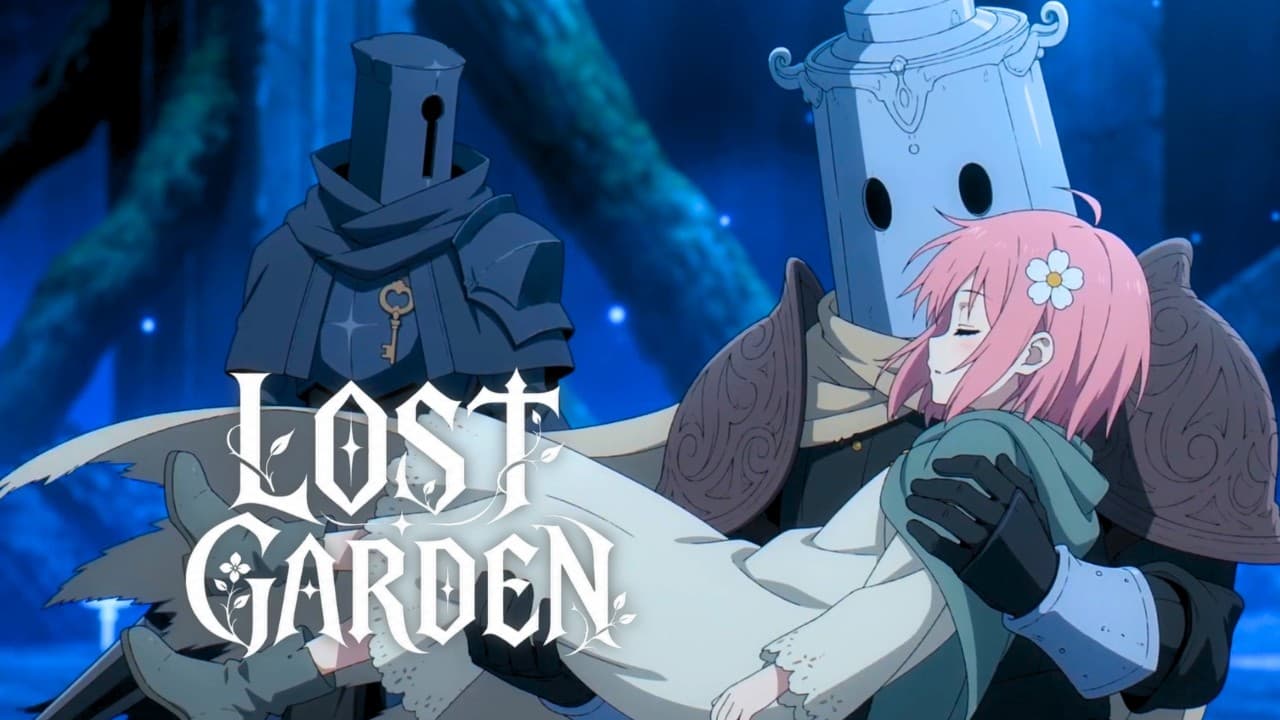
The Emmys judge an episode, so here is one. Lost Garden, episode 2, an animated series by the ScreenWeaver team, supplies the scene: its screenplay page, then each shot as a storyboard frame and as the final image.

Logline. A newborn knight whose inner light is leaking away crosses a world that has stopped hoping, to find the one blacksmith who can seal his armor.

Screenplay · episode 2 · page 1

INT. UNDERGROUND CAVERN - LOWER PATH - CONTINUOUS

Blue mushrooms the size of houses. LANTERN, a small knight with a lantern for a helm, walks alone.

He presses a hand to his chest. Sparks of light slip between his fingers.

SERRURE

Hold on. You're losing something.

Serrure lifts the edge of the cloak. A gash in the armor. Blue light leaks out like smoke.

SERRURE

That's your energy. What keeps you standing.

He grips Lantern's shoulder. Two knights alone among the crystals.

SERRURE

A suit that leaks goes out. Eventually.

Under the giant mushrooms, the road climbs into the dark.

SERRURE

So. We follow the road.

Serrure points the way. Lantern follows.

CUT TO:

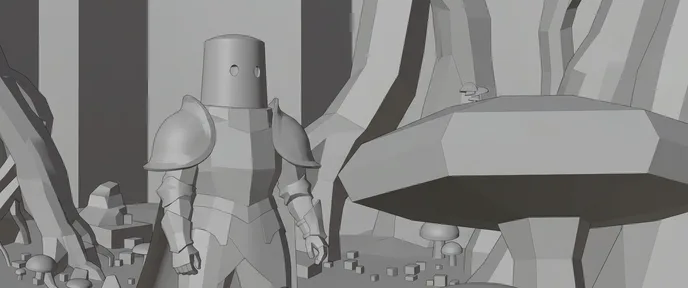
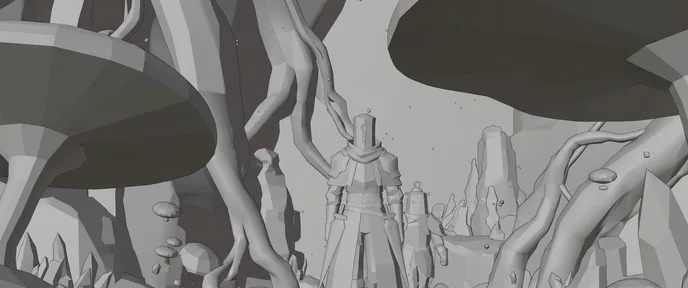
  1. A small knight with a lantern helm stands by a giant glowing blue mushroom in a crystal cavern
    Storyboard frame of the same wide shot, in grey
    01

    Wide · the world

    Wide shot, Lantern alone by a giant glowing blue mushroom, crystal cavern, roots, drifting spores, cold blue light

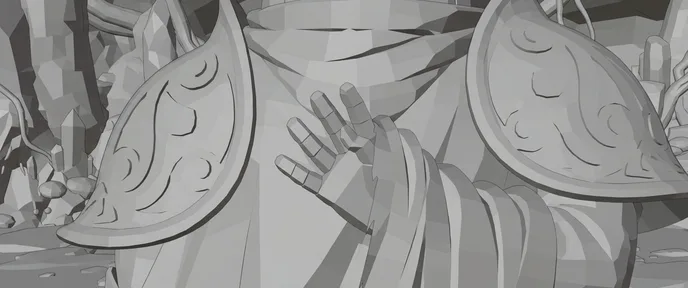
  2. Close-up of an armored chest under a cream cloak, a gloved hand, a spark of light
    Storyboard frame of the chest close-up, in grey
    02

    Close-up · the chest

    Close-up on Lantern's chest, his gloved hand pressed to the cloak, a spark of light escaping between the fingers

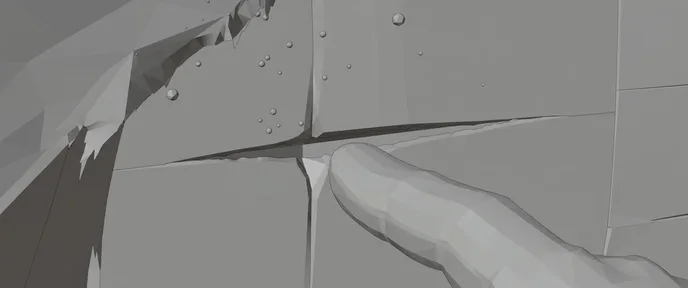
  3. A torn gash in an armor plate leaking bright blue light, a finger pointing at it
    Storyboard frame of the wound insert, in grey
    03

    Insert · the wound

    Extreme close-up, Serrure's finger near a torn gash in the back plate, blue light leaking out like luminous smoke

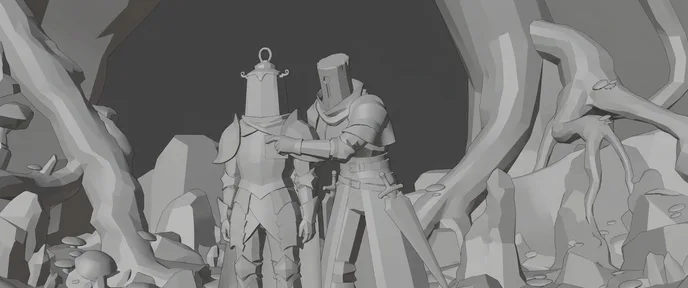
  4. Two armored knights side by side, one with a hand on the other's shoulder, in a crystal cavern
    Storyboard frame of the two-shot, in grey
    04

    Two-shot · the bond

    Medium two-shot among crystals and roots, Serrure's hand on Lantern's shoulder, faceless armors, emotion through posture only

  5. Two small knights walk beneath two giant glowing blue mushrooms
    Storyboard frame of the wide shot, in grey
    05

    Wide · the scale

    Wide low angle, the two knights tiny beneath two giant glowing mushrooms, blue crystals in the foreground, mist

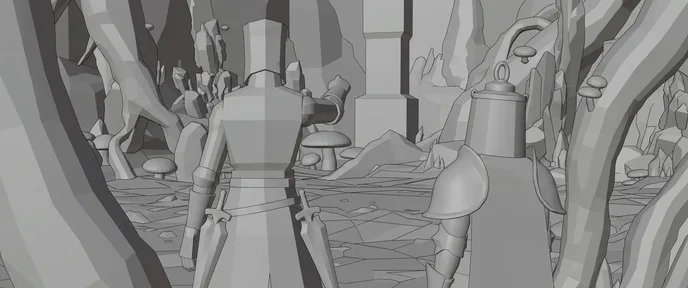
  6. Seen from behind, a tall dark knight points ahead while the small lantern knight looks on
    Storyboard frame of the over-the-shoulder shot, in grey
    06

    Over the shoulder · the road

    Over-the-shoulder from behind, Serrure points ahead into the cavern, Lantern beside him, roots framing the path

Lost Garden, episode 2 runs 21 minutes, which is a half-hour episode in the Academy's brackets, more than 20 minutes and up to 40. It is shown as a method, not as an Emmy entry. A series like it would need six episodes in one year, an audience of 13 and over for animation, and a US premiere. Watch the episode in the player below.

The script

A 24 minute episode in five movements.

A half-hour episode in the Academy's brackets runs more than 20 minutes and up to 40. Aim for 24 minutes: about 24 screenplay pages and 180 to 220 shots of 6 to 8 seconds.
  1. 0:00 to 2:00

    The teaser

    A question and a stake. The viewers are voters, so give them a reason to stay.

  2. 2:00 to 8:30

    Act one

    The week's problem enters the established world. Reintroduce who we follow without a recap.

  3. 8:30 to 15:30

    Act two

    The plan goes wrong. This is the stretch where an episode earns a nomination by surprising the viewer.

  4. 15:30 to 22:30

    Act three

    A choice with a cost, and a change that carries into the next episode.

  5. 22:30 to 24:00

    The tag

    A final image or a line that opens the next door. Then the credits.

A series is judged one episode at a time in animation, and nominated drama and comedy series submit six episodes for the final round. Build every episode so it can stand alone.

In order

From a series idea to an entry.

An Emmy entry is the last step of a long chain. Do the chain in this order, starting with the step that most filmmakers skip: distribution.
  1. 01

    Step 1 · before you write

    Choose the category and the length

    Pick short form (2 to 20 minutes) or half-hour episodes, and count six episodes. Reread the rules for the 79th cycle the day they appear.

  2. 02

    Step 2 · the first month

    Write the series

    A bible and six episode outlines, then the first screenplay. Write it free in ScreenWeaver, in industry format, and keep every version.

  3. 03

    Step 3 · early

    Secure where it will air

    Eligibility needs a national US premiere on broadcast, cable or broadband. A program with no network or studio involved is vetted for the ballot, so a distributor or a platform deal comes before the budget.

  4. 04

    Step 4 · production

    Board it, then generate

    Storyboard from the screenplay, then footage with Seedance in ScreenWeaver as video generation reaches your plan. Keep the prompts and any original voice recordings.

  5. 05

    Step 5 · premiere

    Air inside the window

    The first airing must be promoted and reviewed as the premiere, and every required episode must air by 31 May. A late episode moves the series to the next year.

  6. 06

    Step 6 · entry

    Enter and be ready for questions

    Submit by the spring deadline, with credits for every episode and a link to the series. Be ready to explain how AI was used, which the Academy may ask.

Eligibility traps

Eight ways to be out before the vote.

Most of these have nothing to do with AI. They are why a festival film is not an Emmy entry.
  • A festival or private premiere

    Entries available only in a limited number of physical places, on closed or invitation-only sites, or shown solely at conferences, events or festivals are not eligible. A festival circuit is not a premiere.

  • A premiere nobody noticed

    The premiere must be the first airing, promoted and reviewed as such. Preview screenings posted online or late at night, without promotion or reviews, do not count.

  • Too few episodes

    Six episodes must air in the eligibility year for animation, comedy, drama, variety and short form series. A fifth episode pushes everything to the next cycle.

  • A foreign production alone

    A foreign production is ineligible unless it is a co-production between US and foreign partners agreed before production started, with a view to showing it on US television.

  • AI images in costume concept art

    Illustrations for Costume Illustrator entries must be the work of a person. No AI images are allowed.

  • An AI voice with no original

    If you manipulated a performer's voice with AI, submit the original recording as well. Without it, the voice-over entry cannot be vetted.

  • Fully generated stunts

    Stunts may not be completely AI or VFX generated. They must be practical performances that aired.

  • Taking the Oscar route first

    A program nominated for an Oscar is not eligible for the Emmys, and a non-documentary film placed on the Academy's viewing platform is deemed theatrical and ineligible. Choose television or cinema.

Why ScreenWeaver

A series is a long project. Keep it connected.

The Emmys reward a finished series that aired, one episode at a time. ScreenWeaver gives a series maker one connected project from the bible to the footage.
  • Six episodes, one world

    Characters, places and references carry from episode to episode, so episode six looks like episode one. The Academy counts six episodes before a series qualifies.

  • A record that answers an inquiry

    Shots trace to scenes, scenes to the screenplay, and prompts are kept with each frame. If the Academy asks how the work was made, you can show it.

  • A writer's page

    The notice talks about human storytelling. Your screenplay is the human part, and ScreenWeaver gives you industry formatting and free export to PDF and Final Draft.

  • A free first episode

    The Screenwriter plan costs $0 and has no expiry. At $9.99 a month, Storyboard Beta adds the storyboard, and Seedance generation arrives with the Filmmaker plan.

Real productions

International festival-recognized films have been written and produced with ScreenWeaver.

ScreenWeaver is already being used as a creative workspace for real AI film productions, from cinematic shorts to animated series pilots selected, nominated, and awarded by international festivals.

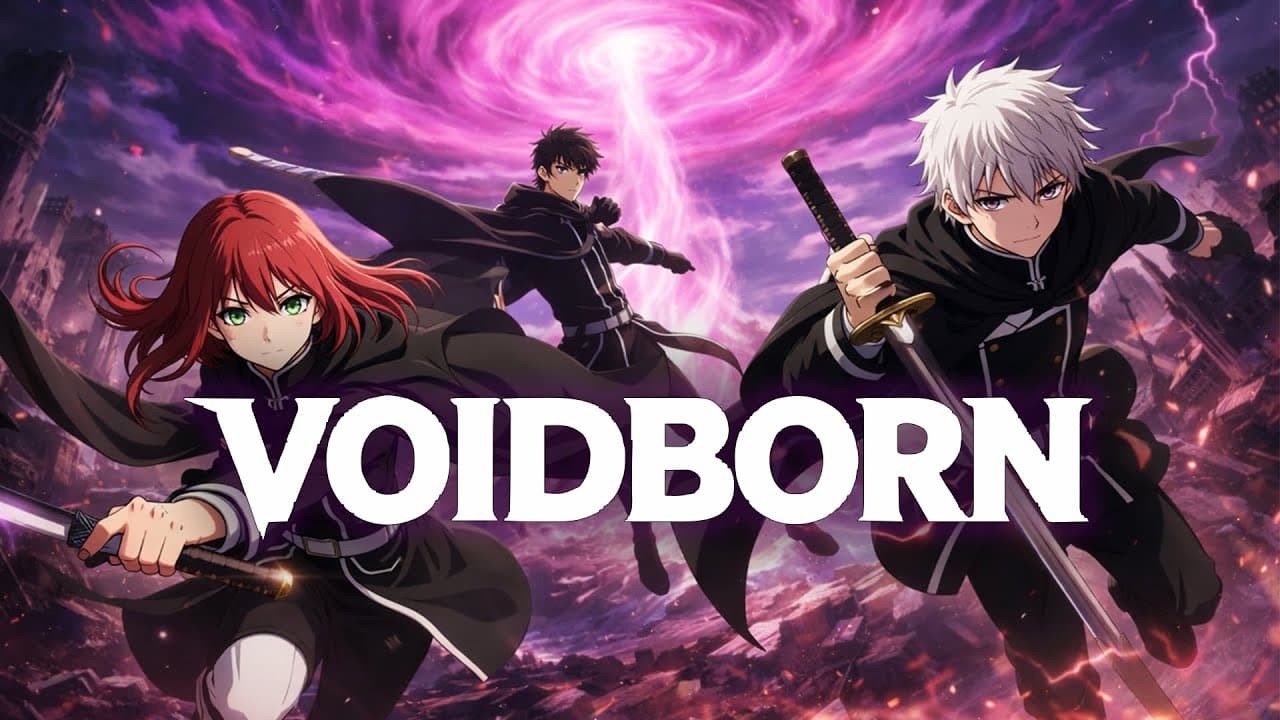
  • Video thumbnail for VOIDBORN

    VOIDBORN

    AI animated / cinematic short

    Festival recognition

    • 1st Place Silver

      Mondial Chroma Awards

    • 2nd Place Dreamina

      Mondial Chroma Awards

    • Award Winner

      Seoul International AI Film Festival

  • Video thumbnail for Les Fils du Vinnana

    Les Fils du Vinnana

    AI short film

    Festival recognition

    • Honorable Mention

      Top Quark Film Festival

    • People's Choice Nominee

      Illuminate Oneness of Humanity

    • Nominee

      ALTFF Supershort

  • Video thumbnail for Lost Garden

    Lost Garden

    AI animated series pilot

    Festival recognition

    • Finalist

      AI London Festival

The pipeline

Write. Board. Produce.

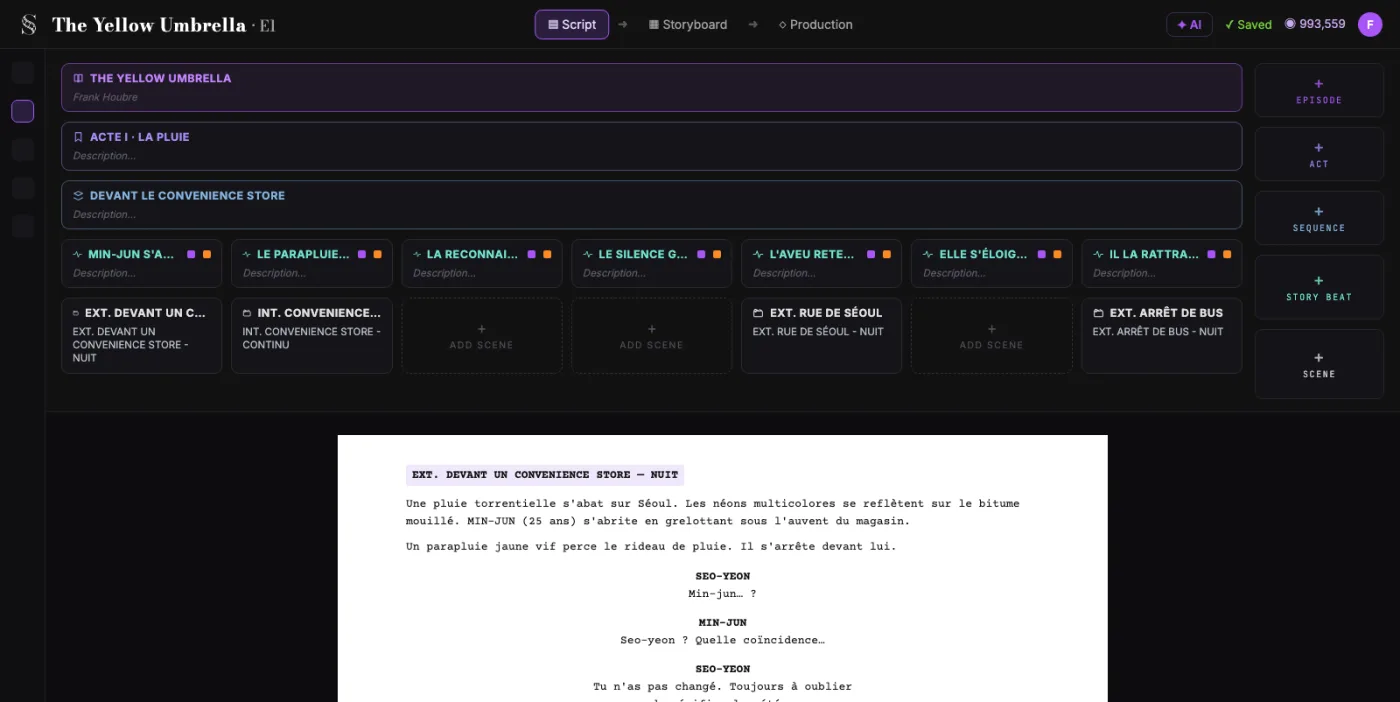
  1. ScreenWeaver screenplay editor: acts, sequences and beats above the formatted script of The Yellow Umbrella

    01The screenplay, enriched

    An industry-standard screenplay editor, and more: a visual outline and beat editor, your writing inspirations (notes, photos, audio) kept next to the page, and an AI researcher to support your writing, not replace it.

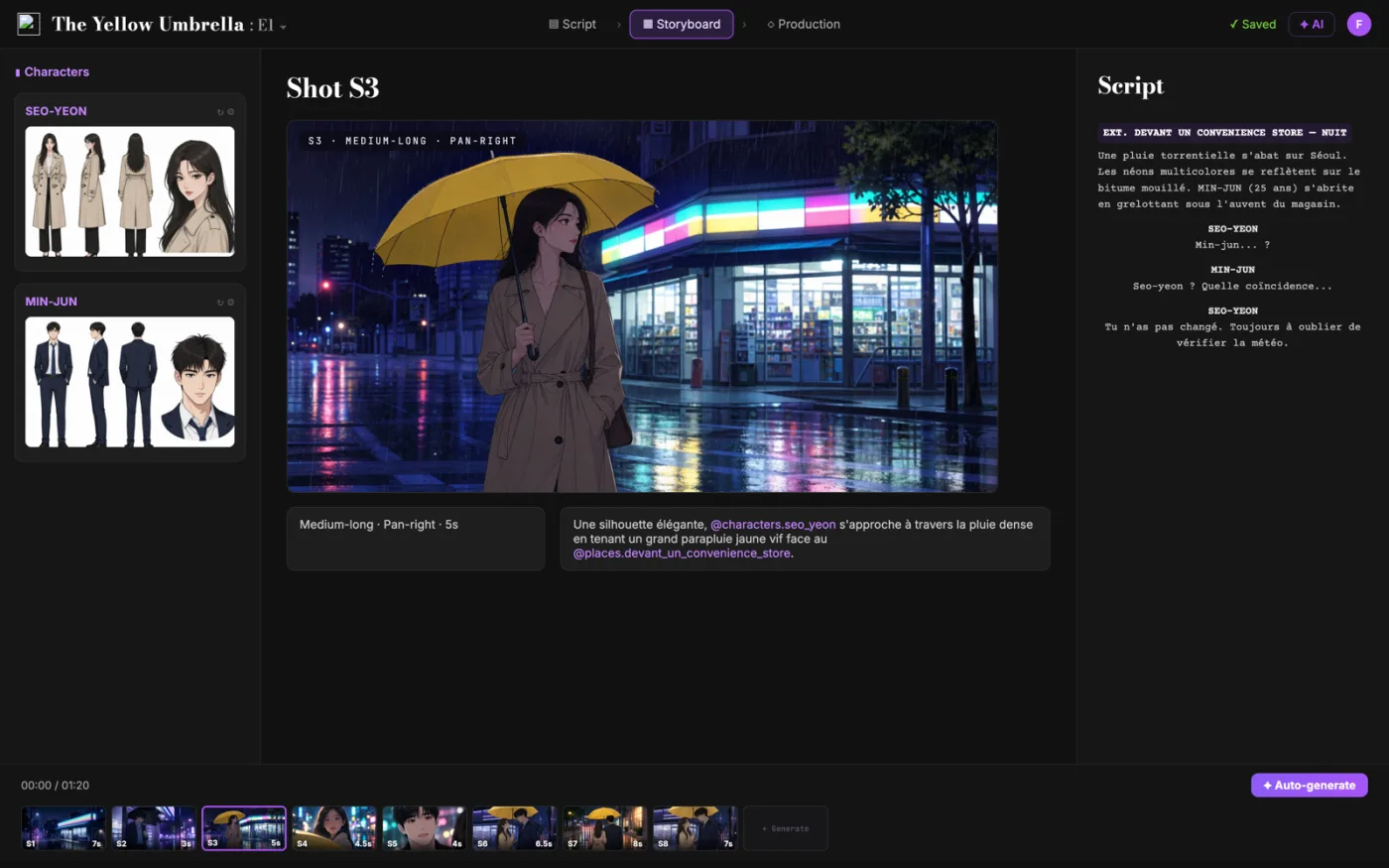
  2. ScreenWeaver storyboard: shot S3 of The Yellow Umbrella with characters, shot settings and the script beside it

    02The storyboard, made easy

    Shot breakdown generated from your screenplay, manual control over every shot (frame, angle, movement, duration), and generative AI previsualization in one click.

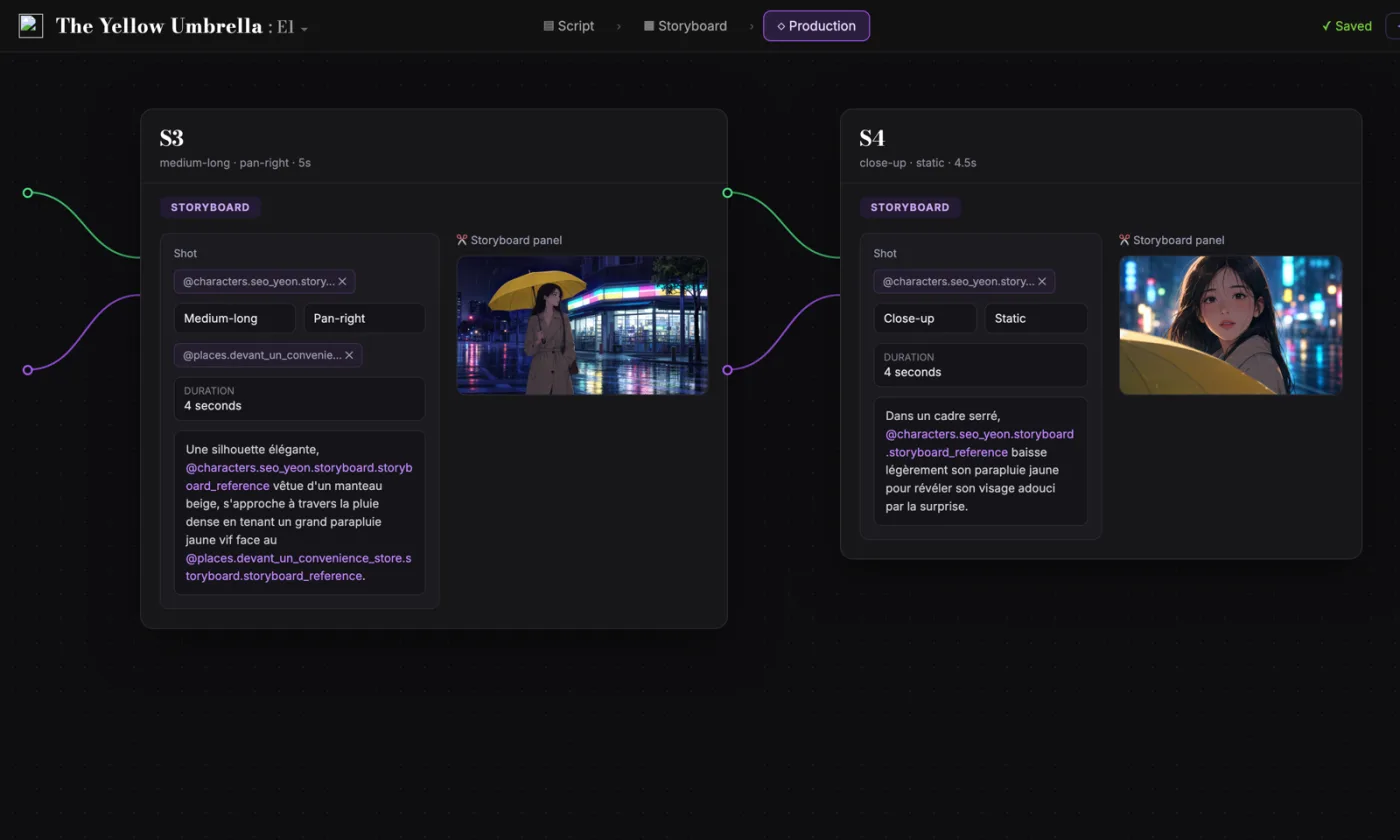
  3. ScreenWeaver production canvas: shots S3 and S4 as connected nodes carrying their storyboard panels and prompts

    03AI production, with finesse

    Footage generation pipelines connected to your screenplay and storyboard. Optimized out of the box, fully editable workflow.

FAQ

The Emmys and AI series, your questions

Can an AI series win an Emmy?
The 78th rules do not ban AI. The Television Academy reserves the right to inquire about its use, and bars AI images in costume concept art and fully AI stunts. The real barrier is eligibility: a national US premiere, six episodes in the year and a vote by Academy members.
What do the Emmy rules say about AI?
Four things: the right to inquire about AI use in submissions, no AI images for costume illustrators, the original recording when a voice is manipulated with AI, and no completely AI or VFX generated stunts. The rules are version 4 of 4 July 2026.
Do I have to disclose AI use?
No form asks for it, but the Academy can inquire. Voice manipulation with AI requires the original recording. Keep your process records and answer plainly if you are asked.
Can I enter a short film made with AI?
Not as a festival short. The Emmys cover programs that aired on national US broadcast, cable or streaming. Festival-only exhibition does not count. A short form series of 2 to 20 minutes with six episodes can qualify.
What does an Emmy entry cost?
In the 78th cycle a program entry cost $225 plus $100 per entrant, and an individual achievement cost $125 plus $100 per entrant. Active and associate members got a discount on up to two entries.
What was the 78th deadline?
For the 78th Emmys it was 7 May 2026, for programs aired between 1 June 2025 and 31 May 2026. The 79th rules are not published yet.
Who votes?
Academy members. All national active members vote for the outstanding program nominations, except animated and documentary programs. Individual achievements are judged by peer groups, and animation by the animation peer group.
Is a series I release myself eligible?
It can be, but it is checked. A self-published program, without financial or creative involvement from a network or studio, is vetted to decide whether it is competitive enough for the nominating ballot. Until it is approved, none of its individual achievements can be entered.

A series starts with one page.

Draft the first episode at no cost today, storyboard it, and generate it when your plan includes video.