Academy Awards 2027 · AI films guide

Can an AI film win an Oscar?Yes, if a human is at the heart of it.

The 99th Academy Awards rules say generative AI neither helps nor harms a nomination, and that voters weigh how much human authorship stands behind the work. For a short film, the way in is a win at a qualifying festival. Below are the clauses, the dates and the route. Then build the film in ScreenWeaver, from the screenplay to the footage.
  • AI neither helps nor harms
  • Human authorship is weighed
  • Short route: a festival win
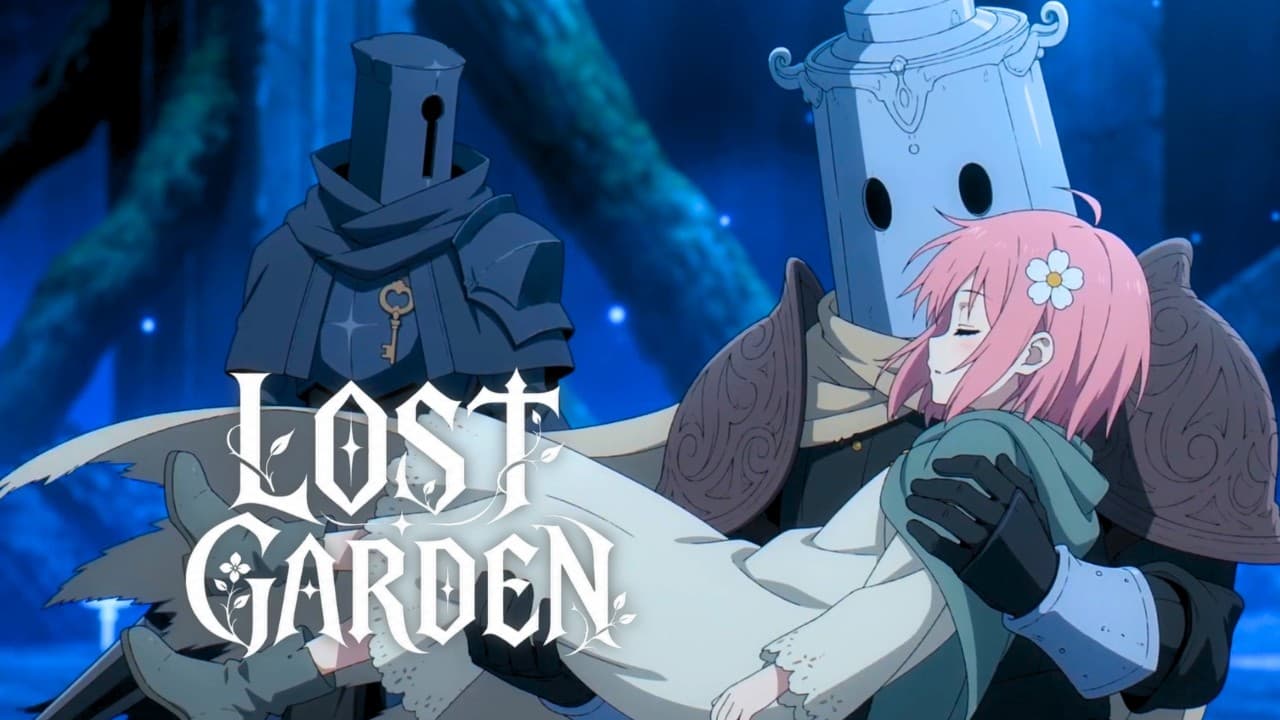
Lost Garden · Episode 1

Independent guide. ScreenWeaver does not organise the Academy Awards and is not affiliated with the Academy of Motion Picture Arts and Sciences. Rules read on 1 October 2026. Official Oscars rules

Available today in ScreenWeaver: free screenwriting, and a storyboard generated from your screenplay with Storyboard Beta, $9.99 a month.

Rolling out: video generation of each shot, powered by Seedance, with the Filmmaker plan.

The 99th rules in brief

What the rules ask of a short.

The Academy publishes one rulebook per awards year. The 99th rules, in a file dated May 2026, are the current ones. The rules for the 100th Awards were not on the Academy’s site on 1 October 2026, so a film you finish now is read against what is known today.
Ceremony
14 March 2027, the 99th Oscars
The AI rule
Tools neither help nor harm a nomination
Short film
Up to 40 minutes with credits
Short film window
1 Oct 2025 to 30 Sep 2026
Last short deadline
8 October 2026, 5 pm PT
Ways to qualify a short
Theatrical run, festival win or Student Academy Award
Animated short
At least 75% animation of the primary subject
Live action short
Primarily practical photography

Source: the 99th Academy Awards Complete Rules (Rules Two, Three, Six, Eight, Ten, Seventeen and Twenty-Four), the 99th key dates page and the Short Films Qualifying Festival List updated on 10 April 2026, read on 1 October 2026. The Academy says all dates are subject to change.

What the rules say about AI

Six clauses that touch AI.

The Academy has no ban and no quota. It has one general rule and several craft rules that name human work. Wording from the 99th Complete Rules, read on 1 October 2026.
  • The general rule: tools neither help nor harm

    Rule Two, item 7: generative AI and other digital tools “neither help nor harm” the chances of a nomination. The Academy and each branch judge the achievement and take into account how central a human was to the creative authorship. If questions arise, the Academy may ask for more information on the nature of the AI use and on human authorship.

  • Acting: humans, credited, consenting

    Rule Six: only roles credited in the film’s legal billing and demonstrably performed by humans with their consent are eligible for the acting awards. A generated performance cannot be nominated.

  • Writing: a human-authored screenplay

    Rule Twenty-Four: to be eligible in either Writing category, a film needs an explicit screenwriting credit and the screenplay must be human-authored. Credited companies or entities of any kind are ineligible.

  • Cinematography: disclosure on request

    Rule Ten, item 6: the branch acknowledges that AI tools are now part of many creative processes. Its executive committee may request disclosure of any known use of generative AI or other AI tools in the cinematographer’s own work, to encourage transparency and fair evaluation.

  • Animation: human creation of the image

    Rules Seven and Eight describe animation as movement created for characters or objects by “any human means”, a craft of human creation and manipulation of images. At least 75% of the running time must animate the primary subject. The rules do not say whether prompted video counts, and filmmakers must explain how the film qualifies as animated.

  • Live action: practical photography

    Rule Seventeen defines live action as imagery and sound created primarily through practical photographic techniques that capture physical actors, props, sets and locations. A fully generated film does not fit. Its only door is Animated Short Film, if the Animation Branch accepts it as animation.

Key dates

The dates that matter for a short.

The Academy runs by awards year. The short film window of the 99th Awards ends on 30 September 2026, and the last submission date comes a week later. <b>A film that qualifies after that is a candidate for the next awards year</b>, whose rules are not out.
  1. 8 Oct 2026

    Last short film deadline

    All materials by 5 pm PT for animated and live action shorts that qualified between 1 July and 30 September 2026. The first deadline was 13 August.

  2. 12 Nov 2026

    Last feature deadline

    General entry, Animated Feature and Best Picture forms and credits, by 5 pm PT. The first feature deadline was 17 September.

  3. 15 Dec 2026

    Shortlists

    Preliminary voting runs from 7 to 11 December, then the shortlists are announced. Fifteen shorts advance in the animated and live action categories. The last day to withdraw a film is 1 December.

  4. 21 Jan 2027

    Nominations

    Nominations voting runs from 11 to 15 January. Five films are nominated in the animated and live action short categories.

  5. 14 Mar 2027

    The 99th Oscars

    Final voting runs from 25 February to 4 March, restricted to members who have seen all the nominated shorts.

Who decides

Branch committees, members, and a festival jury first.

For a short film, three different judges stand between your film and a statuette, and the first is usually not the Academy.
  • Branch committees rule on eligibility

    The Animation Branch Executive Committee resolves eligibility questions for animated shorts, and the Short Films Branch Executive Committee does the same for live action shorts. The rules allow no appeals.

  • Members vote in two rounds

    Members of the Animation and Short Films Branches view the eligible animated shorts and vote for up to fifteen. Then every active and life member who watches all fifteen votes for up to five nominees.

  • Two people at most

    A short can designate at most two nominees, the credited director and one person in a key creative position. Companies and groups receive no nomination.

  • A festival jury comes first

    For most shorts the first judge is a festival jury, and only the awards named on the list count. Annecy’s Cristal and Jury Award, Slamdance’s Grand Jury awards for animation and narrative, and Palm Springs ShortFest’s Best Animation Short are on it.

Four routes

Where a film made with AI could compete.

Not every Oscar category is open to every kind of film. These four are the ones a ScreenWeaver filmmaker meets. Under each card, the move we would make.
  • 01

    Animated Short Film

    40 minutes or less, at least 75% animation of the primary subject, movement created by human means. Qualify by a festival win, a theatrical run or a Student Academy Award.

    The only realistic door for generated imagery. Show art direction, designed characters and a screenplay you wrote, and be ready to explain how the film qualifies as animated.

  • 02

    Live Action Short Film

    Imagery created primarily through practical photography of actors, props, sets and locations.

    Not for generated footage. AI in post-production can sit within the general rule, since tools neither help nor harm, but the film must remain a photographed film.

  • 03

    Animated Feature Film

    Over 40 minutes, with a theatrical run of seven days in one of six US metro areas, or eligibility in the International Feature category. Episodes extracted from a series are excluded.

    A different scale: a standalone feature, in a cinema, as a DCP. If you hold a series, an episode taken from it does not qualify.

  • 04

    Student Academy Awards

    A Gold, Silver or Bronze Medal in the 2026 Student Academy Awards qualifies a short, in the Animation or Alternative/Experimental categories for an animated short.

    If you are a student, this is a separate path. Student films cannot qualify with a theatrical release.

The qualifying list

What the qualifying list teaches.

The Academy’s Short Films Qualifying Festival List, 21 pages updated on 10 April 2026, is the real gate between a festival win and an Oscar submission. It names each festival and the specific awards that count.

  1. 01

    The list runs from Annecy to Sundance. It includes Annecy, Clermont-Ferrand, Slamdance, Sundance, Palm Springs ShortFest and the BAFTA British Short Film award, among many others.

  2. 02

    No AI-dedicated festival is on the list that was read. A win at an AI festival does not qualify a film, and the document never mentions AI.

  3. 03

    A festival needs a track record to apply. The Academy’s application rules ask for at least ten consecutive editions, a juried short film award given every year, screenings in a theatrical setting and three past winners.

  4. 04

    The list moves slowly. The application process opens every three years, costs $250 per festival and guarantees nothing, so a festival that is absent today usually waits for the next window.

Authorship you can show

The Source Tree: who decided what.

The Academy asks how central a human was to the creative authorship of a film. This scene is from Lost Garden, episode 1, an animated series made by the ScreenWeaver team with Seedance. Read the screenplay page, then each shot as a storyboard frame and as the final image: every choice of framing, angle and gesture has an author you can name.

Logline. A small knight wakes up in a dead world and learns he is the last guardian of a seed that could bring the garden back.

Screenplay · episode 1 · the Source Tree

INT. HEART OF THE ROOTS - NIGHT

Living roots coil around LANTERN and pin him down. A voice stops them.

THE SOURCE TREE

Stop. He is my guest.

A giant woman of roots and white lilies opens her arms over the cavern.

Her eyes open. Blue, and vast.

THE SOURCE TREE

Welcome to you, Lantern Knight.

She lifts him in her palm, like a lamp.

THE SOURCE TREE

Do not be afraid. I will not harm you.

In the dark, a seed of light opens. Inside the flower, a sleeping child.

THE SOURCE TREE

You must find yours. Protect her.

CUT TO:

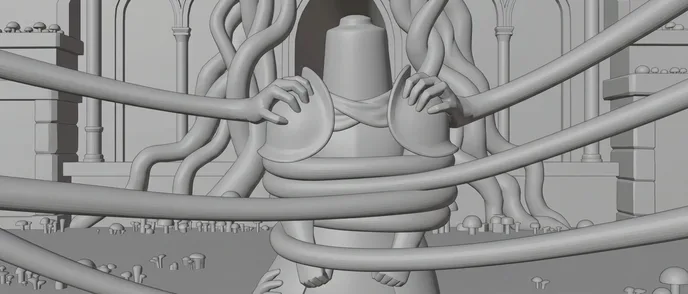
  1. A small lantern-helmed knight bound by thick roots in a ruined hall
    Storyboard frame of the trap shot, in grey
    01

    Medium · the trap

    Medium shot, Lantern bound by thick living roots in a ruined hall, glowing blue mushrooms on the floor, cold light

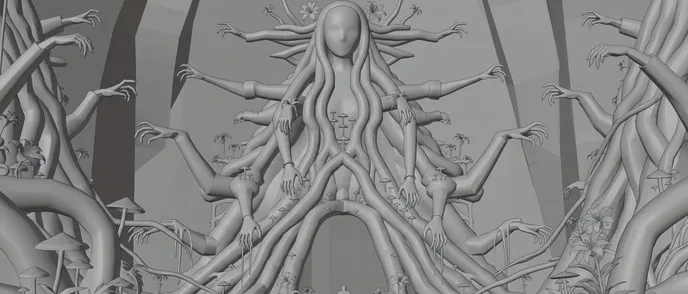
  2. A giant woman made of roots and white lilies spreads her many arms in a dark cavern
    Storyboard frame of the wide shot, in grey
    02

    Wide · the Source Tree

    Symmetrical wide shot, a giant woman made of roots, arms spread with many hands, white lilies, blue glyphs

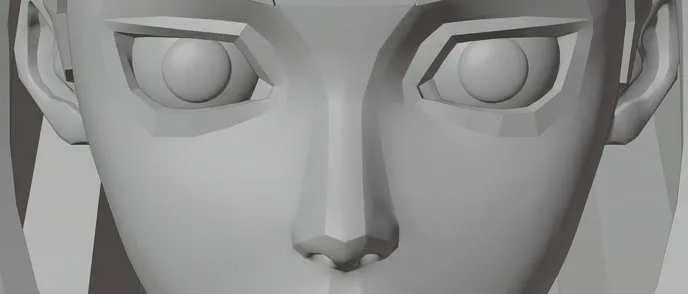
  3. Extreme close-up of a giant pale face with piercing blue eyes
    Storyboard frame of the eyes close-up, in grey
    03

    Extreme close-up · the eyes

    Extreme close-up on the giant's face, piercing blue eyes opening, pale skin, soft light from below

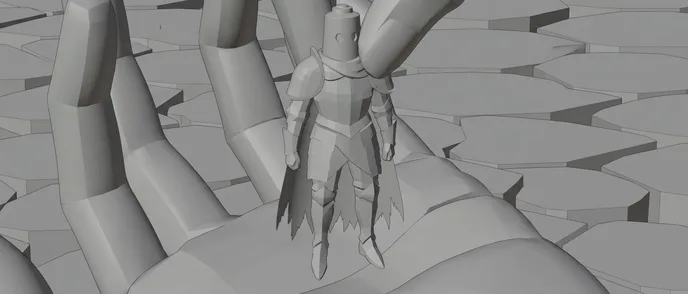
  4. A tiny armored knight stands in the middle of a giant open hand
    Storyboard frame of the palm shot, in grey
    04

    High angle · the palm

    High angle, the tiny knight standing in the center of a giant open palm, stone floor far below

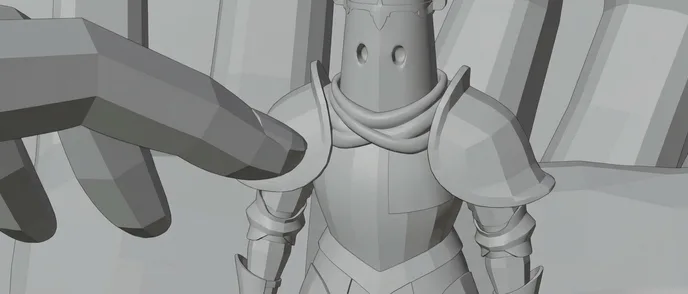
  5. A giant fingertip gently touches the chest of a small armored knight
    Storyboard frame of the touch close-up, in grey
    05

    Close-up · the touch

    Close-up, a giant fingertip gently touches the knight's armored chest, faceless helm, emotion through posture

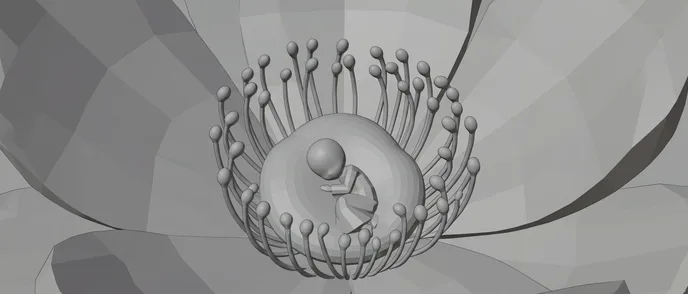
  6. A sleeping pink-haired child curled inside a glowing blue flower
    Storyboard frame of the seed insert, in grey
    06

    Insert · the seed

    Top-down insert, a glowing pale blue flower opening, a sleeping child with pink hair curled inside

Lost Garden, episode 1 runs 17 minutes, under the 40 minutes the Academy sets for shorts. But it is an episode, and the short film rules exclude works created as episodic television. A film aimed at the Oscars is conceived as a standalone short. Playback starts at this scene.

The script

A 12 minute standalone short in five movements.

The Academy’s ceiling is 40 minutes, credits included, but festival juries watch long lists. A 12 minute film is 12 screenplay pages and 120 to 160 shots of 4 to 6 seconds, with room for credits.
  1. 0:00 to 1:00

    The question

    One image that poses it. Make the first minute a promise.

  2. 1:00 to 3:00

    The world by design

    Characters and places drawn once, then held to the end.

  3. 3:00 to 8:00

    The cost

    Every scene asks more of the character. Cut the shots that show the tool and not the story.

  4. 8:00 to 10:30

    The turn

    The gesture or line people will remember. Sound it with care.

  5. 10:30 to 12:00

    The answer

    A last image that answers the first, then credits that count inside the 40 minutes.

The Academy wants dialogue or narration substantially in English, or English subtitles, plus English captions on the streaming copy. Plan the captions from the screenplay, then reuse the same file for festivals.

The route, step by step

From a blank page to a qualifying win.

There is no Academy deadline to chase before you hold a festival win. The steps below come first, and the Academy’s window opens only once you have the award.
  1. 01

    Step 1

    Choose Animated, and say why

    Decide honestly that the film is animation: designed characters, art direction, movement you control. Write one paragraph on how it qualifies, because the Academy asks for it at submission.

  2. 02

    Step 2

    Write the screenplay yourself

    A screenplay you wrote is the clearest proof of human authorship. Write it in ScreenWeaver for free, in industry format, and keep dated drafts.

  3. 03

    Step 3

    Design and storyboard by choice

    Define each character and set once, then generate the storyboard from the screenplay and adjust shot by shot. Keep the frames you changed: they show human decisions.

  4. 04

    Step 4

    Make the film and keep the logs

    Generate scene by scene with Seedance, from the storyboard and the references. Keep every prompt and version, in case a branch asks about the nature of the AI use.

  5. 05

    Step 5

    Target festivals on the list

    Pick festivals whose winning awards are on the list, such as Annecy, Clermont-Ferrand, Slamdance or Palm Springs ShortFest, and read each one’s AI rules first. We have guides for Annecy and Slamdance.

  6. 06

    Step 6

    Submit inside the window

    Once you win, submit with proof of the award before the deadline of that awards year. Clear music and rights for theatrical exhibition, since festival clearances are not enough.

Where films fall out

Seven ways to miss the Academy.

Most of the trouble sits in definitions, not in tools. Read the exact words.
  • Calling a generated film live action

    Live action means practical photography of physical actors, props, sets and locations. A film generated from prompts belongs, if anywhere, in Animated Short Film.

  • Submitting an episode

    Short films originally created as episodic television, pilots included, are excluded. A series needs a standalone short.

  • Counting on festival clearances

    The film must have the clearances for commercial theatrical exhibition, and festival clearances are not sufficient. Check every music, voice and font licence.

  • Winning the wrong award

    Only the awards named on the list qualify, not every prize at a listed festival. Check the exact award before you plan around it.

  • Missing the window

    The qualifying win must fall inside the awards year and within two years of the film’s completion, and each short has a final submission date.

  • Hiding AI when asked

    The Academy can ask for more information on the nature of the AI use and on human authorship. An answer that contradicts your credits does more harm than any tool.

  • Submitting twice

    A short can be submitted only once, and in the awards year in which it qualifies. The last day to withdraw is 1 December.

Why ScreenWeaver

The Academy weighs authorship. Start with the page.

ScreenWeaver puts your screenplay, storyboard and footage in one record that shows who decided what.
  • Authorship you can document

    Each shot traces back to its scene, its storyboard frame and its prompt, and every frame you changed by hand is visible. That is the record of human decisions the Academy’s rule is about.

  • A screenplay you own

    The Screenwriter plan is free with no end date, with industry formatting and PDF and Final Draft export. Your projects are private and you own your work.

  • Animation you art-direct

    Characters, locations and references are defined once and carry from shot to shot, with manual control of framing, angle, movement and duration. That is art direction, not a lottery.

  • One project, several films

    The same screenplay, storyboard and references can serve a short for festivals and, later, a series. Storyboard Beta is $9.99 a month, and video generation comes with the Filmmaker plan.

Real productions

International festival-recognized films have been written and produced with ScreenWeaver.

ScreenWeaver is already being used as a creative workspace for real AI film productions, from cinematic shorts to animated series pilots selected, nominated, and awarded by international festivals.

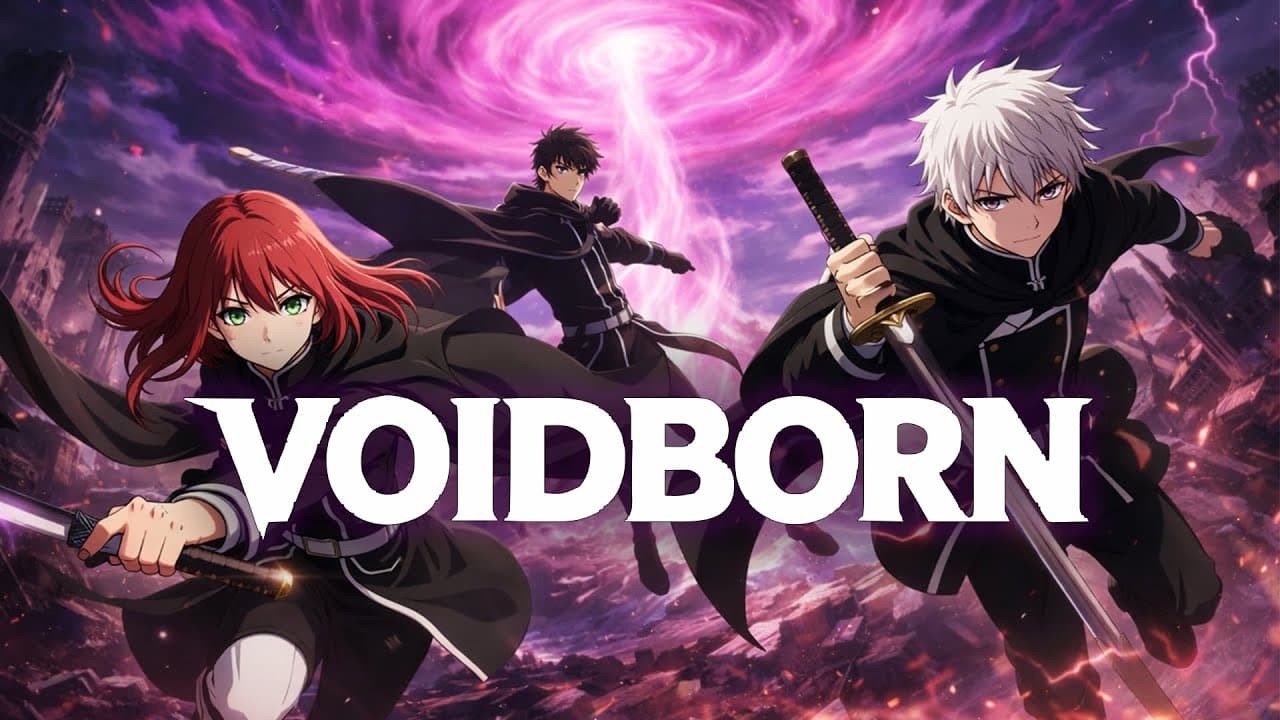
  • Video thumbnail for VOIDBORN

    VOIDBORN

    AI animated / cinematic short

    Festival recognition

    • 1st Place Silver

      Mondial Chroma Awards

    • 2nd Place Dreamina

      Mondial Chroma Awards

    • Award Winner

      Seoul International AI Film Festival

  • Video thumbnail for Les Fils du Vinnana

    Les Fils du Vinnana

    AI short film

    Festival recognition

    • Honorable Mention

      Top Quark Film Festival

    • People's Choice Nominee

      Illuminate Oneness of Humanity

    • Nominee

      ALTFF Supershort

  • Video thumbnail for Lost Garden

    Lost Garden

    AI animated series pilot

    Festival recognition

    • Finalist

      AI London Festival

The pipeline

Write. Board. Produce.

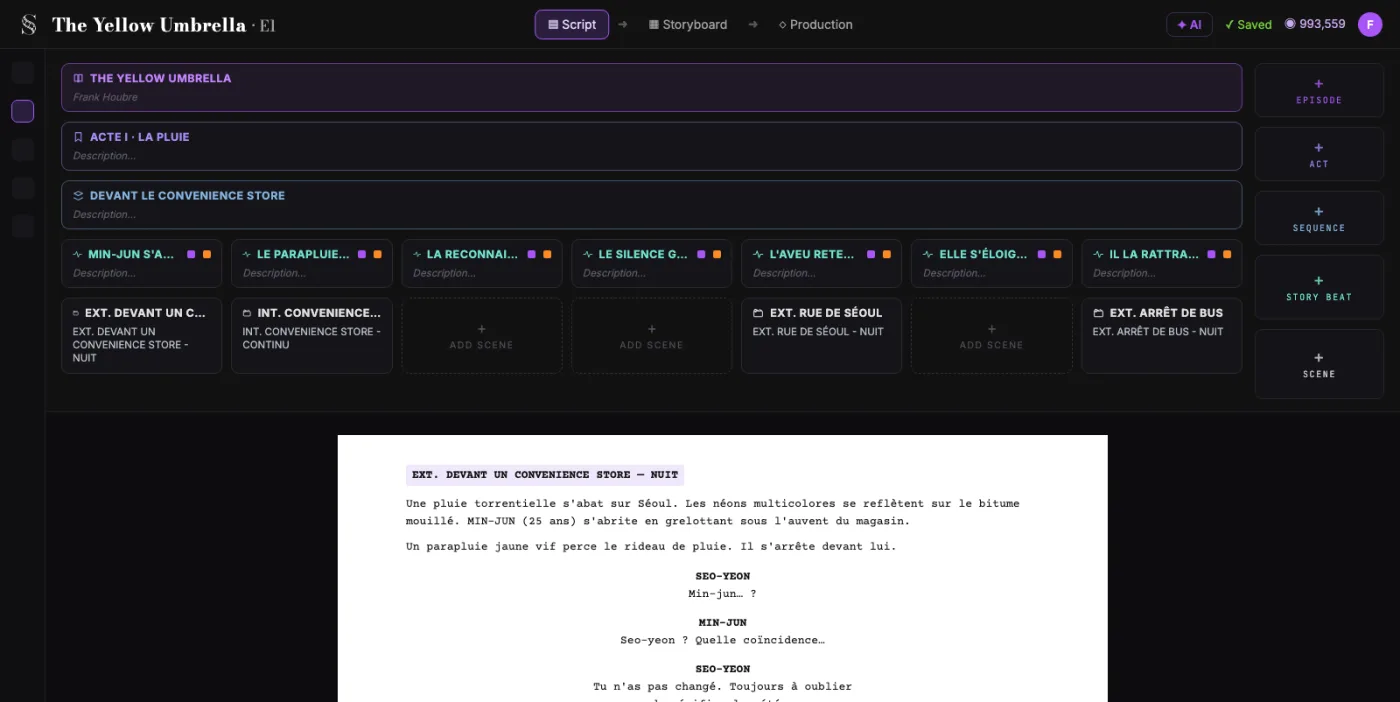
  1. ScreenWeaver screenplay editor: acts, sequences and beats above the formatted script of The Yellow Umbrella

    01The screenplay, enriched

    An industry-standard screenplay editor, and more: a visual outline and beat editor, your writing inspirations (notes, photos, audio) kept next to the page, and an AI researcher to support your writing, not replace it.

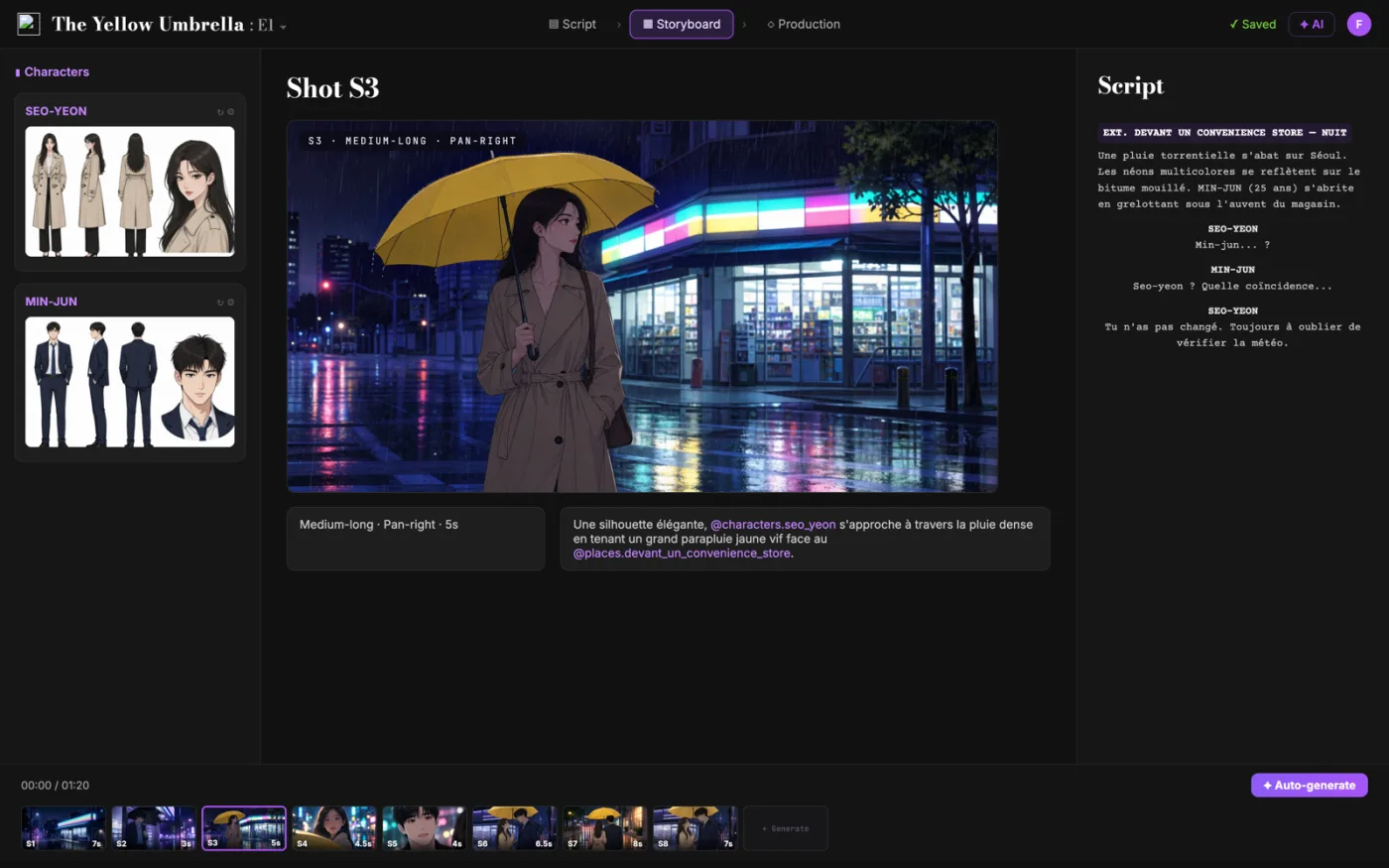
  2. ScreenWeaver storyboard: shot S3 of The Yellow Umbrella with characters, shot settings and the script beside it

    02The storyboard, made easy

    Shot breakdown generated from your screenplay, manual control over every shot (frame, angle, movement, duration), and generative AI previsualization in one click.

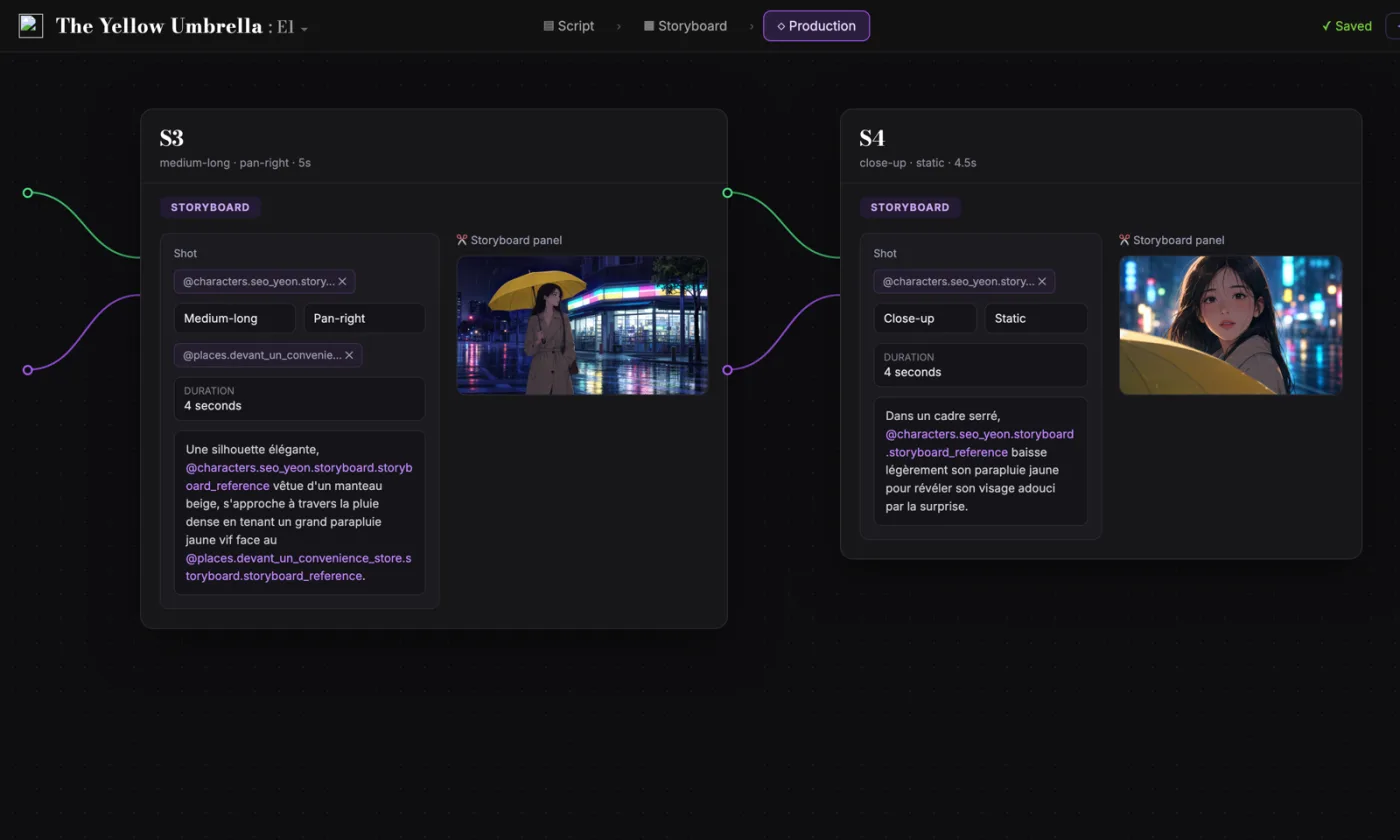
  3. ScreenWeaver production canvas: shots S3 and S4 as connected nodes carrying their storyboard panels and prompts

    03AI production, with finesse

    Footage generation pipelines connected to your screenplay and storyboard. Optimized out of the box, fully editable workflow.

FAQ

The Oscars and AI films, your questions

Can you submit an AI film to the Oscars?
Yes. The 99th Academy Awards rules say generative AI and other digital tools neither help nor harm a nomination, and that the Academy and each branch weigh how central a human was to the creative authorship. Acting and writing awards require humans. A short must also qualify through a theatrical run or a qualifying festival win.
Does the Academy ban generative AI?
No. It sets no ban and no quota. It can ask for more information on the nature of the AI use and on human authorship, and the Cinematographers Branch can request disclosure of AI use in the cinematographer’s work.
Can an AI-generated actor be nominated?
No. Only roles credited in the film’s legal billing and demonstrably performed by humans with their consent are eligible for the acting awards (Rule Six).
Can a short film qualify for the Oscars through a festival?
Yes. A short qualifies by winning a qualifying award at a festival on the Academy’s list, with proof of the award, inside the eligibility period and within two years of completion. Other routes are a seven day theatrical run in one of six US metro areas and a Student Academy Award medal.
Which festivals qualify a short film?
The list updated on 10 April 2026 names, among many others, Annecy (Cristal and Jury Award), Clermont-Ferrand (Grand Prix), Slamdance (Grand Jury awards), Sundance, Palm Springs ShortFest and the BAFTA British Short Film award. It names no AI-dedicated festival.
What is the next deadline?
For the 99th Awards, the last short film submission deadline is 8 October 2026, 5 pm PT, for films that qualified between 1 July and 30 September 2026. Features close on 12 November 2026. Rules for the next awards year were not published on 1 October 2026.
Does a screenplay written with AI qualify?
The Writing awards require a human-authored screenplay with an explicit screenwriting credit. They are separate categories from the shorts, but the general rule weighs human authorship for every film. Write your own screenplay.
Can an episode of my series be an Oscar short?
No. Short films originally created as episodic television, including pilots and parts of a series, are excluded. Make a standalone short, or aim the episode at festivals that take series.

The Academy reads authorship. Show yours.

Start with the screenplay, free. Keep every decision in one project.