Sundance 2027 · AI films guide

Can you submit an AI film to Sundance?Yes. You just have to disclose it.

Sundance sets no restriction on AI, but rule 24 makes disclosure your responsibility and says an omission may get the project disqualified. The 2027 windows are closed: here are the rules, the odds and a plan for the next call, starting with the screenplay in ScreenWeaver.
  • Disclosure mandatory (rule 24)
  • 2027 windows closed
  • Festival 21 to 31 January 2027
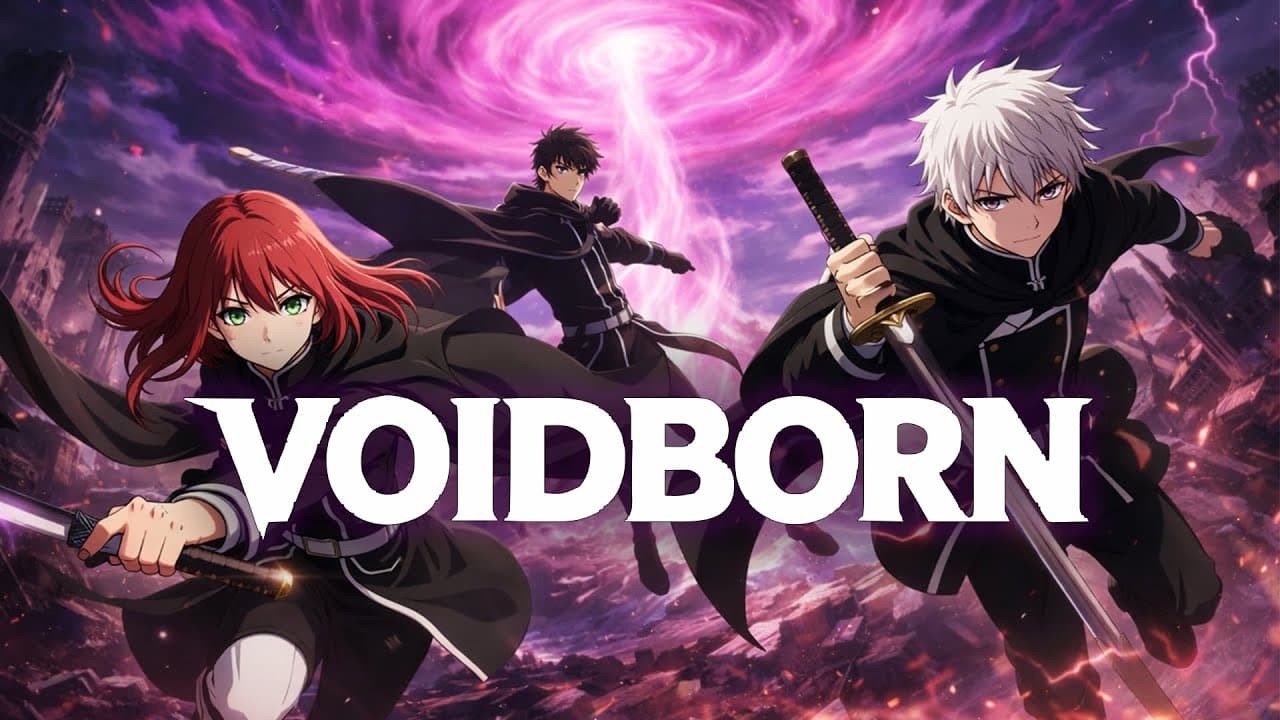
Voidborn · Episode 0

Independent guide. ScreenWeaver does not organise Sundance and is not affiliated with Sundance Institute. Rules read on 1 October 2026. Official rules and regulations

Available today in ScreenWeaver: free screenwriting, and a storyboard generated from your screenplay with Storyboard Beta, $9.99 a month.

Rolling out: video generation of each shot, powered by Seedance, with the Filmmaker plan.

The rules on one card

What Sundance asks of an AI film.

Sundance is a general festival run by Sundance Institute. It has one rule on AI, number 24 of 31, and one FAQ answer. Everything else applies to your film as to any other, and the 2027 call is closed.
Festival
21 to 31 January 2027, Boulder, Colorado
2027 call
Closed: last windows 31 August to 21 September 2026
Short film fee
$55, $75 or $95 by window
What a short is
Under 50 minutes, credits included
AI rule
No restriction, disclosure required
Short premiere status
Not required if completed after 31 December 2025
Screener
Upload, Vimeo or YouTube link on FilmFreeway
Notification
By 4 December 2026

Source: the 2027 Rules and Regulations and the 2027 Submissions FAQ on sundance.org, read on 1 October 2026. The Rules say they supersede the FAQ. The next call has not been announced.

What the rules say about AI

One rule, one answer, six things to know.

Rule 24 and FAQ question 12 say the same thing: use AI if you want, and tell the Institute. Here is the wording, what it leaves open, and where an AI film can go.
  • Rule 24

    It makes it the applicant's sole responsibility to disclose any usage or utilization of Artificial Intelligence in the making of any or all submitted projects. It adds that failure to disclose may result in disqualification, at the Institute's sole discretion. Text read in the 2027 Rules on 1 October 2026.

  • FAQ question 12

    Asked whether it accepts projects made with AI, Sundance answers: “We do not currently have any restrictions surrounding the usage of Artificial Intelligence technology.” The same answer requires disclosure. The word “currently” matters: the rule can change.

  • How wide “any usage” is

    The rule says any usage and defines nothing. It sets no threshold and excludes no writing tool, voice or music. Disclose all of it, and say which parts are generated and which are not.

  • Who you disclose to

    The rule is written for the Institute and mentions no label on screen. Sundance's nonfiction development application is different: since June 2025 it asks how you plan to disclose generative AI to your audience, and why not if you do not. That is not the festival form, but it shows what Sundance cares about.

  • Where an AI film can go

    You cannot pick a program. You pick a category: short film (under 50 minutes), episodic content (up to 60 minutes, or longer) or feature, and the programming team places the film. Shorts compete for jury prizes in four groups: U.S. fiction, international fiction, nonfiction and animation.

  • What Sundance does not take

    Open submissions for VR, AR and XR projects are not accepted, nor are interactive works suited to an exhibition. There is no screenplay competition and no written submission. An AI project has to arrive as a film.

Key dates

The 2027 call is over. Learn its calendar.

Every window for 2027 has closed. The call took projects from 1 May 2026, so <b>expect the 2028 call to open around spring 2027</b>. Nothing is announced yet.
  1. 13 Jul 2026

    Short films, early window

    $55 for a short. The official window ended on 3 August at $75.

  2. 31 Aug 2026

    Short films, late window

    The last window for shorts, at $95. Episodic content closed on 11 September and features on 21 September.

  3. 4 Dec 2026

    Notification

    Sundance says projects are told by email in the first week of December, and at the latest by 4 December.

  4. 21 Dec 2026

    Shorts delivered

    Selected short films deliver their festival files by this date: a DCP with closed and open captions, plus a ProRes file.

  5. 21 to 31 Jan 2027

    The festival in Boulder

    The first edition in Boulder, Colorado. Features and episodic projects deliver by 4 January 2027.

Who decides

Programmers, with no feedback.

Sundance names no jury at the submission stage. It does publish how submissions are read, and the answers are blunt.
  • Every project is watched

    The FAQ says all officially submitted projects in good standing are treated in the same manner, whatever the window. The early window gives you a lower fee and nothing else.

  • The programming team

    The selection period runs from 1 June to 4 December 2026, according to the rules. The team decides which program a film joins, and you cannot choose it.

  • No feedback

    Sundance owes no comments, no reasons and no information on how a project was reviewed. A rejection says nothing about your film or its AI. Do not read a verdict into silence.

  • Juries come after selection

    Accepted shorts compete for jury prizes in four groups. Feature films also compete for the Festival Favorite, an audience award. A short is not judged against a feature.

Programs

Four programs, one you cannot choose.

Sundance has no themes. It has programs, and you never apply to one: the programmers place the film. Four of them matter to an AI filmmaker, and under each is the angle we would take.
  • 01

    Short Film Competition

    Shorts under 50 minutes, with their own jury prizes, animation included.

    The natural program for a first AI film, and the one with an animation prize. Make the short a finished film, not a proof of concept.

  • 02

    Episodic

    Series and pilots, up to 60 minutes or longer, delivered as one continuous video file.

    A pilot and a few episodes suit a connected project. Cut them as one file: Sundance accepts no links to separate episodes.

  • 03

    NEXT

    Features distinguished by an innovative approach to storytelling.

    It takes features only, so an AI short cannot aim for it. Treat it as the long-term target of a series that grows into a film.

  • 04

    Family Matinee

    Work that appeals to young and old alike, drawn from the feature and short film categories.

    An animated fable made for families can land here, since shorts are eligible. Say how it was made in the disclosure, as for any film.

The odds

What the 2027 documents tell you.

The FAQ speaks of more than 15,000 notification emails going out within days each December, to every officially submitted project. It also says no single aesthetic or genre is favoured, and tells applicants to make the project they want to make.

  1. 01

    The odds are low and the process is equal. Over 15,000 projects are notified, and all are watched in the same way. Early or late, only the fee changes.

  2. 02

    No style is favoured. The FAQ tells you to make the project you want, not the one you think suits Sundance. A distinct voice beats a copy of last year's lineup.

  3. 03

    A rough cut is allowed, a bluff is not. Unfinished work is accepted if on-screen text lists what is missing. You can replace the cut, but only the first version received is guaranteed to be viewed.

  4. 04

    The rule is dated and can move. The AI rule and the word “currently” belong to the 2027 documents. Read the next set the day it is published.

Page to screen

Voidborn: six shots from episode 0.

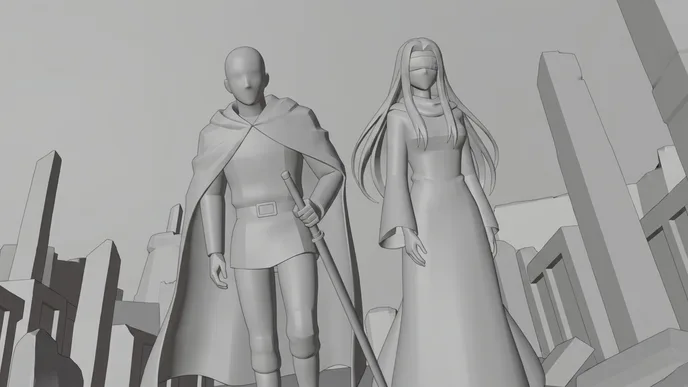
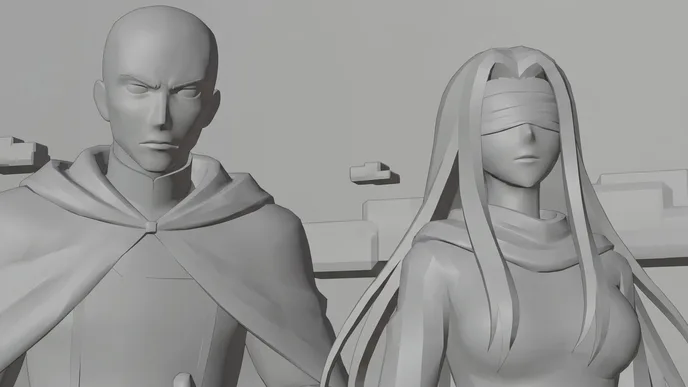
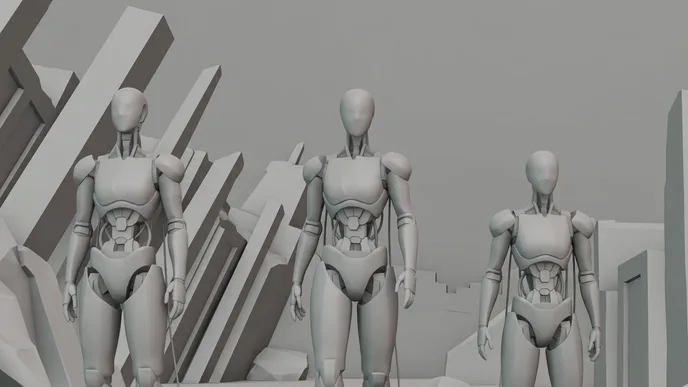
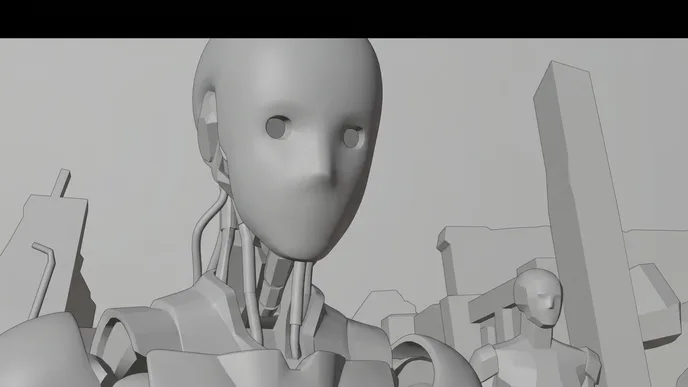
Sundance has an animation prize for shorts and a category for pilots. This is a scene from Voidborn, episode 0, an anime pilot made by the ScreenWeaver team: the screenplay page, then each shot as a storyboard frame and as the final image.

Logline. Every seven years, the Rift opens and swallows the world’s dreams. A swordsman sworn to a blind seer escorts her through its levels, toward a promise they made to a girl left behind.

Screenplay · episode 0 · English subtitles

EXT. RUINS OF THE FIRST LEVEL - NIGHT

Broken towers under a violet sky. SIM, a swordsman in a black cloak, walks beside LADY MARIA, blindfolded, all in white.

SIM

Tell me, Maria... do you think Leia believes we are still alive?

MARIA

We made a promise... the two of us.

A line of white automatons rises from the ruins.

AUTOMATON

The Rift will wait for no one.

SIM

What are machines doing at this level?

One automaton steps forward. Its face is blank.

AUTOMATON

We must return to the surface.

Its eyes ignite red.

SIM

I am Sim, guardian of Lady Maria... and I will proceed with your execution.

Steel meets steel. Lightning runs down the blade.

CUT TO:

  1. A swordsman in a black cloak and a blindfolded woman in white walk through ruins at night
    Storyboard frame of the wide shot, in grey
    01

    Wide · the pair

    Wide shot, a bald swordsman in a black cloak and a blindfolded red-haired woman in white walk through night ruins

  2. Medium two-shot of a bald swordsman and a blindfolded red-haired woman
    Storyboard frame of the two-shot, in grey
    02

    Two-shot · the promise

    Medium two-shot, the swordsman and the blindfolded seer side by side, violet night sky, broken towers

  3. Three white humanoid automatons stand in night ruins
    Storyboard frame of the automatons shot, in grey
    03

    Wide · the machines

    Wide low angle, three white humanoid automatons standing in the ruins, cold blue moonlight

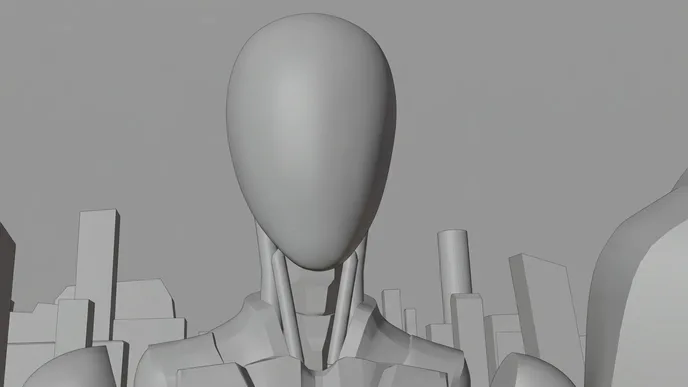
  4. Close-up of a white automaton with a smooth blank face
    Storyboard frame of the blank face close-up, in grey
    04

    Close-up · the blank face

    Close-up on an automaton's smooth faceless head, black eye slots, cables at the neck, ruins behind

  5. A white automaton's eyes glow red
    Storyboard frame of the red eyes close-up, in grey
    05

    Close-up · the red eyes

    Same framing, the automaton's eyes ignite red, the swordsman's shoulder out of focus in the foreground

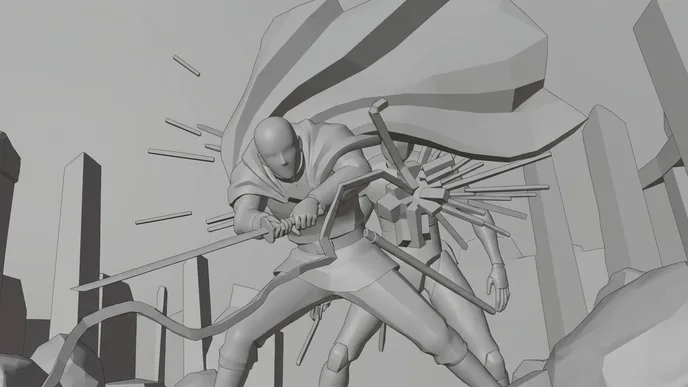
  6. A swordsman strikes with a katana wreathed in lightning and sparks
    Storyboard frame of the clash shot, in grey
    06

    Action · the clash

    Dynamic low angle, the swordsman strikes with his katana, lightning running along the blade, sparks, cape flying

Voidborn, episode 0 runs 13 minutes, far under Sundance's 50 minute line for shorts, and is shaped like a pilot for the Episodic category. The ScreenWeaver team's film took 1st Place Silver and 2nd Place Dreamina at the Mondial Chroma Awards and an award at the Seoul International AI Film Festival. Press play and the player opens on this sequence.

The script

A 12 minute short in four movements.

A Sundance short can run up to 49 minutes, but a short that ends sooner is safer to land. Aim for 12 minutes: about 12 screenplay pages and 110 to 150 shots of 4 to 6 seconds.
  1. 0:00 to 0:45

    The cold open

    A programming team sees thousands of films. Start inside the action: a face, a place, a problem.

  2. 0:45 to 3:15

    The rule of the world

    Who we follow, what they want, and the one visual rule the film will keep.

  3. 3:15 to 9:00

    Escalation

    Each scene raises the cost. Let one scene run on sound alone, not on spectacle.

  4. 9:00 to 12:00

    The landing

    A choice and its price. End one beat earlier than the audience expects, then the credits.

Subtitles must be hardcoded into the video when a significant part of the dialogue is not in English. Captions switched on in a player do not count.

Month by month

From now to the next call.

The 2027 windows are closed. This plan targets the 2028 call, which should open around spring 2027 if the pattern holds. Each step is also a good month to watch what Sundance programs.
  1. 01

    October 2026

    Study the rules

    Read the Rules and Regulations and the FAQ in full, and mark rules 17 to 20 on rights and subtitles. Open a disclosure file for the project: tools, versions, tasks.

  2. 02

    November 2026

    Logline and screenplay

    Twelve pages for a short or a pilot. Write it free in ScreenWeaver, and decide now whether it is a short under 50 minutes or the first episode of a series.

  3. 03

    December 2026

    Watch the selection

    Projects are told by 4 December. Watch the shorts and episodic work Sundance picks, and compare length, opening and sound with your own pages.

  4. 04

    January to March 2027

    Storyboard and generate

    References, storyboard, then footage scene by scene with Seedance in ScreenWeaver as video generation reaches your plan. Keep the prompts: your disclosure comes from them.

  5. 05

    April 2027

    Edit, sound, subtitles

    Cut, mix, hardcode English subtitles if needed and export a clean file. Clear every music source and every logo a generated shot may have added.

  6. 06

    From May 2027

    Submit in the early window

    The 2027 call took projects from 1 May. Submit a finished film in the cheapest window, with the disclosure written. Fill in the form only when the video is final.

Ways to lose a spot

Eight ways the rules can cost you the entry.

Sundance is open about style and about premieres for shorts. It is firm on a handful of practical points. Check each one before you pay.
  • Not disclosing AI

    Rule 24 makes it your sole responsibility. A failure to disclose may mean disqualification at the Institute's sole discretion. Disclose every use, including AI for script, music and voice.

  • A submission that is not complete

    Your FilmFreeway status must read “In Consideration” by 11:59 pm PST on the last day of your window. A non-working file or link gets the entry disqualified, whatever the film.

  • Subtitles that are not hardcoded

    A project with significant non-English dialogue needs on-screen English subtitles in the video file. Switchable captions on Vimeo or YouTube do not count, and dialogue made with a voice model counts as dialogue.

  • Rights nobody cleared

    You must secure permission for every copyrighted and trademarked element, and you indemnify the festival if a claim arises. Check each AI tool's terms and every logo a generated shot added by itself.

  • A short of 50 minutes or more

    The line is 50 minutes, credits included. At 50 minutes or more the project belongs in a feature category, with a feature's fee.

  • The wrong country category

    A project is U.S. when at least half of its financing is American. Pick the category that fits where the money came from, not where you live.

  • Changing the cut or sending it again

    You can replace your file, but the Institute need not watch an updated version, and only the first one is guaranteed. A project sent in a past year can enter again only if it changed significantly.

  • A placeholder to meet the deadline

    Sundance owes no feedback and offers no fee waivers. A placeholder video sent to reach the deadline gets the entry disqualified: wait until the cut is ready.

Why ScreenWeaver

Sundance wants honesty and a voice. Start with the page.

Sundance imposes no tool and no AI quota. It asks for your film and for an honest disclosure. ScreenWeaver gives you both from one connected project, with the screenplay, storyboard and footage side by side.
  • A disclosure that is already written

    Each shot is tied to its scene, its storyboard frame and its prompt, so the statement rule 24 asks for comes from the project and not from memory.

  • A short, a pilot or an episode

    Sundance has a category for each. One project can be cut as a 12 minute short or as a pilot, and delivered as the single continuous file the Episodic category asks for.

  • A look that holds

    Sundance says no style is favoured. A held look, with the same faces from shot to shot, is what makes a short read as a voice and not as a reel.

  • Start for free today

    Screenwriting is free with no time limit on the Screenwriter plan. Storyboard Beta is $9.99 a month, and the Filmmaker plan will bring Seedance video generation.

Real productions

International festival-recognized films have been written and produced with ScreenWeaver.

ScreenWeaver is already being used as a creative workspace for real AI film productions, from cinematic shorts to animated series pilots selected, nominated, and awarded by international festivals.

  • Video thumbnail for VOIDBORN

    VOIDBORN

    AI animated / cinematic short

    Festival recognition

    • 1st Place Silver

      Mondial Chroma Awards

    • 2nd Place Dreamina

      Mondial Chroma Awards

    • Award Winner

      Seoul International AI Film Festival

  • Video thumbnail for Les Fils du Vinnana

    Les Fils du Vinnana

    AI short film

    Festival recognition

    • Honorable Mention

      Top Quark Film Festival

    • People's Choice Nominee

      Illuminate Oneness of Humanity

    • Nominee

      ALTFF Supershort

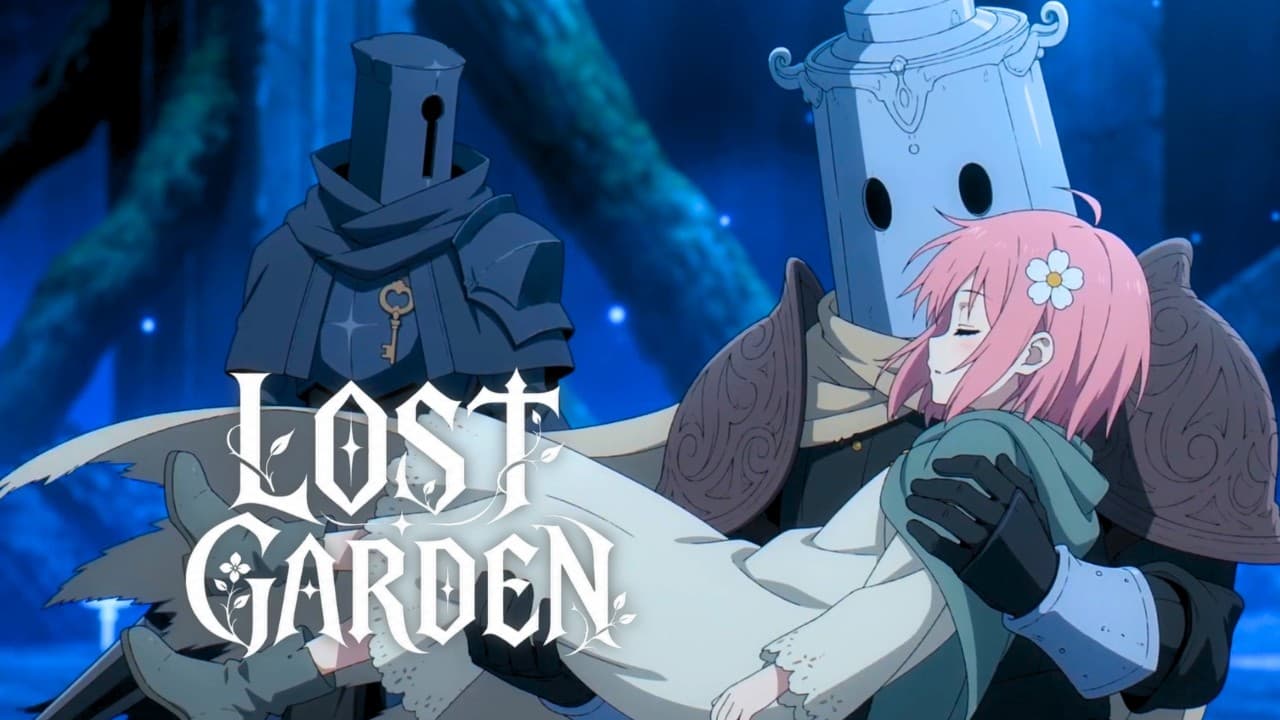
  • Video thumbnail for Lost Garden

    Lost Garden

    AI animated series pilot

    Festival recognition

    • Finalist

      AI London Festival

The pipeline

Write. Board. Produce.

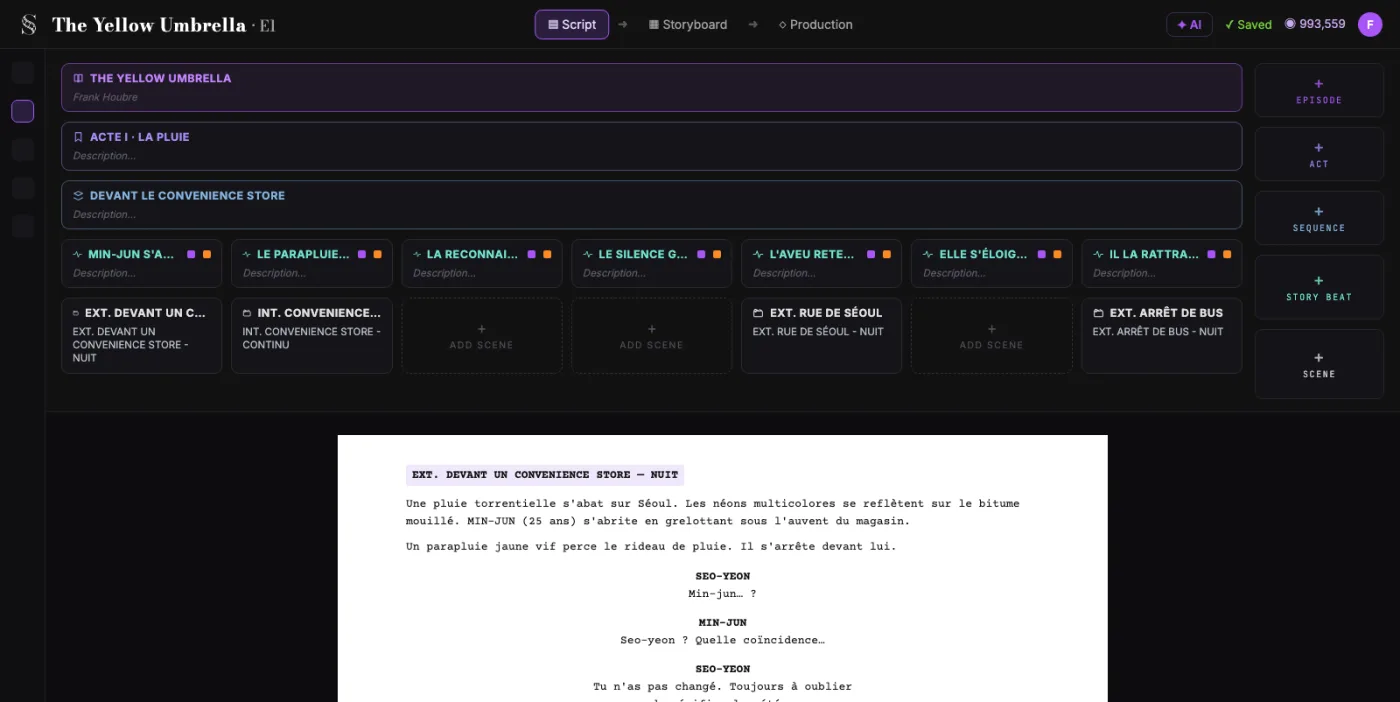
  1. ScreenWeaver screenplay editor: acts, sequences and beats above the formatted script of The Yellow Umbrella

    01The screenplay, enriched

    An industry-standard screenplay editor, and more: a visual outline and beat editor, your writing inspirations (notes, photos, audio) kept next to the page, and an AI researcher to support your writing, not replace it.

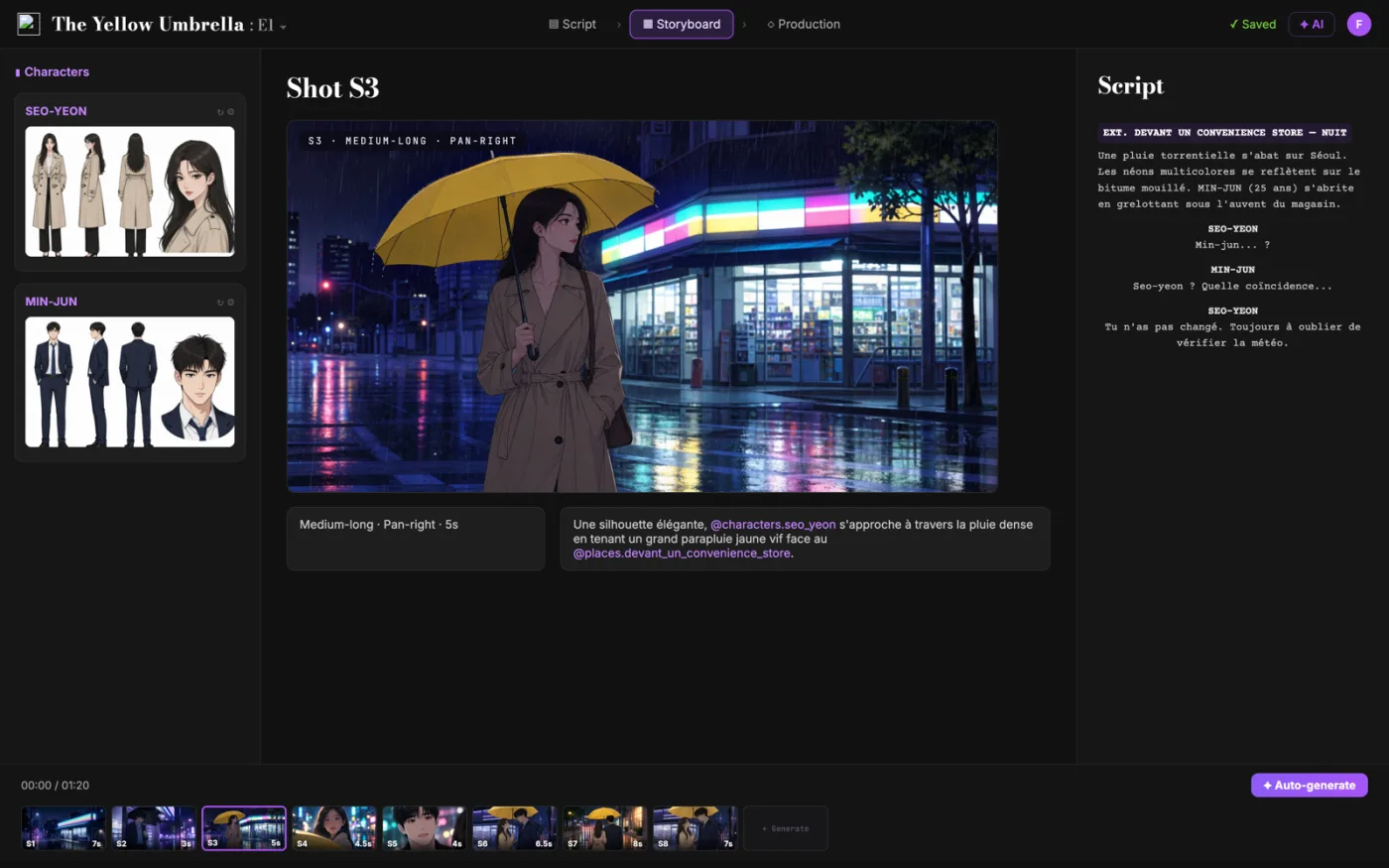
  2. ScreenWeaver storyboard: shot S3 of The Yellow Umbrella with characters, shot settings and the script beside it

    02The storyboard, made easy

    Shot breakdown generated from your screenplay, manual control over every shot (frame, angle, movement, duration), and generative AI previsualization in one click.

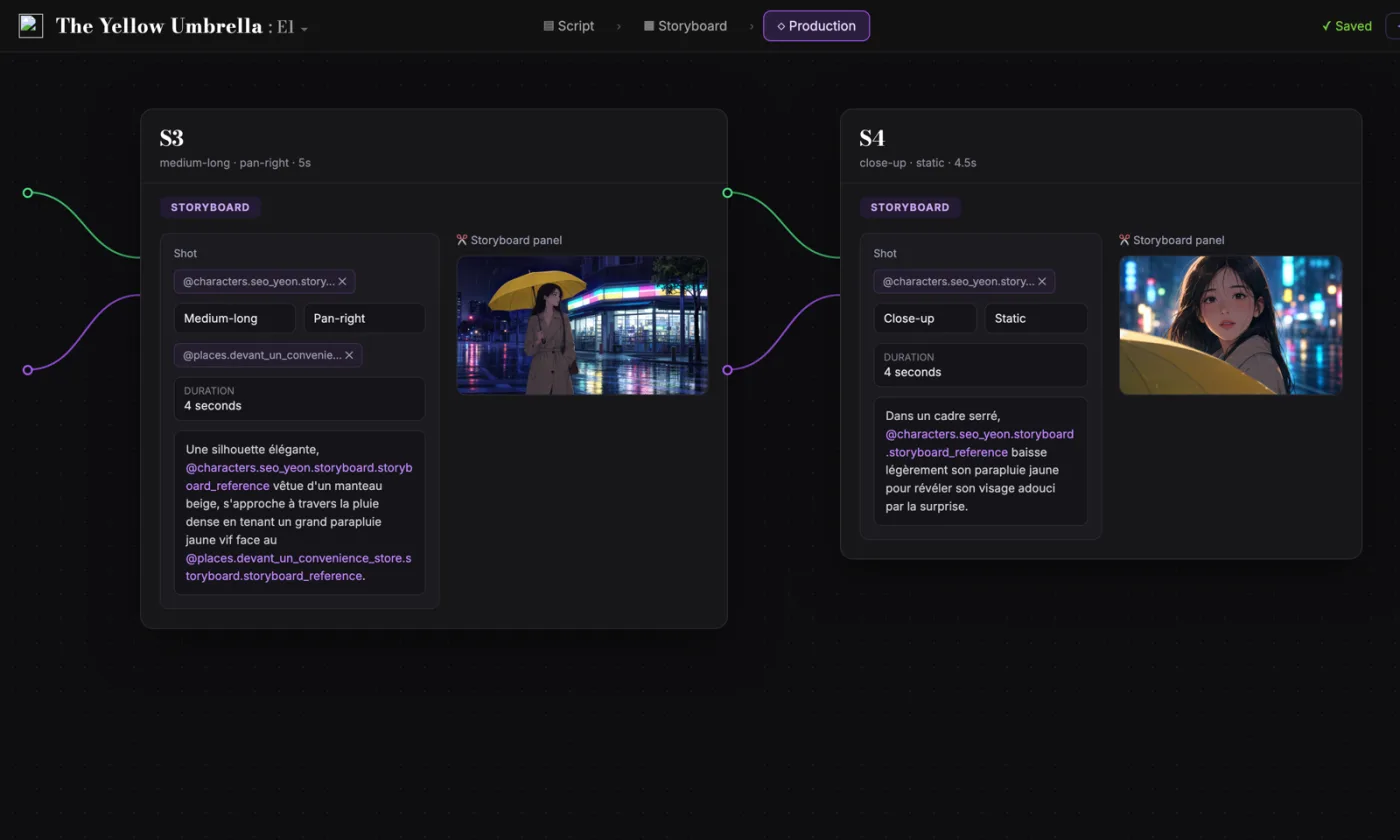
  3. ScreenWeaver production canvas: shots S3 and S4 as connected nodes carrying their storyboard panels and prompts

    03AI production, with finesse

    Footage generation pipelines connected to your screenplay and storyboard. Optimized out of the box, fully editable workflow.

FAQ

Sundance and AI films, your questions

Can you submit an AI film to Sundance?
Yes. The 2027 FAQ says Sundance has no restrictions on the usage of AI technology and requires disclosure of any usage. A failure to disclose could result in disqualification. The 2027 call has closed.
What does Sundance's AI rule say?
Rule 24 makes it the applicant's sole responsibility to disclose any usage or utilization of AI in the making of a project. An omission may lead to disqualification at the Institute's sole discretion.
Must I tell Sundance my film uses AI?
Yes, to the Institute. The rule and the FAQ both require it, and neither asks for a label on screen. Disclose every use and keep a record of tools and tasks.
When is the next deadline?
The 2027 windows closed: shorts on 31 August, episodic content on 11 September and features on 21 September 2026. No 2028 call is published yet. The 2027 call took projects from 1 May 2026, so spring 2027 is the likely start.
What does it cost?
For shorts and episodic content up to 60 minutes, $55 early, $75 official and $95 late in 2027. For features and longer episodic content, $80, $100 and $125. There are no fee waivers.
How long can a short be?
Under 50 minutes, credits included. From 50 minutes a project is a feature. There is no minimum length for a short.
Does my short need to be a premiere?
Not strictly. The FAQ says a short completed after 31 December 2025 can be submitted whatever its premiere status. Rule 11 gives a different date and the Rules prevail over the FAQ, so ask programming@sundance.org if your film is already online.
Can I submit a series or a pilot?
Yes, as Episodic Content. Up to 60 minutes costs the same as a short, and longer projects cost as much as a feature. Deliver one continuous video file or link, since Sundance does not accept separate episode links.

The call is closed. The page is open.

Write the screenplay free today and keep your disclosure file from the first prompt.