Toronto International Film Festival · AI films guide

Can you submit an AI film to TIFF?Yes, if you say so on the form.

TIFF accepts films made with AI and requires you to disclose it at submission. The exact wording, the two questions on the form, the shorts rules and a plan for the 2027 call, which TIFF has not dated yet. Then make the film in ScreenWeaver, from first page to final shot.
  • AI accepted, disclosure mandatory
  • Shorts: 40 minutes or under
  • 2027 call not dated yet
Lost Garden · Episode 1

Independent guide. ScreenWeaver does not organise the Toronto International Film Festival and is not affiliated with TIFF. Rules read on 1 October 2026. Official submissions page

Available today in ScreenWeaver: free screenwriting, and a storyboard generated from your screenplay with Storyboard Beta, $9.99 a month.

Rolling out: video generation of each shot, powered by Seedance, with the Filmmaker plan.

The rules on one card

What TIFF asks of a short film.

TIFF is a general festival, not an AI festival. Its 2026 submissions FAQ has one question about AI, number 18, and every other rule applies to your film as it does to any other.
Last festival
10 to 20 September 2026, 51st edition
2027 call
Announced for 2027, no date yet
Last cycle
Opened 27 February, closed 8 May 2026
Fee, international short
75 CAD early-bird, 95 CAD standard
Short runtime
40 minutes or under, credits included
AI films
Accepted, with disclosure on the form
Premiere status
World, International or North American
Decision and delivery
Before 14 August, final film by 21 August 2026

Source: the 2026 Festival Submissions FAQ (question 18) and tiff.net/submissions, read on 1 October 2026. The 2027 FAQ is not published, and TIFF says its Terms and Conditions prevail over the FAQ: read both when the call opens.

What the rules say about AI

One question, six things to know.

Here is the whole AI position, quoted from the 2026 FAQ. No 2027 text exists yet, so this is the best guide to what TIFF will ask next.
  • The answer is yes

    Question 18 asks whether TIFF accepts films with content created using AI. The answer starts with one word: “Yes.” Then it asks you to disclose the use of AI at submission, “and provide as much detail as possible as to which components of the Film this applies to.”

  • Two questions on the form

    The custom FilmFreeway form asks: “Have you used Generative Artificial Intelligence or Artificial Intelligence (AI) in the creation of this production?” and, if so, “please detail how and where AI was used in the production.” Answer both in full sentences.

  • What a missing answer costs

    If a film uses AI and the form does not say so, it “may no longer be eligible for submission and/or inclusion in the Festival, at TIFF's sole discretion.” The penalty reaches inclusion too, so honesty at the start is cheaper than an explanation later.

  • How much detail is enough

    TIFF gives no template, only “as much detail as possible”, component by component. Our suggestion: name the parts (screenplay, images, video, voices, music, subtitles), the tool and its role in each, and what stayed human. Three honest lines beat one vague sentence.

  • No ban, no quota

    The FAQ sets no AI share, lists no forbidden tool and creates no AI section. Premiere status, runtime, completion date and subtitles apply to every film. The disclosure is a condition, not a verdict on your work.

  • What the FAQ does not say

    It says nothing on how programmers weigh AI use, on clearing the rights to AI output, or on 2027. In a conflict the Terms and Conditions win, and they carry the Intellectual Property, Legal Claims and Indemnities section. Write to submissions@tiff.net for anything unclear.

The 2026 calendar

Dates to plan with, not to trust.

TIFF has not announced 2027 dates. Its page says only that <b>submissions will open for the 52nd Festival in 2027</b>. Below is the 2026 cycle, the best guide to the shape of the next one.
  1. 27 Feb 2026

    Submissions opened

    Everything goes through FilmFreeway and nowhere else. No emailed screeners, no DVDs.

  2. 27 Mar 2026

    Early-bird deadline

    11:59 pm ET. International shorts cost 75 CAD at this stage, Canadian shorts 50 CAD.

  3. 8 May 2026

    Standard deadline

    11:59 pm ET, last day. International shorts 95 CAD, Canadian shorts 75 CAD. An incomplete file can be disqualified.

  4. 14 Aug 2026

    Decisions by

    Verdicts came through FilmFreeway before this date. TIFF does not phone or email, and gives no individual feedback.

  5. 10 to 20 Sep 2026

    The 51st festival

    Invited films had to deliver their final version by 21 August. The 52nd edition follows in 2027.

Who decides

A programming team, then separate prizes.

TIFF publishes no jury for the submissions stage. Its FAQ does say who watches your film, how, and what can happen to it next.
  • The programming team

    Every submission is reviewed by TIFF's programming team. Programmers also watch films offline, so a play counter on your Vimeo link tells you little. Only one version of the screener is accepted, and review can take several weeks.

  • Referral between programmers

    A programmer who thinks another section or category suits your film can refer it internally, at their sole discretion. Choose the category that is true and let them move it: the placing is theirs.

  • Awards after the programme

    Prizes go to films already invited. In 2026 the Short Cuts awards paid 10,000 CAD each for best international, Canadian and animated short, according to press coverage. The first job is the invitation.

  • The audience

    TIFF runs a public vote for its People's Choice Awards. In 2026 all four winners were features. A short has little history there, so aim at the programme, not the ballot.

Where a film can go

Four doors, two of them open to you.

TIFF has no AI section. Your film enters as a short or a series, and programmers place it. These are the doors the FAQ describes, and what each means for an AI film.
  • 01

    Shorts

    Canadian Shorts and International Shorts, 40 minutes or under with credits. Short documentaries may enter too.

    The natural door. Choose Canadian or International by the director and the country of production, not by where you filmed. One category only.

  • 02

    Primetime

    Fiction or documentary series, Canadian or international. At least two chronological episodes, 60 minutes combined, nothing already public online in North America.

    A fit for an AI series if you hold two finished episodes with the same faces and the same look. Post nothing in North America before the verdict.

  • 03

    Wavelengths

    A curated showcase of artist film and video. TIFF takes no unsolicited entries: only films invited by programmers can submit.

    Do not apply. If you are invited, the invitation is the news. Requests for an invitation are not answered.

  • 04

    TIFF: The Market (XR)

    The festival refuses submissions that need virtual or augmented reality. The FAQ says the Market supports projects that use or require them.

    An immersive AI piece belongs there, not in the festival categories. It is a different application, so read the Market's programme.

The 2026 edition

What TIFF 2026 teaches.

The 51st edition ran from 10 to 20 September 2026, and its awards were announced on 20 September. Four lessons for a first AI submission, drawn from the rules and from press coverage of the winners.

  1. 01

    No AI film shows up in the winners. I found no public list of AI films in the 2026 programme, so there is no precedent to lean on. Expect to be judged as a film, not as an experiment.

  2. 02

    Animation competes with animation. Into The Betaverse, by Varun Raman and Tom Hancock, took Best Animated Short, and MAMMALIA, by Elia Kalogianni, Best International Short. An AI animated short meets every other animated short.

  3. 03

    Audience prizes went to features. The four People's Choice winners were all features. A short earns its place through programmers, so the first minute and the finish matter most.

  4. 04

    The calendar is long. Decisions came before 14 August for a September festival, and invited films delivered by 21 August. Submit the cut you want judged: TIFF watches one version.

From page to screen

Lost Garden: the Source Tree scene.

A programmer opens your screener asking one thing: does this film know what it is? The scene below comes from Lost Garden, episode 1, an animated series the ScreenWeaver team made with Seedance. The screenplay page, then each shot as a storyboard frame and as the final image: writing, image and motion, the very components TIFF asks you to name.

Logline. A small knight wakes up in a dead world and learns he is the last guardian of a seed that could bring the garden back.

Screenplay · episode 1 · the Source Tree

INT. HEART OF THE ROOTS - NIGHT

Living roots coil around LANTERN and pin him down. A voice stops them.

THE SOURCE TREE

Stop. He is my guest.

A giant woman of roots and white lilies opens her arms over the cavern.

Her eyes open. Blue, and vast.

THE SOURCE TREE

Welcome to you, Lantern Knight.

She lifts him in her palm, like a lamp.

THE SOURCE TREE

Do not be afraid. I will not harm you.

In the dark, a seed of light opens. Inside the flower, a sleeping child.

THE SOURCE TREE

You must find yours. Protect her.

CUT TO:

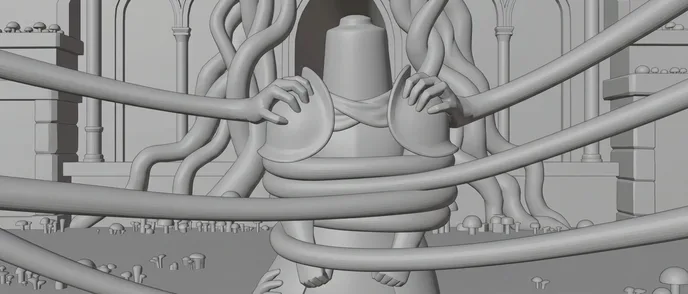
  1. A small lantern-helmed knight bound by thick roots in a ruined hall
    Storyboard frame of the trap shot, in grey
    01

    Medium · the trap

    Medium shot, Lantern bound by thick living roots in a ruined hall, glowing blue mushrooms on the floor, cold light

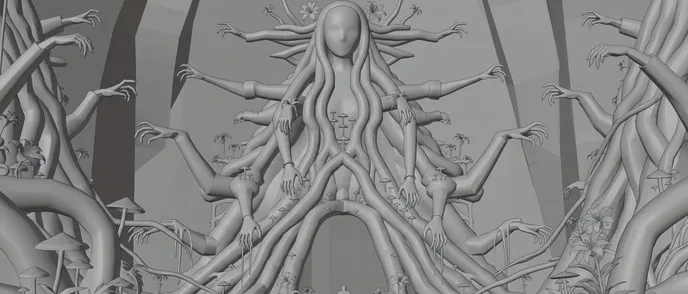
  2. A giant woman made of roots and white lilies spreads her many arms in a dark cavern
    Storyboard frame of the wide shot, in grey
    02

    Wide · the Source Tree

    Symmetrical wide shot, a giant woman made of roots, arms spread with many hands, white lilies, blue glyphs

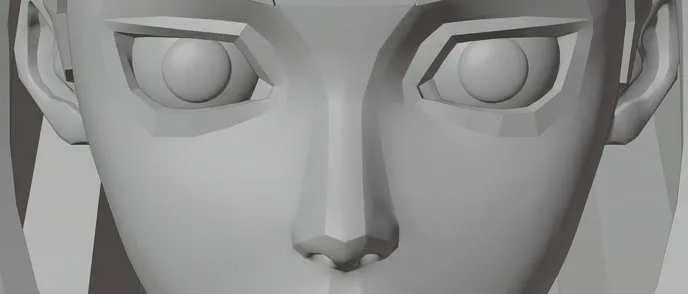
  3. Extreme close-up of a giant pale face with piercing blue eyes
    Storyboard frame of the eyes close-up, in grey
    03

    Extreme close-up · the eyes

    Extreme close-up on the giant's face, piercing blue eyes opening, pale skin, soft light from below

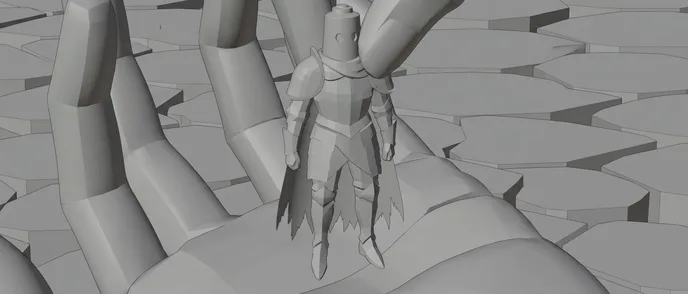
  4. A tiny armored knight stands in the middle of a giant open hand
    Storyboard frame of the palm shot, in grey
    04

    High angle · the palm

    High angle, the tiny knight standing in the center of a giant open palm, stone floor far below

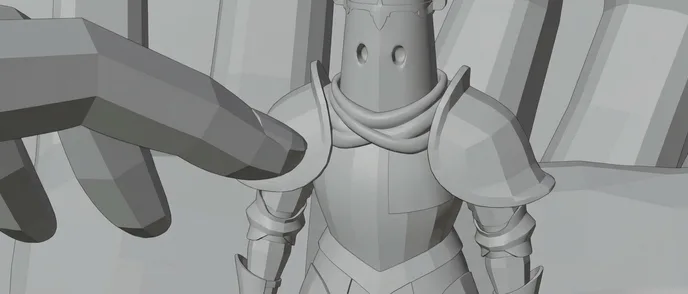
  5. A giant fingertip gently touches the chest of a small armored knight
    Storyboard frame of the touch close-up, in grey
    05

    Close-up · the touch

    Close-up, a giant fingertip gently touches the knight's armored chest, faceless helm, emotion through posture

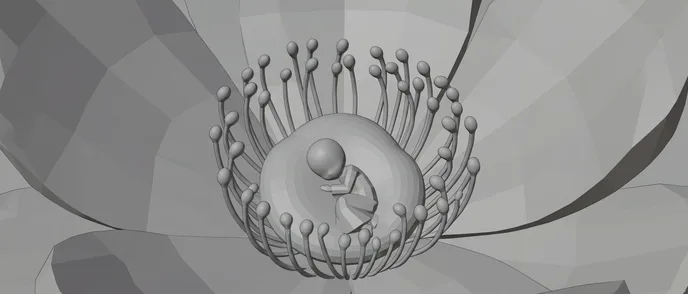
  6. A sleeping pink-haired child curled inside a glowing blue flower
    Storyboard frame of the seed insert, in grey
    06

    Insert · the seed

    Top-down insert, a glowing pale blue flower opening, a sleeping child with pink hair curled inside

Lost Garden, episode 1, 17 minutes, well under the 40 minute ceiling TIFF sets for shorts, credits included. A finalist at the AI London Festival. A film like this would enter through the shorts door, with its AI use declared component by component. The player opens on this scene.

The script

A 12 minute short in five movements.

TIFF shorts can run to 40 minutes, but programmers watch fast and see one version. Aim for 12 minutes: about 12 screenplay pages and 120 to 160 shots of 4 to 6 seconds.
  1. 0:00 to 1:00

    The promise

    In one minute a programmer must know what kind of film this is. One image, one rule of the world.

  2. 1:00 to 3:00

    The ordinary day

    The want and the obstacle, in as few shots as you can.

  3. 3:00 to 7:45

    The pressure

    Each scene costs the character something. Cut every shot that only shows what the model can do.

  4. 7:45 to 10:15

    The decision

    The scene the film exists for. Hold the shot and let the sound carry it.

  5. 10:15 to 12:00

    The aftermath

    A last image that rhymes with the first. The credits count toward the 40 minutes.

A film not in English needs English subtitles on the screener. Burn them in, and write the runtime with credits on the form.

Month by month

From now to the opening of the call.

TIFF has not opened the 2027 call, so use the months to finish a film, not to rush one. If the 2026 calendar repeats, the call opens in late February and the early-bird deadline falls in late March. That is an inference, not an announcement.
  1. 01

    October 2026

    Choose the format and the door

    A short under 40 minutes with credits, or two episodes of 60 minutes combined for Primetime. A 45 minute film has no category.

  2. 02

    November 2026

    Write the screenplay

    Free in ScreenWeaver, in industry format. Read it aloud and cut whatever does not move the story.

  3. 03

    December 2026

    Storyboard and references

    Generate the shot breakdown, then fix framing and duration shot by shot. Approve one reference per character and set, and start a log of every tool you use.

  4. 04

    January 2027

    Generate the footage

    Scene by scene from the storyboard. Write down tool, version and role for each scene in plain words. This log becomes your answer to the AI question.

  5. 05

    February 2027

    Edit, sound, subtitles

    Cut to the runtime with credits, mix, add English subtitles if needed. TIFF takes work in progress but watches one version: submit when that version is the one you want judged.

  6. 06

    When the call opens

    Read the new FAQ, then submit once

    Check the 2027 FAQ and Terms for changes to the AI question. Fill both disclosure fields, pick one category, keep your premiere status clean and pay once: fees are never refunded.

Ways to lose a film

Eight rules that end a submission early.

Every one comes from the 2026 FAQ. Check each again in the 2027 version, since TIFF can change them.
  • Not saying you used AI

    If the form does not disclose AI use, the film may no longer be eligible for submission or inclusion. TIFF decides at its sole discretion.

  • A vague disclosure

    Answering yes and nothing more skips the second question. TIFF asks how and where AI was used, with as much detail as possible by component.

  • Posting the film online

    A film publicly posted or exhibited online in North America is not eligible. Geoblocked outside North America is still fine, and a trailer or clip may be public. Keep the full film private.

  • Burning your premiere

    Films need World, International or North American premiere status. A public screening in Canada before the festival leaves no status at all, and such a film is not eligible. A Canadian premiere is accepted only at TIFF's discretion.

  • A runtime in the dead zone

    Shorts run 40 minutes or under including credits, features 60 minutes or over. Nothing in between is accepted.

  • No English subtitles

    If the original language is not English, the screener must carry English subtitles. Synthetic voices count as dialogue.

  • Submitting too early

    A film already submitted to a previous edition is not eligible again, even if that version was a work in progress. TIFF can disqualify it.

  • Two categories, no refund

    One category per film. Fees are not refunded under any circumstances, and a file incomplete at 11:59 pm ET on the final day can be disqualified.

Why ScreenWeaver

TIFF asks what AI did. ScreenWeaver keeps the record.

ScreenWeaver is one project from screenplay to footage: script, storyboard and shots stay connected. TIFF imposes no tool, so what counts is the film and your honesty about how it was made.
  • A disclosure written as you work

    Every shot keeps a link to its scene, its storyboard frame and its prompt. When TIFF asks which components used AI, the answer is already in the project.

  • One screener, one chance

    Characters, locations and references carry from shot to shot, so the single version you send already holds together from the first image to the last.

  • A short today, a series tomorrow

    The same project can become a 12 minute short for the shorts door or two episodes for Primetime. Films, series and short dramas are all formats you can pick.

  • Start for free today

    Writing is free on the Screenwriter plan, $0 with no expiry. Storyboard Beta costs $9.99 a month, and video generation arrives with the Filmmaker plan.

Real productions

International festival-recognized films have been written and produced with ScreenWeaver.

ScreenWeaver is already being used as a creative workspace for real AI film productions, from cinematic shorts to animated series pilots selected, nominated, and awarded by international festivals.

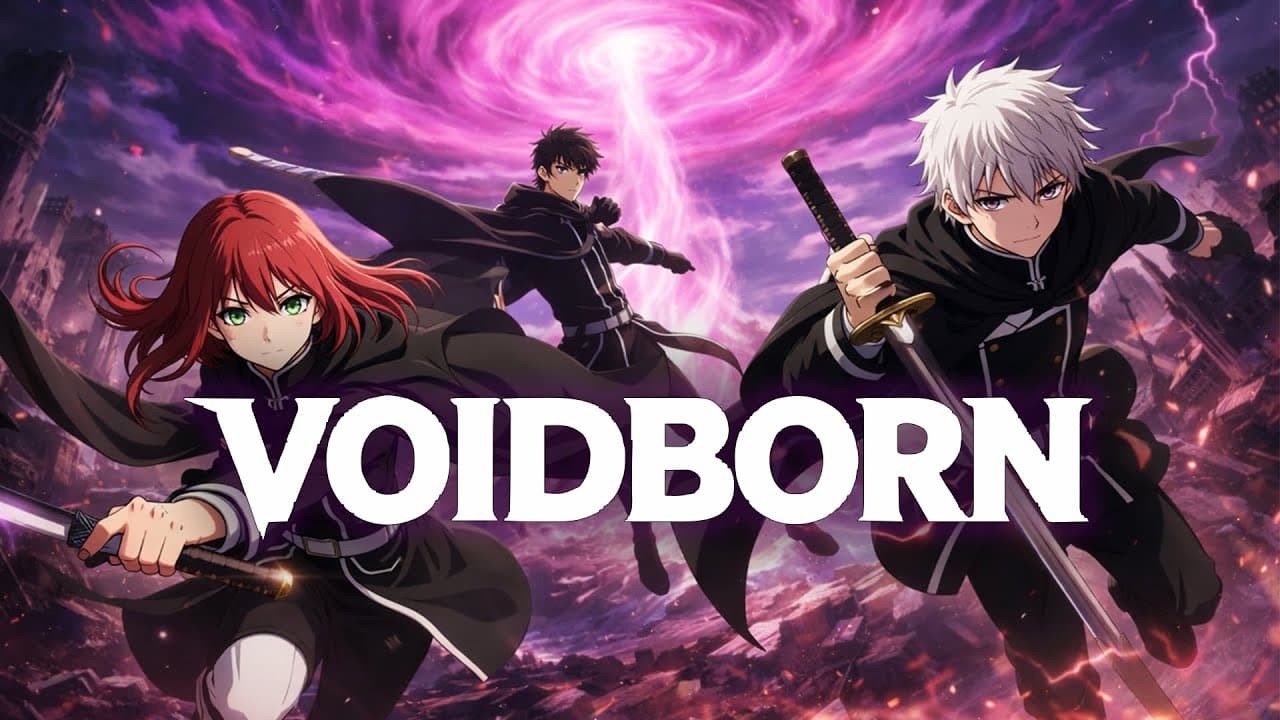
  • Video thumbnail for VOIDBORN

    VOIDBORN

    AI animated / cinematic short

    Festival recognition

    • 1st Place Silver

      Mondial Chroma Awards

    • 2nd Place Dreamina

      Mondial Chroma Awards

    • Award Winner

      Seoul International AI Film Festival

  • Video thumbnail for Les Fils du Vinnana

    Les Fils du Vinnana

    AI short film

    Festival recognition

    • Honorable Mention

      Top Quark Film Festival

    • People's Choice Nominee

      Illuminate Oneness of Humanity

    • Nominee

      ALTFF Supershort

  • Video thumbnail for Lost Garden

    Lost Garden

    AI animated series pilot

    Festival recognition

    • Finalist

      AI London Festival

The pipeline

Write. Board. Produce.

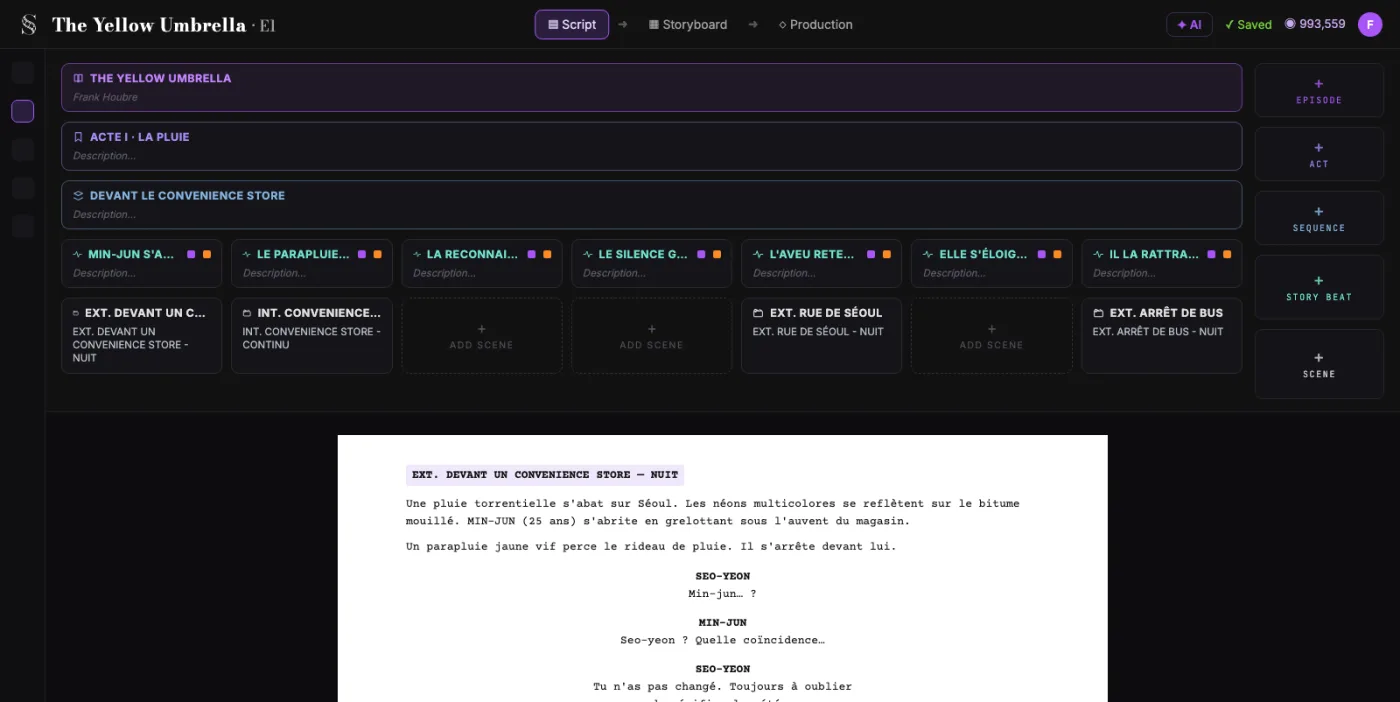
  1. ScreenWeaver screenplay editor: acts, sequences and beats above the formatted script of The Yellow Umbrella

    01The screenplay, enriched

    An industry-standard screenplay editor, and more: a visual outline and beat editor, your writing inspirations (notes, photos, audio) kept next to the page, and an AI researcher to support your writing, not replace it.

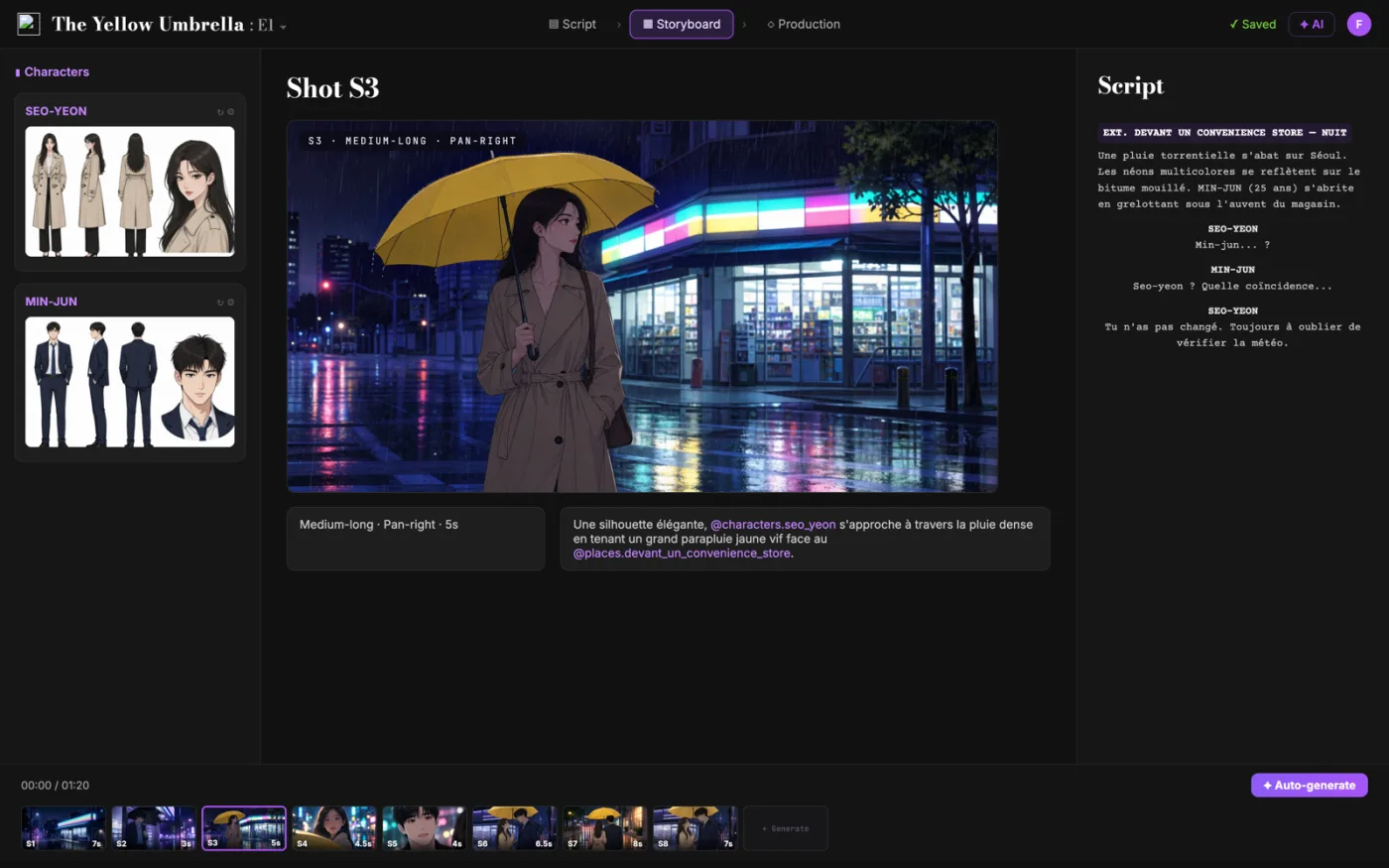
  2. ScreenWeaver storyboard: shot S3 of The Yellow Umbrella with characters, shot settings and the script beside it

    02The storyboard, made easy

    Shot breakdown generated from your screenplay, manual control over every shot (frame, angle, movement, duration), and generative AI previsualization in one click.

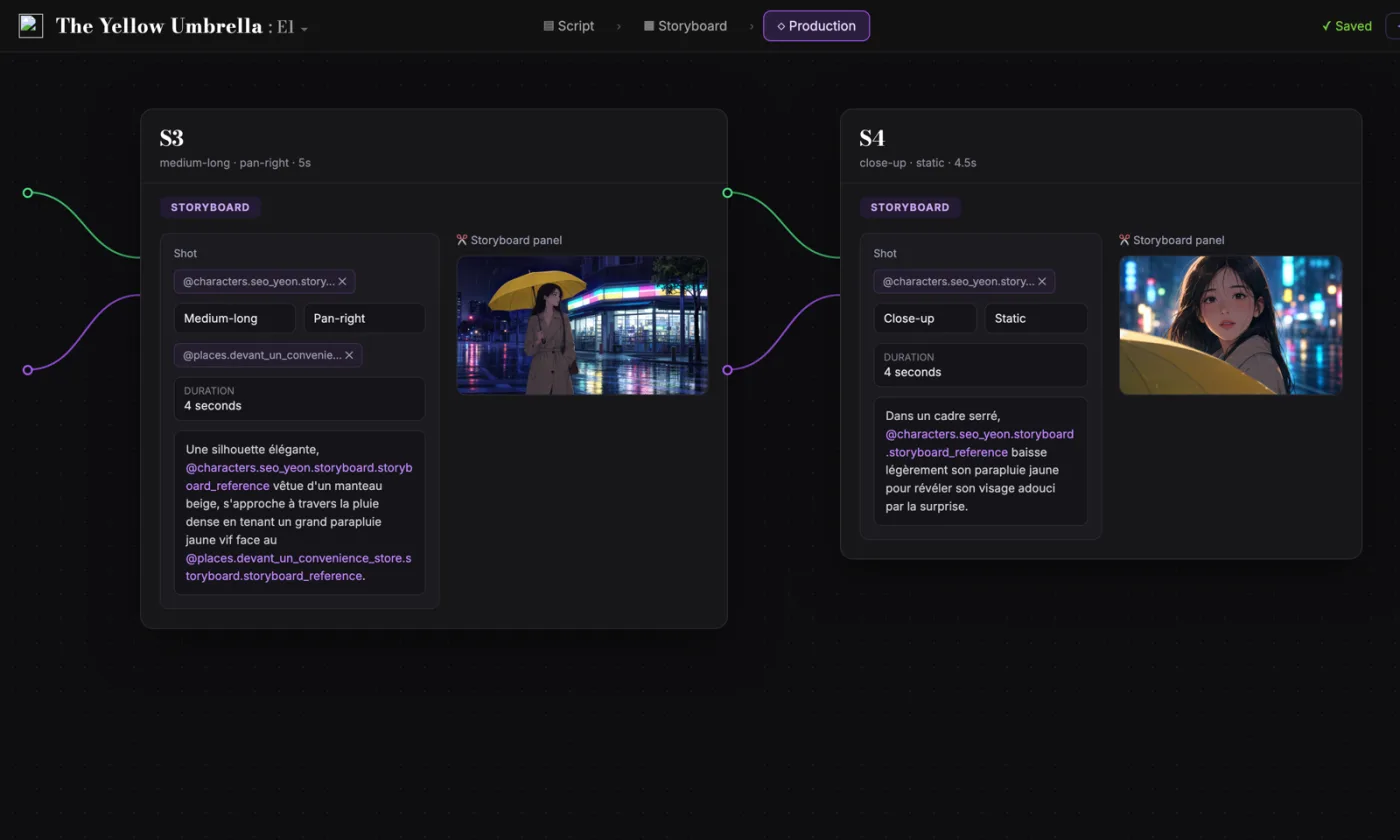
  3. ScreenWeaver production canvas: shots S3 and S4 as connected nodes carrying their storyboard panels and prompts

    03AI production, with finesse

    Footage generation pipelines connected to your screenplay and storyboard. Optimized out of the box, fully editable workflow.

FAQ

TIFF and AI films, your questions

Can you submit an AI film to TIFF?
Yes. The 2026 submissions FAQ, question 18, accepts films with content created using AI and asks you to disclose it at submission, with as much detail as possible about which components use AI. There is no ban and no AI quota.
What exactly does TIFF ask about AI?
Two questions on the custom FilmFreeway form: whether you used Generative Artificial Intelligence or Artificial Intelligence in the creation of the production, and, if so, how and where. Answer both fully.
What happens if I do not disclose AI use?
The FAQ says the film may no longer be eligible for submission or inclusion in the Festival, at TIFF's sole discretion. Disclose, and describe it by component.
When is the 2027 deadline?
TIFF has not announced it. Its page says submissions will open for the 52nd Festival in 2027. In 2026 the call opened on 27 February, the early-bird deadline was 27 March and the standard deadline 8 May.
How long can a short be, and what does it cost?
A short runs 40 minutes or under, credits included. In 2026 an international short cost 75 CAD early-bird or 95 CAD standard, a Canadian short 50 or 75 CAD. Fees are not refundable.
Can I post my film online before submitting?
Not if it is public in North America: such a film is not eligible. Geoblocked outside North America is allowed, and a trailer, clip or reel may be public. Keep the full film private until TIFF decides.
Which category does an AI short go in?
Canadian Shorts or International Shorts, by the director's nationality or residence and the country of production. There is no AI category. Programmers may refer your film to another programme.
Can an AI series enter TIFF?
Yes, through Primetime: at least two chronological episodes, 60 minutes combined with credits, and nothing already public online in North America. The same AI disclosure applies.

Finish the film before the call opens.

Write the screenplay for free today. Storyboard it, generate it, and keep the log.