Berlinale 2027 · AI films guide

Can you submit an AI film to the Berlinale?Yes. Short films by 4 November.

The Berlinale's own FAQ says it accepts films that used AI and may ask you for details. The rules, the AI question on the form, and a plan for the five weeks before the short film deadline. Then write and storyboard your film in ScreenWeaver, and generate it when video reaches your plan.
  • Short films: 4 November 2026
  • AI films accepted, with a question
  • Festival 10 to 21 February 2027
Lost Garden · Episode 2

Independent guide. ScreenWeaver does not organise the Berlinale and is not affiliated with the Berlin International Film Festival. Rules read on 1 October 2026. Official submission FAQ

Available today in ScreenWeaver: free screenwriting, and a storyboard generated from your screenplay with Storyboard Beta, $9.99 a month.

Rolling out: video generation of each shot, powered by Seedance, with the Filmmaker plan.

The rules on one card

What the Berlinale asks of a film.

The Berlinale is a general festival, not an AI festival. Its FAQ answers the AI question in two sentences, and every other rule applies to your film as it does to any other.
Festival
10 to 21 February 2027, Berlin
Deadline, short films
4 November 2026
Deadline, features
21 October 2026
Processing fee
€75 for a short, €175 for a feature
Short film limits
30 minutes in Berlinale Shorts, 20 in Generation
AI films
Accepted, more information may be requested
Premiere status
World or international premiere needed
Final version
Due 26 January 2027 if selected

Source: the Film Submission FAQ on berlinale.de, read on 1 October 2026. The festival dates come from Deadline (March 2026), not from the FAQ. The rules can change: check the page before you pay.

What the rules say about AI

A yes with a condition.

The FAQ has one question on AI, in its eligibility section. It is an answer with a condition, not a rule against anything. Here is what it says, what the form asks, and what stays open.
  • The official answer

    The FAQ asks whether films that use AI are accepted. The answer opens with “Yes, we accept submissions that have used AI” and adds that you may be asked for additional information during the submission process. Text read on the festival's page on 1 October 2026.

  • The question on the form

    Festival director Tricia Tuttle said in November 2025 that the form asks: “Have you used AI in any way in the making of this?” Screen Daily reported that she called it research, and that the festival plans no mandatory disclosure, no on-screen AI label and no AI section. Secondary source: check the live form.

  • What the FAQ does not say

    It sets no AI quota, bans no tool and creates no AI section. It does not say how an answer is used in selection. Silence is not a guarantee: the rules are rewritten every year, so read them again before the next call.

  • Where an AI film can go

    Short films go to Berlinale Shorts, up to 30 minutes, or to Generation, up to 20 minutes. Features can aim at Competition, Panorama, Forum or Perspectives. You file one application, even if you list several sections.

  • Our advice on the answer

    Answer in full and in plain words. Name the tools and the stages: script, image, motion, voice, music. Never hide AI use. A false or empty answer puts the whole entry at risk, and the truth costs you nothing under these rules.

Key dates

Features first, shorts two weeks later.

Count the weeks from today, 1 October 2026. Features close in three weeks and short films in five.
  1. 21 Oct 2026

    Feature deadline

    Last day to register a feature-length film. The processing fee is €175 and is not refunded.

  2. 4 Nov 2026

    Short film deadline

    Last day to register a short. The fee is €75, however many sections you list.

  3. Early 2027

    Selection result

    The festival says it will answer as soon as possible and at the latest by the beginning of 2027.

  4. 26 Jan 2027

    Festival version due

    A selected film must reach the Berlinale Film Office by this date, with the subtitles its section requires.

  5. 10 to 21 Feb 2027

    The 77th Berlinale

    According to Deadline, the awards ceremony is on 19 February and the first Audience Days are on 20 and 21 February.

Who decides

Nobody is named, so watch what is.

The FAQ names no committee and no jury. What it does say is what the programmers actually watch, and a director has explained in public why the AI question exists.
  • The screener decides

    No trailer is taken for selection. The programmers want the complete film as an MP4 file or a DCP, with English subtitles, and take rough cuts only in rare cases. Your first minutes are your whole application.

  • The festival director

    Tricia Tuttle told an audience at the International Film Festival of India in November 2025 that the AI question is there to learn how filmmakers use AI, for budgets and schedules as well as images. Expect a research question, not a verdict.

  • The competition jury

    A jury is named for each edition to judge the selected films. In 2026 it was led by Wim Wenders, according to Wikipedia. It does not read submissions, so your audience at this stage is the programming team.

Three doors

Pick the section before you pick the length.

The Berlinale has no AI section and no set themes. It has sections, and the FAQ names the ones that matter to a filmmaker. Under each, the angle we would take for an AI film.
  • 01

    Berlinale Shorts

    Short films of up to 30 minutes, with a Golden Bear and a Silver Bear of their own.

    The natural home of a first AI film. Aim for 12 to 18 minutes: one world and one idea told to the end beats a reel of effects.

  • 02

    Generation

    The section for young audiences, with short films of up to 20 minutes.

    An animated fable suits it, since an AI film can build a child's world without a shoot. Cut to 20 minutes or less and write for a young viewer, not for a demo.

  • 03

    Documentary and animation

    Documentaries can enter Competition, Panorama, Generation, Berlinale Shorts, Forum and Forum Expanded.

    An essay film that uses AI to rebuild what no camera recorded can work. Say what is real and what is generated, in the film and in your answer.

The 2026 edition

Reading the 2026 edition.

The 76th Berlinale ran from 12 to 22 February 2026 with Wim Wenders as jury president. Yellow Letters, by İlker Çatak, won the Golden Bear. The Golden Bear for Best Short Film went to Someday a Child, by Marie-Rose Osta, according to Wikipedia. None of the pages I read mention an AI film among the prizes.

  1. 01

    Shorts have a top prize of their own. A short competes for a Golden Bear and a Silver Bear reserved for short films, so you are not up against features.

  2. 02

    The AI question is research. The director has said so. Answer it plainly and let the film do the talking.

  3. 03

    No AI film shows in the prize lists I read. That is not a ban, since the FAQ says yes. It means you compete on story and craft, and the form is neither a way in nor a way out.

Page to screen

A scene, six shots, one look.

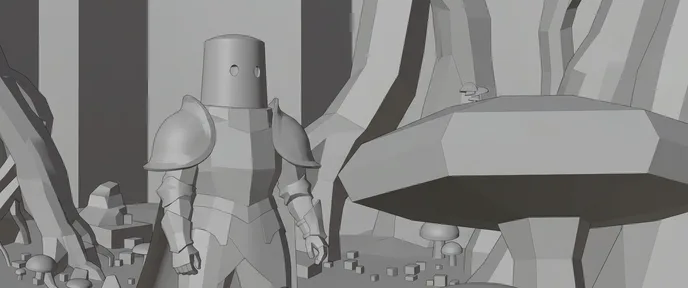
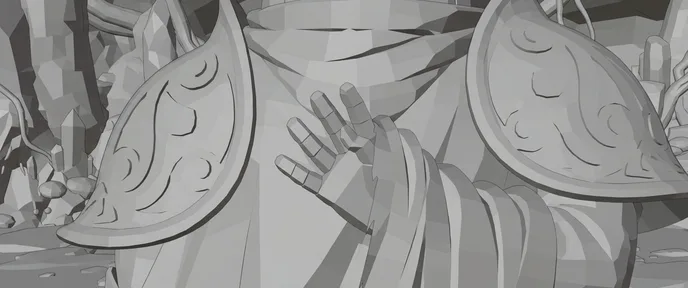
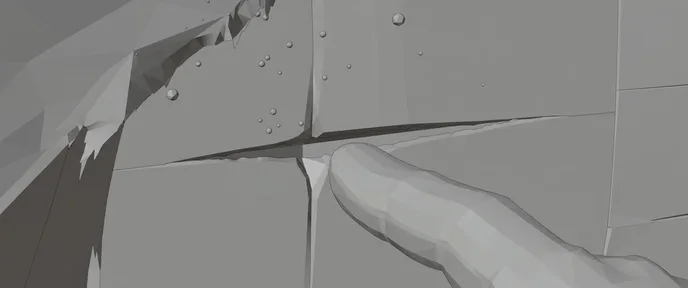
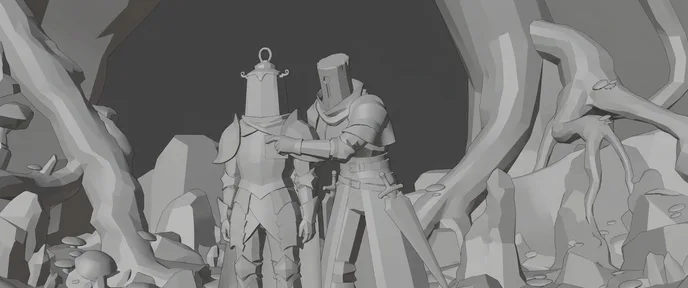
A screener is watched whole, so any drift in a face or a light shows. The scene is the opening of Lost Garden, episode 2, from an animated series by the ScreenWeaver team. Six shots follow the page, each as a storyboard frame and as a final image.

Logline. A newborn knight whose inner light is leaking away crosses a world that has stopped hoping, to find the one blacksmith who can seal his armor.

Screenplay · episode 2 · page 1

INT. UNDERGROUND CAVERN - LOWER PATH - CONTINUOUS

Blue mushrooms the size of houses. LANTERN, a small knight with a lantern for a helm, walks alone.

He presses a hand to his chest. Sparks of light slip between his fingers.

SERRURE

Hold on. You're losing something.

Serrure lifts the edge of the cloak. A gash in the armor. Blue light leaks out like smoke.

SERRURE

That's your energy. What keeps you standing.

He grips Lantern's shoulder. Two knights alone among the crystals.

SERRURE

A suit that leaks goes out. Eventually.

Under the giant mushrooms, the road climbs into the dark.

SERRURE

So. We follow the road.

Serrure points the way. Lantern follows.

CUT TO:

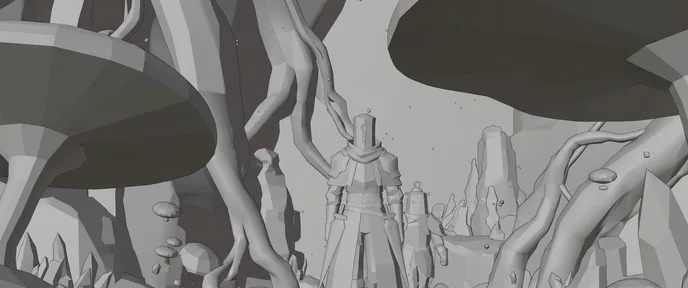
  1. A small knight with a lantern helm stands by a giant glowing blue mushroom in a crystal cavern
    Storyboard frame of the same wide shot, in grey
    01

    Wide · the world

    Wide shot, Lantern alone by a giant glowing blue mushroom, crystal cavern, roots, drifting spores, cold blue light

  2. Close-up of an armored chest under a cream cloak, a gloved hand, a spark of light
    Storyboard frame of the chest close-up, in grey
    02

    Close-up · the chest

    Close-up on Lantern's chest, his gloved hand pressed to the cloak, a spark of light escaping between the fingers

  3. A torn gash in an armor plate leaking bright blue light, a finger pointing at it
    Storyboard frame of the wound insert, in grey
    03

    Insert · the wound

    Extreme close-up, Serrure's finger near a torn gash in the back plate, blue light leaking out like luminous smoke

  4. Two armored knights side by side, one with a hand on the other's shoulder, in a crystal cavern
    Storyboard frame of the two-shot, in grey
    04

    Two-shot · the bond

    Medium two-shot among crystals and roots, Serrure's hand on Lantern's shoulder, faceless armors, emotion through posture only

  5. Two small knights walk beneath two giant glowing blue mushrooms
    Storyboard frame of the wide shot, in grey
    05

    Wide · the scale

    Wide low angle, the two knights tiny beneath two giant glowing mushrooms, blue crystals in the foreground, mist

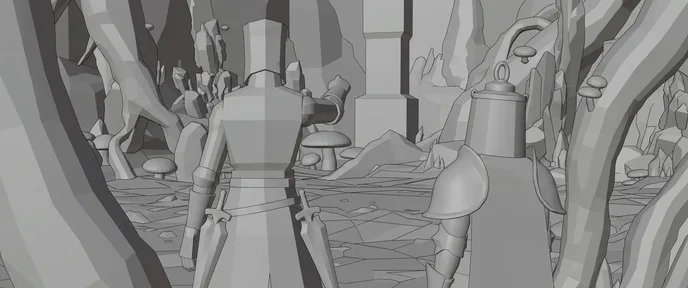
  6. Seen from behind, a tall dark knight points ahead while the small lantern knight looks on
    Storyboard frame of the over-the-shoulder shot, in grey
    06

    Over the shoulder · the road

    Over-the-shoulder from behind, Serrure points ahead into the cavern, Lantern beside him, roots framing the path

Lost Garden, episode 2 runs 21 minutes and was made with Seedance. It fits under the 30 minutes of Berlinale Shorts, and sits one minute over the 20 of Generation, where it would need a cut. Press play to land on the scene above.

The script

A 14 minute short in five movements.

Berlinale Shorts takes up to 30 minutes and Generation up to 20. Aim for 14 minutes: about 14 screenplay pages and 130 to 170 shots of 4 to 6 seconds, which leaves room for the credits.
  1. 0:00 to 1:00

    The first minute

    The screener is the whole application. Give one image and one question.

  2. 1:00 to 3:30

    The world and its rule

    Who we follow, what they want, and the one visual rule this film will hold.

  3. 3:30 to 9:30

    The descent

    Each scene costs the character more. Cut every shot that only shows what the tool can do.

  4. 9:30 to 12:00

    The decision

    The scene this short was written for. Let the sound carry it.

  5. 12:00 to 14:00

    The echo

    A closing image that echoes the opening one. Then the credits.

A film in another language needs English subtitles for selection. Keep a clean master without them for the festival version.

Week by week

From today to the 4 November deadline.

You have 34 days. That is tight for a new film and comfortable for a nearly finished one. If you start from nothing, read this as the plan for the next call.
  1. 01

    1 to 7 October

    Choose the section and the length

    Berlinale Shorts takes 30 minutes at most and Generation 20. Write five loglines, tell them to five people and keep the one they repeat back.

  2. 02

    8 to 14 October

    The screenplay

    Fourteen pages and little dialogue. Write it free in ScreenWeaver, in industry format, and read it out loud.

  3. 03

    15 to 21 October

    Characters, sets, storyboard

    Pin down each character and each set once, then generate the storyboard from the screenplay and adjust framing and duration shot by shot.

  4. 04

    22 to 28 October

    Generate the footage

    Scene by scene, with Seedance in ScreenWeaver as video generation reaches your plan. Keep every prompt and every version: you may be asked how AI was used.

  5. 05

    29 October to 2 November

    Edit, sound, English subtitles

    Cut to length, mix the sound and add the subtitles. Export a complete MP4 (H.264, AAC, stereo). No trailer and no rough cut.

  6. 06

    3 and 4 November

    Register with your AI answer

    On the Berlinale's own website. Describe the tools and the stages in a few specific lines, then pay the €75 fee.

  7. 07

    If selected

    The festival version by 26 January

    Deliver to the Berlinale Film Office with the subtitles the section requires. A German version is also asked for Competition and Berlinale Special Gala.

Ways to lose a spot

Eight mistakes the FAQ makes easy.

Almost all of them sit in the eligibility and delivery answers. Check each one before you pay the €75.
  • A vague answer on AI

    The festival may ask for more information. Answer in a few specific lines: tools, stages, who did what. The answer is the one thing in this process you fully control.

  • No premiere status

    A world or international premiere is needed. A film with only a German premiere, or none, is ineligible. German productions need a world premiere for Competition and Berlinale Shorts.

  • A film already online

    A film published online, released on video on demand or shown at an online festival is ineligible. Password-protected submission links are the one exception. Keep the film private until you have your answer.

  • No English subtitles

    A film not in English needs English subtitles for selection. Selected for Competition or Berlinale Special Gala, it also needs German ones, unless the original is English or German.

  • A trailer or a rough cut

    A trailer does not replace the film, and a rough cut is taken only in rare cases. Send the complete version.

  • Sending the film twice

    A film that was rejected cannot be sent again, and fees for ineligible films are not refunded. Send your best cut, once.

  • The wrong channel

    Submissions go through the Berlinale's own website, not FilmFreeway or Withoutabox. A DCP is accepted only in exceptional cases, with a €250 handling fee.

  • The wrong length for the section

    Berlinale Shorts stops at 30 minutes and Generation at 20. Check the limit of your section before the final edit, not after.

Why ScreenWeaver

The Berlinale asks the question. Your project holds the answer.

The Berlinale imposes no tool and asks only a question. ScreenWeaver keeps screenplay, storyboard and footage in one connected project, so the answer to that question is already written.
  • A record of how the film was made

    Every shot links back to its scene, its storyboard frame and its prompt. When the festival asks how AI was used, you read the answer off the project.

  • A short that holds together

    Characters, sets and references are defined once and reused in every shot. Programmers watch a complete screener, and a face that changes at minute six shows.

  • One screenplay, two lengths

    The same project can become a 14 minute short for Berlinale Shorts or a 20 minute cut for Generation. You decide the length before the first shot, not in the edit.

  • Start for free today

    Writing costs $0 and never expires on the Screenwriter plan, so page one can start tonight. Storyboard Beta adds the shot-by-shot frames for $9.99 a month, and the Filmmaker plan will add the Seedance footage.

Real productions

International festival-recognized films have been written and produced with ScreenWeaver.

ScreenWeaver is already being used as a creative workspace for real AI film productions, from cinematic shorts to animated series pilots selected, nominated, and awarded by international festivals.

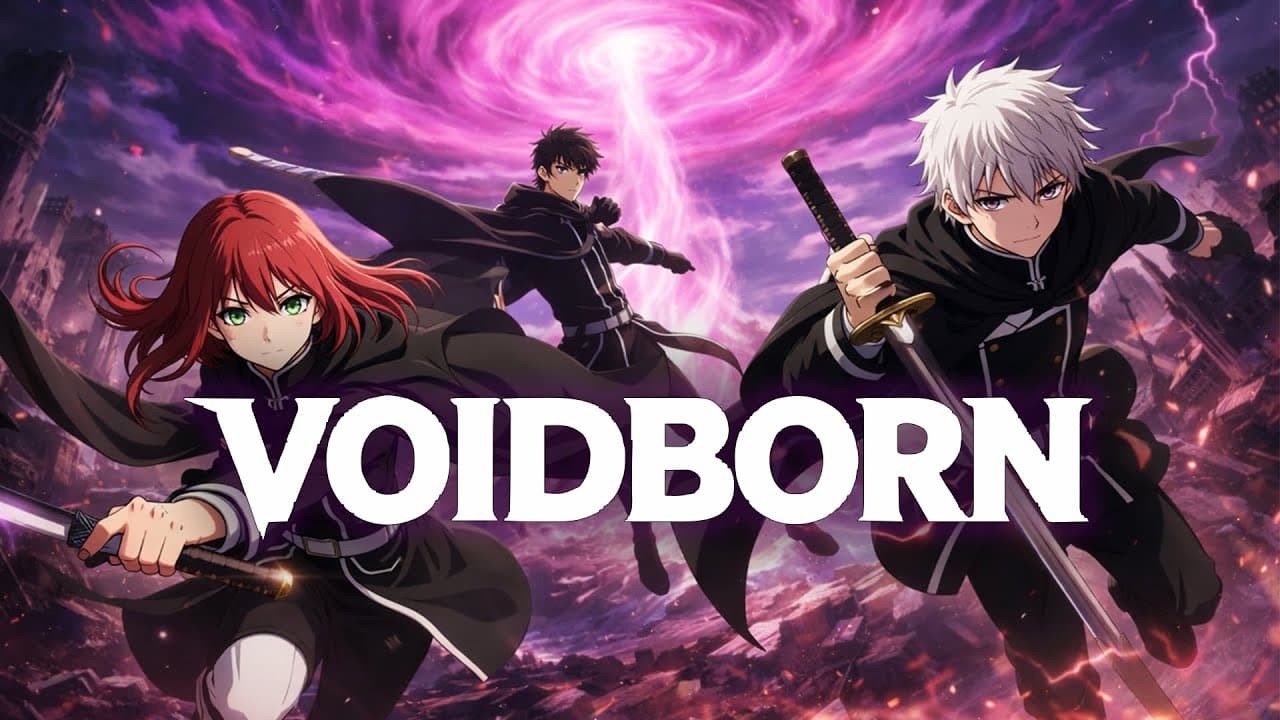
  • Video thumbnail for VOIDBORN

    VOIDBORN

    AI animated / cinematic short

    Festival recognition

    • 1st Place Silver

      Mondial Chroma Awards

    • 2nd Place Dreamina

      Mondial Chroma Awards

    • Award Winner

      Seoul International AI Film Festival

  • Video thumbnail for Les Fils du Vinnana

    Les Fils du Vinnana

    AI short film

    Festival recognition

    • Honorable Mention

      Top Quark Film Festival

    • People's Choice Nominee

      Illuminate Oneness of Humanity

    • Nominee

      ALTFF Supershort

  • Video thumbnail for Lost Garden

    Lost Garden

    AI animated series pilot

    Festival recognition

    • Finalist

      AI London Festival

The pipeline

Write. Board. Produce.

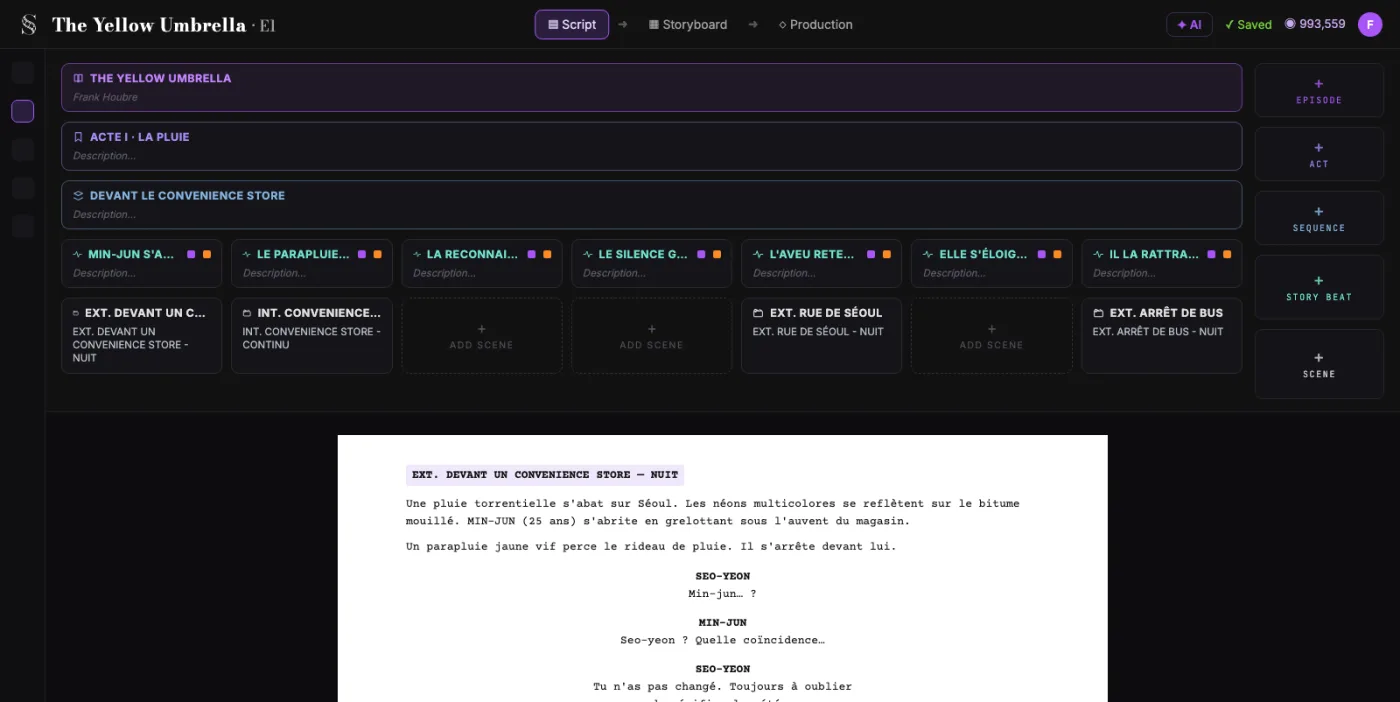
  1. ScreenWeaver screenplay editor: acts, sequences and beats above the formatted script of The Yellow Umbrella

    01The screenplay, enriched

    An industry-standard screenplay editor, and more: a visual outline and beat editor, your writing inspirations (notes, photos, audio) kept next to the page, and an AI researcher to support your writing, not replace it.

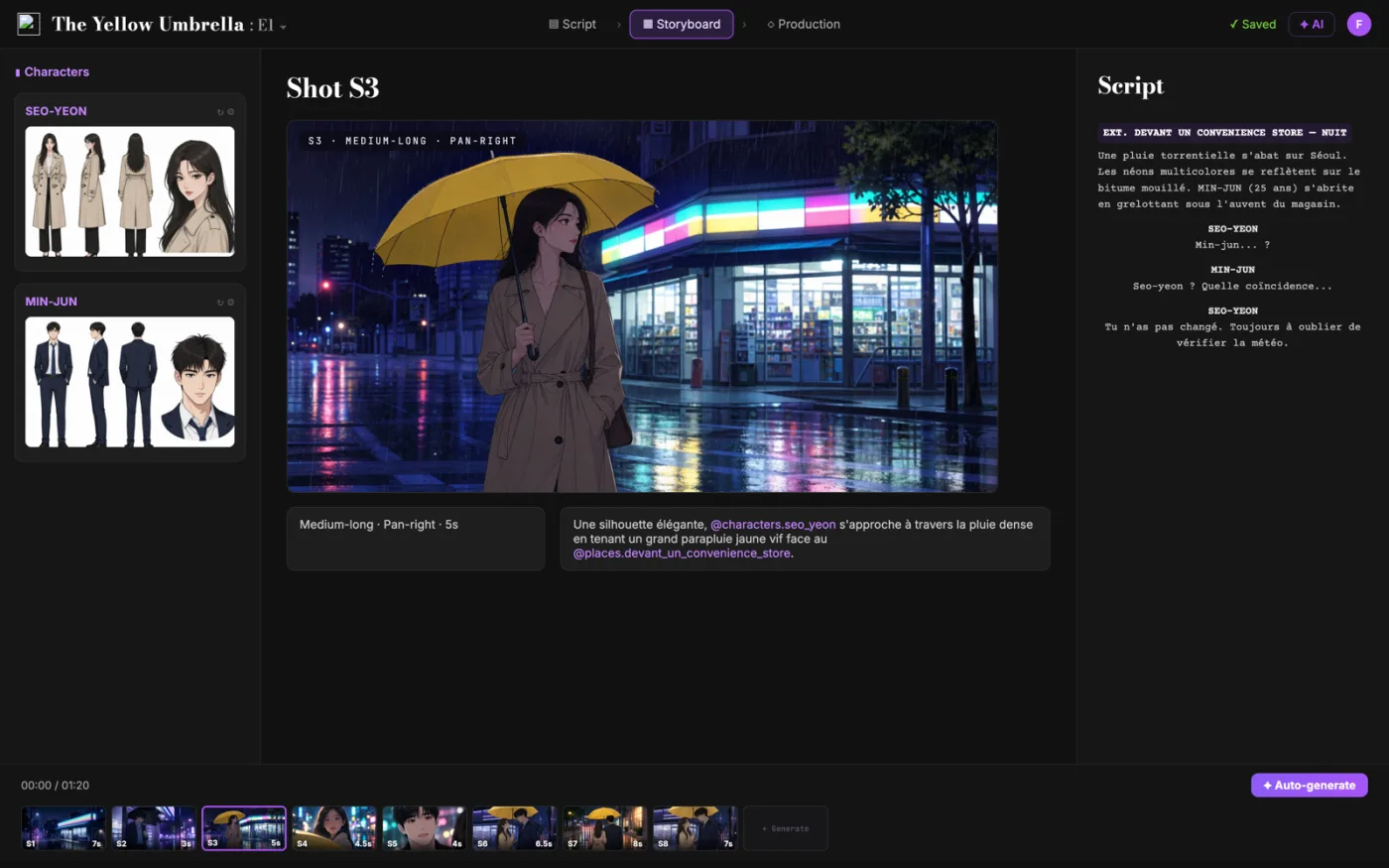
  2. ScreenWeaver storyboard: shot S3 of The Yellow Umbrella with characters, shot settings and the script beside it

    02The storyboard, made easy

    Shot breakdown generated from your screenplay, manual control over every shot (frame, angle, movement, duration), and generative AI previsualization in one click.

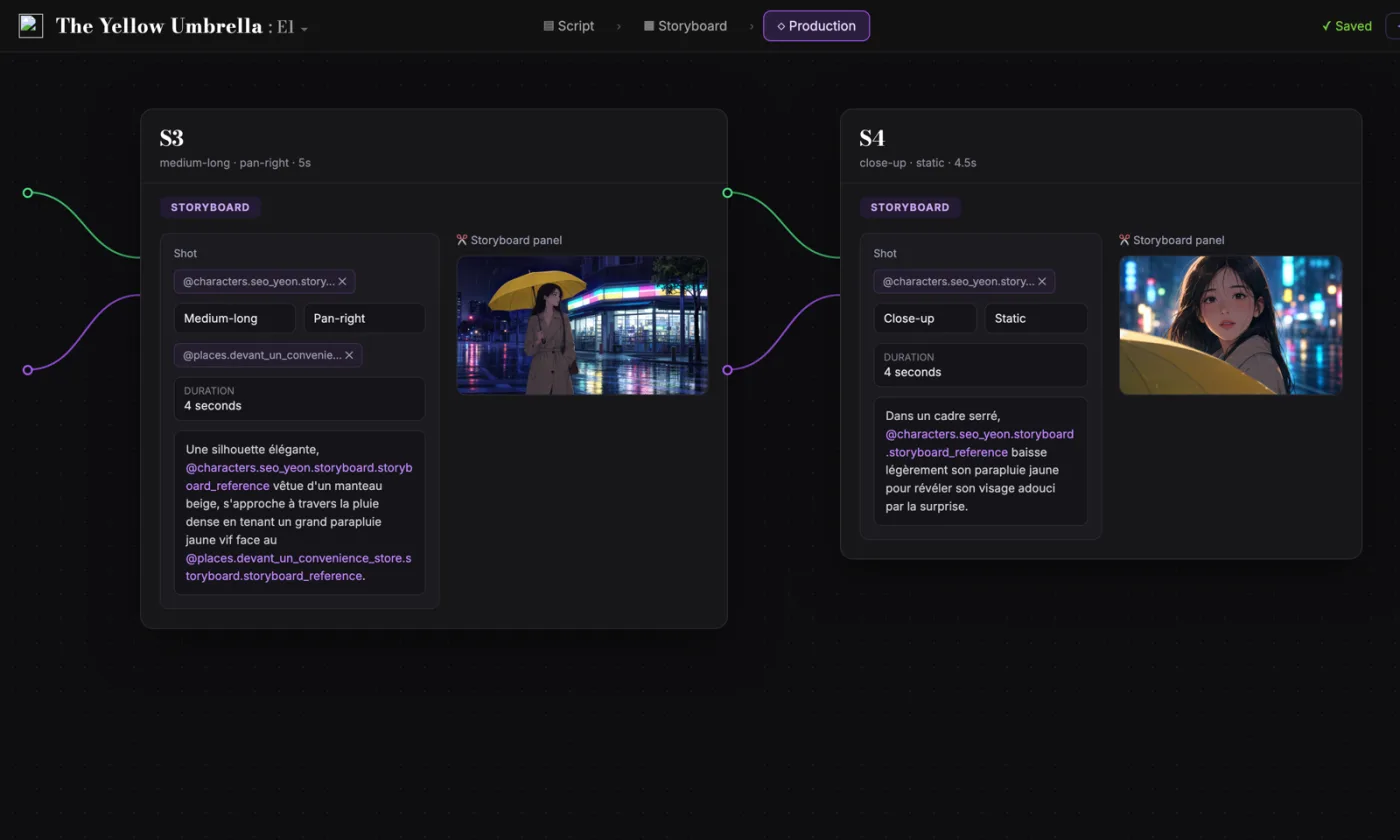
  3. ScreenWeaver production canvas: shots S3 and S4 as connected nodes carrying their storyboard panels and prompts

    03AI production, with finesse

    Footage generation pipelines connected to your screenplay and storyboard. Optimized out of the box, fully editable workflow.

FAQ

The Berlinale and AI films, your questions

Can you submit an AI film to the Berlinale?
Yes. The festival's FAQ says it accepts submissions that used AI, and that you may be asked for additional information if AI was used in making your film. It sets no quota and bans no tool. Answer the AI question in full.
What do you have to say about AI?
The FAQ does not list what to declare. Festival director Tricia Tuttle said in November 2025 that the form asks whether AI was used in any way in the making, and that it is research. Name the tools and the stages: script, image, motion, voice and music.
What are the 2027 deadlines and fees?
21 October 2026 for features and 4 November 2026 for short films. The processing fee is €75 for a short and €175 for a feature, it is not refunded, and the FAQ lists no early-bird or late fee. A selected film's festival version is due on 26 January 2027.
How long can a short film be?
Berlinale Shorts takes up to 30 minutes and Generation up to 20 minutes. Check the limit of the section you aim for before the final edit.
Does my film need a premiere?
Yes, a world or international premiere. Films released on television, online, on video on demand or on disc are ineligible, and so are films shown at online festivals. Password-protected links sent to festivals do not count.
Can I send a trailer or a rough cut?
No trailer: the Berlinale accepts none for selection. It wants a complete version as an MP4 file or a DCP, with English subtitles, and takes rough cuts only in rare cases.
Who selects the films?
The FAQ names no selection committee or jury. It says the result comes as soon as possible and at the latest by the beginning of 2027. A jury only judges films already selected; in 2026 it was led by Wim Wenders.
Is an AI short worth sending?
It is a real option: the answer is yes and shorts have prizes of their own. The FAQ gives no selection figure, so assume the odds are low. Send it if the film stands without any mention of AI, because story and craft decide.

Five weeks. Start with the page.

The screenplay is free today. The storyboard comes next, and the footage when video reaches your plan.