Locarno 80th edition · AI films guide

Can you submit an AI film to Locarno?Yes. The festival says so in its FAQ.

Locarno answers in one line: “We do, however, accept AI-generated films.” VR is refused. Here are the sections an AI short can enter, the premiere and completion rules, the fees, and a plan for the 2027 call, which is not announced yet.
  • AI-generated films accepted
  • VR films refused
  • Festival 4 to 14 August 2027
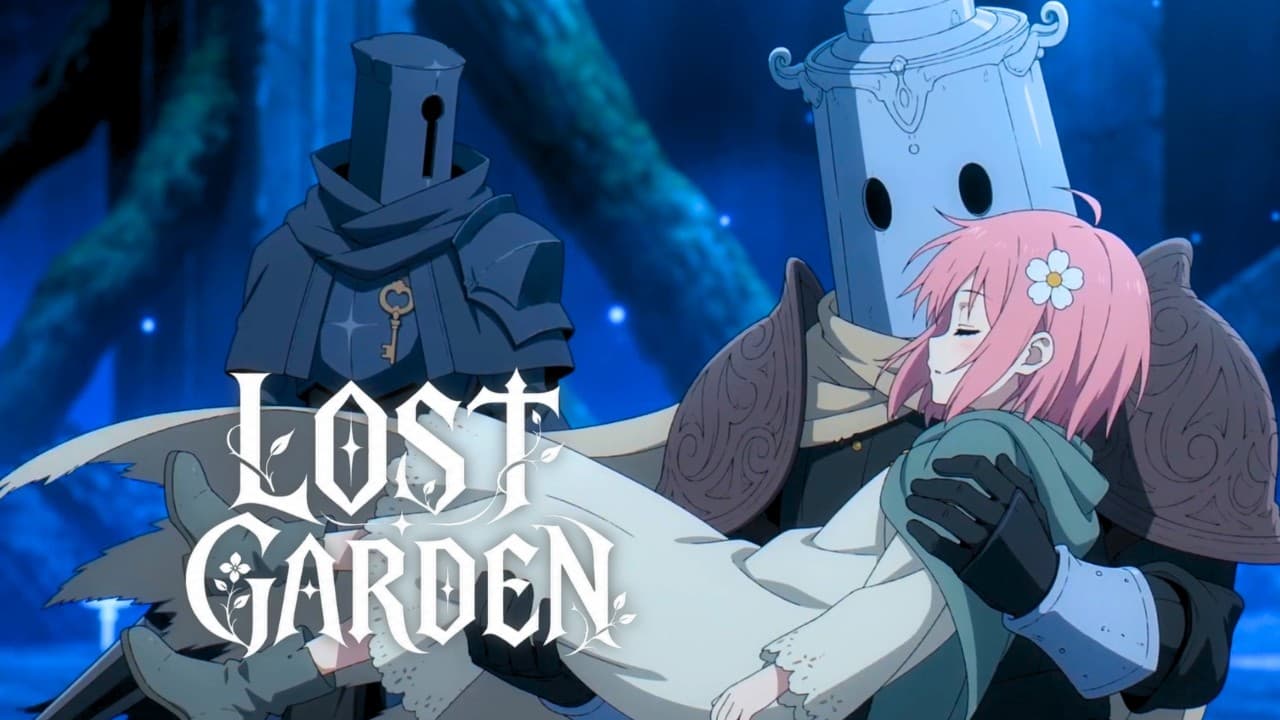
Lost Garden · Episode 1

Independent guide. ScreenWeaver does not organise Locarno Film Festival and is not affiliated with it. Rules read on 1 October 2026, in part through secondary sources: see the note under the fact sheet. Official submission page

Available today in ScreenWeaver: free screenwriting, and a storyboard generated from your screenplay with Storyboard Beta, $9.99 a month.

Rolling out: video generation of each shot, powered by Seedance, with the Filmmaker plan.

The rules on one card

What Locarno asks of an AI film.

Locarno states its position on AI in a single FAQ answer. Everything else in its rules applies to an AI film as it does to any other. The call for the 80th edition is not published, so most figures below come from the 79th call.
Festival
4 to 14 August 2027, Locarno, Switzerland
2027 call
Not announced on 1 October 2026
AI rule
AI-generated films accepted, VR films refused
Last call, 79th edition
19 February to 23 April 2026, 2 pm
Short fee, up to 40 min
CHF 35, 55 or 75 by deadline
From 41 minutes
CHF 100, 130 or 200 by deadline
Completion window
Within 12 months before the festival
Premiere
World or international premiere for the competitions

Sources: the Locarno film submission FAQ as published for the 79th edition, the 79th call reproduced on asianfilmfestivals.com, and the Ascona-Locarno event page for the 2027 dates. locarnofestival.ch blocked automated reading on 1 October 2026, so the full Regulations could not be re-read and the fees come from our research notes of the Locarno79 submission page. Confirm the figures on the live page first.

What the rules say about AI

One sentence on AI, and four things around it.

Locarno gives AI one sentence, and it is a welcoming one. Below: the wording, what it leaves open, why VR is a different case, and where a generated short can compete.
  • The FAQ answer

    The FAQ asks whether the festival accepts VR or AI-generated films. VR is refused. About AI the festival says, in its own words, “We do, however, accept AI-generated films.” The text sits in the Eligibility section of the Locarno79 submission page, rules valid from 12 November 2025 and updated on 15 July 2026.

  • What it leaves open

    The answer does not define “AI-generated”. In the text we could read there is no share, no disclosure form and no tool list. Silence is not a reason to hide it. We could not read the full Regulations, so ask the festival if your film is mostly generated, and keep a record of tools and versions.

  • Why VR is a different case

    Virtual reality films are refused outright. A generated 360 degree or headset experience will not go through, even if a flat film from the same project would. Deliver a film made for a cinema screen.

  • Where a generated short can compete

    Pardi di Domani takes short and medium-length films of up to 59 minutes, for filmmakers who have not made a feature. It holds three competitions: the international one, a national one for Swiss productions, and Corti d’Autore for established filmmakers. An emerging AI filmmaker aims at the international competition.

  • AI changes nothing about the premiere

    A generated film meets the same conditions as any other. It must be completed within the 12 months before the festival, and it must not have been released outside its production countries before Locarno shows it. A public online release can cost you the slot.

Key dates

The 80th call is not open. Learn the 79th.

Locarno has not published its next call. The 79th ran from February to April 2026, and <b>that calendar is the best guide to the next one</b>. Read the dates below as a precedent, not a promise.
  1. 19 Feb 2026

    Early deadline, 79th call

    The cheapest bracket: CHF 35 for a short up to 40 minutes.

  2. 9 Apr 2026

    Regular deadline

    CHF 55 for the same short.

  3. 23 Apr 2026, 2 pm

    Late deadline

    The last day, closing at 2 pm, and the dearest bracket: CHF 75 for a short.

  4. 5 to 15 Aug 2026

    The 79th festival

    The edition whose rules we read. Its call asked for films completed after 31 August 2025.

  5. 4 to 14 Aug 2027

    The 80th festival

    If the 12 month window repeats, a film finished after 31 August 2026 is eligible. Watch locarnofestival.ch for the call.

Sections

Four sections. Your length and your record choose.

Locarno does not let you pick a section at will: the running time and your filmography decide where a film belongs. Here is each section, and the angle we would take for a generated film.
  • 01

    Pardi di Domani

    Short and medium-length films of up to 59 minutes, by filmmakers who have not made a feature, in three competitions.

    The door for a first AI film. Finish a short of about 20 minutes and aim at the international competition.

  • 02

    Concorso Internazionale

    Fiction, documentary and animation over 60 minutes, with world or international premieres.

    A feature-length generated film would land here. It is a long-term target: build a short and a series first.

  • 03

    Cineasti del presente

    First and second features of over 60 minutes, with world or international premieres.

    Out of reach for a short. Keep it as the destination of a series that grows into a first feature.

  • 04

    Locarno Kids

    Films for ages 6 to 14, with a Swiss premiere as the minimum.

    An animated fable made for children fits. The premiere minimum is lighter than in the other sections, which helps a film that has already played elsewhere.

Recent winners

What Pardi di Domani picked in 2026.

At the 79th edition, the international competition of Pardi di Domani gave its Pardino d’Oro to Melk by Filip Anthonissen, a Belgian short. Press coverage of the awards is our source, since Locarno’s own pages could not be read.

  1. 01

    Melk (Filip Anthonissen, Belgium) won the Pardino d’Oro and is also Locarno’s short film candidate for the European Film Awards. A win here opens a second door.

  2. 02

    Khufu (Mahmoud Assi) took the silver prize. It is a co-production of Egypt, France, Sweden and Canada: the field is international, and co-production credits are common.

  3. 03

    Mutrion (Marco Cavazzin, Italy) won the Pardino for Best Direction, and Las Damas (Camille Zéhenne, France) a special mention. Direction is rewarded as a category of its own.

  4. 04

    None of these titles was reported as an AI film in the coverage we read. The first generated short to win here would be news, and a distinct voice is how it gets there.

Six frames, one scene

Lost Garden: six shots for a Locarno short.

Pardi di Domani takes films of up to 59 minutes. This is a scene from Lost Garden, episode 1, an animated fable made by the ScreenWeaver team: the screenplay page, then each shot as a storyboard frame and as the final image.

Logline. A small knight wakes up in a dead world and learns he is the last guardian of a seed that could bring the garden back.

Screenplay · episode 1 · the Source Tree

INT. HEART OF THE ROOTS - NIGHT

Living roots coil around LANTERN and pin him down. A voice stops them.

THE SOURCE TREE

Stop. He is my guest.

A giant woman of roots and white lilies opens her arms over the cavern.

Her eyes open. Blue, and vast.

THE SOURCE TREE

Welcome to you, Lantern Knight.

She lifts him in her palm, like a lamp.

THE SOURCE TREE

Do not be afraid. I will not harm you.

In the dark, a seed of light opens. Inside the flower, a sleeping child.

THE SOURCE TREE

You must find yours. Protect her.

CUT TO:

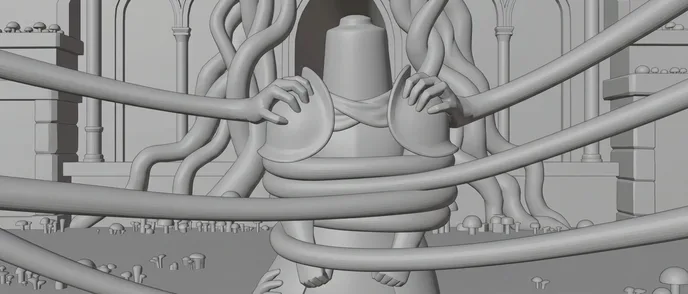
  1. A small lantern-helmed knight bound by thick roots in a ruined hall
    Storyboard frame of the trap shot, in grey
    01

    Medium · the trap

    Medium shot, Lantern bound by thick living roots in a ruined hall, glowing blue mushrooms on the floor, cold light

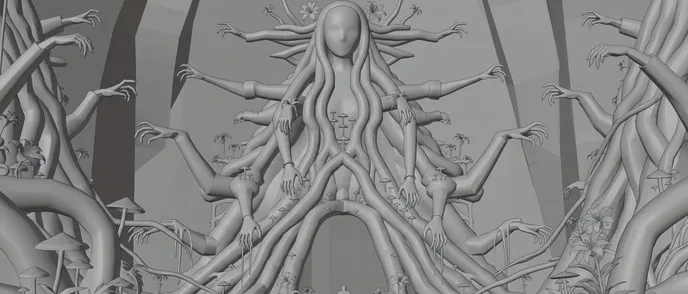
  2. A giant woman made of roots and white lilies spreads her many arms in a dark cavern
    Storyboard frame of the wide shot, in grey
    02

    Wide · the Source Tree

    Symmetrical wide shot, a giant woman made of roots, arms spread with many hands, white lilies, blue glyphs

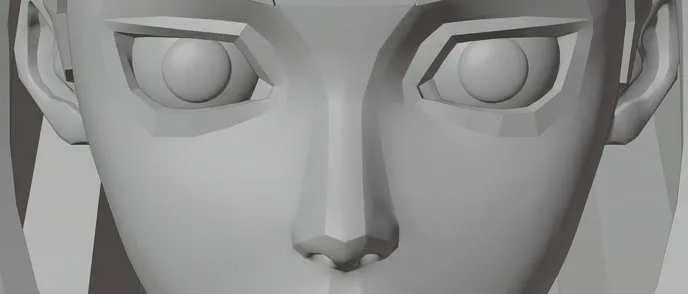
  3. Extreme close-up of a giant pale face with piercing blue eyes
    Storyboard frame of the eyes close-up, in grey
    03

    Extreme close-up · the eyes

    Extreme close-up on the giant's face, piercing blue eyes opening, pale skin, soft light from below

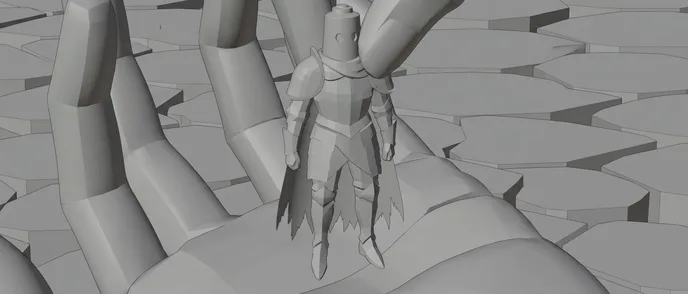
  4. A tiny armored knight stands in the middle of a giant open hand
    Storyboard frame of the palm shot, in grey
    04

    High angle · the palm

    High angle, the tiny knight standing in the center of a giant open palm, stone floor far below

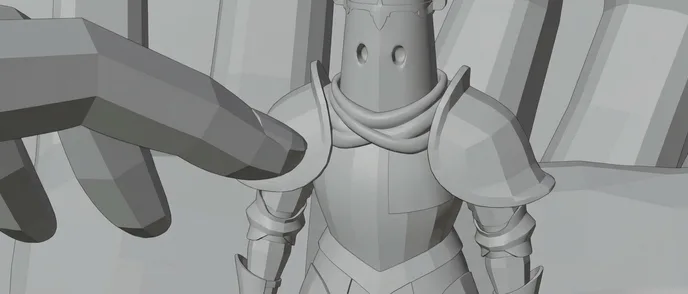
  5. A giant fingertip gently touches the chest of a small armored knight
    Storyboard frame of the touch close-up, in grey
    05

    Close-up · the touch

    Close-up, a giant fingertip gently touches the knight's armored chest, faceless helm, emotion through posture

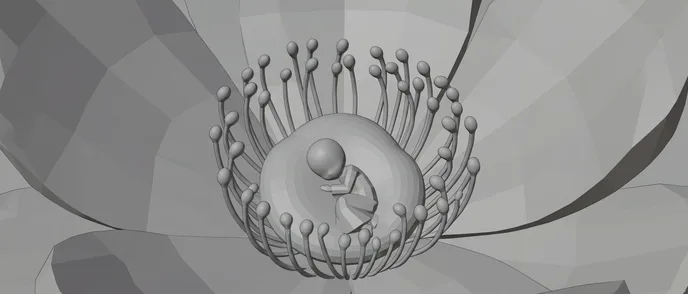
  6. A sleeping pink-haired child curled inside a glowing blue flower
    Storyboard frame of the seed insert, in grey
    06

    Insert · the seed

    Top-down insert, a glowing pale blue flower opening, a sleeping child with pink hair curled inside

Lost Garden, episode 1 runs 17 minutes, well inside the 40 minute bracket of Locarno’s lowest short fee, and was a finalist at the AI London Festival. It is a fable told in images and few words, which is the register a section for emerging filmmakers rewards. Press play and the player opens on the scene the six shots come from.

The script

An 18 minute short in four movements.

Locarno’s cheapest bracket stops at 40 minutes, so aim well under it: about 18 minutes, 18 screenplay pages and 130 to 170 shots of 5 to 8 seconds.
  1. 0:00 to 1:30

    An image that asks a question

    Selectors in a short section watch many films in a row. Open on a strange, specific image, not on an explanation.

  2. 1:30 to 6:00

    The rule of the place

    Show how this world works and what the character wants, without a spoken briefing.

  3. 6:00 to 14:00

    A turn, not an escalation

    Auteur shorts reward a change of perception more than a chase. Let one scene breathe on sound and a face.

  4. 14:00 to 18:00

    An ending that stays open

    Close on an image the audience carries out of the room. Do not tie every thread.

For a film not in English, the 79th call made English subtitles mandatory for pre-selection. Prepare a clean subtitle file before you submit.

Month by month

From now to the regular deadline.

Nothing is open yet. This plan aims at the regular bracket of the 80th call, which the 79th pattern puts around early April 2027, with a film finished inside the 12 month window.
  1. 01

    October 2026

    Choose the length

    Decide between a short up to 40 minutes, the cheapest bracket, and a film of 41 to 59 minutes at the higher fee. The free ScreenWeaver editor takes the screenplay.

  2. 02

    November 2026

    Study the section

    Look up the 2026 Pardi di Domani winners and read what the press wrote about them. Write the logline, and pick the one image the film is about.

  3. 03

    December 2026

    Storyboard and references

    Storyboard every shot and fix the faces, the places and the colour of the film. The look must hold for the whole short.

  4. 04

    January 2027

    Generate and sort the footage

    Scene by scene, footage made with Seedance inside ScreenWeaver once video generation reaches your plan. Keep every prompt and version.

  5. 05

    February 2027

    Edit, sound, subtitles

    Cut, mix, add English subtitles and export. The 79th early bracket closed on 19 February: being ready by then saves money.

  6. 06

    March to April 2027

    Submit once the call opens

    Read the new Regulations, then submit in the regular bracket. Do not put the film online first, and do not leave the last day for the entry.

Ways to miss the slot

Eight ways a generated short gets stopped.

Locarno welcomes AI-generated films, so the traps are the usual ones: premiere, dates, length and delivery. Check each of them before you pay.
  • Releasing the film early

    The call asks for films not released outside their production countries before the festival. A public release on YouTube or Vimeo can make a short ineligible.

  • Finishing too early

    The film must be completed within the 12 months before the festival. A short finished in the summer of 2025 was already too old for the 79th edition.

  • A film over 59 minutes

    Pardi di Domani stops at 59 minutes. From 60 minutes a film is a feature and goes to the feature competitions, with their own premiere weight.

  • Paying the late fee

    A short costs CHF 35 early and CHF 75 late in the 79th call. The same film, finished three weeks sooner, costs less than half. Fees are tax inclusive.

  • Missing the hour

    The last deadline of the 79th call fell at 2 pm, not at midnight. Do not plan to upload on the last evening.

  • No English subtitles

    A film not in English needs English subtitles for pre-selection. Generated voices count as dialogue, so a French, Italian or Hindi film still needs the file.

  • A VR or headset version

    VR films are refused. Offer the flat film, even if the project also exists as an immersive experience.

  • A format the cinema cannot play

    The call lists 35 mm and DCP as the screening formats. If you are selected, plan a DCP or a lab that makes one.

Why ScreenWeaver

Locarno wants a clean premiere. Work in a private project.

Locarno wants a finished film, made for a cinema screen and shown first at the festival. ScreenWeaver follows that route in one connected project, from the first page to the last shot.
  • A premiere you keep clean

    The screenplay, the storyboard and the footage stay in a private project, so nothing has to go online for a colleague to review it. Send a PDF, not a public link to a cut.

  • A running time you can read early

    The storyboard sets the duration of each shot, so you see whether the film lands well under 40 minutes before you generate a single frame.

  • A look that survives the cinema

    Characters, locations and references follow you from one shot to the next. On a big screen, that is what separates a short from a reel.

  • Free to start

    The Screenwriter plan is free and never expires, with PDF and Final Draft export. Storyboard Beta is $9.99 a month, and the Filmmaker plan will add Seedance video generation.

Real productions

International festival-recognized films have been written and produced with ScreenWeaver.

ScreenWeaver is already being used as a creative workspace for real AI film productions, from cinematic shorts to animated series pilots selected, nominated, and awarded by international festivals.

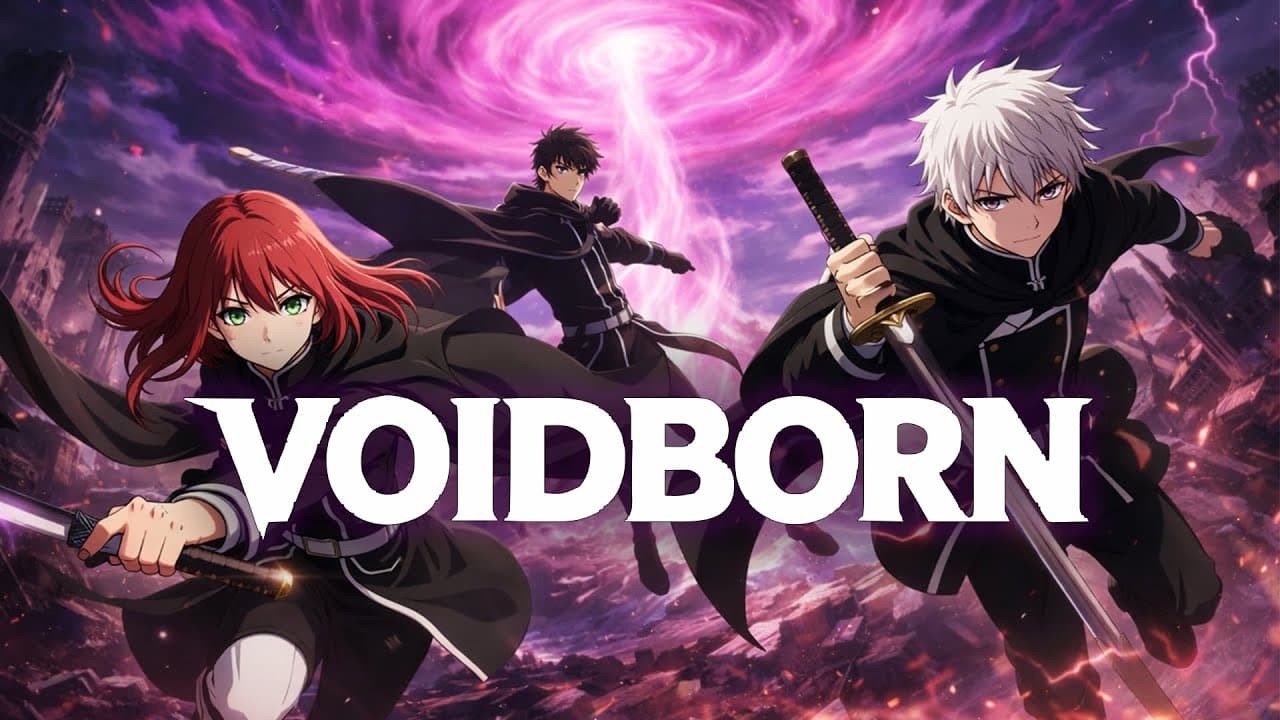
  • Video thumbnail for VOIDBORN

    VOIDBORN

    AI animated / cinematic short

    Festival recognition

    • 1st Place Silver

      Mondial Chroma Awards

    • 2nd Place Dreamina

      Mondial Chroma Awards

    • Award Winner

      Seoul International AI Film Festival

  • Video thumbnail for Les Fils du Vinnana

    Les Fils du Vinnana

    AI short film

    Festival recognition

    • Honorable Mention

      Top Quark Film Festival

    • People's Choice Nominee

      Illuminate Oneness of Humanity

    • Nominee

      ALTFF Supershort

  • Video thumbnail for Lost Garden

    Lost Garden

    AI animated series pilot

    Festival recognition

    • Finalist

      AI London Festival

The pipeline

Write. Board. Produce.

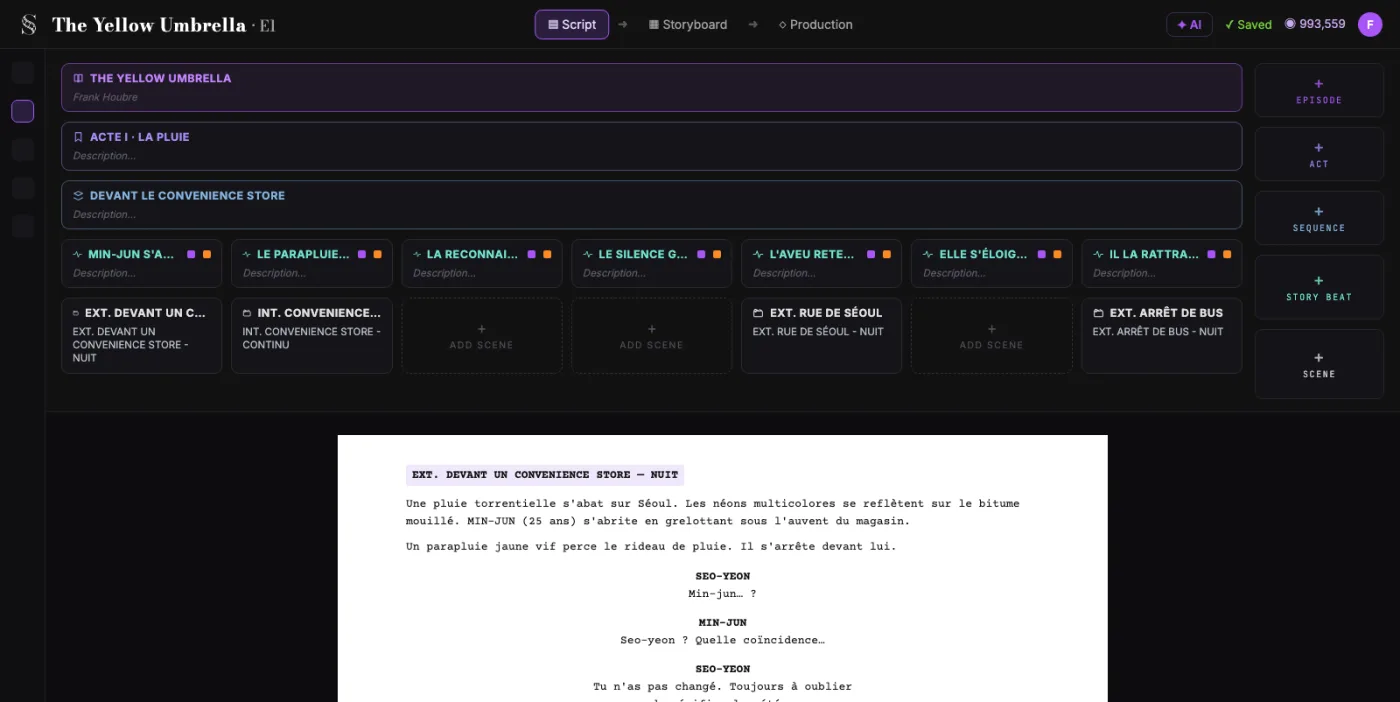
  1. ScreenWeaver screenplay editor: acts, sequences and beats above the formatted script of The Yellow Umbrella

    01The screenplay, enriched

    An industry-standard screenplay editor, and more: a visual outline and beat editor, your writing inspirations (notes, photos, audio) kept next to the page, and an AI researcher to support your writing, not replace it.

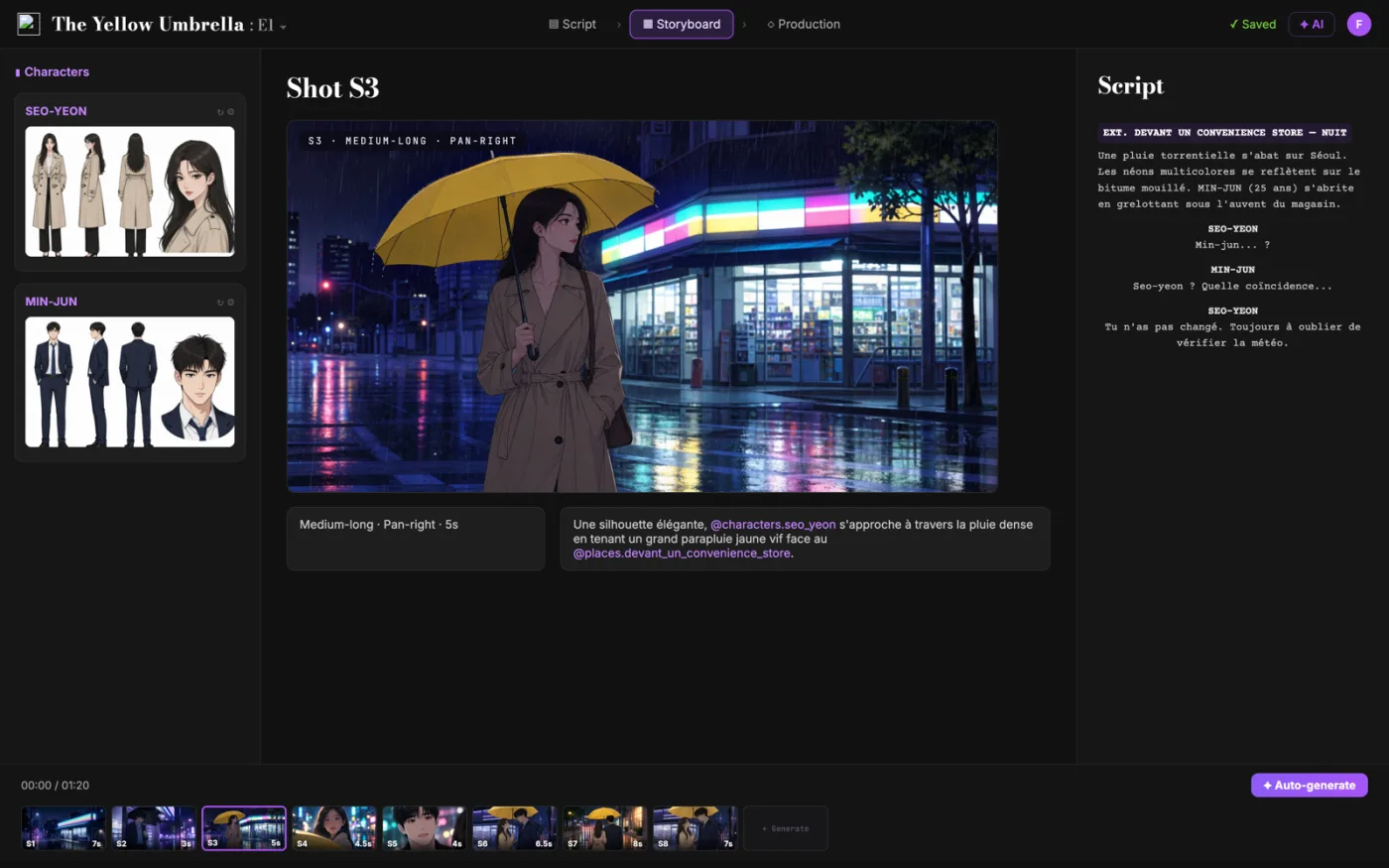
  2. ScreenWeaver storyboard: shot S3 of The Yellow Umbrella with characters, shot settings and the script beside it

    02The storyboard, made easy

    Shot breakdown generated from your screenplay, manual control over every shot (frame, angle, movement, duration), and generative AI previsualization in one click.

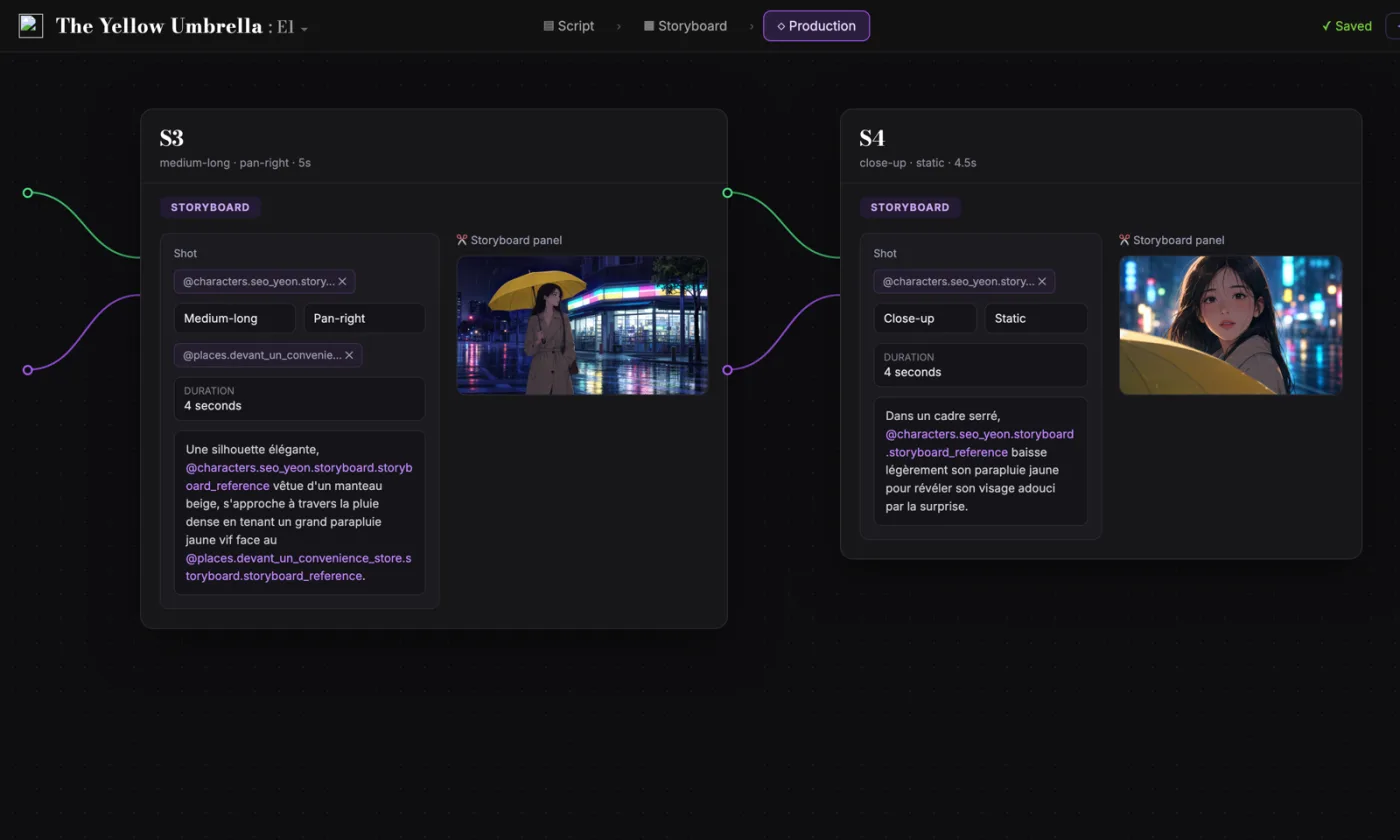
  3. ScreenWeaver production canvas: shots S3 and S4 as connected nodes carrying their storyboard panels and prompts

    03AI production, with finesse

    Footage generation pipelines connected to your screenplay and storyboard. Optimized out of the box, fully editable workflow.

FAQ

Locarno and AI films, your questions

Can you submit an AI film to Locarno?
Yes. The submission FAQ says the festival does not accept VR films but does accept AI-generated films. Premiere, completion and length rules apply as for any film. The call for the 80th edition is not announced yet.
What does Locarno say about AI exactly?
One FAQ answer: VR is refused, and “We do, however, accept AI-generated films.” We found no disclosure form, share or tool rule in the text we could read, but we could not read the full Regulations. Ask the festival if your film is mostly generated.
Must I tell Locarno that my film uses AI?
We found no obligation in the FAQ, and that is not a promise that none exists in the Regulations. Disclose anyway if the form asks how the film was made, and keep a record of tools and versions.
When is the next Locarno deadline?
Not announced. The 79th call closed on 23 April 2026 at 2 pm, with earlier brackets on 19 February and 9 April. The 80th festival runs from 4 to 14 August 2027, so a similar calendar is likely.
What are the fees at Locarno?
In the 79th call, CHF 35, 55 or 75 for a short up to 40 minutes, early, regular or late, tax inclusive. From 41 minutes, CHF 100, 130 or 200. Check the 2027 grid when it is published.
Which section is for a short AI film?
Pardi di Domani, for filmmakers who have not made a feature, with films of up to 59 minutes. Its international competition is where an AI filmmaker from outside Switzerland would enter.
Does my film have to be a premiere?
For the competitions, yes: a world or international premiere. The call also says films must not have been released outside their production countries before the festival. Locarno Kids asks only for a Swiss premiere.
How recent must the film be?
Completed within the 12 months before the festival. For the 79th edition that meant after 31 August 2025. For August 2027 the cut-off would move to about the end of August 2026, if the rule repeats.

Ten months to August 2027. Start with the page.

Write the short free today. Storyboard it next, and film it with Seedance as soon as that reaches your plan.