IDFA 2027 · AI documentaries guide

Can you submit an AI documentary to IDFA?No clause says no. The consent rules still bite.

IDFA's 2026 entry regulations contain no clause on AI, and IDFA DocLab lists AI among the forms it welcomes. What they do demand is informed consent from the people portrayed and clearance of every borrowed image. The 2027 call is not out: here are the 2026 pattern and a plan.
  • No AI clause in the regulations
  • 2027 call not announced
  • DocLab welcomes AI as a form
Lost Garden · Episode 1

Independent guide. ScreenWeaver does not organise IDFA and is not affiliated with IDFA. Rules read on 1 October 2026. Festival entry regulations

Available today in ScreenWeaver: free screenwriting, and a storyboard generated from your screenplay with Storyboard Beta, $9.99 a month.

Rolling out: video generation of each shot, powered by Seedance, with the Filmmaker plan.

The regulations in brief

What IDFA asks of a film.

IDFA is the International Documentary Film Festival Amsterdam. Its call for 2026 has closed and the 2027 call is not announced, so this page follows the 2026 entry regulations, which say they apply to that edition only.
Festival
39th edition, 12 to 22 November 2026, Amsterdam
2027 call
Not announced. In 2026 the deadlines were 23 April, 28 May and 9 July
Film fees in 2026
Under 40 minutes €25, €40 or €50. 40 minutes or more €45, €65 or €85. Students €25
AI rule
No clause in the entry regulations
Eligible films
Completed after 10 July 2025 for the 2026 edition
Premiere
World, international, European or Dutch. Nothing shown in the Netherlands before
Versions
One version only. A rejected rough cut cannot return
Screener
Link with English subtitles, valid until 30 September 2026

Source: the Festival entry regulations 2026, the festival entries page and the IDFA Forum entry page on professionals.idfa.nl, read on 1 October 2026. The text says it applies only to the 2026 edition.

What the regulations say

No AI clause, and six passages that matter.

The 2026 regulations never use the word AI, nor generative or synthetic. Read what they do say about reality, consent, archive and new forms: that is where an AI film is tested.
  • What the regulations say about AI

    Nothing. We read the full text of the 2026 regulations on 1 October 2026 and found no clause on AI, generative or synthetic media. The IDFA Forum entry page, for projects in development, does not mention it either. Read the 2027 text the day it is published.

  • How IDFA defines documentary

    IDFA takes documentary in a broad sense: a film that deals with reality, including hybrid films and films that rely on real elements as a core component. The phrase “core component” is the hinge: if the real part is a thin frame around generated scenes, you may be outside the definition.

  • Consent and clearance

    The applicant warrants that all rights are secured, including the informed consent of the people and entities portrayed, and clearance of material not made for the film, such as archive and music. A generated likeness of a real person is where this sentence bites hardest.

  • IDFA DocLab

    DocLab welcomes projects that use emerging media to represent reality, from digital art and immersive work to games, installations and live performance. Its Forum programme lists AI among the formats it welcomes. An AI-led documentary form has a home here, as a new media project and not as a linear film.

  • Archive has its own prize

    The IDFA ReFrame Award, with Beeld en Geluid, goes to the best creative use of archive. A film that invents its archive and lets it pass as real is the opposite of what this prize celebrates.

  • Where an AI film does not go

    Forum's DocLab programme does not take linear projects meant for cinema or broadcast. Competitions need a world, international or European premiere. A film already online in the Netherlands is not eligible at all.

The calendar

Five dates that set the year.

No 2027 call has been published. If it follows 2026, <b>the first deadline falls in April</b> and the last in July. These are the 2026 dates, as a model.
  1. 23 Apr 2026

    Early deadline

    Films under 40 minutes €25, longer €45. Early entrants hear by the end of June whether they are still in consideration.

  2. 28 May 2026

    Second deadline

    €40 or €65. Answers by the end of July.

  3. 9 Jul 2026

    Final deadline

    €50 or €85, with the screener due by 16 July. Answers by the start of September.

  4. 30 Sep 2026

    All decisions known

    IDFA says every final decision is communicated by this date. New media projects hear by mid-September.

  5. 12 to 22 Nov 2026

    The festival in Amsterdam

    About 250 new documentary films and projects were to be selected for 2026.

Who decides

Programmers, shortlists, then juries.

IDFA names no jurors in its regulations. It describes how an entry is read before any prize exists.
  • A programming team

    Each entry is considered by an international team of programmers, associate programmers and programme advisors. They put forward shortlists, which are discussed in collective selection meetings.

  • Equal opportunity

    All films and new media projects entered are given equal opportunity, early or late. The early deadline buys a lower fee and an earlier answer, nothing else.

  • No feedback, no refund

    IDFA cannot comment on rejected films and applies a no-refund policy with no exceptions. A rejection tells you nothing about your use of AI.

  • Juries after selection

    The Artistic Director appoints an international jury for each competition: five jurors for the International and Envision Competitions, three for Short Documentary. Names are not in the regulations.

Sections

Where a film can land.

You do not enter a section. IDFA decides, and a film may be eligible for several. Four matter most for a documentary that uses generated material, with the angle we would take.
  • 01

    International and Envision Competitions

    International: about 15 films over 60 minutes. Envision: about 15 films over 40 minutes, with stylistic courage. Both need a world, international or European premiere.

    Envision is where a formally daring hybrid belongs. Daring needs honesty: show clearly which parts are staged or generated.

  • 02

    Luminous and Frontlight

    Non-competitive sections for films over 40 minutes. Luminous covers observational, personal and experimental styles. Frontlight takes an artistic approach to urgent issues.

    Open to experimental forms, but still documentary. An urgent issue treated with invented footage needs a reason, not only a look.

  • 03

    Competition for Short Documentary

    Films up to 40 minutes, in world, international or European premiere. Dutch productions only as world premieres.

    The practical door for a first AI-assisted documentary. Fifteen minutes with a clear convention beats forty with a blurred one.

  • 04

    Paradocs and DocLab

    Paradocs shows the year's best experimental documentary art, of any duration. DocLab takes new media, immersive and interdisciplinary projects.

    If your project is a form, not a film, DocLab is the obvious address. Prepare a video of the audience experience, not just a trailer.

Reading the numbers

What the 2026 regulations imply about your odds.

IDFA planned to select about 250 new documentary films and projects in 2026. The document does not say how many it received, so these are lessons from its own rules, not from a statistic.

  1. 01

    The programme is half Dutch premieres. On average, half of the selection is a Dutch premiere and half a world, international or European one. So a film does not need a world premiere to be considered for the sections that accept Dutch ones.

  2. 02

    One version counts. Unless IDFA approves another in writing, only one version is considered, and a picture lock is preferred. A rough cut you send is the film they judge.

  3. 03

    You cannot try again. A film already considered in a previous edition is not eligible, even if it changed a lot. Ask yourself whether the film is ready before you pay.

  4. 04

    Private screenings are allowed. A private screening before IDFA keeps premiere status if it is unannounced, by invitation, free and for fewer than 50 people. Test a labelled reconstruction on a small audience first.

A traceable method

Lost Garden: an invented world, openly invented.

IDFA asks that a documentary rely on real elements as a core component. This scene from Lost Garden, episode 1 is the opposite case, a world nobody could mistake for record, and it shows the method: for each shot, the screenplay line, the storyboard frame and the final image. For a documentary, that trail is the part worth borrowing.

Logline. A small knight wakes up in a dead world and learns he is the last guardian of a seed that could bring the garden back.

Screenplay · episode 1 · the Source Tree

INT. HEART OF THE ROOTS - NIGHT

Living roots coil around LANTERN and pin him down. A voice stops them.

THE SOURCE TREE

Stop. He is my guest.

A giant woman of roots and white lilies opens her arms over the cavern.

Her eyes open. Blue, and vast.

THE SOURCE TREE

Welcome to you, Lantern Knight.

She lifts him in her palm, like a lamp.

THE SOURCE TREE

Do not be afraid. I will not harm you.

In the dark, a seed of light opens. Inside the flower, a sleeping child.

THE SOURCE TREE

You must find yours. Protect her.

CUT TO:

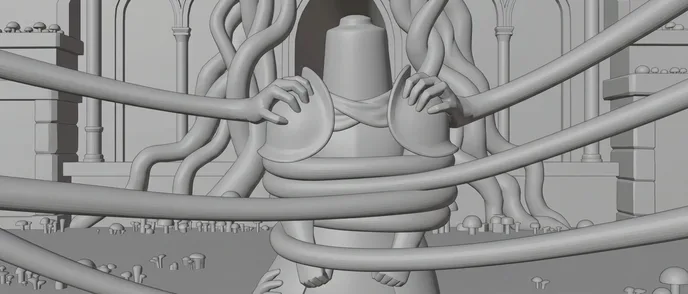
  1. A small lantern-helmed knight bound by thick roots in a ruined hall
    Storyboard frame of the trap shot, in grey
    01

    Medium · the trap

    Medium shot, Lantern bound by thick living roots in a ruined hall, glowing blue mushrooms on the floor, cold light

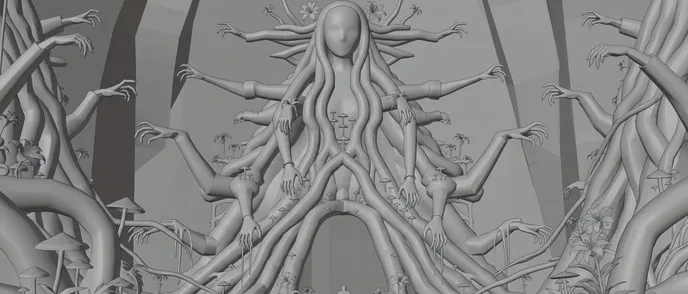
  2. A giant woman made of roots and white lilies spreads her many arms in a dark cavern
    Storyboard frame of the wide shot, in grey
    02

    Wide · the Source Tree

    Symmetrical wide shot, a giant woman made of roots, arms spread with many hands, white lilies, blue glyphs

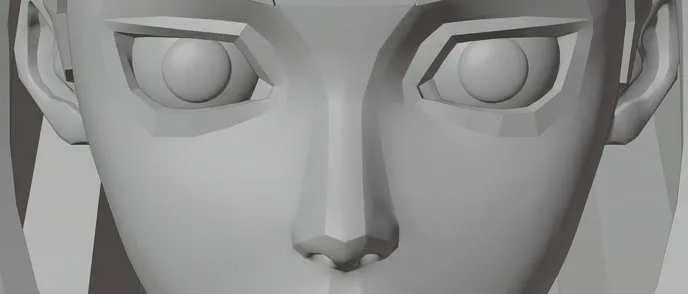
  3. Extreme close-up of a giant pale face with piercing blue eyes
    Storyboard frame of the eyes close-up, in grey
    03

    Extreme close-up · the eyes

    Extreme close-up on the giant's face, piercing blue eyes opening, pale skin, soft light from below

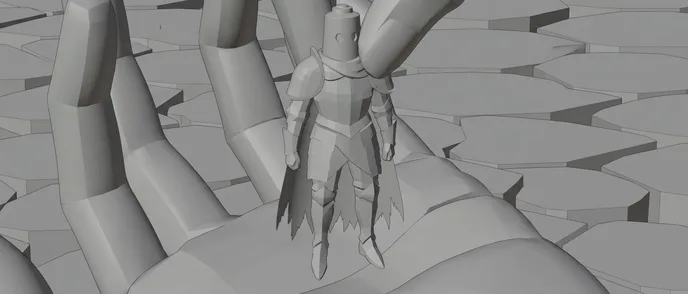
  4. A tiny armored knight stands in the middle of a giant open hand
    Storyboard frame of the palm shot, in grey
    04

    High angle · the palm

    High angle, the tiny knight standing in the center of a giant open palm, stone floor far below

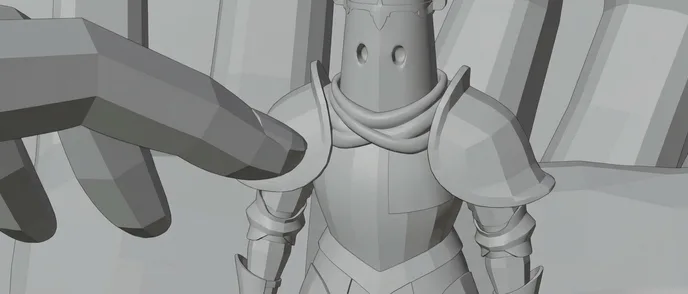
  5. A giant fingertip gently touches the chest of a small armored knight
    Storyboard frame of the touch close-up, in grey
    05

    Close-up · the touch

    Close-up, a giant fingertip gently touches the knight's armored chest, faceless helm, emotion through posture

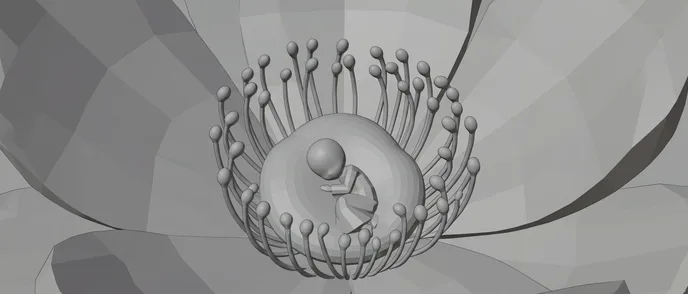
  6. A sleeping pink-haired child curled inside a glowing blue flower
    Storyboard frame of the seed insert, in grey
    06

    Insert · the seed

    Top-down insert, a glowing pale blue flower opening, a sleeping child with pink hair curled inside

Lost Garden, episode 1, 17 minutes, an animated series by the ScreenWeaver team made with Seedance, and a finalist at the AI London Festival. It is fiction, so it is not an IDFA entry. The player opens on the Source Tree scene, about 7 minutes 35 seconds in.

The script

A 15 minute short documentary in four movements.

The short competition runs up to 40 minutes. At 15 minutes you hold about 15 pages of narration and scenes, enough to establish the real before you stage anything.
  1. 0:00 to 1:00

    The real thing

    A person, a place, a fact you can stand behind. Begin with what was filmed.

  2. 1:00 to 5:00

    The consent

    Let the people portrayed speak, and make clear they agreed. This part of the film is also your paper trail.

  3. 5:00 to 13:00

    The form

    Where you go beyond the camera: a labelled reconstruction, a stylised sequence, a voice you recreated with permission. One convention, kept to the end.

  4. 13:00 to 15:00

    The honest ending

    Return to the real, and say what was staged. Then the credits.

Credit the generated elements by name and tool, next to the real contributors. Credits are part of how the film discloses.

Month by month

From now to the 2027 entry form.

Nothing is open today. The plan targets the likely 2027 window, April to July if the pattern holds, and it puts consent and clearance before any generation.
  1. 01

    October 2026

    Define the real core

    Write one paragraph on what in your film is real, filmed or documented. If you cannot fill it, the project may be a fiction.

  2. 02

    November 2026

    Treatment and consent plan

    Write the treatment free in ScreenWeaver. List every person portrayed and how their informed consent will be recorded.

  3. 03

    December 2026 to February 2027

    Film the real material

    Shoot, interview, gather and clear archive and music. Keep the paperwork with the footage.

  4. 04

    March 2027

    Storyboard the form

    Storyboard each staged or generated sequence, and decide its label before you generate it. Keep prompts and versions.

  5. 05

    April 2027

    Lock the picture

    IDFA prefers a picture lock and considers one version. Mix the sound, add English subtitles and prepare a link that stays live through the selection period.

  6. 06

    From the first deadline

    Submit at the right deadline

    If the 2026 pattern holds, the early deadline falls in April and the last in July. Pick the first one your picture lock can meet.

Mistakes to avoid

Eight ways to be ruled out.

Most of the dangers sit in the premiere and rights clauses, not in an AI rule. Check each one before you pay the fee.
  • Already shown in the Netherlands

    A film screened in the Netherlands, broadcast on Dutch television or available on any online platform there is not eligible. A Dutch release even on VOD counts.

  • The wrong premiere for the section

    The competitions, Luminous and Frontlight need at least a European premiere. Best of Fests and Signed need a Dutch premiere. Check your section before you announce the film elsewhere.

  • A face or voice without consent

    You warrant informed consent from the people and entities portrayed. A generated likeness of a real person who did not agree falls under it.

  • Unlicensed archive or music

    Material not made for the film must be cleared within accepted industry norms, the law and fair use. Generated music is not exempt: keep the tool's terms.

  • A concealed conflict of interest

    If anyone connects your film to a member of the IDFA team, tell program@idfa.nl in writing before you submit. Concealing it ends in disqualification.

  • A screener that expires

    The link must stay valid until the stated date. Where a platform limits views, allow no fewer than 20. A link sent by email is refused.

  • No English subtitles

    The screener must be subtitled in English unless the spoken language is English. Hardcode them rather than relying on a player setting.

  • A film that is too old

    For 2026, only films completed after 10 July 2025 are eligible. Expect a similar one-year window in 2027 and check the new text.

Why ScreenWeaver

A documentary needs a paper trail. This gives you one.

ScreenWeaver is the AI production pipeline for films and series. It keeps screenplay, storyboard and footage in one connected project, which suits the part of a documentary where you stage or illustrate and must say so.
  • Every sequence is documented

    Each sequence is tied to its scene, its storyboard frame and its prompt. The log a rights holder or a programmer might ask for already exists.

  • Your treatment, free

    Write the structure, narration and consent plan in industry format. The pages are private and stay yours.

  • Staged, never impersonated

    Use generated footage for invented or clearly staged sequences, and keep real people out of it. That is our advice, and IDFA does not state it as a rule.

  • Start for free today

    The Screenwriter plan is $0 and does not expire, with no catch. Storyboard Beta is $9.99 a month. Video generation belongs to the Filmmaker plan, now rolling out.

Real productions

International festival-recognized films have been written and produced with ScreenWeaver.

ScreenWeaver is already being used as a creative workspace for real AI film productions, from cinematic shorts to animated series pilots selected, nominated, and awarded by international festivals.

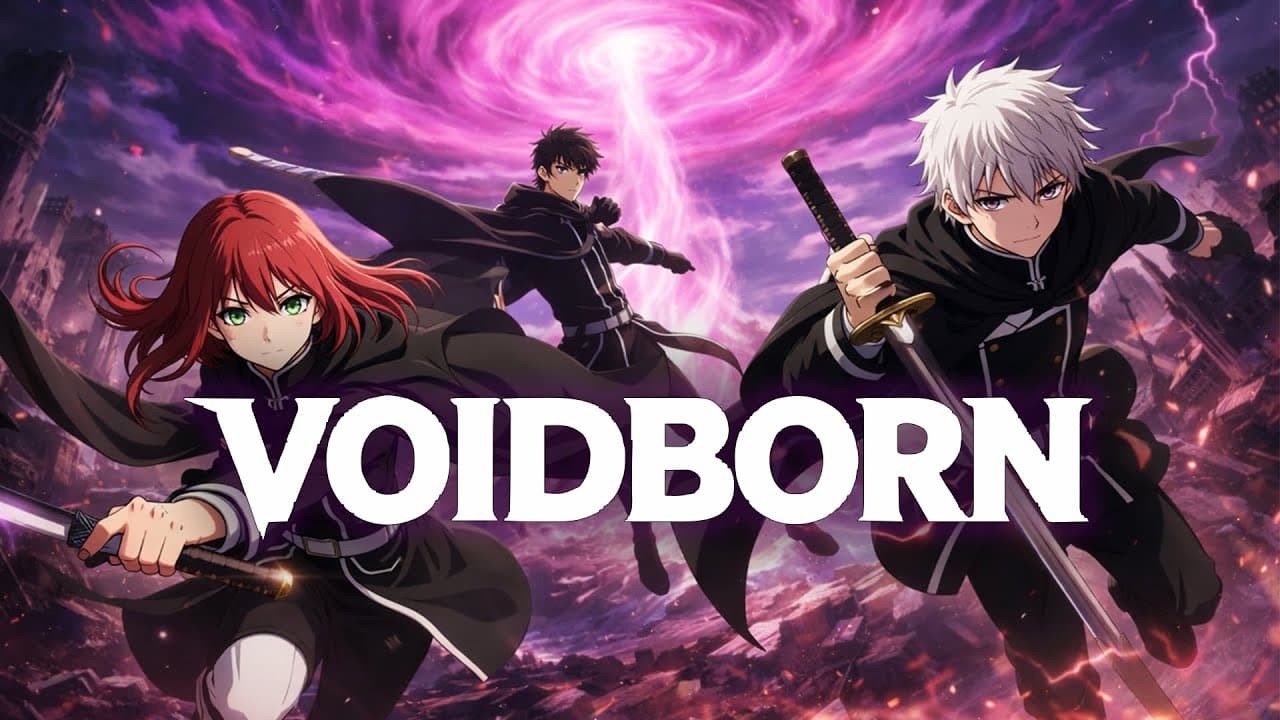
  • Video thumbnail for VOIDBORN

    VOIDBORN

    AI animated / cinematic short

    Festival recognition

    • 1st Place Silver

      Mondial Chroma Awards

    • 2nd Place Dreamina

      Mondial Chroma Awards

    • Award Winner

      Seoul International AI Film Festival

  • Video thumbnail for Les Fils du Vinnana

    Les Fils du Vinnana

    AI short film

    Festival recognition

    • Honorable Mention

      Top Quark Film Festival

    • People's Choice Nominee

      Illuminate Oneness of Humanity

    • Nominee

      ALTFF Supershort

  • Video thumbnail for Lost Garden

    Lost Garden

    AI animated series pilot

    Festival recognition

    • Finalist

      AI London Festival

The pipeline

Write. Board. Produce.

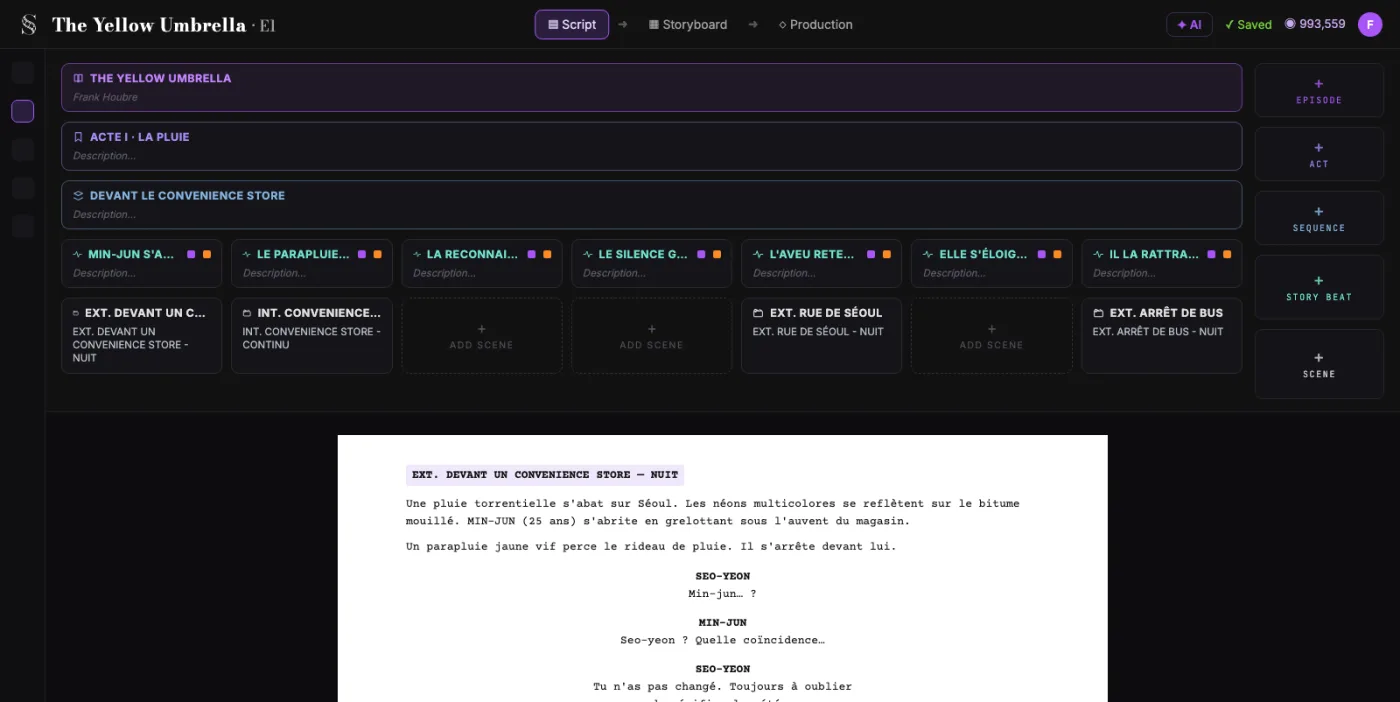
  1. ScreenWeaver screenplay editor: acts, sequences and beats above the formatted script of The Yellow Umbrella

    01The screenplay, enriched

    An industry-standard screenplay editor, and more: a visual outline and beat editor, your writing inspirations (notes, photos, audio) kept next to the page, and an AI researcher to support your writing, not replace it.

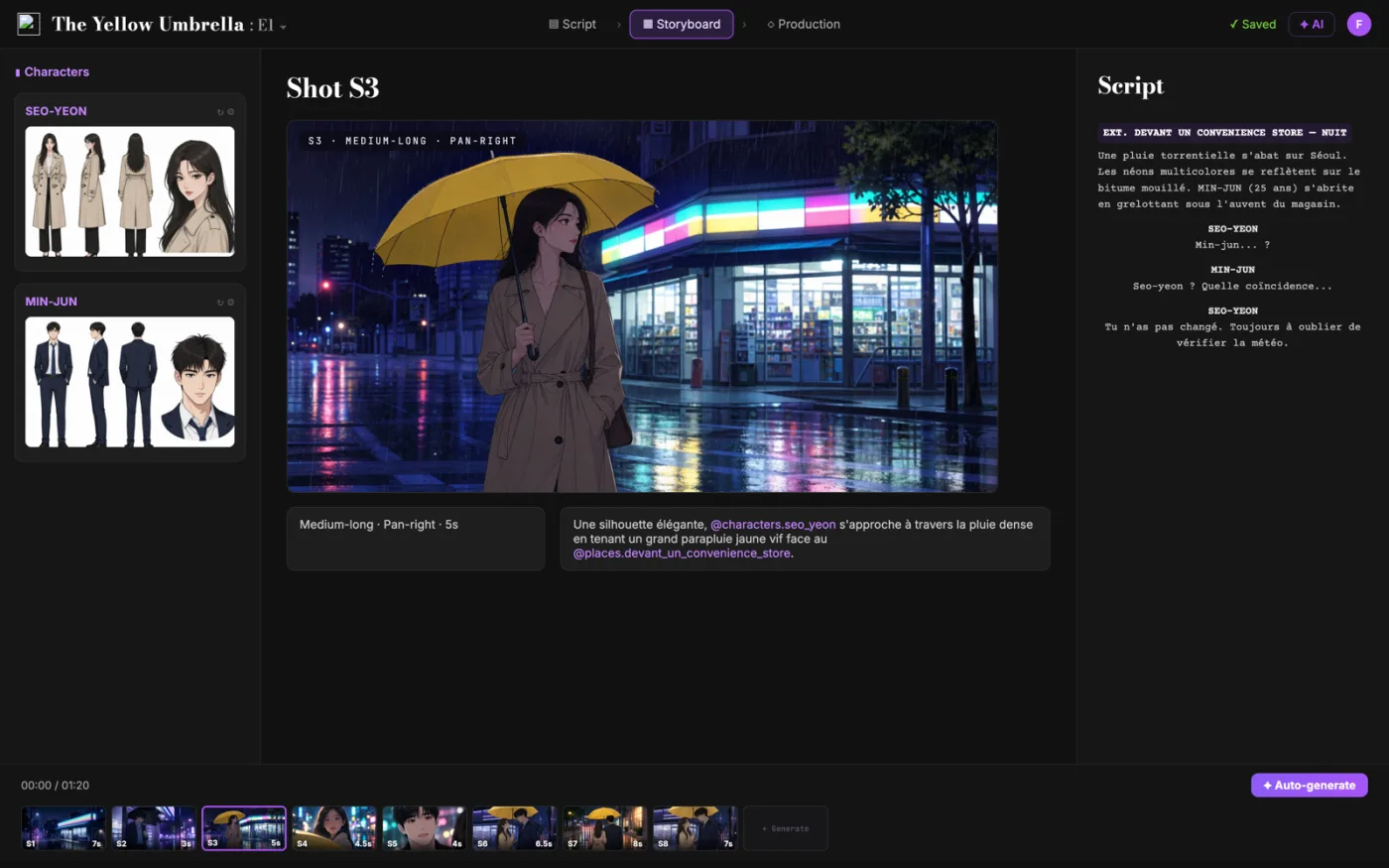
  2. ScreenWeaver storyboard: shot S3 of The Yellow Umbrella with characters, shot settings and the script beside it

    02The storyboard, made easy

    Shot breakdown generated from your screenplay, manual control over every shot (frame, angle, movement, duration), and generative AI previsualization in one click.

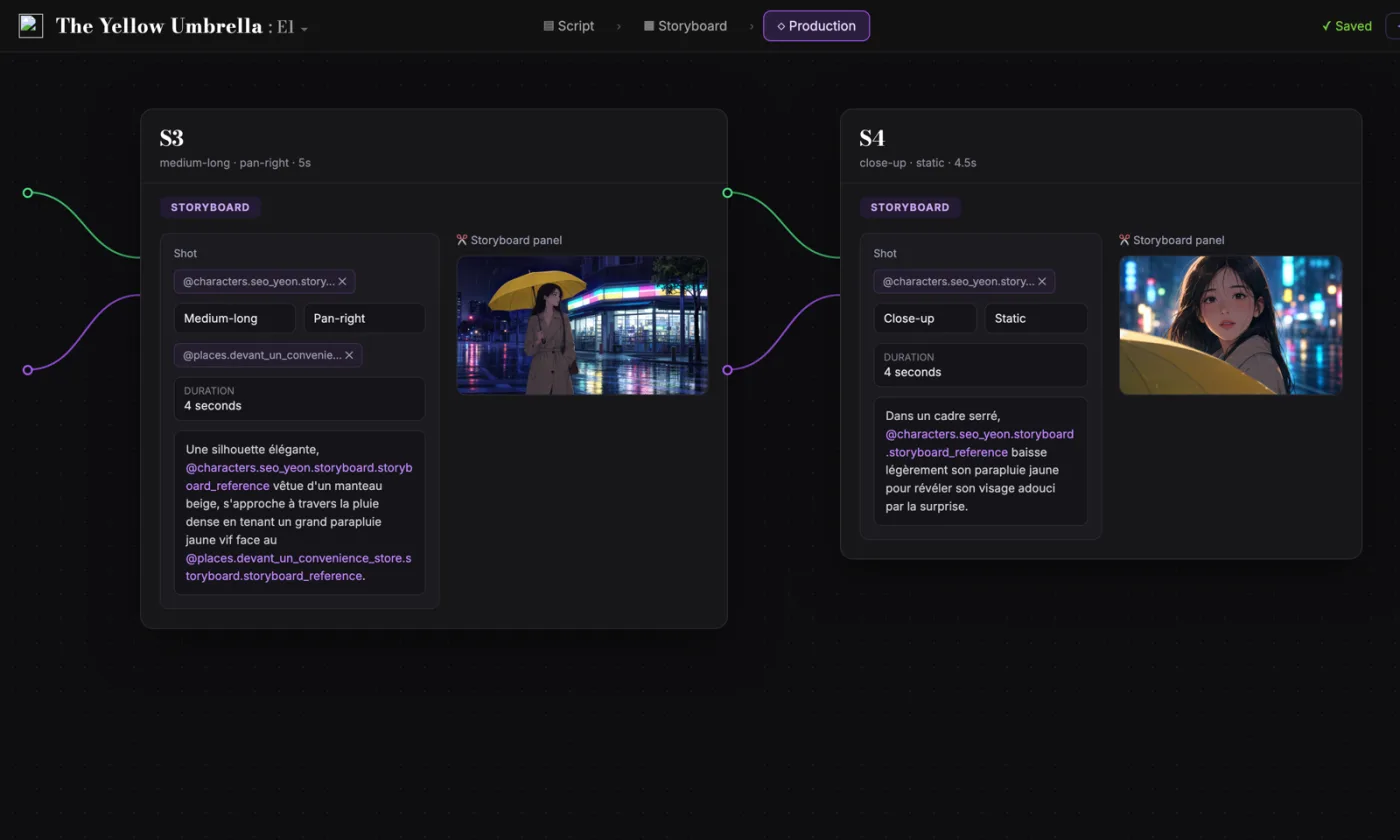
  3. ScreenWeaver production canvas: shots S3 and S4 as connected nodes carrying their storyboard panels and prompts

    03AI production, with finesse

    Footage generation pipelines connected to your screenplay and storyboard. Optimized out of the box, fully editable workflow.

FAQ

IDFA and AI, your questions

Can you submit an AI documentary to IDFA?
The 2026 entry regulations contain no clause on AI, so nothing forbids it. IDFA does require informed consent from the people portrayed and clearance of material not made for the film, and it defines documentary as a film that deals with reality.
What is the IDFA deadline for 2027?
Not announced. In 2026 the film deadlines were 23 April, 28 May and 9 July, and the festival ran 12 to 22 November.
How much does it cost?
In 2026, a film under 40 minutes cost €25, €40 or €50 by deadline, and a film of 40 minutes or more €45, €65 or €85. Student films cost €25. There is no refund. New media entries cost €35 or €45.
Does IDFA take AI projects?
DocLab does. It welcomes projects using emerging media to represent reality, and the DocLab Forum lists AI among its formats. For linear films, the standard film rules apply.
Do I have to disclose AI use to IDFA?
The regulations do not ask. We advise you to say so anyway, and to label generated sequences on screen. Silence in a rulebook is not the same as permission to mislead an audience.
Is a premiere required?
Yes, by section. The festival welcomes world, international, European and Dutch premieres, and competitions, Luminous and Frontlight need at least a European one. A film already shown in the Netherlands is not eligible.
Can I send a rough cut?
You can, but IDFA considers only one version, and a rejected work in progress cannot return, even with a newer cut. A picture lock is strongly preferred.
How long can the film be?
Any length. IDFA considers documentary in any format and duration. The Short Documentary competition runs up to 40 minutes, the International Competition takes over 60, and Envision over 40.

Start with what is real.

Write your treatment free today, and plan consent before you plan a single generated shot.