CPH:DOX 2027 · AI films guide

Can you submit an AI film to CPH:DOX?There is no AI rule. There is a documentary test.

The 2027 Rules and Regulations never mention AI. They do say what Copenhagen selects: documentaries and artists’ films, with a final deadline of 3 November 2026. Here is what that silence means for a film made with generative tools, and how to prepare the screenplay in ScreenWeaver.
  • Final deadline 3 November 2026
  • No AI clause anywhere
  • Any length, from 150 DKK
Lost Garden · Episode 1

Independent guide. ScreenWeaver does not organise CPH:DOX and is not affiliated with the Foundation of the Copenhagen Film Festivals. Rules read on 1 October 2026. Official rules and regulations

Available today in ScreenWeaver: free screenwriting, and a storyboard generated from your screenplay with Storyboard Beta, $9.99 a month.

Rolling out: video generation of each shot, powered by Seedance, with the Filmmaker plan.

The rules on one card

What CPH:DOX asks of any film.

CPH:DOX, the Copenhagen International Documentary Film Festival, belongs to the Foundation of the Copenhagen Film Festivals. Its rules are short and say nothing about AI. The ordinary rule set therefore applies to an AI-assisted film as to any other.
Festival
10 to 21 March 2027, Copenhagen
Final deadline
3 November 2026
Eligibility
Any duration, premiered after 1 April 2026
Entry fee
DKK 300 over 50 min, DKK 150 under
AI rule
None in the Rules and Regulations
Premiere
World premiere first in competition
Subtitles
English, even for English dialogue
Section
Chosen by the festival, not by you

Source: the Rules and Regulations for Film Submissions (2027 edition) and the submissions page on cphdox.dk, read on 1 October 2026. The online festival runs from 18 March to 4 April 2027. The festival can change its rules.

What the rules say about AI

Silence on AI, and five things to read into it.

CPH:DOX has no AI clause, so there is no sentence to cite. What you can read is what the rules do say, how the festival treats AI in its programme, and the documentary standard your film will be measured against.
  • What the rules say

    We read the 2027 Rules and Regulations for Film Submissions from section 1 to the conclusion on 1 October 2026. They contain no clause on AI, generative tools or synthetic images. They ask for no disclosure and set no limit. The only technology they name is the welcome given to VR, AR, mixed media and installations.

  • Silence is not a green light

    The conclusion says that entering means accepting the rules without condition, and that in unspecified cases the festival decides. An AI question the rules did not foresee is the festival’s call. A short email to submissions@cphdox.dk before you register costs nothing.

  • A documentary makes a claim

    For non-fiction, the reference most often cited is the Archival Producers Alliance guidelines of September 2024. They separate generative AI from machine learning used for logging or transcription, and ask for a cue sheet of every generated element and for clarity toward the audience. CPH:DOX has not adopted them, but they are the clearest yardstick, and worth meeting before anyone asks.

  • How the festival treats AI

    The 2026 programme put AI on screen as a subject: The AI Doc: How I Became an Apocaloptimist, Intelligence Rising, a war game on AI, and Molly vs the Machines. Nothing on that programme page presents a film as generated by AI. That is an observation, not a rule.

  • Reconstruction is the line to watch

    The same guidelines place generated images on a continuum with reenactment. They ask for extra care when AI alters footage of a real event, invents a historical scene or makes a real person say something. A visibly synthetic sequence, labelled as such, stays on the right side of that line. A synthetic image presented as archive does not.

Key dates

Thirty-three days to register.

The call opened on 15 May 2026 and <b>the first deadline has passed</b>. A film completed after 1 September can still register until 3 November.
  1. 1 Sep 2026

    First deadline, passed

    It applied to films completed before this date. A film finished afterwards uses the November deadline.

  2. 3 Nov 2026

    Final deadline

    Register with at least a synopsis and credits. A preview link is not needed yet, so a film still in the edit can be registered.

  3. 25 Nov 2026

    Preview links

    The festival must have your link by this date, sent to submissions@cphdox.dk. Work-in-progress versions are welcome.

  4. Mid-Feb 2027

    The answer

    Selected films are told at once, every other film by mid-February at the latest. Selected films deliver materials by 1 February and screening copies by 12 February.

  5. 10 to 21 Mar 2027

    The festival

    Seven competitions in the cinemas of Copenhagen and across Denmark, then the online festival from 18 March to 4 April.

Where it could land

Four doors, none you can pick.

You cannot apply to a section: the festival places the film. These four are where an AI-assisted work has a real chance of being read. Each card ends with how we would approach it.
  • 01

    NEW:VISION AWARD

    Experimental and artists’ films, shorts and features, with a 5,000 EUR prize.

    The natural home for a work in which the generated image is the subject. Treat AI as a medium with a point of view, not as a way to save on a shoot.

  • 02

    NEXT:WAVE AWARD

    Innovative films by emerging filmmakers and artists, features, with a 5,000 EUR prize.

    A first feature that invents a form can use generated material if the form is the argument. A conventional film with an AI patch will not stand out here.

  • 03

    INTER:ACTIVE AWARD

    Artworks in the Inter:active Exhibition, with a 1,400 EUR prize and a reduced fee of DKK 150.

    A generative installation or a branching piece belongs here, not in a film competition. Interactive works are exempt from the Danish premiere rule.

  • 04

    F:ACT AWARD

    Investigative and journalistic features, with a 5,000 EUR prize.

    The strictest ground. A synthetic image inside an investigation reads as a statement of fact. Use one only where it is labelled and where no real footage exists.

The 2026 programme

What the festival put on screen.

We read the 2026 programme page on 1 October 2026. In every passage that mentions AI, it is a subject, a debate or a research tool in another field, never the method used to make the film.

  1. 01

    AI is a subject first. The AI Doc: How I Became an Apocaloptimist follows a director as he asks what AI will do to the world. The film is about AI. It is not made by it.

  2. 02

    A speaker sits beside the film. Intelligence Rising was paired with a talk on AI and geopolitical decisions, and Molly vs the Machines with one on how Big Tech exploits attention.

  3. 03

    An argument beats a technique. None of these titles sells a tool. They defend a position on technology. A film made with AI needs a reason to exist beyond how it was made.

  4. 04

    The festival listens to its field. Its industry summit on 17 and 18 March 2026 held a session on documentary and AI, and presented DOX:AI, a co-design process with Doc Society, according to Modern Times Review.

Not a documentary, and honest about it

Lost Garden: a world nobody mistakes for real.

CPH:DOX selects documentaries and artists’ films, and this scene is neither. It is the Source Tree sequence from Lost Garden, episode 1, an animated fantasy by the ScreenWeaver team. We show it for one reason: nobody will take it for footage, which is the first rule of labelling synthetic images. The screenplay page, each shot as a storyboard frame and as the final image.

Logline. A small knight wakes up in a dead world and learns he is the last guardian of a seed that could bring the garden back.

Screenplay · episode 1 · the Source Tree

INT. HEART OF THE ROOTS - NIGHT

Living roots coil around LANTERN and pin him down. A voice stops them.

THE SOURCE TREE

Stop. He is my guest.

A giant woman of roots and white lilies opens her arms over the cavern.

Her eyes open. Blue, and vast.

THE SOURCE TREE

Welcome to you, Lantern Knight.

She lifts him in her palm, like a lamp.

THE SOURCE TREE

Do not be afraid. I will not harm you.

In the dark, a seed of light opens. Inside the flower, a sleeping child.

THE SOURCE TREE

You must find yours. Protect her.

CUT TO:

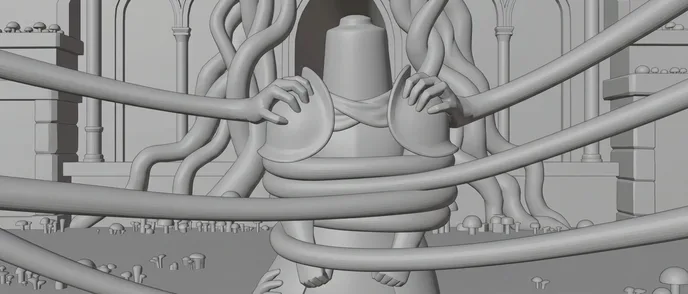
  1. A small lantern-helmed knight bound by thick roots in a ruined hall
    Storyboard frame of the trap shot, in grey
    01

    Medium · the trap

    Medium shot, Lantern bound by thick living roots in a ruined hall, glowing blue mushrooms on the floor, cold light

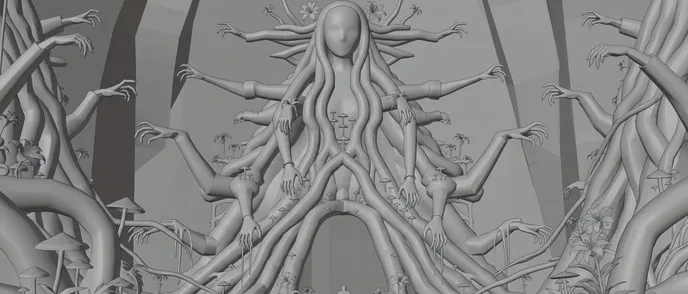
  2. A giant woman made of roots and white lilies spreads her many arms in a dark cavern
    Storyboard frame of the wide shot, in grey
    02

    Wide · the Source Tree

    Symmetrical wide shot, a giant woman made of roots, arms spread with many hands, white lilies, blue glyphs

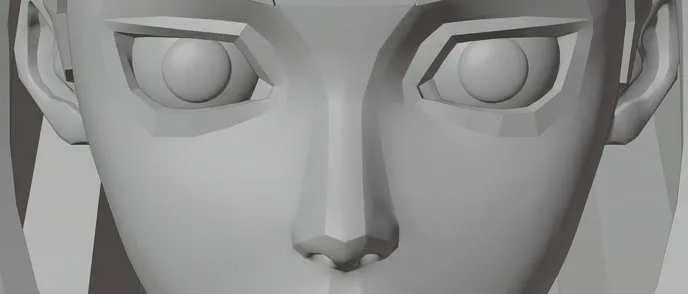
  3. Extreme close-up of a giant pale face with piercing blue eyes
    Storyboard frame of the eyes close-up, in grey
    03

    Extreme close-up · the eyes

    Extreme close-up on the giant's face, piercing blue eyes opening, pale skin, soft light from below

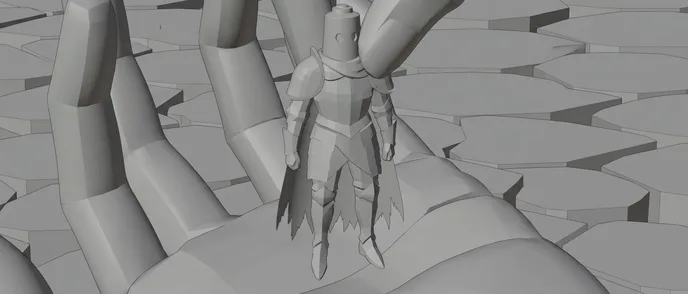
  4. A tiny armored knight stands in the middle of a giant open hand
    Storyboard frame of the palm shot, in grey
    04

    High angle · the palm

    High angle, the tiny knight standing in the center of a giant open palm, stone floor far below

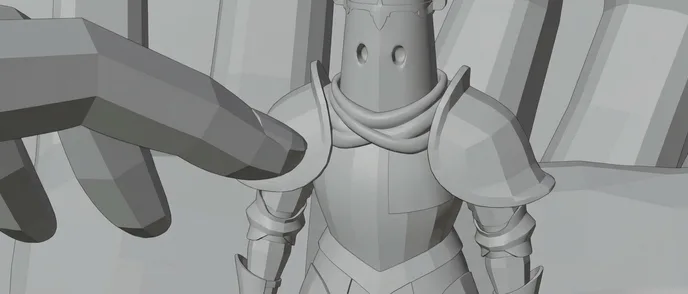
  5. A giant fingertip gently touches the chest of a small armored knight
    Storyboard frame of the touch close-up, in grey
    05

    Close-up · the touch

    Close-up, a giant fingertip gently touches the knight's armored chest, faceless helm, emotion through posture

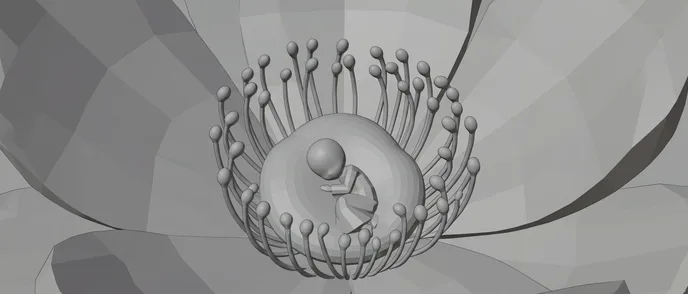
  6. A sleeping pink-haired child curled inside a glowing blue flower
    Storyboard frame of the seed insert, in grey
    06

    Insert · the seed

    Top-down insert, a glowing pale blue flower opening, a sleeping child with pink hair curled inside

Lost Garden, episode 1 lasts 17 minutes. The ScreenWeaver team made this animated series with Seedance, and the AI London Festival named it a finalist. A documentary would use a sequence like this for a recreation or a dream, with a visual code that sets it apart from real footage. Press play and it starts on this scene.

The script

A 25 minute documentary in five movements.

Under 50 minutes the fee is halved, and CPH:DOX takes any length. A 25 minute film with one authored synthetic sequence is a structure a programmer can hold in mind. Plan a treatment and a narration, not a shot list.
  1. 0:00 to 2:00

    The question

    Open on something real: a place, a voice, a document. Say what the film wants to find out.

  2. 2:00 to 7:00

    The subject in its world

    Interviews, locations, evidence. The audience must trust you before anything synthetic appears.

  3. 7:00 to 17:00

    The gap

    Where no camera was present, the authored sequence goes here, framed so that nobody takes it for archive.

  4. 17:00 to 23:00

    The test

    Return to the real and set the reconstruction against what your subject says.

  5. 23:00 to 25:00

    What remains

    End on a fact, not on an effect.

Credit every synthetic element as you credit archive and music: the tool, its version and the person who wrote the prompts. The Archival Producers Alliance guidelines ask for it, and it costs nothing in the end credits.

Step by step

From today to the 3 November registration.

Registration needs only a synopsis and credits, and the preview link can follow by 25 November. Use the weeks to decide what is synthetic and how it is shown, not to generate more.
  1. 01

    By 7 October

    Is this a CPH:DOX film?

    Write the film in three sentences. A documentary or an artist’s film belongs. Fiction with no claim on reality is better placed at one of the AI festivals.

  2. 02

    By 14 October

    List every synthetic element

    One line each: what it shows, why it is generated, the tool and version, and its timecode. This is your cue sheet, and the basis of the AI statement in your synopsis.

  3. 03

    By 21 October

    Board the authored sequences

    Treatment first, then a storyboard for the sequences you control. Interviews and observed scenes stay off the board. The writing is free in ScreenWeaver and the boards cost $9.99 a month in the beta.

  4. 04

    By 28 October

    Design the label

    Choose how the audience will know: a frame, a change of ratio, a colour, a line in the narration. The code must repeat every time a synthetic image appears.

  5. 05

    By 3 November

    Register

    Create a CPH:DOX profile and enter the synopsis, the credits and your AI statement. The fee is DKK 150 under 50 minutes and DKK 300 above.

  6. 06

    By 25 November

    Send the preview link

    A work in progress is welcome. Say plainly which sequences are still to be generated, and keep the link live.

  7. 07

    December to February

    Prepare delivery

    English subtitles on every version, a DCP or a film print, and an online transfer. Materials are due on 1 February 2027 and screening copies on 12 February.

What gets a film out

Eight ways a film falls out.

Most of these come from the Rules and Regulations. None of them is about AI, and each can end an entry.
  • A premiere already spent

    A film shown in Denmark, on Danish television or on a VOD platform available from Denmark is not eligible without the festival’s authorisation. Interactive works are exempt.

  • Choosing a section

    You cannot apply to one, and the placement is entirely the festival’s. Write the synopsis for the programmers, not for an award.

  • No English subtitles

    Every film screens in its original language with English subtitles, English dialogue included. Optional or hardcoded subtitles are both accepted.

  • A generated image passed off as archive

    The one AI mistake that can sink a documentary. Never present a synthetic image as the record of a real event, place or person. Label it every time it appears.

  • A real voice or face, generated

    Making a real person say what they never said is the first case the Archival Producers Alliance singles out. Seek consent, and think hard about a subject who cannot give it.

  • Waiting for feedback

    The festival cannot respond with reviews or comments on individual films. A film that is not selected is told by mid-February at the latest, and nothing more.

  • The wrong delivery

    Screening formats are DCP, 35mm and 16mm. A DCP cannot arrive through Google Drive or Dropbox, and a physical copy needs the festival’s prior authorisation.

  • A withdrawal after January

    A confirmed film cannot be withdrawn after 1 January 2027. Do not accept an invitation while a streaming or broadcast deal is still open.

Why ScreenWeaver

CPH:DOX wants a point of view. ScreenWeaver organises the work behind it.

ScreenWeaver is built for authored film, and a documentary has authored parts: the treatment, the recreations, the sequences that stand for what no camera recorded. It does not shoot, interview or edit a documentary. It carries the parts you write.
  • A treatment that holds

    Write the treatment and the narration on the Screenwriter plan, in industry format, with outline and beats. A documentary’s structure is written before it is found, then rewritten.

  • A cue sheet from the project

    Each generated shot traces back to its scene, its storyboard frame and its prompt, because the pipelines are connected to the script. That is the raw material of the cue sheet the guidelines recommend.

  • Boards for what you author

    Storyboard Beta turns the screenplay of a recreation into frames you can adjust, so you decide how synthetic material looks, and how it differs from real footage, before anything is made.

  • Start for free today

    Writing costs $0 and never expires on the Screenwriter plan. The beta storyboard costs $9.99 a month, and footage generation follows with the Filmmaker plan, now rolling out.

Real productions

International festival-recognized films have been written and produced with ScreenWeaver.

ScreenWeaver is already being used as a creative workspace for real AI film productions, from cinematic shorts to animated series pilots selected, nominated, and awarded by international festivals.

  • Video thumbnail for VOIDBORN

    VOIDBORN

    AI animated / cinematic short

    Festival recognition

    • 1st Place Silver

      Mondial Chroma Awards

    • 2nd Place Dreamina

      Mondial Chroma Awards

    • Award Winner

      Seoul International AI Film Festival

  • Video thumbnail for Les Fils du Vinnana

    Les Fils du Vinnana

    AI short film

    Festival recognition

    • Honorable Mention

      Top Quark Film Festival

    • People's Choice Nominee

      Illuminate Oneness of Humanity

    • Nominee

      ALTFF Supershort

  • Video thumbnail for Lost Garden

    Lost Garden

    AI animated series pilot

    Festival recognition

    • Finalist

      AI London Festival

The pipeline

Write. Board. Produce.

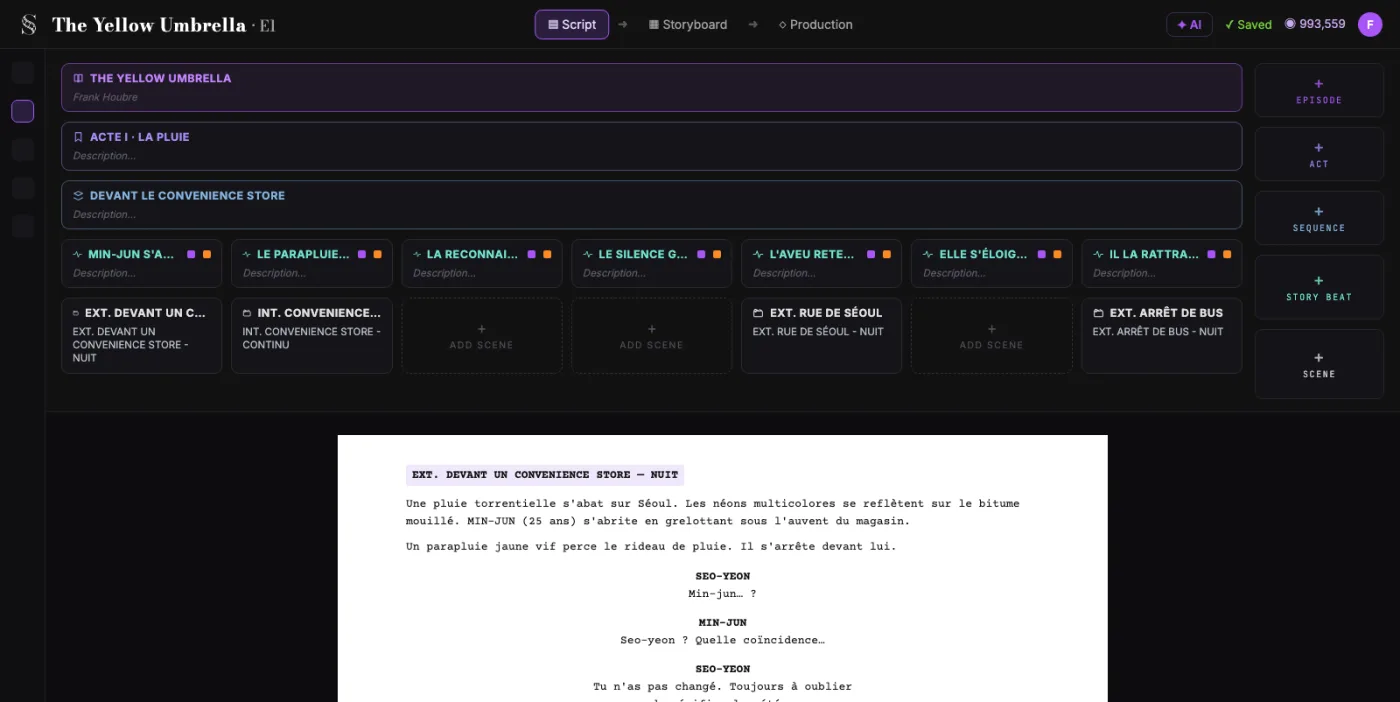
  1. ScreenWeaver screenplay editor: acts, sequences and beats above the formatted script of The Yellow Umbrella

    01The screenplay, enriched

    An industry-standard screenplay editor, and more: a visual outline and beat editor, your writing inspirations (notes, photos, audio) kept next to the page, and an AI researcher to support your writing, not replace it.

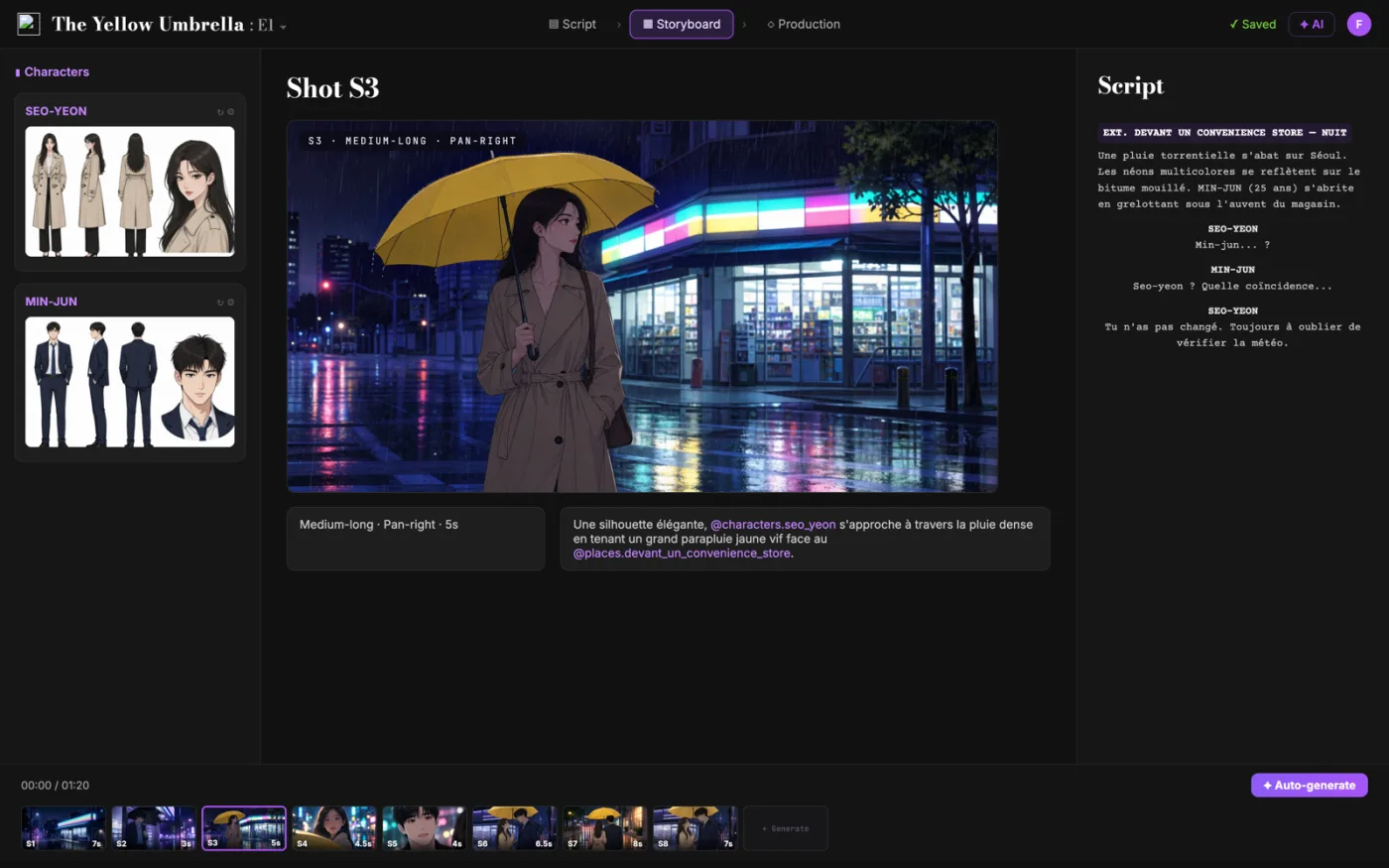
  2. ScreenWeaver storyboard: shot S3 of The Yellow Umbrella with characters, shot settings and the script beside it

    02The storyboard, made easy

    Shot breakdown generated from your screenplay, manual control over every shot (frame, angle, movement, duration), and generative AI previsualization in one click.

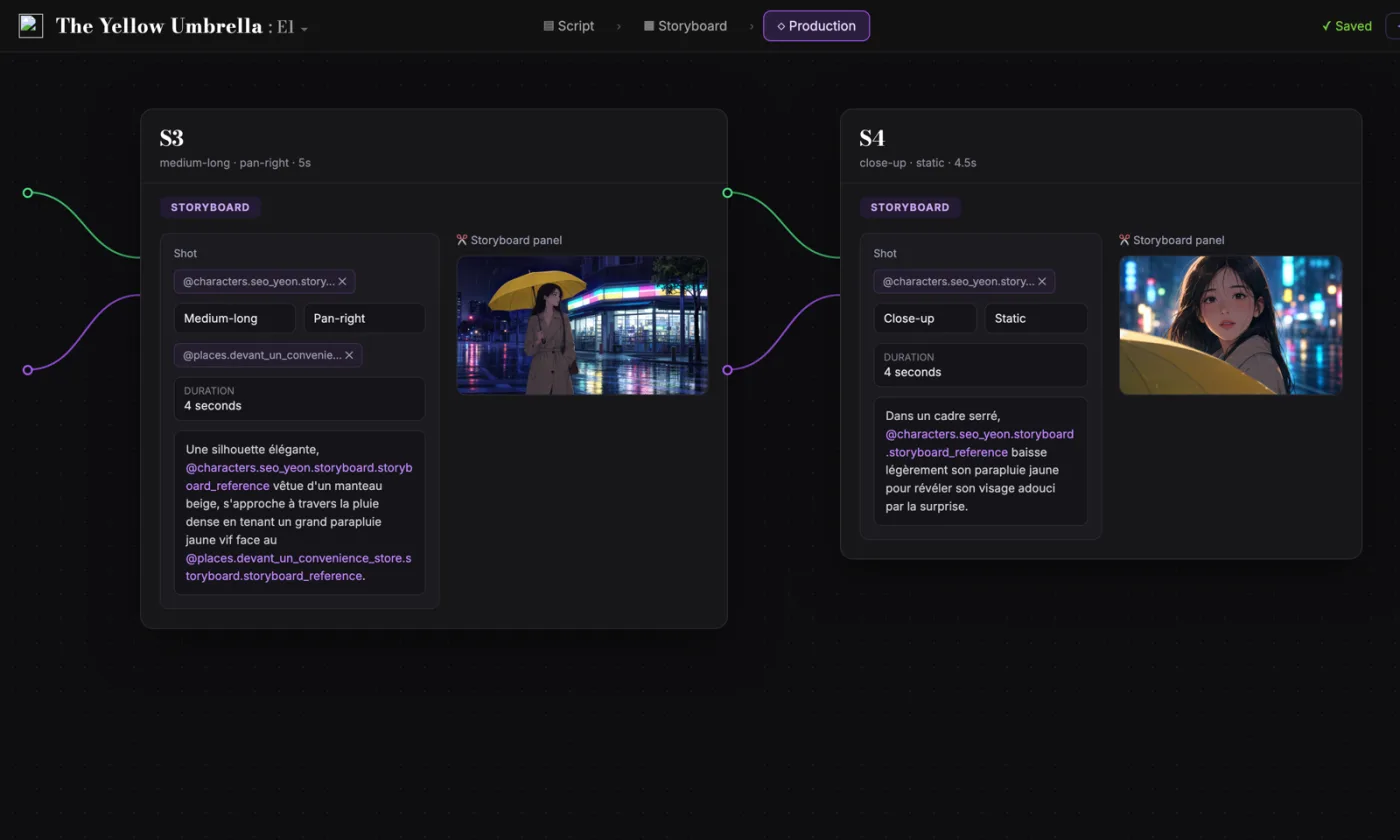
  3. ScreenWeaver production canvas: shots S3 and S4 as connected nodes carrying their storyboard panels and prompts

    03AI production, with finesse

    Footage generation pipelines connected to your screenplay and storyboard. Optimized out of the box, fully editable workflow.

FAQ

CPH:DOX and AI films, your questions

Can you submit an AI film to CPH:DOX?
Nothing in the 2027 Rules and Regulations forbids it, and nothing requires a disclosure. The rules are silent on AI, and in unspecified cases the festival decides. CPH:DOX selects documentaries and artists’ films, so a fictional AI film is a poor fit. The final deadline is 3 November 2026.
What is the deadline for CPH:DOX 2027?
1 September 2026 for films completed before that date, which has passed, and 3 November 2026 for films completed after it. On 3 November a synopsis and credits are enough, and the preview link is due by 25 November.
What does it cost to submit to CPH:DOX?
DKK 300 (about 40 EUR) for films over 50 minutes, and DKK 150 (about 20 EUR) for shorter films and interactive works. The fee can be waived for countries on the DAC list, for up to two projects per production company. Ask submissions@cphdox.dk.
Do I have to tell CPH:DOX my film uses AI?
The rules do not ask. For a documentary, telling is wise: the Archival Producers Alliance guidelines call for transparency toward production partners and audiences. Say it in your synopsis and in the end credits.
Which section will my film be in?
You cannot apply to a section or a competition. The festival decides, and it runs seven competitions, from the 10,000 EUR DOX:AWARD to the 1,400 EUR INTER:ACTIVE AWARD. Experimental work is read for NEW:VISION.
Must my film be a world premiere?
In the competitions the festival prefers world premieres, then international and European ones. The non-competitive sections only require a Danish premiere. A film already shown in Denmark or available on Danish VOD is not eligible without authorisation.
Is there a jury I can read about?
Each competition is judged by an appointed jury, except the Audience Award. The rules published on 1 October 2026 name no juror and list no criteria or weights, so do not trust a site that gives you either.
Can I send a work in progress?
Yes. Work-in-progress versions are welcome for preview, and a film can be registered with only a synopsis and credits until the link is ready. Say plainly what is still being made.

Register by 3 November. Start with the treatment.

Start the treatment at no cost. Board the sequences you author, and keep your cue sheet from the first prompt.