Dappled lightLight broken into living patches
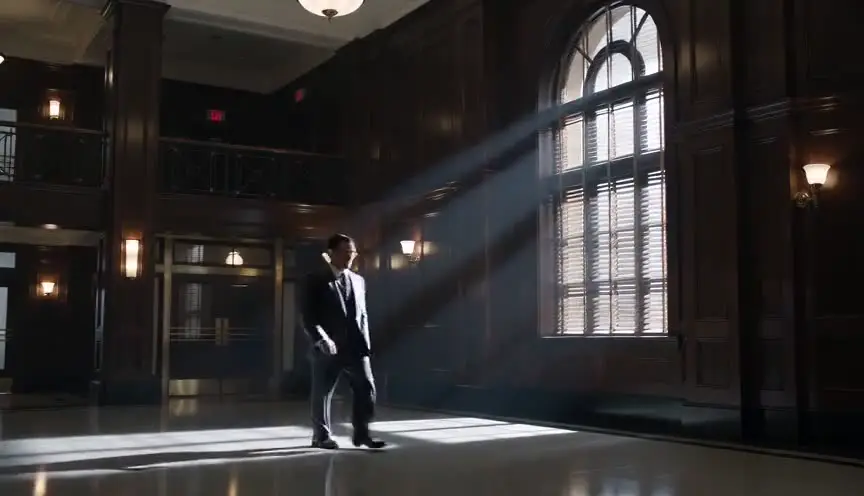
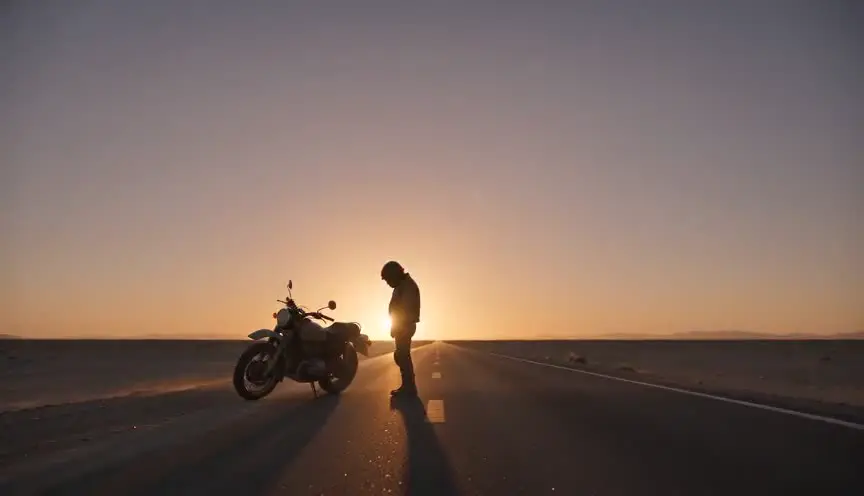
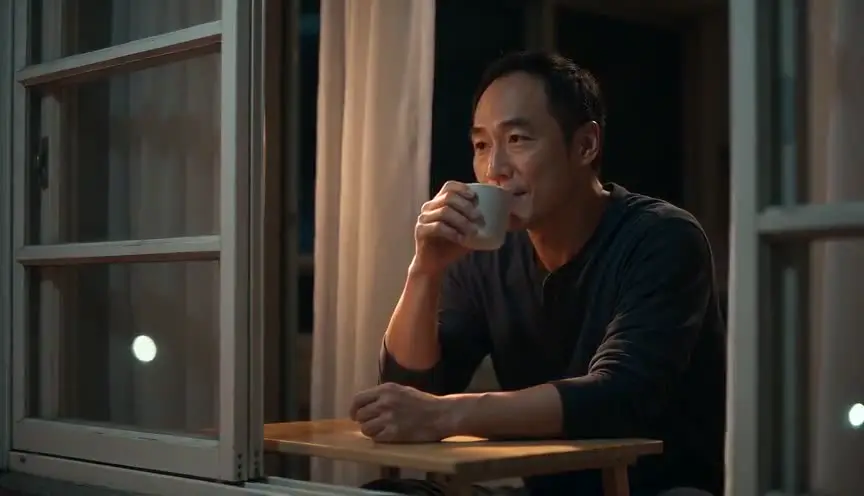
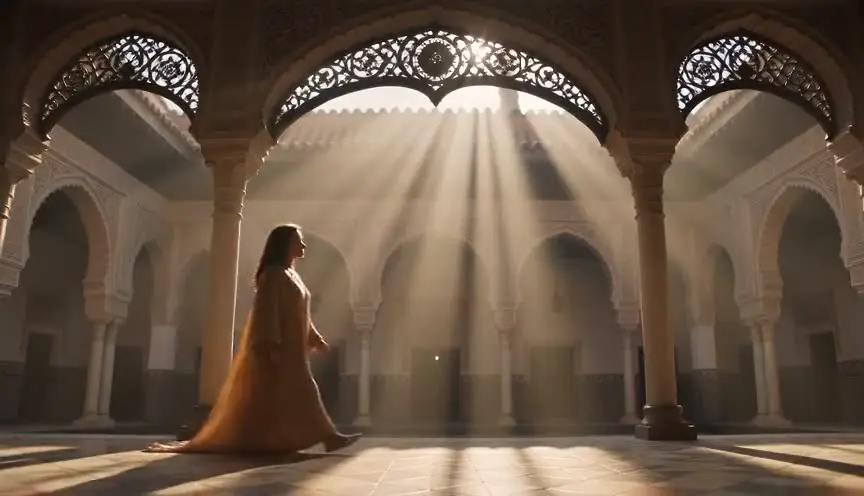
Dappled light is light broken into patches by something in its path, such as leaves, lattices, screens or blinds, so it falls on faces and floors in irregular spots and stripes. The image feels alive and textured, and the audience senses both beauty and concealment.
Also calledBroken lightFiltered lightMottled light
Lighting
Why it works on screen
Dappled light makes a scene breathe. Under trees, the patches move with the wind, and faces pass in and out of light. That suits childhood, summer, first love, dreams and pastoral peace. Through blinds, screens or grilles, the same broken light becomes restless and secretive: people half hidden, never fully in the clear. It serves romance that cannot be spoken and suspicion that cannot be proven. A scene earns it when the setting's texture carries mood, and when the characters' partial visibility echoes what they reveal and hide from each other.
The shot list line
- Size
- Medium two-shot
- Angle
- Eye level
- Movement
- Static or slow slide
- Lens
- 50mm to 85mm
- Duration
- 5 to 8 s
Use hard sun or a hard lamp through real branches or a cookie, keep the pattern moving gently, and check that eyes land in light on the key lines.
Screenplay
On the page
Dappled light comes from things in the set: trees, lattice screens, blinds, a straw roof. A writer can name them freely and let the characters move through them. Describe the place, not the lighting pattern. If a character stepping into or out of the patches matters, write that as action once. How hard the sun must be, whether to add a branch or a cookie in front of a lamp, and how to keep continuity belong to the shot list.
EXT. TEMPLE COURTYARD - KERALA - AFTERNOON
A huge banyan spreads over the stone floor. The sun comes through it in a thousand small coins.
ANJALI MENON (16) and ARJUN NAIR (17) sit on the low wall, a textbook open between them, neither of them reading.
The leaves move. Light slides across Anjali's face, then off it.
Arjun starts to say something and stops.
ANJALI
If you're going to say it, say it before my mother comes back.
Storyboard
In the storyboard
Draw irregular patches of light and shadow over the faces, the floor and the background, with the source (sun, lamp) marked above and the filtering object (tree, blind, screen) drawn in or labeled. Add small curved arrows if the pattern moves with wind. Note "dappled, moving" or "dappled, static blind pattern". Mark the moment a character's eyes should fall into a patch of light.
Pairs well with

When real trees are not available, a gobo or cookie in front of a hard lamp reproduces dappled light on set. It gives control over pattern, size and movement for interiors or night shoots.
Dappled light in the background becomes soft, glowing shapes with a shallow focus. The subject stays crisp while the broken light turns into texture behind them.
Reference
Watch it in
In the Mood for Love (2000)
Light through screens and blinds falls in narrow bands across the two leads, a match for the longing they will not act on.
The Conformist (1970)
Blind shadows stripe Clerici and the rooms around him, so ordinary interiors feel broken, oppressive and watched.
Blade Runner (1982)
Light cut by blinds, windows and fans falls over faces and walls, thickening the future city with noir texture.
ScreenWeaver
Set it up in ScreenWeaver
Name the tree, the lattice or the blind in your action lines, and ScreenWeaver breaks the scene down into shots automatically. Open each shot, set framing, angle, movement and duration, and note "dappled light" with the filtering object. The location and characters carry from shot to shot, so the pattern stays on the same side as you cut. Use the AI previsualization to see how much broken light the faces can take before they become hard to read.
Start writing for freeThe prompt behind this clip
This is the exact prompt that rendered the clip at the top of the page. Keep the description of the camera and the light, change the subject and the place.
Dappled light. Close-up of a woman's face lying in the grass under a tree on a bright summer day. Sharp leaf shadows and small bright patches of sunlight cover her face and hair like a moving mosaic, and the pattern of light and shadow slides across her skin as the branches above sway in the wind. She closes her eyes and smiles. High contrast, warm sunlight, static camera. No text.
Common mistakes
- 01
Eyes in the dark
Random patches often land on a cheek while the eyes stay in shadow. Move the actor or the pattern so the eyes catch light on important lines.
- 02
Busy frame
Too much contrast in the pattern competes with the actors. Soften it with a little fill or a less harsh source so faces stay the priority.
- 03
Pattern that jumps
Real sun through leaves changes with every take and every cloud. Plan continuity: record the pattern, or replace the sun with a controllable lamp and a cookie.