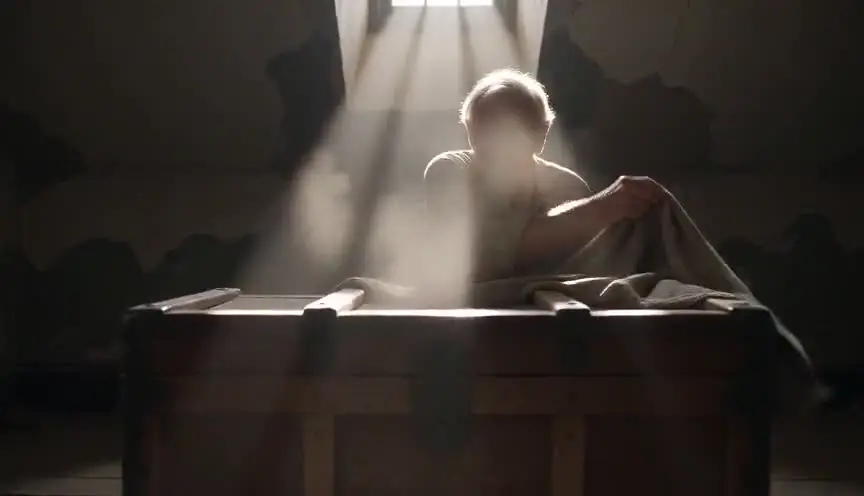
Volumetric lightWhen light becomes a solid thing
Volumetric light makes beams visible in the air, as light passes through haze, smoke, dust, fog or steam and draws shafts across the frame. The space gains depth and scale, and the audience feels awe, mystery or the sacred.
Also calledGod raysLight shaftsCrepuscular raysSunbeams
Lighting
Why it works on screen
Visible beams turn air into architecture. They make a room feel bigger, older and more charged. Use them for revelation and wonder: a character entering a cathedral, a barn at dawn, an abandoned factory, a forest after rain, a spaceship hangar. They can also make a scene feel threatening, a searchlight cutting through smoke, a flashlight beam in a crawl space. Volumetric light directs the eye along its lines and gives the audience a path through the frame. A scene earns it when the place matters as much as the people, or when a moment should feel like a vision.
The shot list line
- Size
- Wide shot
- Angle
- Low angle, looking up into the beams
- Movement
- Slow push in
- Lens
- 24mm to 35mm
- Duration
- 6 to 10 s
Fill the space with even haze, keep the source hard and high, and place the camera facing toward the light so the beams read against darker surroundings.
Screenplay
On the page
Writers can suggest volumetric light honestly by naming what fills the air: dust, smoke, steam, morning fog, incense. Add the hard source, a high window, a hole in the roof, a flashlight. The combination paints the beam in the reader's mind. Do not write "god rays" or "volumetric" as instructions. Haze density, the source's position and the camera angle into the light are decisions for the shot list.
INT. ABANDONED TEXTILE MILL - LANCASHIRE - MORNING
The roof has holes the size of cars. The sun drops through them in solid white columns, full of dust.
Three urban explorers climb in through a broken window: KWAME (20s), filming on his phone, JESS (20s), and her younger brother TOBY (14).
Toby walks straight into the nearest column of light and stops, arms out.
The dust turns around him like snow.
TOBY
It's like standing inside a church.
Storyboard
In the storyboard
Draw the beams as long, straight bands from the source to the floor, lighter than everything around them, with a few specks for dust. Shade the rest of the space dark so the beams stand out. Mark the source (window, roof hole, lamp) and add "haze" in the margin with the density you want. Show the camera looking toward the light in a small overhead diagram, and note where the character stands relative to the beam.
Pairs well with
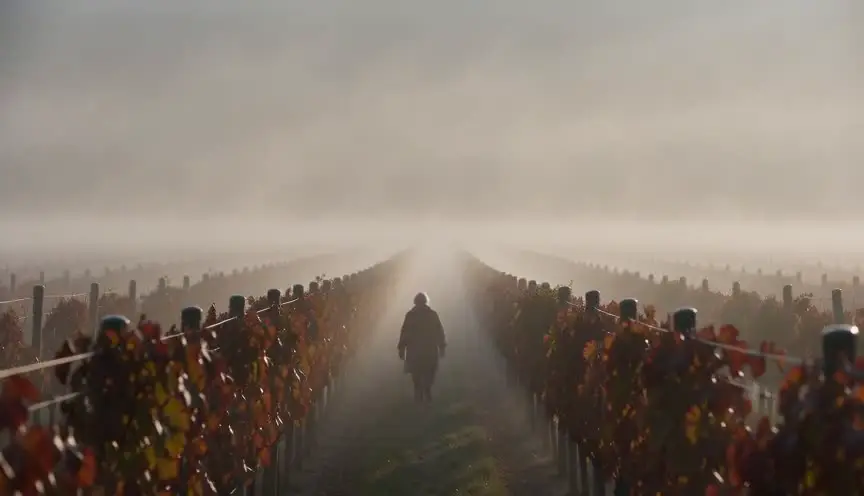
Volumetric light needs particles in the air. Planning haze together with the lighting ensures the beams read, and lets the crew control density shot by shot for continuity.
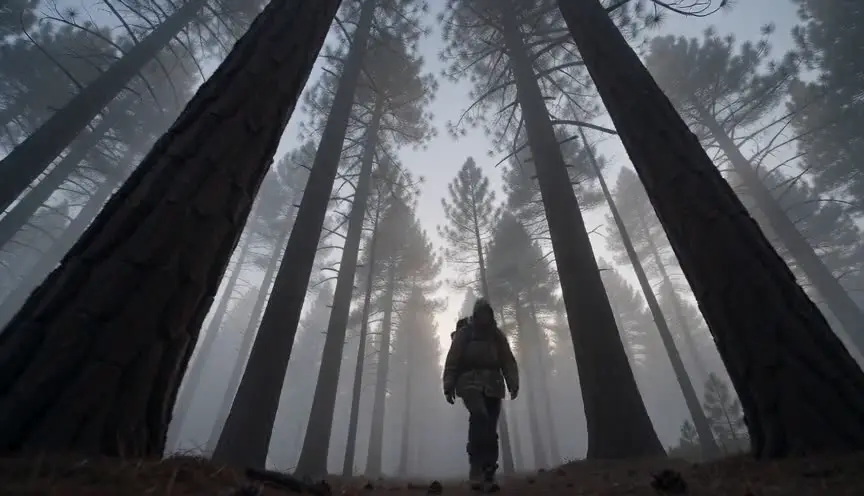
A low angle looking up into the shafts stretches them across the frame and adds a sense of height and awe, as if the light were falling from a great distance.
Reference
Watch it in
Blade Runner 2049 (2017)
Thick backlit shafts through dust and haze fill interiors and exteriors, giving the world immense scale and a heavy mood.
Blade Runner (1982)
Smoke, rain and hard backlight make beams from windows, flying cars and signs look solid in the dark city.
Citizen Kane (1941)
Smoke in the projection room turns the projector beams into bright, sculpted shafts that give the space depth and atmosphere.
ScreenWeaver
Set it up in ScreenWeaver
Write the source and what fills the air, dust, steam or smoke, into your action lines, and ScreenWeaver breaks the scene down into shots automatically. Open each shot, set framing, angle, movement and duration, and note "volumetric light, haze" with the source direction. The location carries from shot to shot, so the beams keep the same angle. The AI previsualization helps you find the camera positions where the shafts read best.
Start writing for freeThe prompt behind this clip
This is the exact prompt that rendered the clip at the top of the page. Keep the description of the camera and the light, change the subject and the place.
Volumetric light: in a Moroccan riad courtyard, thick columns of golden sunlight pour through the ornate carved wooden mashrabiya screen overhead, cutting sharp diagonal shafts through the hazy air thick with fine dust. A middle-aged woman in a flowing caftan crosses slowly through the courtyard, her silhouette breaking and reforming across the beams as she walks. The camera is locked on a low tripod, framing the tiled floor and carved arches, holding perfectly still while the light shafts remain fixed, and only the dust drifting inside them and her unhurried steps mark the passage of the four seconds. No text.
Common mistakes
- 01
Camera facing away
Beams are most visible when the camera looks toward the light. Shot from behind the source, the shafts almost disappear. Plan angles into the light.
- 02
Uneven haze
Haze that drifts or thins between takes breaks continuity. Use a hazer with steady output, close doors and check density before every take.
- 03
Everything washed out
Too much haze lowers contrast everywhere and turns the frame milky. Use just enough to show the beams and keep deep shadows around them.