Gobo lightingShadows with a shape and a meaning
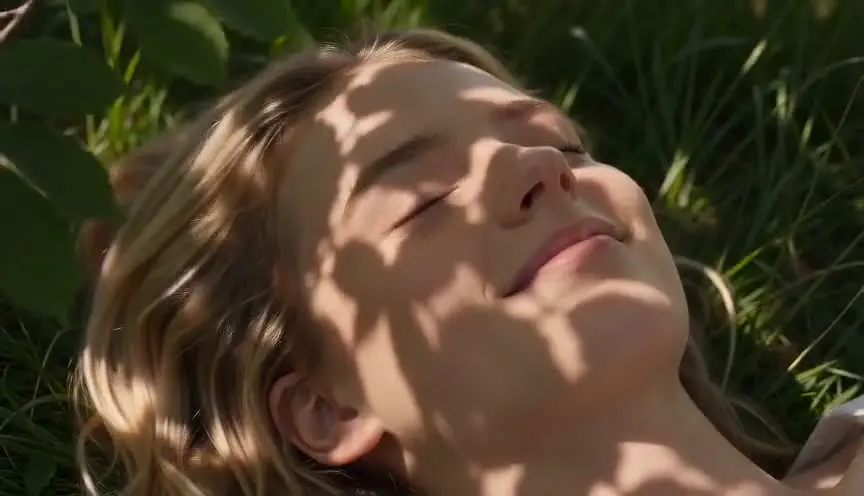
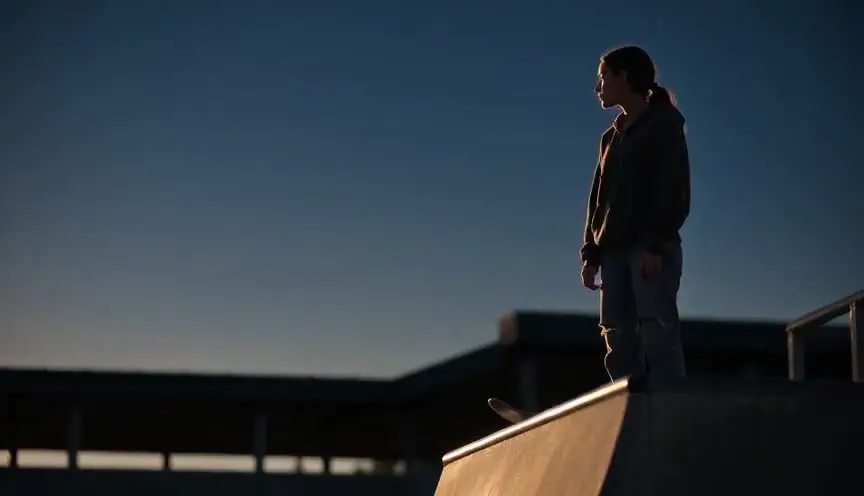
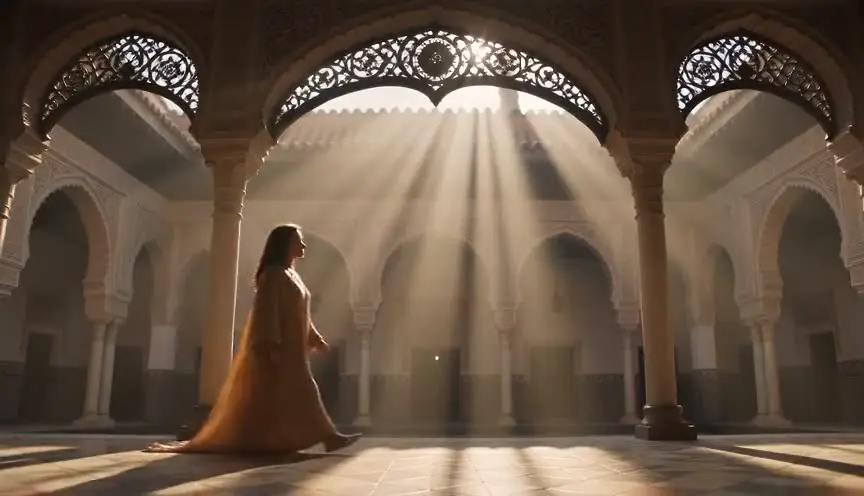
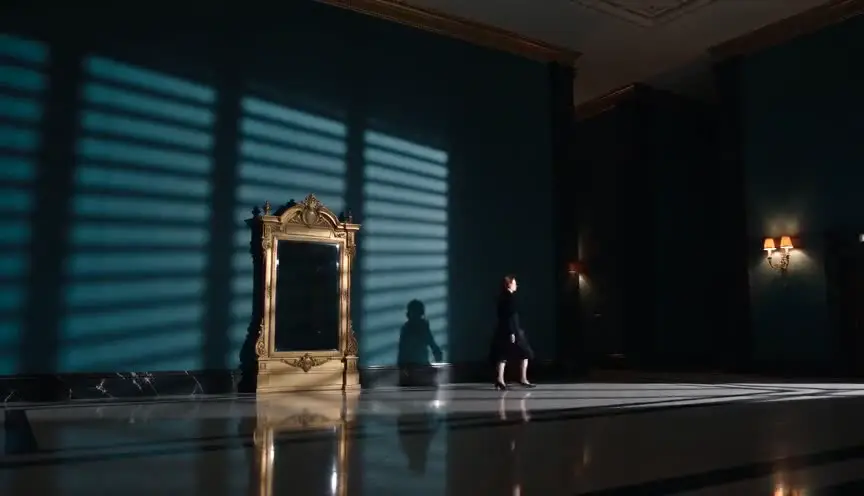
Gobo lighting places a cutout (a gobo or a cookie) between a hard light and the scene, so the light lands in a pattern: blinds, window bars, leaves, a grille. The frame gets texture and a hint of a world beyond it, and the audience feels the mood the shape suggests.
Also calledCucolorisCookie lightingPattern projection
Lighting
Why it works on screen
A gobo lets the crew draw with shadow. Venetian blind stripes say noir, secrets and surveillance. Window bars say prison or a trapped life. Leaves say a garden outside, even on a stage. Use it to suggest an off-screen space, to break up a plain wall, or to lay a symbol across a face. It serves thrillers, crime, period interiors and dream sequences. A scene earns it when a room needs a sense of the outside, or when a pattern of shadow can quietly say something about a character's situation that no one in the scene will say out loud.
The shot list line
- Size
- Medium shot
- Angle
- Eye level or slightly low
- Movement
- Static
- Lens
- 35mm to 50mm
- Duration
- 5 to 8 s
Use a hard, focusable lamp with a blind-pattern gobo or a real blind in front of it, add light haze if the beams should read, and place the actors so a stripe crosses the eyes on key lines.
Screenplay
On the page
The screenplay should never mention a gobo or a cookie. Write the object that would cast the pattern: blinds half closed, a barred window, a ceiling fan, a trellis outside. If the shadows matter, say where they fall once, the stripes across a desk or a face. The crew then decides whether to use the real object or a gobo on a lamp, and records the pattern, size and sharpness in the shot list.
INT. PAWNSHOP BACK OFFICE - NEW ORLEANS - NIGHT
Blinds half shut against the streetlamp. Stripes of light lie across the desk, the safe, the wall calendar from 1998.
AUGUSTINE BROUSSARD (60s) counts cash under the stripes.
A knock. The door opens. LOUISE TRAN (30s), a detective, steps in, and the bars of light fall across her badge.
Augustine keeps counting.
AUGUSTINE
We closed an hour ago, officer. Even for you.
Storyboard
In the storyboard
Draw the pattern across the frame as bands or shapes of shadow: stripes on the wall, the desk and the faces. Mark the source outside the frame with a lamp symbol and draw the gobo as a small grid or cutout in front of it. Note the pattern type, its angle and its sharpness ("blinds, 30 degrees, hard"). If a character walks into the pattern, draw the moment when the stripes land on them.
Pairs well with
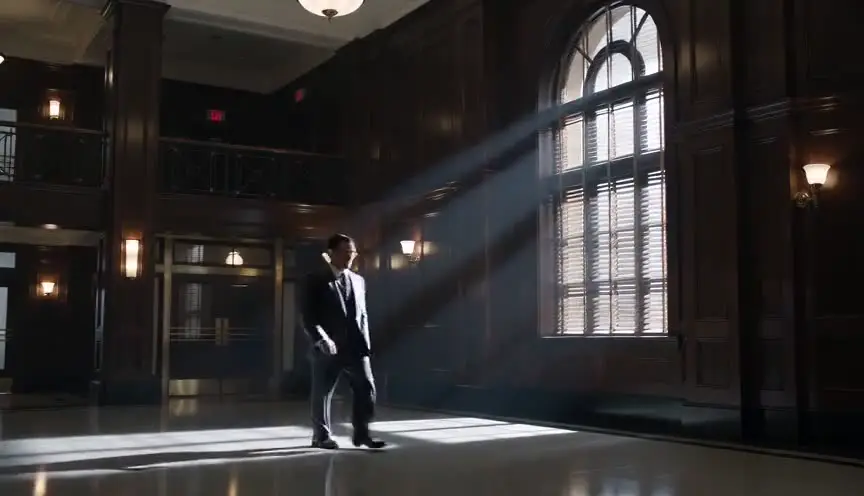
A gobo only casts a clear pattern with a hard source. Soft light turns stripes into a blur. Pair them when you want sharp, graphic shadows that read on camera.
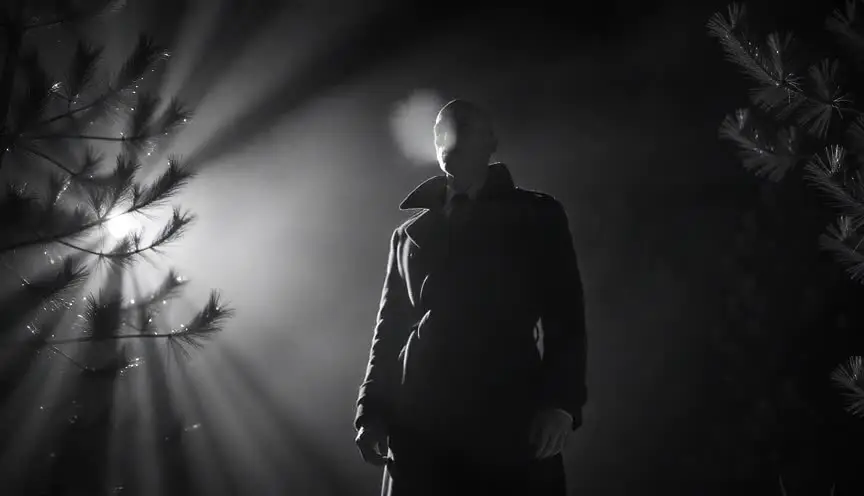
Blind and window patterns are at the heart of the noir look. Combining gobos with noir staging and low-key contrast gives a scene its familiar tension and moral murk.
Reference
Watch it in
Double Indemnity (1944)
Blind shadows fall across the characters again and again, a noir signature that makes the rooms feel like traps full of lies.
Blade Runner (1982)
Blind and grid patterns cut through haze in Deckard's rooms and offices, adding to the film's noir mood of being watched.
ScreenWeaver
Set it up in ScreenWeaver
Name the blinds, bars or foliage that cast the shadows in your action lines, and ScreenWeaver breaks the scene down into shots automatically. Open each shot, set framing, angle, movement and duration, and note the pattern and its direction. Characters and the location carry from shot to shot, so the stripes stay at the same angle as you cut. The AI previsualization shows where the pattern lands on the faces and the walls.
Start writing for freeThe prompt behind this clip
This is the exact prompt that rendered the clip at the top of the page. Keep the description of the camera and the light, change the subject and the place.
Gobo lighting in a dim jazz club: a single spotlight fitted with a venetian blind pattern throws sharp horizontal bars of light and shadow across a saxophonist standing at a microphone, cigarette haze drifting through the beam and catching the striped light. The camera stays locked on a static tripod at eye level, framing the musician in a medium shot as the blind-shadow bars stay fixed on his face and shoulders while his upper body sways gently with the music, background tables and glasses dissolving into soft darkness beyond the pattern's edge. No text.
Common mistakes
- 01
Pattern with no source
Blind stripes in a room with no window look like a style effect. Show the window or the blinds at least once so the pattern belongs to the space.
- 02
Too sharp or too soft
A gobo too close to the lamp blurs; too far gives a pattern so sharp it looks drawn. Adjust the distance until the edges match the source you are faking.
- 03
Stripes hide the eyes
A shadow band across the eyes can kill a key line. Adjust the actor or the gobo so the eyes land in light when it matters.