Cosmic horrorThe terror of being very small
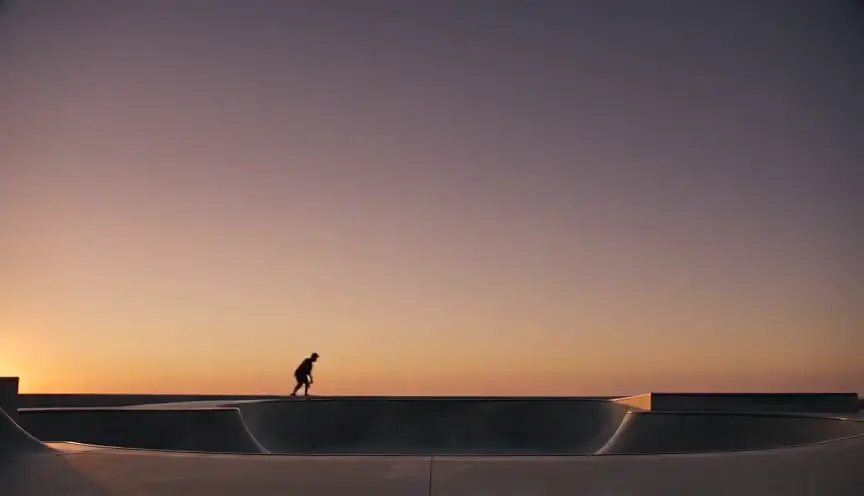
Cosmic horror is a style of fear built on forces too vast and alien for humans to understand, shown through wrong colors, impossible shapes and glimpses rather than full views. The audience feels insignificant, and the worst part is never fully explained.
Also calledLovecraftian horrorEldritch horrorCosmicism
Genre looks
Why it works on screen
Cosmic horror is not about a monster to defeat. It is about discovering that the universe does not care, and that some truths break the mind that learns them. Scientists, explorers and ordinary families meet something that bends matter, time or perception. The style serves awe, dread, madness and the loss of certainty. A story earns it when the characters' curiosity is their undoing, when each answer opens a deeper question. The visuals should suggest scale beyond the frame and rules beyond logic: a color that has no name, a corridor that is longer inside than outside.
The shot list line
- Size
- Extreme wide for scale, close-ups for reactions
- Angle
- Low angles toward vast structures, high angles to shrink characters
- Movement
- Very slow push in or static
- Lens
- Ultra-wide for vastness, long lens to compress
- Duration
- 5 to 12 s
Show only fragments of the unknown, use unnatural color and light, and let the characters' faces carry the horror.
Screenplay
On the page
The page should show how the unknown affects people, not what it looks like in detail. Write the wrongness through reactions and small anomalies: a clock running backward, a shadow at the wrong angle, a sound felt in the teeth. Resist describing the entity fully, since a vague description keeps the fear alive for the reader too. Leave the visual design of the impossible to the director, the designers and the shot list.
INT. CONTROL ROOM, CERRO LAGUNA OBSERVATORY - ATACAMA - NIGHT
Monitors show a star field. One patch of sky is simply missing: no stars, no black, no pixels.
DR. VALENTINA ROJAS (50s, astronomer, parka over pajamas) zooms in. The patch grows faster than the zoom.
Her intern TOMÁS (24) covers his ears. There is no sound.
TOMÁS
Why can I hear it counting?
Storyboard
In the storyboard
Draw characters small in huge frames, with the edges of something enormous leaving the panel. Represent the entity through partial shapes, strange angles or empty areas labeled "wrong color" or "impossible geometry". Use arrows for very slow moves. Add a close panel of a face reacting. Note the color scheme and the rule that is broken (time, space, light) under each panel.
Pairs well with
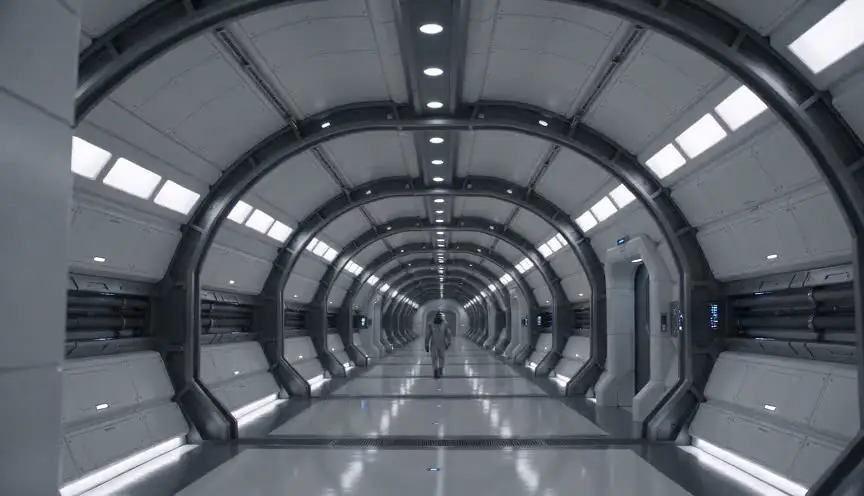
Only extreme scale makes the human presence feel trivial. A tiny figure before a vast shape sets the philosophical terror of the genre.

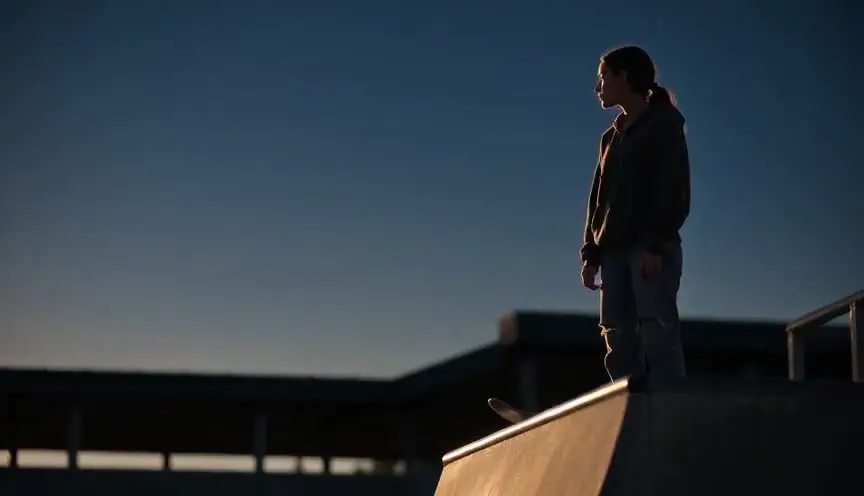
The unknowable is best shown through faces. Cutting to a character's reaction leaves the audience imagining what they saw, which is always worse.
Reference
Watch it in
Annihilation (2018)
Mutated plants, strange refractions and a shimmering zone suggest a mind reshaping matter for reasons people cannot grasp.
Color Out of Space (2019)
A direct Lovecraft adaptation turns a family's remote farm into a place of biological and geometric wrongness driven by an unseen force.
Event Horizon (1997)
The gravity drive room, Gothic corridors and flashes of an unknowable dimension make the ship feel like a gate to powers beyond understanding.
ScreenWeaver
Set it up in ScreenWeaver
Write the anomalies and the characters' reactions in your screenplay, and ScreenWeaver breaks the scene down into shots automatically. Open each shot and set extreme wide or close framings, low or high angles, very slow movements and long durations. Note unnatural color and fragmented views in the shot descriptions. Characters, locations and references carry from shot to shot, and the AI previsualization lets you test how much of the unknown to show before it loses its power.
Start writing for freeThe prompt behind this clip
This is the exact prompt that rendered the clip at the top of the page. Keep the description of the camera and the light, change the subject and the place.
Cosmic horror look. A lone lighthouse keeper stands on a rocky coast at night and looks up: in the black sky above the sea, an impossibly huge dark shape with faint glowing lines slowly moves behind the clouds, so big that it fills half the sky, while the lighthouse beam looks tiny. Cold green and grey tones, dread, slow push in. No text.
Common mistakes
- 01
Showing too much
A fully visible monster becomes a creature feature. Cosmic horror depends on fragments, glimpses and the edges of things. Keep the whole out of frame.
- 02
Explaining the mystery
A final explanation shrinks the cosmos down to a plot point. Leave rules unclear and questions open, so the dread survives the ending.
- 03
Jump scares instead of dread
Sudden noises can startle but do not create existential fear. Build slow, growing wrongness and let the audience sit with it.