Side lightingTexture, depth and a hidden side
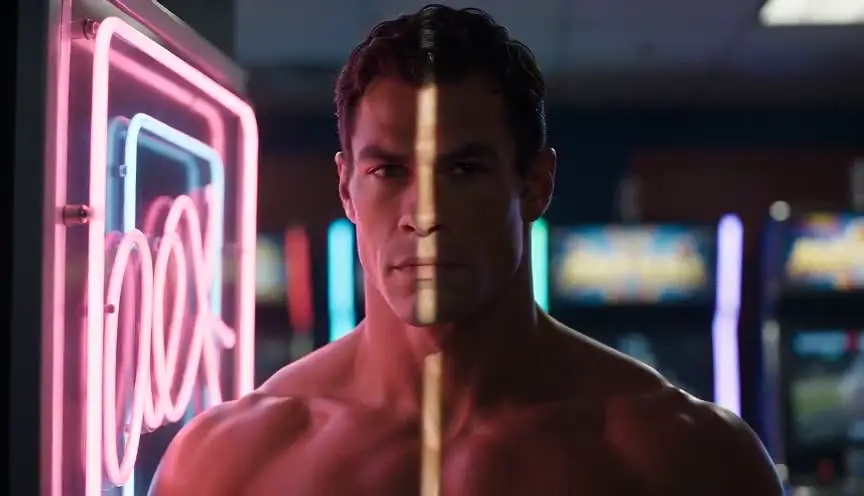
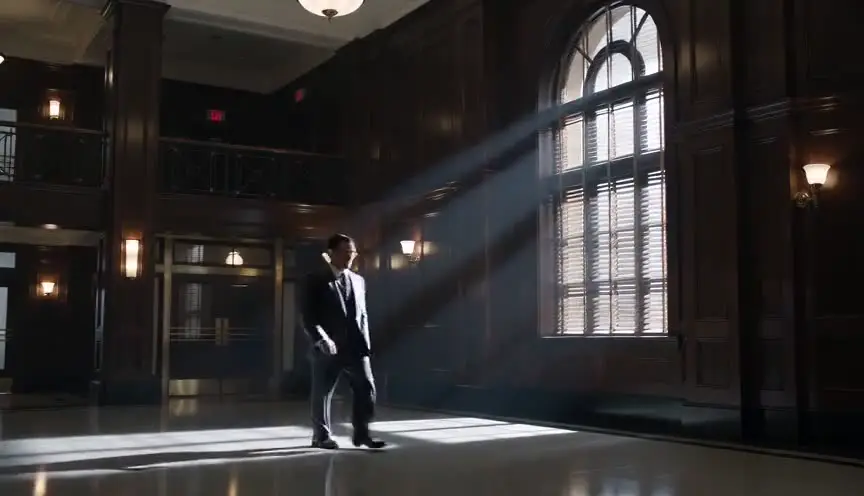
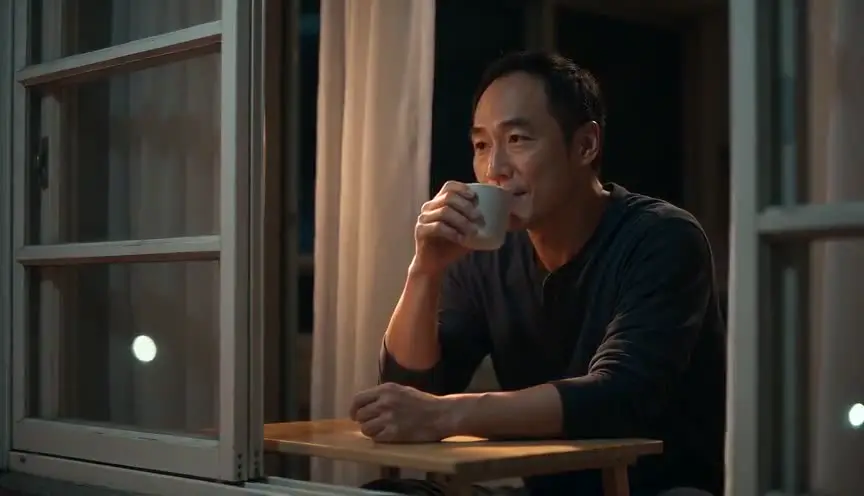
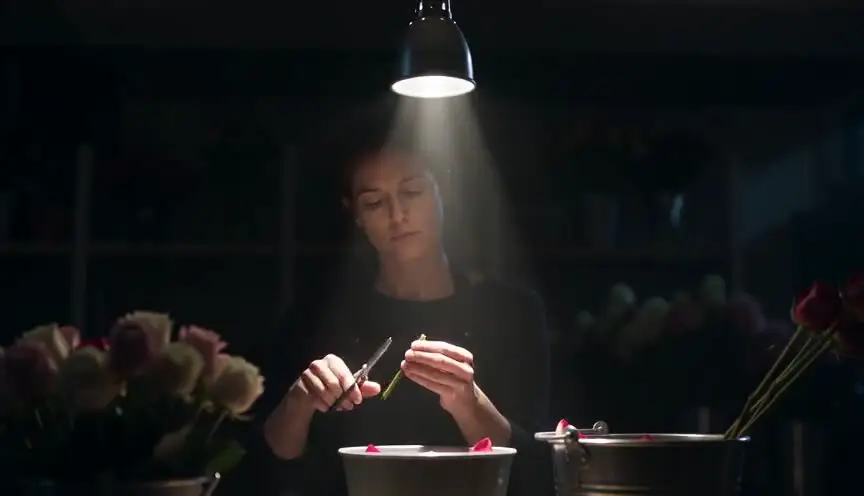
Side lighting comes from one side of the subject, roughly at a right angle to the camera, so it rakes across surfaces and leaves the other side in shadow. Faces, hands and objects gain texture and depth, and the audience senses that something stays out of view.
Also calledLateral lighting90-degree lightingCross light
Lighting
Why it works on screen
Side light shows how things are made: the grain of wood, the wrinkles of a hand, clay under fingers, the stubble on a jaw. That makes it ideal for scenes about work, age, the body and craft. On faces it adds drama and a sense of concealment, since one side stays dark. It serves portraits of stubborn, secretive or weathered characters, conversations with something unspoken, and interiors lit by a single window or doorway. A scene earns it when texture and the idea of a hidden side both matter, when the audience should look hard at a surface and wonder what lies behind it.
The shot list line
- Size
- Medium close-up
- Angle
- Eye level
- Movement
- Static or slow slide along the bench
- Lens
- 50mm to 100mm macro for inserts
- Duration
- 5 to 8 s
Place the key at about 90 degrees to the camera axis and low enough to rake across the surfaces; let the far side fall off, with fill only if the eyes disappear.
Screenplay
On the page
Keep lighting terms out of the screenplay, but place the side source in the space: a window to the left of the workbench, a door open to the yard, a low sun across a field. Describe what the light reveals, the dust on a shelf, the veins on a hand. That is description a reader enjoys. The angle, the hardness and whether to add fill go in the shot list, set with the cinematographer.
INT. POTTERY WORKSHOP - OAXACA - LATE AFTERNOON
One open door to the courtyard. The light comes in low and flat across the wheel.
DOÑA CELIA RUIZ (70s) centers black clay with both hands. Every ridge on her knuckles casts a shadow.
Her grandson TOMÁS (25), back from Los Angeles, watches from the dark side of the room.
She does not look at him.
DOÑA CELIA
You can sit. The clay doesn't care where you've been.
Storyboard
In the storyboard
Draw the subject with a hard division between the lit side and the dark side, and add small shadow strokes on the lit side to show texture: wrinkles, grain, folds. Mark the source with a lamp or sun symbol at the side of the panel and a flat arrow skimming across. Add an overhead diagram with camera and source at a right angle. Note "side light, no fill" and the motivating door or window.
Pairs well with
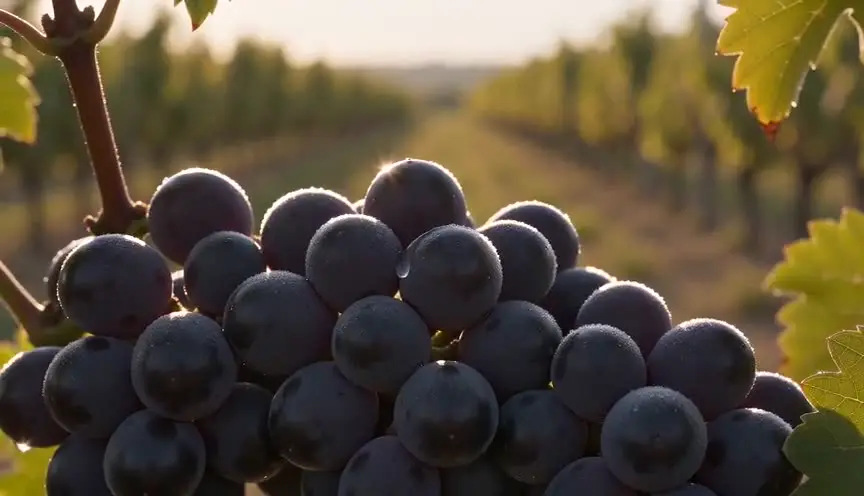
Side light is at its best on textures. Cut from the face to an insert of hands, tools or an object under the same raking light, and the detail tells part of the story.
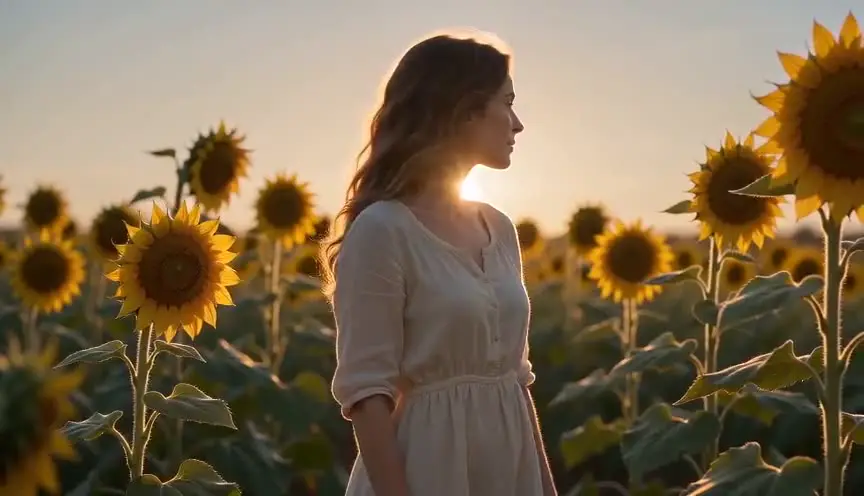
A subtle rim on the shadow side keeps the dark half of the head from merging with the background, while the side key does the modeling on the lit half.
Reference
Watch it in
The Godfather (1972)
Gordon Willis lights rooms from the side and through blinds, cutting faces so these men always keep a part of themselves unseen.
Chinatown (1974)
Hard lateral light through window slats lays bars of shadow over rooms and faces, a visual echo of a story about concealment.
ScreenWeaver
Set it up in ScreenWeaver
Place the side window or door in your action lines, and ScreenWeaver breaks the scene down into shots automatically. Open each shot, set framing, angle, movement and duration, and add a note on the side of the source. Characters and the location carry from shot to shot, so the light stays on the same side through coverage and inserts. The AI previsualization lets you check how much of the face you are willing to lose to the dark.
Start writing for freeThe prompt behind this clip
This is the exact prompt that rendered the clip at the top of the page. Keep the description of the camera and the light, change the subject and the place.
Side lighting: a woman in her fifties kneads dough on a steel counter inside a small bakery at 5 am, low golden light streaming through a single side window and hitting her at roughly ninety degrees, carving one side of her face and arms in bright warm light while the other side falls into deep shadow. The camera holds a static medium shot at eye level as flour dust drifts through the shaft of light. Racks of bread stay dark and undefined in the background, untouched by the light. No text.
Common mistakes
- 01
Light changes sides
If the window is on the left in the wide shot and the close-up is lit from the right, continuity breaks. Keep a plan of the source and respect it on every setup.
- 02
Too much texture
Raking light shows every pore and blemish. On a character meant to look gentle or young, soften the source or bring it slightly forward.
- 03
Background lit the same
If the side key also lights the wall behind, the depth disappears. Flag the spill so the background stays darker than the subject.