Split lightingHalf a face, two people
Split lighting puts the key at 90 degrees to the face, so one half is lit and the other half falls into shadow along the line of the nose. The audience sees a person cut in two, and starts wondering which half is true.
Also calledHalf-and-half lighting90-degree lightingSide split light
Lighting
Why it works on screen
Use it when a character is divided: torn between two loyalties, hiding a second life, about to betray someone, or losing their grip on who they are. The hard line down the middle of the face turns an inner conflict into a visible shape. It serves villains and antiheroes, but also decent people in impossible positions, the night before a confession or a crime. A scene earns it when the character's duality is the subject, ideally at a turning point. Used early, it foreshadows. Used late, it confirms what the audience has been fearing about someone they liked.
The shot list line
- Size
- Close-up
- Angle
- Eye level, face frontal or slight three-quarter
- Movement
- Static or very slow push in
- Lens
- 50mm to 85mm
- Duration
- 4 to 8 s
Key at 90 degrees to the nose, hard or medium source, no fill; flag the bounce off nearby surfaces so the shadow side stays dark.
Screenplay
On the page
Do not write "split lighting" in a spec script. Give the scene a single hard source from the side instead: a streetlight through a car window, a desk lamp at arm's length, a television in a dark room. If the half-lit face is important, you may write that half of it is lost to the dark, once, at the moment it matters. The exact angle, the lack of fill and the lens go in the shot list.
INT. PARKED CAR - SÃO PAULO - NIGHT
Rain on the windshield. A streetlamp beside the driver's window throws its light straight across the car.
RENATA ALVES (40s), mayoral candidate, sits alone behind the wheel, two speeches on her knees.
The results murmur on the radio. She turns it off.
She reads the first line of the concession speech aloud, then the first line of the victory one.
Half of her face stays in the dark the whole time.
RENATA
One of these is a lie.
Storyboard
In the storyboard
Draw the face straight on and shade exactly half of it solid, with the line running down the bridge of the nose and through the lips. Mark the key with a lamp symbol level with the face at 90 degrees, and draw one straight arrow across. Add a tiny overhead diagram showing actor, camera and key. Note "split, no fill" and the source in the scene, and whether the actor turns into or away from the light during the shot.
Pairs well with
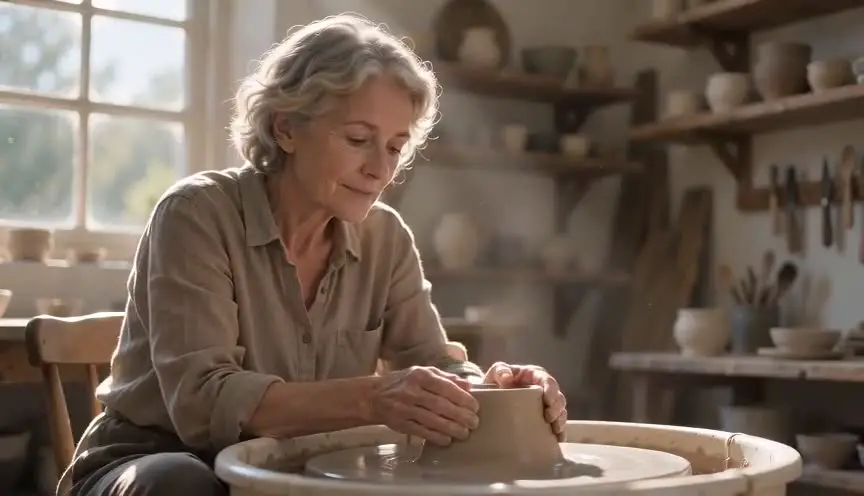
Light the character with a friendly loop key earlier in the scene or the film. When the key swings to split, the change reads as the other half of the person finally coming out.
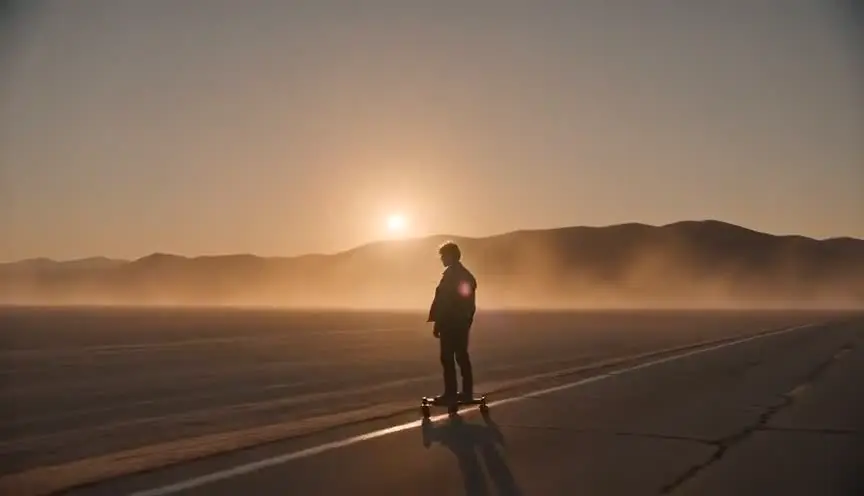
A slow dolly in on a split-lit face tightens the frame around the dividing line. The audience moves closer to the dark half just as the character's decision takes shape.
Reference
Watch it in
The Dark Knight (2008)
After his transformation, Harvey Dent is often lit so one half of his face sits in shadow, a direct image of the man he has split into.
Psycho (1960)
In the parlor talk with Marion, a hard side light cuts Norman Bates's face in two, hinting early at the divided mind the story will reveal.
Apocalypse Now (1979)
Vittorio Storaro keeps half of Brando's face black in the compound scenes, so Kurtz stays a mystery even when he speaks.
ScreenWeaver
Set it up in ScreenWeaver
Write the side source and the character's dilemma into the scene, and ScreenWeaver breaks it down into shots automatically. Open the close-up on the divided character, set a frontal framing at eye level, a static or slow push-in movement and a duration long enough to hold the silence. Note "split lighting, no fill" on the shot. The character carries from shot to shot, so you can compare this face with earlier, softer ones in the AI previsualization.
Start writing for freeThe prompt behind this clip
This is the exact prompt that rendered the clip at the top of the page. Keep the description of the camera and the light, change the subject and the place.
Split lighting: a static medium close-up of a man in his thirties standing beside a glowing pink neon arcade sign, the light hitting his face directly from the right at eye level so a hard, straight shadow line splits his face exactly down the center, the right side lit in warm pink and the left side falling into near-black shadow, no fill light softens the dark half, background arcade cabinets glow softly out of focus, he slowly turns his head a few degrees toward camera while the shadow line stays locked to the center of his face, camera remains locked off on a tripod, lens 50mm. No text.
Common mistakes
- 01
Fill creeps in
A white wall or a bright floor bounces light into the shadow side and the split turns into ordinary side light. Use black fabric or flags to keep the dark half truly dark.
- 02
Key too far forward
If the light drifts in front of 90 degrees, a triangle appears on the far cheek and you have Rembrandt instead. Check the line stays on the nose.
- 03
Everyone gets it
When every character in the film is split-lit, the meaning disappears. Keep the pattern for the person whose duality matters, at the moment it matters.