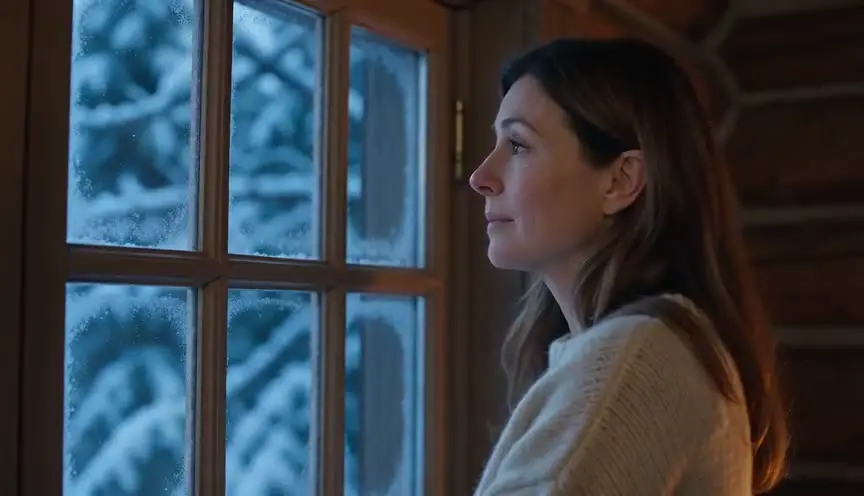
Rembrandt lightingA face with weight and secrets
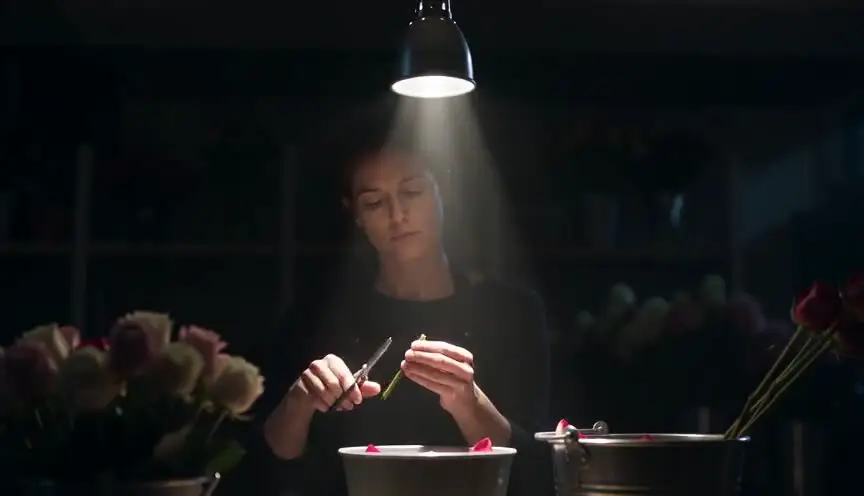
Rembrandt lighting places one key light high and about 45 degrees to the side, so the far cheek falls into shadow except for a small triangle of light under the eye. The face looks sculpted and serious, and the audience senses that half of this person stays hidden.
Also calledRembrandt lightTriangle lighting45-degree lighting
Lighting
Why it works on screen
Reach for it when a character carries weight: a decision, a past, a power they are not showing. The shadow side of the face suggests something withheld, while the triangle of light keeps the far eye alive, so we still read the person. It serves confession, judgment, grief, quiet authority and moral doubt. A scene earns it when the drama sits in faces rather than action, when two people talk across a table and the stakes are inside them. It also dignifies a character. A tired father or a failing king looks like a portrait worth studying.
The shot list line
- Size
- Close-up
- Angle
- Eye level, face in three-quarter view
- Movement
- Static or very slow push in
- Lens
- 85mm portrait lens
- Duration
- 4 to 8 s
Key high and 45 degrees off the nose on the side the face turns from; adjust until a closed triangle of light sits under the far eye, no wider than the eye and no longer than the nose.
Screenplay
On the page
Lighting patterns rarely belong in a spec script, and "Rembrandt lighting" on the page reads as a note to the gaffer. What you can write is the source and the mood: a single lamp, a high window, a room where half of a face is lost to shadow. That tells the director the scene is intimate and heavy. The exact pattern, the ratio and the fixture belong in the shot list and the lighting plan, decided with the cinematographer.
INT. PARISH OFFICE - NIGHT
One desk lamp, pushed high on a shelf. The rest of the room is dark wood and darker corners.
FATHER ANSELM VOSS (60s) sits turned half away from the light. One side of his face is lost.
Across the desk, TILDA RAAB (30s) waits, her coat still buttoned.
He folds the letter she brought him and does not look up.
FATHER ANSELM
You should not have read this.
Storyboard
In the storyboard
Draw the face in three-quarter view and shade the far side solid, leaving a small triangle open under the far eye. Mark the key with a lamp symbol high on the lit side and a dotted line showing its 45-degree angle to the face. Add a small overhead diagram in the corner with the subject, the camera and the key. Note the contrast ratio, whether there is fill, and the motivating source in the scene.
Pairs well with
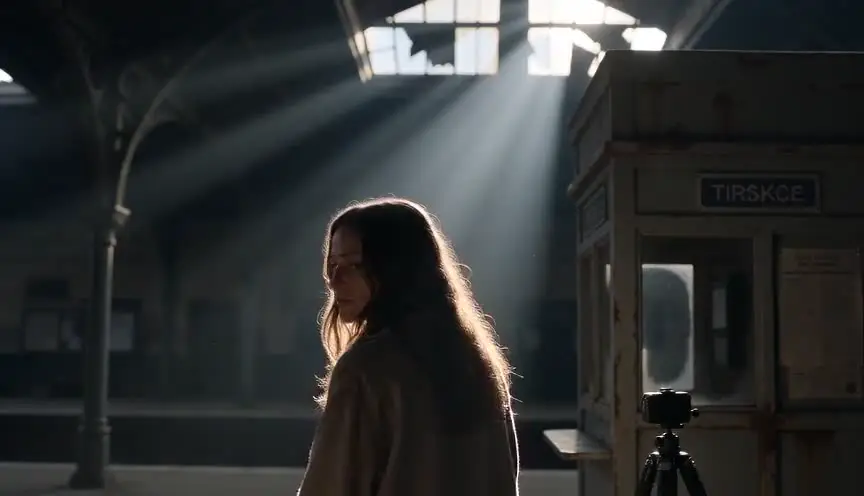
Establish the key light first in a wider shot, a lamp or a window the audience can see, so the Rembrandt close-up that follows feels motivated by the room rather than placed by a crew.
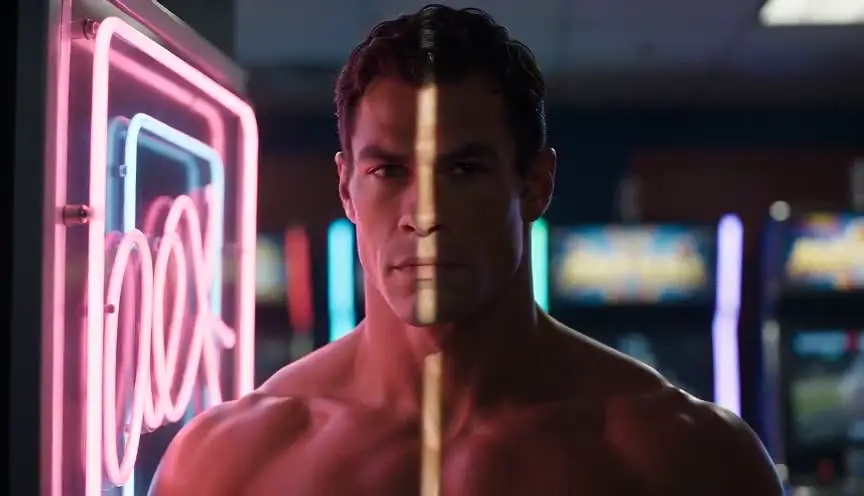
Move from Rembrandt to split lighting as a scene darkens. Losing the cheek triangle takes the last light from the far eye, which shows a character slipping further into secrecy or menace.
Reference
Watch it in
The Godfather (1972)
Gordon Willis keeps the key high and to the side on Don Corleone in his office, sinking the eyes and leaving small lit triangles on the cheeks.
Barry Lyndon (1975)
Stanley Kubrick and John Alcott drew on Dutch and Flemish portraits, lighting interiors from windows and candles to model faces the way painters did.
ScreenWeaver
Set it up in ScreenWeaver
Give the scene one clear light source in the action lines, and ScreenWeaver breaks it down into shots automatically. Open the close-up on the character who holds the secret, set the framing to a close-up in three-quarter view at eye level, with a static or slow push-in movement and a duration long enough to study the face. Note the lighting pattern on the shot. The character and the location carry to the next shots, and the AI previsualization lets you judge the mood before the shoot.
Start writing for freeThe prompt behind this clip
This is the exact prompt that rendered the clip at the top of the page. Keep the description of the camera and the light, change the subject and the place.
Rembrandt lighting portrait. A bearded man in his fifties sits in a dark room in three-quarter view, a single hard light placed high and to one side. The lit side of his face is bright; the far side is in deep shadow except for a small, clearly visible bright triangle of light on the shadowed cheek, just under the eye. Pure black background, like an old master painting. He breathes and blinks, very slow push in. No text.
Common mistakes
- 01
The triangle opens up
If the key is too low or too frontal, the cheek triangle spreads into loop or broad lighting and the mystery disappears. Raise the light and swing it around until the triangle closes.
- 02
Dead far eye
When the key goes too far around, the far eye falls into total darkness and the look becomes split lighting. Rembrandt needs that small catch of light, or the audience loses the character's gaze.
- 03
No source in the room
A dramatic side key with nothing to justify it feels theatrical. Give the scene a lamp, a window or a candle in the wide shot, so the modeling on the face reads as natural.