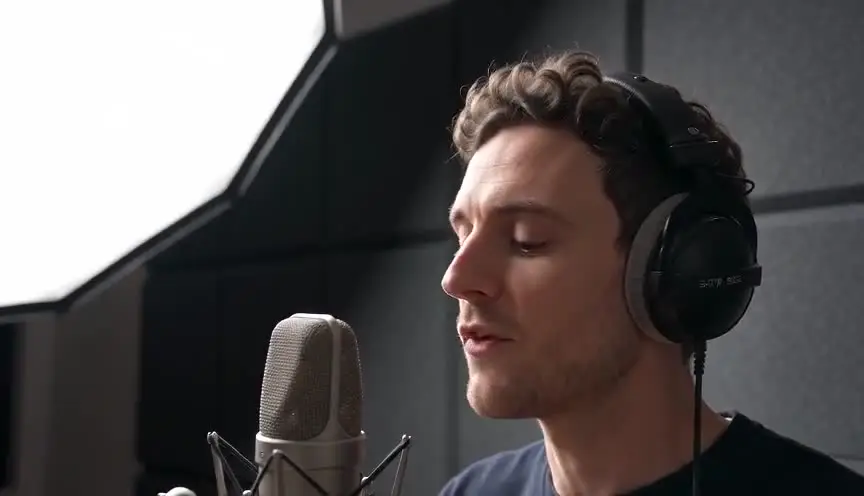
Loop lightingThe honest face of dialogue
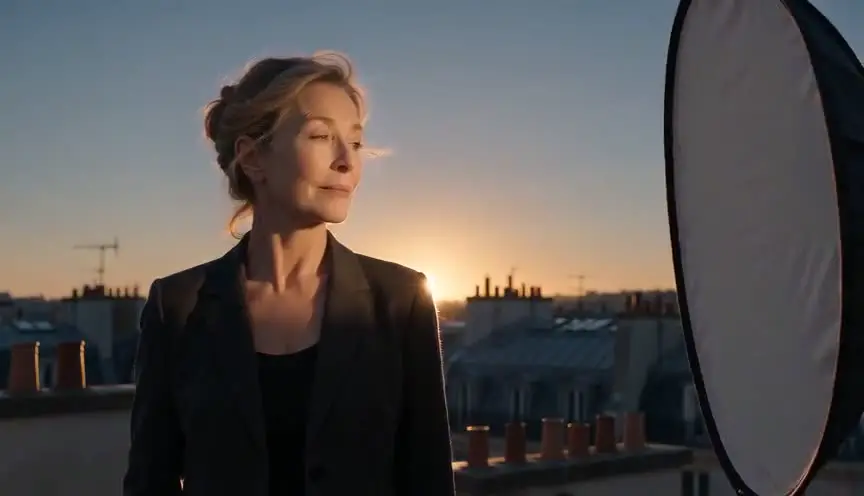
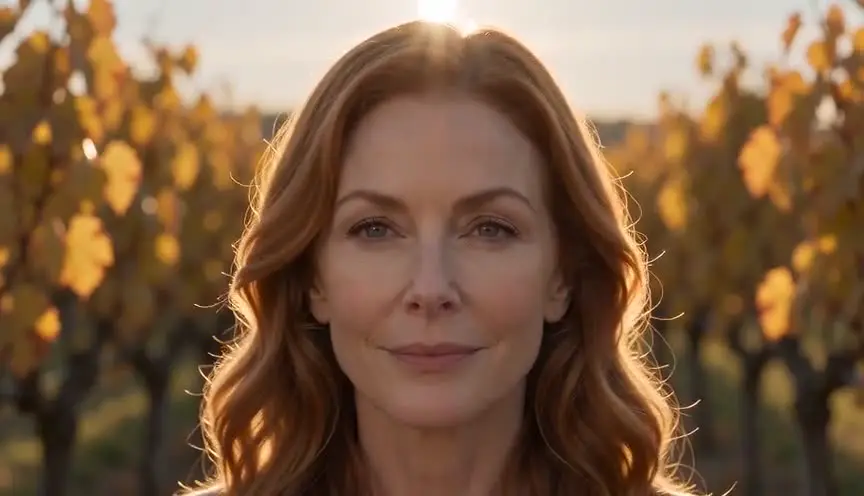
Loop lighting places the key slightly above eye level and 30 to 45 degrees to one side, so the nose casts a small shadow that curves toward the cheek without touching it. Faces look natural, open and dimensional, and the audience trusts the person speaking.
Also calledLoop pattern lighting45-degree lighting
Lighting
Why it works on screen
Loop lighting is the everyday workhorse of dramatic dialogue. Use it when the audience needs to follow a conversation closely and believe the people in it: a doctor delivering news, two friends making up, a teacher and a student, a job interview. It flatters without glamour and shapes without menace. That neutrality is its strength. A scene earns it when performance carries the drama and nothing in the light should distract from it. It also gives you a baseline, so that when you later move the key for a darker or brighter moment, the change registers.
The shot list line
- Size
- Medium close-up
- Angle
- Eye level, slight three-quarter view
- Movement
- Static
- Lens
- 50mm to 85mm
- Duration
- 4 to 8 s
Key just above eye level and about 35 degrees off the nose, soft source, gentle fill on the far side so the nose shadow stays short and never joins the cheek shadow.
Screenplay
On the page
You almost never need to put loop lighting on the page. It is the default a good cinematographer will reach for in dialogue scenes. What a writer can give is the source: a lamp on the side of a desk, a window at the edge of the room, afternoon sun through blinds. Describe the room clearly and let the crew place the key. Record the pattern in the shot list when you want it to stay consistent across a long scene.
INT. VETERINARY CLINIC - MONTANA - AFTERNOON
A small consult room. A window on one side, a steel table in the middle.
DR. RUTH OYELARAN (30s) crouches to eye level with CALEB (9), who holds the leash of an old sheepdog.
The dog lies on the table, breathing slow.
Ruth waits until Caleb looks at her, not the dog.
RUTH
He's not in pain. I promise you that.
Storyboard
In the storyboard
Draw the face in a slight three-quarter view and add a small curved shadow from the nose down toward the far cheek, leaving a clear gap between them. Shade the far side lightly, not solid. Mark the key with a lamp symbol about 35 degrees to the side and a little above, and a fill card on the other side. Note "loop, soft key" and the window or lamp that motivates it in the scene.
Pairs well with
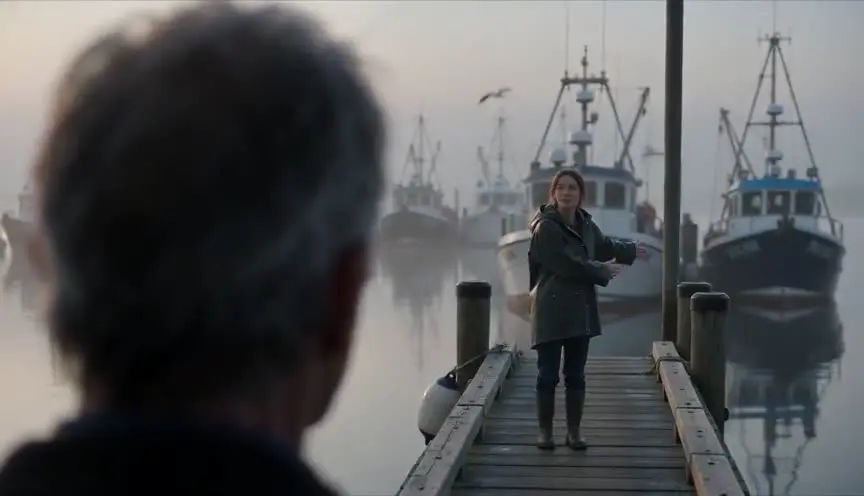
Loop lighting keeps both faces readable in a shot and reverse-shot conversation. Over-the-shoulder coverage shows who is talking to whom, while the loop key keeps each speaker clear and natural.
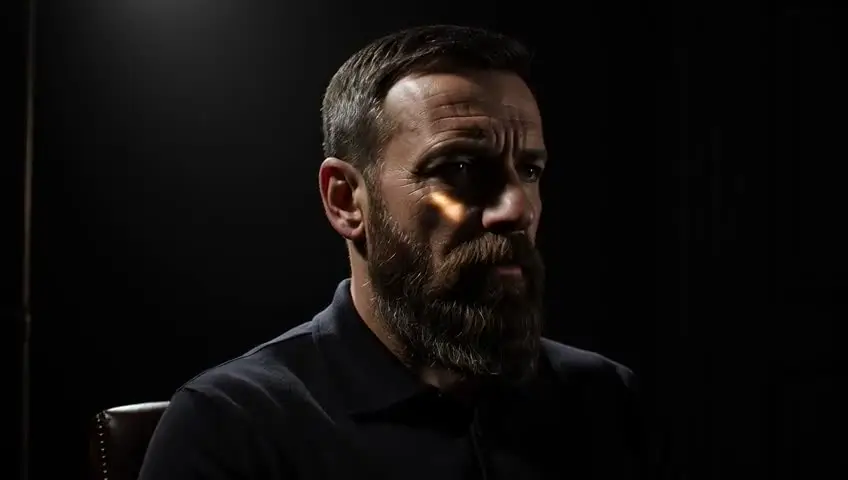
Swing the key a little further and higher when the conversation turns heavy. The shift from loop to Rembrandt deepens the shadow side and marks the moment the talk becomes serious.
Reference
Watch it in
Casablanca (1942)
Arthur Edeson gives Ingrid Bergman's close-ups a soft loop key that keeps her features gentle, balanced and easy to love.
The Social Network (2010)
Jeff Cronenweth holds a tight loop key through the long talk scenes, so faces stay credible and clean under wall-to-wall dialogue.
ScreenWeaver
Set it up in ScreenWeaver
Write the conversation as it is, with the room's window or lamp in the action lines, and ScreenWeaver breaks it down into shots automatically. Open the close-ups on each speaker, set a medium close-up at eye level in slight three-quarter view, a static movement and a duration matched to the lines. Note the loop pattern on each shot. Characters and the location carry through the coverage, and the AI previsualization lets you check that both sides of the conversation match.
Start writing for freeThe prompt behind this clip
This is the exact prompt that rendered the clip at the top of the page. Keep the description of the camera and the light, change the subject and the place.
Loop lighting on a woman in her fifties shaping clay at a pottery wheel inside a sunlit workshop, camera locked off at eye level in a medium close-up. A large soft key light glows through a window at 45 degrees to her face, casting a small round shadow of her nose that loops onto her cheek without touching her lips, while a lower fill light from the opposite side keeps the shadow gentle. Her hands keep turning the wet clay, dust and light motes drifting through the beam, the camera holding completely still for the full four seconds. No text.
Common mistakes
- 01
Shadow touches the cheek
When the nose shadow joins the cheek shadow, you have drifted into Rembrandt lighting. That may be fine, but decide it on purpose. Bring the key forward to reopen the loop.
- 02
Mismatched reverses
If one actor gets loop lighting and the other gets something flatter or harder, the conversation feels unbalanced. Light both sides of the scene with the same logic and the same source.
- 03
Too hard a source
A bare hard key makes the loop shadow crisp and graphic, which can feel clinical. For warm dialogue, use a large soft source so the shadow stays gentle.